NURSING > EXAM > NURSING 4 CHAPTER 26- DRUG THERAPY FOR ANGINA QUESTIONS AND ANSWERS WITH RATIONALE,100%CORRECT (All)
NURSING 4 CHAPTER 26- DRUG THERAPY FOR ANGINA QUESTIONS AND ANSWERS WITH RATIONALE,100%CORRECT
Document Content and Description Below
Last updated: 2 weeks ago
Preview 4 out of 13 pages
Instant download

Loading document previews ...
Buy this document to get the full access instantly
Instant Download Access after purchase
Reviews( 0 )
Document information
Connected school, study & course
About the document
Uploaded On
May 13, 2026
Number of pages
13
Written in
All

Additional information
This document has been written for:
Uploaded
May 13, 2026
Downloads
0
Views
9
Document Keyword Tags
Recommended For You
Get more on EXAM »
Chapter 26 Respiratory System, BH7 HEME, L7 CARDIAC, L7 26: Nu...

Chapter 26: Narcotics, Narcotic Antagonists and Antimigraine A...
NR 599 Test Bank -Nursing Informatics and The Foundation Of Kn...
 (1).png)
Chapter 26: Recording Information Test Bank—Nursing (GRADED A)...
ATI Adult Medical-Surgical Nursing Nclex Questions Stephanie S...

NURSING HEALTH ASS EXAM 1-MATERNAL HEALTH CARE Chapter 26 QUES...

NURS 3320 Chapter 26- Disorders of Hemostasis: Questions and A...

ATI Lewis Medical-Surgical Nursing, 8th Edition, Chapter 26 Nu...
Test Bank-Chapter 26 Nursing Assessment Respiratory System
Test Bank-Chapter 26 Nursing Assessment Respiratory System
Chapter 26: NURS 340 Preparation For The Nclex Questions and A...
Sophia Milestone Adult Nursing (NUR 105) Med Surg test Latest...

NUR 354 Varcarolis Foundations of Psychiatric-Mental Health Nu...

Chapter 26: Care of Patients with Disorders of the Eyes and Ea...

Communicable Disease Nies: Community/Public Health Nursing, 7t...
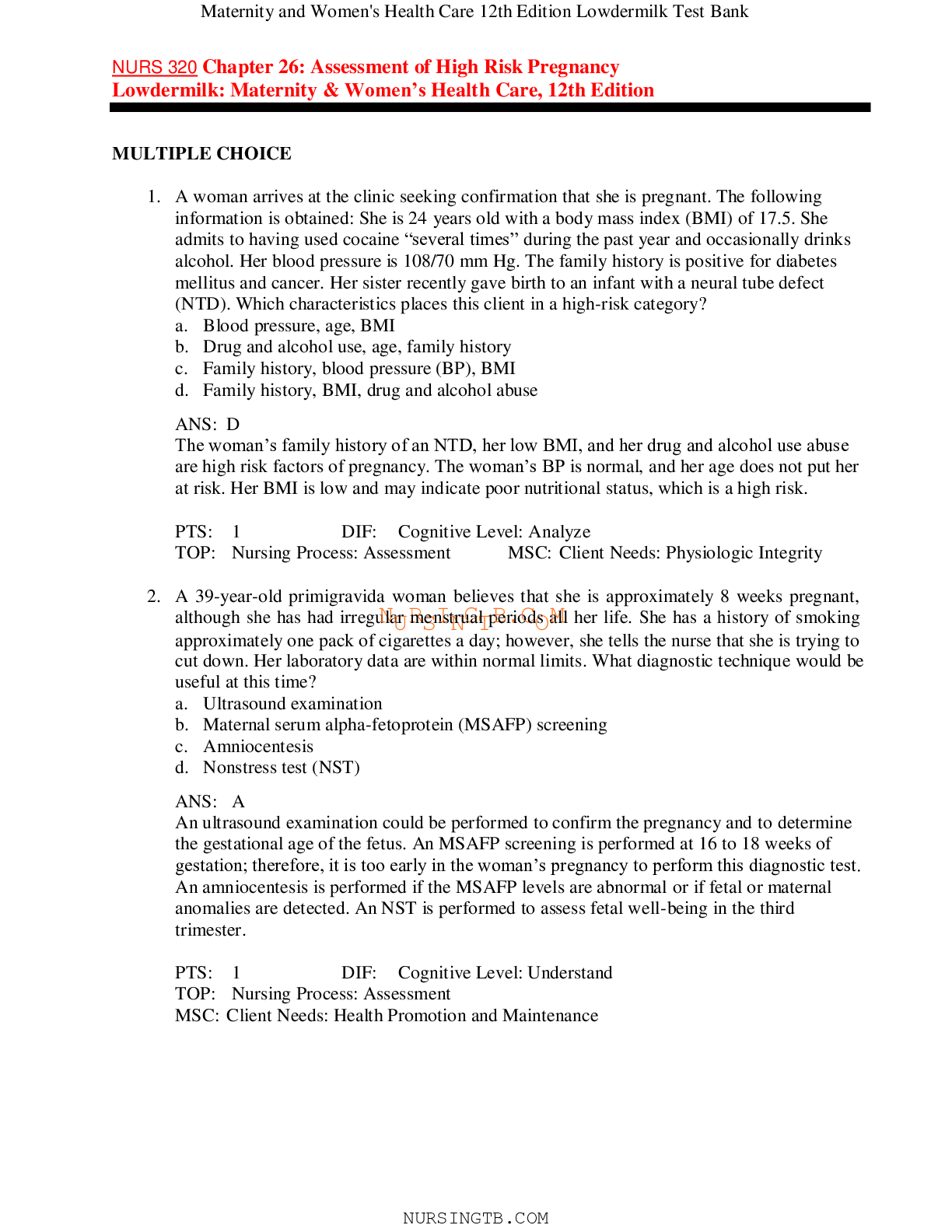
NURS 320 Chapter 26: Assessment of High Risk Pregnancy Lowderm...
Chapter 26: Communicable Disease Nies: Community/Public Health...
Communicable Disease Nies: Community/Public Health Nursing, 7t...
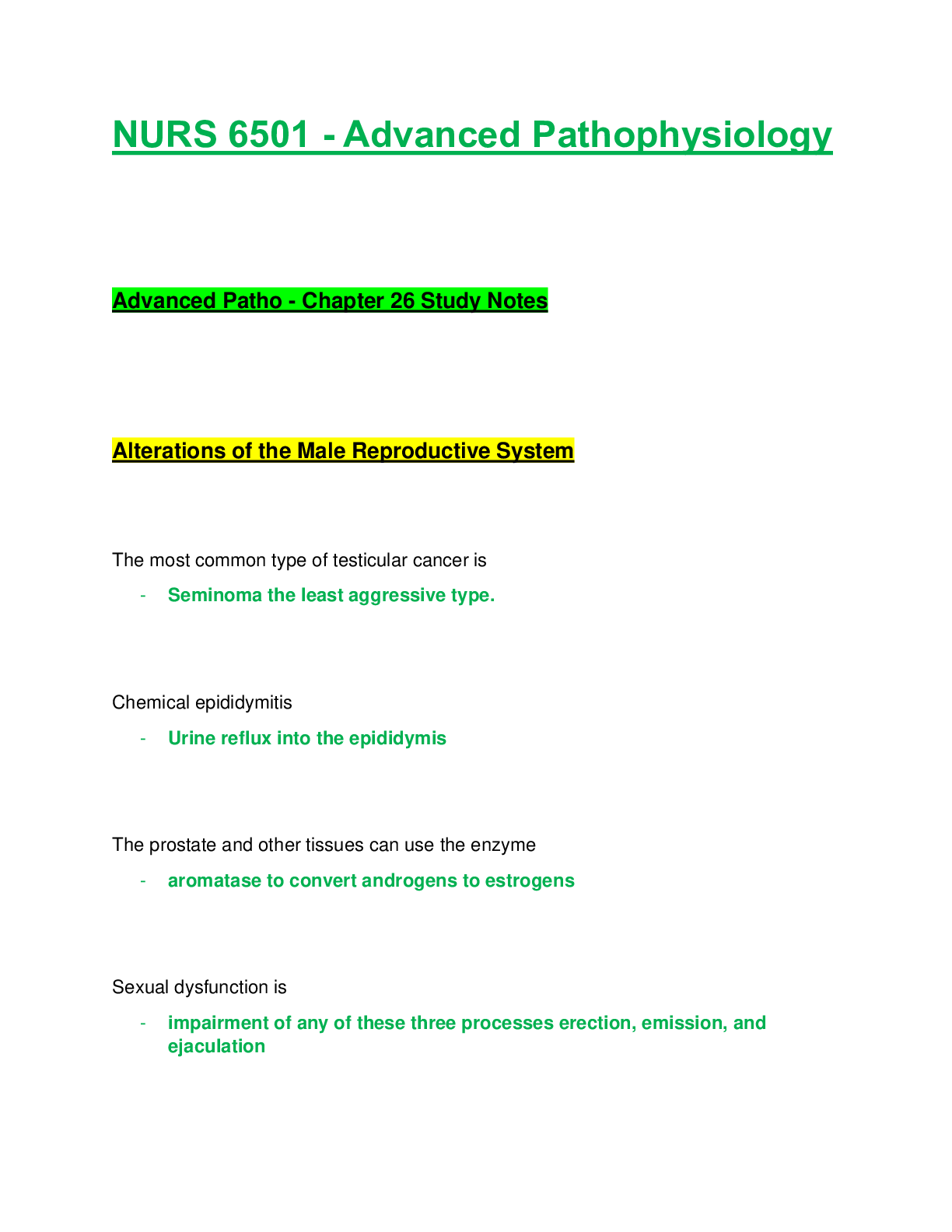
NURS 6501 / NURS6501: Advanced Pathophysiology - Chapter 26 St...