NR507 Final exam Study Guide 1 – Chamberlain college of nursing
NR-507 Study Guide
Chapters 1-5, 11-14, 16-20, 21-25, 27-3-33, 34-39, 40-47
1. Types of immunity-e.g. innate, active, etc (ch 7 ,191)
¬ Innate immu
...
NR507 Final exam Study Guide 1 – Chamberlain college of nursing
NR-507 Study Guide
Chapters 1-5, 11-14, 16-20, 21-25, 27-3-33, 34-39, 40-47
1. Types of immunity-e.g. innate, active, etc (ch 7 ,191)
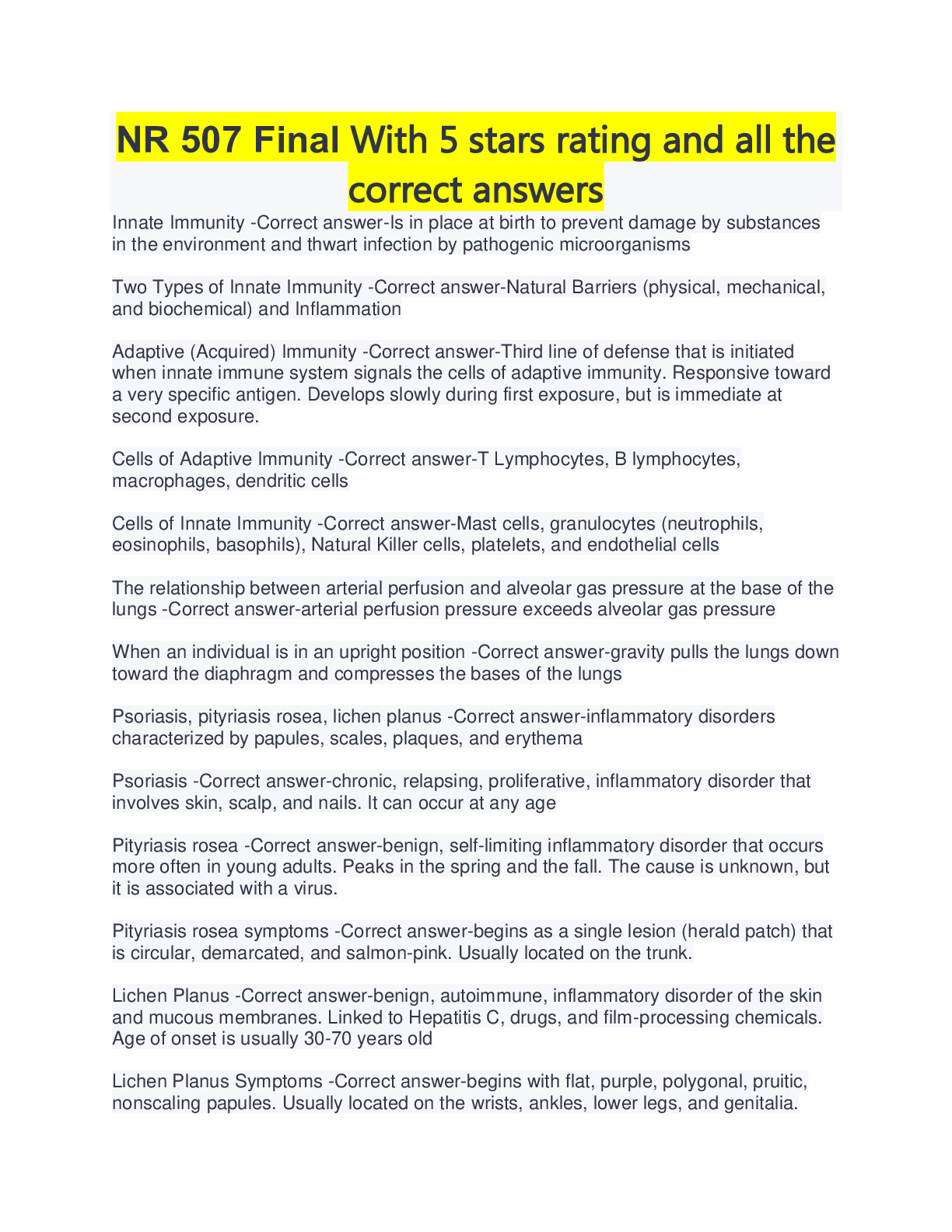
¬ Innate immunity includes two lines of defense: natural barriers and inflammation Natural barriers are physical, mechanical, and biochemical barriers at the body’s surfaces and are in place at birth to prevent damage by substances in the environment and thwart infection by pathogenic microorganisms.
¬ the natural epithelial barrier and inflammation confer innate resistance and protection, commonly referred to as innate, native, or natural immunity. Inflammation associated with infection usually initiates an adaptive process that results in a long-term and very effective immunity to the infecting microorganism, referred to as adaptive, acquired, or specific immunity.
¬ Adaptive immunity is relatively slow to develop but has memory and more rapidly targets and eradicates a second infection with a particular disease-causing microorganism.
¬ Innate immunity includes two lines of defense: natural barriers and inflammation. Natural barriers are physical, mechanical, and biochemical barriers at the body’s surfaces and are in place at birth to prevent damage by substances in the environment and thwart infection by pathogenic microorganisms
INNATE IMMUNITY
ADAPTIVE (ACQUIRED) IMMUNITY
BARRIERS
INFLAMMATORY RESPONSE
Level of defense
First line of defense against infection and tissue injury
Second line of defense; occurs as a response to tissue injury or infection
Third line ofdefense; initiated when innate immune system signals the cells ofadaptive immunity
Timing of defense
Constant
Immediate response
Delay between primary exposure to antigen and maximum response; immediate against secondary exposure to antigen
Specificity
Broadly specific
Broadly specific
Response is very specific toward “antigen”
Cells
Epithelial cells
Mast cells, granulocytes (neutrophils, eosinophils, basophils), monocytes/macrophages, natural killer (NK) cells, platelets, endothelial cells
T lymphocytes, B lymphocytes, macrophages, dendritic cells
Memory
No memory involved
No memory involved
Specific immunologic memory by T and B lymphocytes
Peptides
Defensins, cathelicidins, collectins, lactoferrin, bacterial toxins
Complement, clotting factors, kinins
Antibodies, complement
Protection
Protection includes anatomic barriers (i.e., skin and mucous membranes), cells and secretory molecules or cytokines (e.g., lysozymes, low pH of stomach and urine), and ciliary activity
Protection includes vascular responses, cellular components (e.g., mast cells, neutrophils, macrophages), secretory molecules or cytokines, and activation of plasma protein systems
Protection includes activated T and B lymphocytes, cytokines, and antibodies
2. Alveolar ventilation/perfusion- (ch, 34,pg 1238)
¬ The relationship between arterial perfusion and alveolar gas pressure at the base of the lungs is best described as: arterial perfusion pressure exceeds alveolar gas pressure.
¬ Effective gas exchange depends on an approximately even distribution of gas (ventilation) and blood (perfusion) in all portions of the lungs. The lungs are suspended from the hila in the thoracic cavity. When the individual is in an upright position (sitting or standing), gravity pulls the lungs down toward the diaphragm and compresses their lower portions or bases.
3. Dermatologic conditions e.g. pityriasis rosea (ch46, pg 1630/1631)
¬ Psoriasis, pityriasis rosea, and lichen planus are inflammatory disorders characterized by papules, scales, plaques, and erythema
¬ Psoriasis is a chronic, relapsing, proliferative, inflammatory disorder that involves the skin, scalp, and nails and can occur at any age.
¬ Pityriasis rosea is a benign self-limiting inflammatory disorder that occurs more often in young adults, with seasonal peaks in the spring and fall. The cause is unknown but
¬ thought to be associated with a virus (e.g., human herpesvirus 6 [HHV-6] and HHV-7) because of the timing and clustering of the outbreaks
¬ Pityriasis rosea begins as a single lesion known as a herald patch that is circular, demarcated, and salmon-pink; is approximately 3 to 4 cm in diameter; and is usually located on the trunk
¬ Lichen planus (LP) is a benign, autoimmune inflammatory disorder of the skin and mucous membranes with multiple clinical variations. The cause is unknown, but T cells, adhesion molecules, inflammatory cytokines, perforin, and antigen-presenting cells are involved.The infiltrate of T cells mediates immunoreactivity against basal layer keratinocytes, which have altered surface antigens and adhesion molecules
¬ LP is also linked to hepatitis C virus. Some individuals develop lichenoid lesions after exposure to drugs or film-processing chemicals. The age of onset is usually between 30 and 70 years. The disorder begins with flat purple, polygonal, pruritic, nonscaling papules 2 to 4 mm in size, usually located on the wrists, ankles, lower legs, and genitalia
¬ New lesions are pale pink and evolve into a dark violet. Persistent lesions may be thickened and red, forming hypertrophic LP. Oral lesions (oral lichen planus) appear as lacy white rings that must be differentiated from leukoplakia or oral candidiasis and they may be precancerous lesions
4. Croup (C 36,pg 1294)-
¬ Croup illnesses can be divided into two categories: (1) acute laryngotracheobronchitis (croup) and (2) spasmodic croup. Diphtheria can be considered a croup illness but is now rare because of vaccinations. Croup illnesses are all characterized by infection and obstruction of the upper airways.
¬ Croup is an acute laryngotracheobronchitis and most commonly occurs in children from 6 months to 3 years of age, with peak incidence at 2 years of age
¬ The incidence of croup is highest in late autumn and winter, corresponding to the parainfluenza and RSV seasons, respectively. Croup is more common in boys than girls. In a significant portion of affected children, croup is a recurrent problem during childhood, and there is a family history of croup in about 15% of cases
¬ Chickenpox (varicella) and herpes zoster (shingles) are produced by the varicella-zoster virus (VZV). VZV is a complex herpes group deoxyribonucleic acid (DNA) virus. The incubation period is 10 to 27 days, averaging 14 days. Productive infection occurs within keratinocytes such that the vesicular lesions occur in the epidermis, and an inflammatory infiltrate is often present
5. Types of anemia (ch 28,pg 987-1002)
¬ anemia is a reduction in the total number of erythrocytes in the circulating blood or a decrease in the quality or quantity of hemoglobin. Anemias commonly result from (1) impaired erythrocyte production, (2) blood loss (acute or chronic), (3) increased erythrocyte destruction, or (4) a combination of these three factors.
¬ Pernicious anemia (PA), the most common type of megaloblastic anemia, is caused by vitamin B12deficiency, which is often associated with the end stage of type A chronic atrophic (congenital or autoimmune) gastritis. PA results from inadequate vitamin B12 absorption because of autoantibodies against the B12transporter IF
¬ Folate (folic acid) is an essential vitamin for RNA and DNA synthesis within the maturing erythrocyte. Folates are coenzymes required for the synthesis of thymine and purines (adenine and guanine) and the conversion of homocysteine to methionine. Deficient production of thymine, in particular, affects cells undergoing rapid division (e.g., bone marrow cells undergoing erythropoiesis). Humans are totally dependent on dietary intake to meet the daily requirement of 50 to 200 mcg/day. Folate deficiency anemia is caused by inadequate dietary intake of folate. Both anemias respond to replacement therapy.
¬ The microcytic-hypochromic anemias are characterized by abnormally small erythrocytes that contain abnormally reduced amounts of hemoglobin
¬ Microcytic-hypochromic anemia can result from (1) disorders of iron metabolism, (2) disorders ofporphyrin and heme synthesis, or (3) disorders of globin synthesis. Specific disorders include iron deficiency anemia, side roblastic anemia, and thalassemia
¬ Iron deficiency anemia (IDA) is the most common type of anemia worldwide, occurring in both developing and developed countries and affecting as many as one fifth of the world population. Certain populations are at high risk for developing hypoferremia and IDA and include individuals living in poverty, women of childbearing age, and children. Iron deficiency in children is associated with numerous adverse health-related manifestations, especially cognitive impairment, which may be irreversible
¬ Sideroblastic anemias (SAs) are a heterogeneous group of disorders characterized by anemia of varying severity caused by a defect in mitochondrial heme synthesis.SA is characterized by the presence of ringed side roblasts within the bone marrow. SA results from defects in mitochondrial metabolism leading to ineffective iron uptake and dysfunctional heme synthesis. The characteristic cell in the bone marrow, a ringed sideroblast, is an erythroblast containing iron granules arranged around the nucleus. SAs may be hereditary or acquired, and treatment varies depending on the cause.
¬ Normocytic-normochromic anemias (NNAs) are characterized by erythrocytes that are relatively normal in size and hemoglobin content but insufficient in number. These anemias have no common etiology, pathologic mechanisms, or morphologic characteristics. They are less frequent than macrocytic-normochromic and microcytic-hypochromic anemias.
¬ NNAs include five distinct groups: aplastic (damage to bone marrow erythropoiesis); posthemorrhagic (acute blood loss); acquired hemolytic (immune destruction of erythrocytes); hereditary hemolytic, such as sickle cell (destruction by eryptosis); and anemia of chronic inflammation (multiple causes)
¬ Macrocytic-normochromic, or megaloblastic-normochromic, anemias are characterized by larger than normal erythrocytes with normal levels of hemoglobin. They most commonly are caused by deficiency of vitamin B12 (PA) or folate.
¬ Aplastic anemia (AA) is a critical condition characterized by pancytopenia, a reduction or absence of all three blood cell types, resulting from failure or suppression of bone marrow to produce adequate amounts of blood cells
¬ Posthemorrhagic anemia is a normocytic-normochromic anemia caused by acute blood loss. Initial manifestations of this event depend on the severity of blood loss. If blood loss is severe, the significant manifestations are related to loss of blood volume rather than loss of hemoglobin.
¬ The predominant event in hemolytic anemias is premature accelerated destruction of erythrocytes, either episodically or continuously. The consequences of the anemia are elevated levels of erythropoietin to induce accelerated production of erythrocytes and an increase in the products of hemoglobin catabolism.
¬ Anemia of chronic disease (ACD) is a mild to moderate anemia resulting from decreased erythropoiesis in individuals with conditions of chronic systemic disease or inflammation (e.g., infections, cancer, and chronic inflammatory or autoimmune diseases). These conditions include acquired immunodeficiency disease (AIDS), malaria (particularly that caused by Plasmodium falciparum), rheumatoid arthritis, systemic lupus erythematosus (SLE), acute and chronic hepatitis, and chronic renal failure (a condition in which almost all affected individuals are anemic)
¬ This form of anemia also is commonly noted in the presence of congestive heart failure (CHF). The anemia develops after 1 to 2 months of disease activity. The initial severity is related to that of the underlying disorder but, although persistent, it usually does not progress. Individuals may be asymptomatic, or the anemia may be a coincidental clinical finding.
6. The inflammatory process upon injury ( ch 7)
¬ The inflammatory response is initiated upon tissue injury or when PAMPs are recognized by PRRs on cells of the innate immune system.
¬ There are two types of human defense mechanisms: innate resistance or immunity conferred by natural barriers and the inflammatory response; and the adaptive (acquired) immune system.
¬ Many different types of cells are involved in the inflammatory process including mast cells, granulocytes (neutrophils, eosinophils, basophils), monocytes/macrophages, NK cells and lymphocytes, and cellular fragments (platelets).
¬ The cells of the innate immune system secrete many biochemical mediators that are responsible for the vascular changes associated with inflammation and for modulating the localization and activities of other inflammatory cells. The mediators include histamine, chemotactic factors, leukotrienes, prostaglandins, and platelet-activating factor.
7. GI symptoms resulting in heart burn( ch 41, pg 1429- 1466)
¬ The clinical manifestations of (GERD) reflux esophagitis are heartburn from acid regurgitation, chronic cough, asthma attacks and laryngitis.
¬ Heartburn also may be experienced as chest pain, which requires ruling out cardiac ischemia.
¬ Hiatal hernias are often asymptomatic. Generally, a wide variety of symptoms develop later in life and are associated with other gastrointestinal disorders, including GERD. Manifestations of the various types of hiatal hernia are difficult to distinguish. Symptoms include heartburn, regurgitation, dysphagia, and epigastric pain
¬ Early stages of esophageal carcinoma are asymptomatic. The two main manifestations of esophageal carcinoma are chest pain and dysphagia. The most common type of pain is heartburn (pyrosis). It is initiated by eating spicy or highly seasoned foods and by lying down.
8. Pulmonary terminology such as dyspnea, orthopnea, etc ( ch 35, pg 1249)
¬ Dyspnea is a feeling of breathlessness and increased respiratory effort.
¬ Orthopnea is dyspnea when a person lies flat
¬ Paroxysmal nocturnal dyspnea occurs at night and requires the person to sit or stand for relief.
9. Complications of gastric resection surgery (c 41, pg 1439)
¬ Weight loss often follows gastric resection but stabilizes within 3 months. Inadequate food intake is a common cause because many individuals cannot tolerate the osmotic effect of carbohydrates or a normal-size meal. Foods may be poorly absorbed because the stomach is less able to mix, churn, and break down food particles. Abdominal pain, vomiting, diarrhea, and malabsorption of fats also contribute to weight loss. In the case of bariatric surgery for extreme obesity, weight loss is the intended outcome.
10. Dermatology terminology-macules, nevi, etc ( ch 46, pg 1620)
¬ Macule- A flat, circumscribed area that is a change in the color of the skin; less than 1 cm in diameter. Freckles, flat moles (nevi), petechiae, measles, scarlet fever
¬ Papule - An elevated, firm, circumscribed area less than 1 cm in diameter, Wart (verruca), elevated moles, lichen planus, fibroma, insect bite
¬ Patch - A flat, nonpalpable, irregular-shaped macule more than 1 cm in diameter, Vitiligo, port-wine stains, mongolian spots, café-au-lait spots
¬ Plaque- Elevated, firm, and rough lesion with flat top surface greater than 1 cm in diameter, Psoriasis, seborrheic and actinic keratosis
¬ Wheal - Elevated, irregular-shaped area of cutaneous edema; solid, transient; variable diameter, Insect bites, urticaria, allergic reaction
¬ Nodule- Elevated, firm, circumscribed lesion; deeper in dermis than a papule; 1-2 cm in diameter, Erythema nodosum, lipomas
¬ Tumor- Elevated, solid lesion; may be clearly demarcated; deeper in dermis; greater than 2 cm in diameter, Neoplasms, benign tumor, lipoma, neurofibroma, hemangioma
¬ Vesicle- Elevated, circumscribed, superficial, does not extend into dermis; filled with serous fluid; less than 1 cm in diameter, Varicella (chickenpox), herpes zoster (shingles), herpes simplex
¬ Bulla - Vesicle greater than 1 cm in diameter, Blister, pemphigus vulgaris
¬ Pustule- Elevated, superficial lesion; similar to a vesicle but filled with purulent fluid, Impetigo, acne
¬ Cyst - Elevated, circumscribed, encapsulated lesion; in dermis or subcutaneous layer; filled with liquid or semisolid material, Sebaceous cyst, cystic acne
¬ Telangiectasia - Fine (0.5-1.0 mm), irregular red lines produced by capillary dilation; can be associated with acne rosacea (face), venous hypertension (spider veins in legs), systemic sclerosis, or developmental abnormalities (port-wine birthmarks), Telangiectasia in rosacea
11. Chicken pox ( c 46,pg 1659)
¬ an infectious viral disease that is spread by direct contact or through the air by coughing or sneezing; it causes a blister-like rash that first affects the face and trunk and then can spread over the rest of the body; symptoms include severe itching, fatigue, and fever.
12. Maternal immune system- (ch 8 & 9, pg 259-276)
¬ The human neonate has a poorly developed immune response, particularly in the production of IgG. The fetus and neonate are protected in utero and during the first few postnatal months by maternalantibody that was actively transported across the placenta
¬ The maternal antibodies are slowly catabolized after birth until they disappear altogether by about 10 months of age. The neonate begins producing IgG at birth, and the child’s antibodies reach protective levels after about 6 months of age.
¬ The mother’s immune system produces the antibody, but because her cells do not express the target antigen, she has no symptoms of the disease.
¬ Neonatal alloimmune disease may be secondary to maternal autoimmune diseases in which the mother produces an IgG autoantibody specific for maternal self-antigens that are found on fetal cells as well. Therefore, symptoms of the same autoimmune disease may affect mother and child, even though the autoantibody is being produced only by the mother’s immune system
13. Candidiasis exacerbation ( ch 10,313)
¬ Candidiasis is a yeastlike fungal infection caused by C. albicans occurring on skin, on mucous membranes, and in the gastrointestinal tract.
¬ Candida overgrowth may occur resulting in vaginitis or oropharyngeal infection (thrush). In those with an intact immune system the infection remains localized.
¬ In immunocompromised individuals, particularly those with diminished levels of neutrophils (neutropenia), disseminated infection may occur. Candida is the most common fungal infection in people with cancer (particularly acute leukemia and other hematologic cancers), transplantation (bone marrow and solid organ), and HIV/AIDS.
14. Carbuncles (ch 46, pg 1635
¬ a condition in which a bacterial infection of the hair follicle or sebaceous gland ducts becomes painful and discharges pus through various openings.
¬ Furuncles and carbuncles are treated with warm compresses to provide comfort and promote localization and spontaneous drainage. Abscess formation requires incision and drainage and recurrent infections, extensive lesions, or those associated with cellulitis or systemic symptoms are treated with systemic antibiotics.
¬ A carbuncle is a collection of infected hair follicles occurring most often on the back of the neck, the upper back, and the lateral thighs. The lesion begins in the subcutaneous tissue and lower dermis as a firm mass that evolves into an erythematous, painful, swollen mass that drains through many openings. Abscesses may develop. Chills, fever, and malaise are systemic symptoms that can occur during the early stages of lesion development.
¬ Furuncles and carbuncles are treated with warm compresses to provide comfort and promote localization and spontaneous drainage. Abscess formation requires incision and drainage and recurrent infections, extensive lesions, or those associated with cellulitis or systemic symptoms are treated with systemic antibiotics.
15. Terms such as hypochromic, macrocytic, microcytic, etc ( ch 28 pg 983 ) see chart above also it will not move for me
ERYTHROCYTE VOLUME
HEMOGLOBIN CONTENT
Normal
Normocytic
Normochromic
Increased
Macrocytic (higher mean corpuscular volume [MCV])
Hyperchromic (higher mean corpuscular hemoglobin concentration [MCHC])
Decreased
Microcytic (lower MCV)
Hypochromic (lower MCHC)
MORPHOLOGY OF REMAINING ERYTHROCYTES
NAME AND MECHANISM OF ANEMIA
PRIMARY CAUSE
Macrocytic-normochromic anemia: large, abnormally shaped erythrocytes but normal hemoglobin concentrations
Pernicious anemia: lack of vitamin B12(cobalamin) for erythropoiesis; abnormal deoxyribonucleic acid (DNA) and ribonucleic acid (RNA) synthesis in the erythroblast; premature cell death
Congenital or acquired deficiency of intrinsic factor (IF); genetic disorder of DNA synthesis
Folate deficiency anemia: lack of folate for erythropoiesis; premature cell death
Dietary folate deficiency
Microcytic-hypochromic anemia: small, abnormally shaped erythrocytes and reduced hemoglobin concentration
Iron deficiency anemia: lack of iron for hemoglobin production; insufficient hemoglobin
Chronic blood loss; dietary iron deficiency; disruption of iron metabolism or iron cycle
Sideroblastic anemia: dysfunctional iron uptake by erythroblasts and defective porphyrin and heme synthesis
Congenital dysfunction of iron metabolism in erythroblasts; acquired dysfunction of iron metabolism as a result of drugs or toxins
Thalassemia: impaired synthesis of α- or β-chain of hemoglobin A; phagocytosis of abnormal erythroblasts in the marrow
Congenital genetic defect of globin synthesis
Normocytic-normochromic anemia: normal size, normal hemoglobin concentration
Aplastic anemia: insufficient erythropoiesis
Depressed stem cell proliferation resulting in bone marrow aplasia
Posthemorrhagic anemia: blood loss
Acute or chronic hemorrhage that stimulates increased erythropoiesis, which eventually depletes body iron
Hemolytic anemia: premature destruction (lysis) of mature erythrocytes in the circulation
Increased fragility of erythrocytes
Sickle cell anemia: abnormal hemoglobin synthesis, abnormal cell shape with susceptibility to damage, lysis, and phagocytosis
Congenital dysfunction of hemoglobin synthesis
Anemia of chronic disease: abnormally increased demand for new erythrocytes
Chronic infection or inflammation; malignancy
16. Antibodies, IgG, IgA, etc- (ch 8, pg 229)
¬ There are five molecular classes of immunoglobulins (IgG, IgA, IgM, IgE, and IgD) that are characterized by antigenic, structural, and functional differences. Within two of the immunoglobulin classes are several distinct subclasses including four subclasses of IgG and two subclasses of IgA.
¬ IgG is the most abundant class of immunoglobulins; they constitute 80% to 85% of those circulating in the body and account for most of the protective activity against infections. As a result of selective transport across the placenta, maternal IgG is also the major class of antibody found in blood of the fetus and newborn. Four subclasses of IgG have been described: IgG1, IgG2, IgG3, and IgG4.
-
-
-
-
-
-
-
-
-
-
-
-
-
-
-
-
-
-
-
-
-
-
-
-
-
60. Guillain-Barre Syndrome (ch 17, p 622)
¬ Guillain-Barré syndrome is an acquired, acute inflammatory demyelinating or axonal disorder caused by a humoral or cell-mediated immunologic response, or both, directed at peripheral nerves. Four subtypes have been identified and clinical manifestations depend on the subtype.
SUBTYPES
CLINICAL FEATURES
PATHOLOGY
PATHOGENESIS
Acute inflammatory demyelinating polyneuropathy (AIDP accounts for most cases of GBS)
Ascending paralysis with typically distant start
Macrophages invade myelin sheaths and denude axons
Lymphocytic inflammation
Demyelination
T-cell–mediated lymphocytic infiltration into nerves is common
Early sensory symptoms
Loss of DTRs
Endoneurial edema
Some degree of axon loss (all findings most prominent in the spinal roots and nerve terminals)
Antibody-mediated pathogenesis not yet demonstrated
CD4 and CD8 lymphocytes and macrophages are present
Complement is deposited on the outermost Schwann cell plasmalemma
Acute motor axonal neuropathy (AMAN)
Acute progressive weakness with no sensory impairment
Macrophages invade nodes of Ranvier, leaving the myelin sheath intact (absence of demyelination)
Axonal degeneration in ventral root in severe cases
Selective antibody-mediated attack on axon (presence of IgG and complement deposits on axolemma along with macrophage recruitment)
Associated with Campylobacter jejunienteritis
Lymphocyte infiltration sparse
GM1 autoantibodies play a direct pathogenic role through molecular mimicry
Acute motor and sensory axonal neuropathy (AMSAN)
Ascending paralysis
Early sensory symptoms
Similar to AMAN
Absence of demyelination
Evidence of axonal loss in dorsal and ventral roots
Undetermined
Lymphocytic infiltration sparse
Extensive sensory nerve fiber degeneration
Fisher syndrome (FS) (5% of cases of GBS)
In purist form have ophthalmoparesis, areflexia, and ataxia
Pathologic features similar to those in AIDP, but are atypical FS
Antibodies to ganglioside GQ1b measured in serum in 90% of cases
In atypical FS also have features of AIDP
Deposition of antiganglioside antibodies initially causes reversible conduction block followed by axonal degeneration
Anti-GQ1b antibodies cross-react with other gangliosides (typically GT1a, but in many cases with GD3, GD1b, and GT1b)
Infections are common triggers for FS (Campylobacter jejunienteritis)
61. Sympathetic/parasympathetic nervous system ( ch 11 pg 344)
¬ The parasympathetic system balances the sympathetic nervous system and, thus, also influences adaptation or maladaptation to stressful events. The parasympathetic system also has anti-inflammatory effects.
¬ The parasympathetic system opposes the sympathetic (catecholamine) responses, for example, by slowing the heart rate. Researchers evaluate the relative balance of the parasympathetic and sympathetic nervous systems using a technique known as heart rate variability (the measurement of R wave variability from heartbeat to heartbeat).
¬ Under conditions of allostatic overload, the parasympathetic system may decrease its restraint of the sympathetic system, resulting in increased or prolonged inflammatory responses
62. ACTH- (c 11,pg 339)
¬ Adrenocorticotropic hormone;
¬ the hypothalamus secretes corticotropin-releasing hormone (CRH), which binds to specific receptors on pituitary cells that, in turn, produce adrenocorticotropic hormone (ACTH). ACTH is then transported through the blood to the adrenal glands located on the top of the kidneys
63. Bartholin glands (C24,pg 920)
¬ Bartholin glands]) near the urethra and vagina also are common. The external female genitalia are the mons pubis, labia majora, labia minora, clitoris, vestibule (urinary and vaginal openings), Bartholin glands, and Skene glands.
64. Gonococcal disease (c 26,pg 919)
¬ a sexually transmitted disease caused by the bacteria gonococci that invade the mucous membranes of the genitals and urinary tract and in women the cervix, fallopian tubes, and ovaries, causing chronic pelvic pain or infertility.
¬ Gonorrhea is caused by gonococci (singular, gonococcus), which are microorganisms of the species Neisseria gonorrhoeae. Neisser first identified gonococci in stained smears of vaginal, urethral, and conjunctival exudate in 1879.
65. Glomerulonephritis-( chap 38)
¬ Glomerulonephritis is an inflammation of the glomerulus caused by primary glomerular injury, including immunologic responses, ischemia, free radicals, drugs, toxins, vascular disorders, and infection.
66. Small patent ductus arteriosus ( ch 33, pg 1202)
¬ The patent ductus arteriosus (PDA) is a vessel located between the junction of the main and left pulmonary arteries and the lesser curvature of the descending aorta, usually just distal to the left subclavian artery
¬ PDA closure in asymptomatic children with a murmur is recommended by 2 years of age because of the risk of subacute bacterial endocarditis. No treatment is recommended for small PDA in the absence of a murmur or other cardiac conditions
67. Risk factors for hypertension- ( ch 32, pg 1132-1140)
¬ Risk factors associated with primary hypertension include: (1) family history of hypertension; (2) advancing age; (3) gender (men younger than 55 and women older than 70 years); (4) black race; (5) high dietary sodium intake; (6) glucose intolerance (diabetes mellitus); (7) cigarette smoking; (8) obesity; (9) heavy alcohol consumption; and (10) low dietary intake of potassium, calcium, and magnesium.19 Many of these factors are also risk factors for other cardiovascular disorders. In fact, hypertension, dyslipidemia, and glucose intolerance often are found together in a condition called metabolic syndrome
¬ Evaluation of the hypertensive individual should include a complete medical history and assessment of lifestyle and other risk factors for hypertension and cardiovascular disease, as well as evidence of possible secondary causes of hypertension
¬ Idiopathic, or primary, orthostatic hypotension is the term for hypotension in which there is no known initial cause. It is a significant risk factor for falls and associated injuries and has been associated with an increased risk for cardiovascular events. In addition to cardiovascular symptoms, impotence and bowel and bladder dysfunction often are found in this type.
68. Loss of language and/or comprehension-such as terms-aphasia, etc. ( ch 17, pg 539)
¬ This area is responsible for reception and interpretation of speech, and dysfunction may result in receptive aphasia or dysphasia.
¬ Dysphasia is impairment of comprehension or production of language (semantic processing). With dysphasia, comprehension or use of symbols, in either written or verbal language, is disturbed or lost.
¬ Aphasia is loss of comprehension or production of language.
69. Chronic inflammatory joint disease ( ch 44, pg 1568-1578)
¬ Rheumatoid arthritis (RA) is a chronic, systemic inflammatory autoimmune disease distinguished by jointswelling and tenderness and destruction of synovial joints, leading to disability and premature death
¬ Ankylosing spondylitis (AS) is the most common of a group of inflammatory arthropathies known as spondyloarthropathies. It is a chronic inflammatory joint disease characterized by stiffening and fusion (ankylosis) of the spine and sacroiliac joints
70. Male and female sex hormone production ( ch 23 pg 726-791)
¬ The male sex hormones are androgens and testosterone is the primary male sex hormone. Leydig cells of the testes and, to a lesser degree, the adrenal glands produce testosterone and other androgens. In men, sex hormone production is relatively constant with some diurnal variation
¬ The sex hormones are all steroid hormones and are synthesized from cholesterol Male and female sex hormones are present in all adults. However, the female body contains low levels of testosterone and other androgens, and the male body contains low levels of estrogen. Individual effects of sex hormones depend on their amount and concentration in the blood.
¬ The dominant female sex hormones, estrogen and progesterone, are produced primarily by the ovaries. During fetal development, infancy, and childhood, sex hormone production is low.
71. Endogenous antigen (c 8,pg 245)
¬ Endogenous antigens are usually components of proteins synthesized in the cytosol. They are degraded in the cytosol by proteasomes into small peptides and transported by TAP (transporter associated with antigen processing) proteins (TAP-1 and TAP-2) into the endoplasmic reticulum, where MHC class I and class II molecules are assembled.The class I MHC molecules have open antigen-binding sites so that antigen, the class I MHC α-chain, and a β2-microglobulin molecule form a stable complex that is transported through the Golgi apparatus to the plasma membrane. The antigenic peptides presented by class I MHC molecules are usually very small, 8 to 10 amino acids in length.
72. Genital warts- (ch 26, pg 934)
a. Condylomata acuminata are soft, skin-colored, whitish pink to reddish brown discrete growths. They may occur singly or in clusters and may be broad based or pedunculated and feathery or smooth Sometimes the warts enlarge to form cauliflower-like masses on the male frenulum, glans, foreskin, urinary meatus, shaft, scrotum, or anus and on the female labia, clitoris, perineum, vagina, or anus. Although the lesions are usually not painful, they may cause dyspareunia (painful intercourse) and may be friable and bleed easily.
b. Genital warts are very contagious, with transmission rates among individuals estimated to be between 38% and 95%. Such a wide range is attributable to the subclinical nature of some infections and various influencing factors that include number of exposures, HPV type, location of lesions, and cellular immunity response. Infants and children also have been identified as being infected with HPV. Infants can be infected in utero and by passage through an infected birth canal. HPV infection in children has been traced to child sexual abuse; however, reports vary in making this connection.
73. Pancreatic enzymes ( c 40,pg 1415)
¬ pancreatic enzymes hydrolyze proteins (proteases), carbohydrates (amylases), and fats (lipases). The proteases include trypsin, chymotrypsin, carboxypeptidase, and elastase. These enzymes are secreted in their inactive forms—that is, as trypsinogen, chymotrypsinogen, and procarboxypeptidase—to protect the pancreas from the digestive effects of its own enzymes.
¬ pancreatic enzymes (proteases, amylase, and lipase), and bile salts act in the small intestine to digest proteins, carbohydrates, and fats.
74. Process of muscle contraction( c 43,pg 1533)
¬ Muscle contraction is a four-step process: excitation, coupling, contraction, and relaxation. The initial contraction process is the excitation-contraction coupling (ECC) series, which involves the electrical properties of all cells and the movement of ions across the plasma membrane
¬ Excitation, the first step of muscle contraction, begins with the spread of an action potential from the nerve terminal to the neuromuscular junction.
¬ Following depolarization of the T-tubules, the second stage, coupling, occurs. This stage consists of the migration of calcium ions to the myofilaments. Calcium affects troponin and tropomyosin, muscleproteins that bind with actin when the muscle is at rest.
¬ Contraction begins as the calcium ions combine with troponin, a reaction that overcomes the inhibitory function of the troponin-tropomyosin system. The thin filament actin then slides toward the thick filament myosin.
¬ relaxation, begins as the sarcoplasmic reticulum absorbs the calcium molecules, removing them from interaction with troponin. Calcium is pumped back into the sarcoplasmic reticulum by means of an active transport process. The cross-bridges detach, and the sarcomere lengthens.
75. Cervical dysplasia (C 24,pg 825)
¬ Cervical dysplasia (cervical intraepithelial neoplasia [CIN])
a condition characterized by the appearance of abnormal cervical cells that are considered precancerous.
¬ It is established that cervical cancer is almost exclusively caused by cervical human papillomavirus (HPV) infection. Infection with “high-risk” (oncogenic) types of HPV (predominantly 16 and 18) is a necessary precursor to development of the precancerous cell changes, known as dysplasia, of the cervix that leads to invasive cancer
¬ these cell changes can be detected noninvasively through examination of the cervical cells. The cells can be destroyed to prevent cancer development if dysplasia can be detected early.
76. Consanguinity- (c4,pg 156)
¬ Consanguinity is sometimes present in families with autosomal recessive diseases, and it becomes more prevalent with rarer recessive diseases.
¬ Consanguinity and inbreeding are related concepts. Consanguinity refers to the mating of two related individuals, and the offspring of such mating are said to be inbred. Consanguinity is often an important characteristic of pedigrees for recessive diseases because relatives share a certain proportion of genes received from a common ancestor. The proportion of shared genes depends on the closeness of their biologic relationship. For example, siblings share one half of their DNA, on average, because of their descent from the same parents.
77. Nephrotic syndrome ( chap 38)
¬ Nephrotic syndrome is the excretion of 3.0 g or more of protein in the urine per day, hypoalbuminemia (less than 3.0 g/dl), and peripheral edema. Nephrotic syndrome is characteristic of glomerular injury.
¬ Primary causes of nephrotic syndrome include minimal change disease (lipoid nephrosis), membranous glomerulonephritis, and focal segmental glomerulosclerosis.
¬ Secondary forms of nephrotic syndrome occur in systemic diseases including diabetes mellitus, amyloidosis, systemic lupus erythematosus, and Henoch-Schönlein purpura. Nephrotic syndrome also is seen with certain drugs, infections, malignancies, and vascular disorders
¬ S/S of nephrotic syndrome
-hematuria
-urinary casts
-leukocytes
-low GFR
-oliguria
-azotemia (build up of waste products)
-HTN
[Show More]








 – Chamberlain College of Nursing.png)
 – Chamberlain College of Nursing.png)