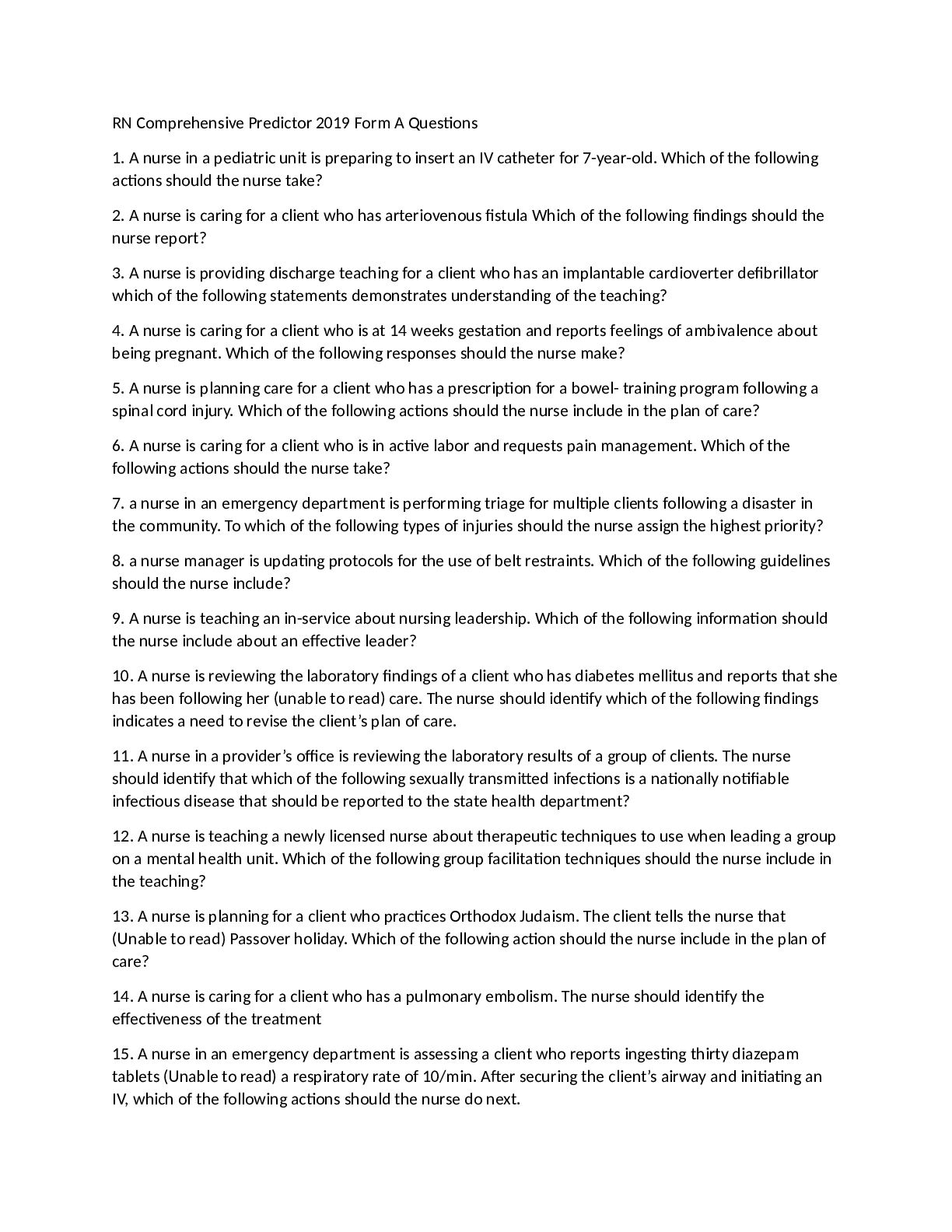
Biological Psychology > QUESTION PAPER (QP) > University of PennsylvaniaBIOL 204BIOL 204 (2019) Problem Set 5 (All)
University of PennsylvaniaBIOL 204BIOL 204 (2019) Problem Set 5
Document Content and Description Below
Last updated: 4 years ago
Preview 1 out of 6 pages
Instant download

Buy this Document to get the Full Access Instantly
Provided by Students Who Aced it
We Verify Document Content to Gurantee Accuracy
Reviews( 0 )
Document information
Connected school, study & course
About the document
Uploaded On
May 01, 2021
Number of pages
6
Written in
All

Additional information
This document has been written for:
Uploaded
May 01, 2021
Downloads
0
Views
159
Topic Tags
Recommended For You
Get more on QUESTION PAPER (QP) »
Test Bank for Biological Psychology 12th Edition By James Kala...
Test Bank For Brain & Behavior, An Introduction to Biological...

Test Bank for Psychopathology An Integrative Approach to Under...

eBook Carbohydrate-Based Therapeutics 1st Edition By Roberto A...

Test Bank for Understanding Psychology 15th Edition by Robert...

Test Bank for Biological Psychology 13th edition James W. Kala...
eBook Working in the Dark Understanding the pre suicide state...

eBook Work with Parents Psychoanalytic Psychotherapy with Chil...
Test bank for Biological Psychology 14th Edition by James W. K...
eBook PDF Diagnostic and Statistical Manual of Mental Disorder...
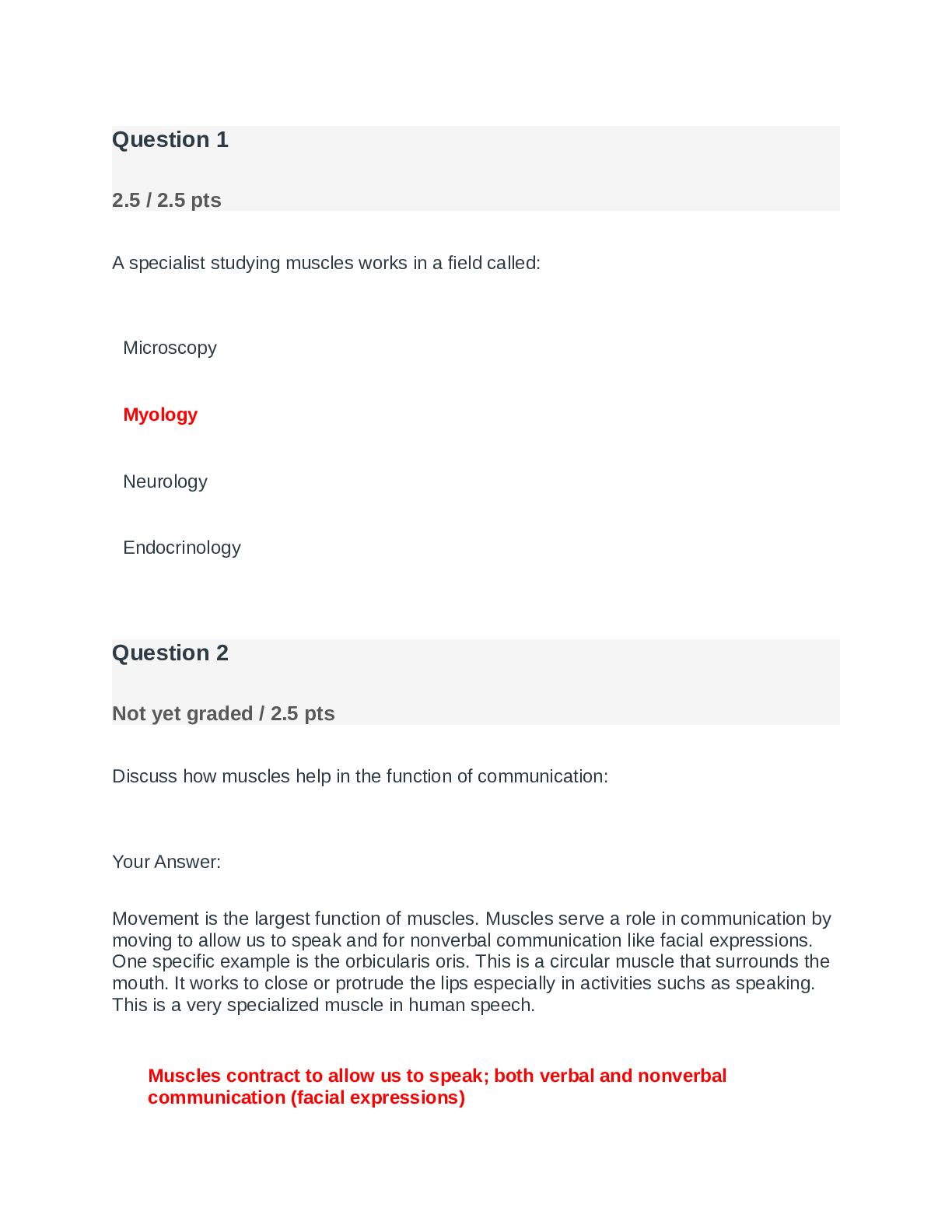
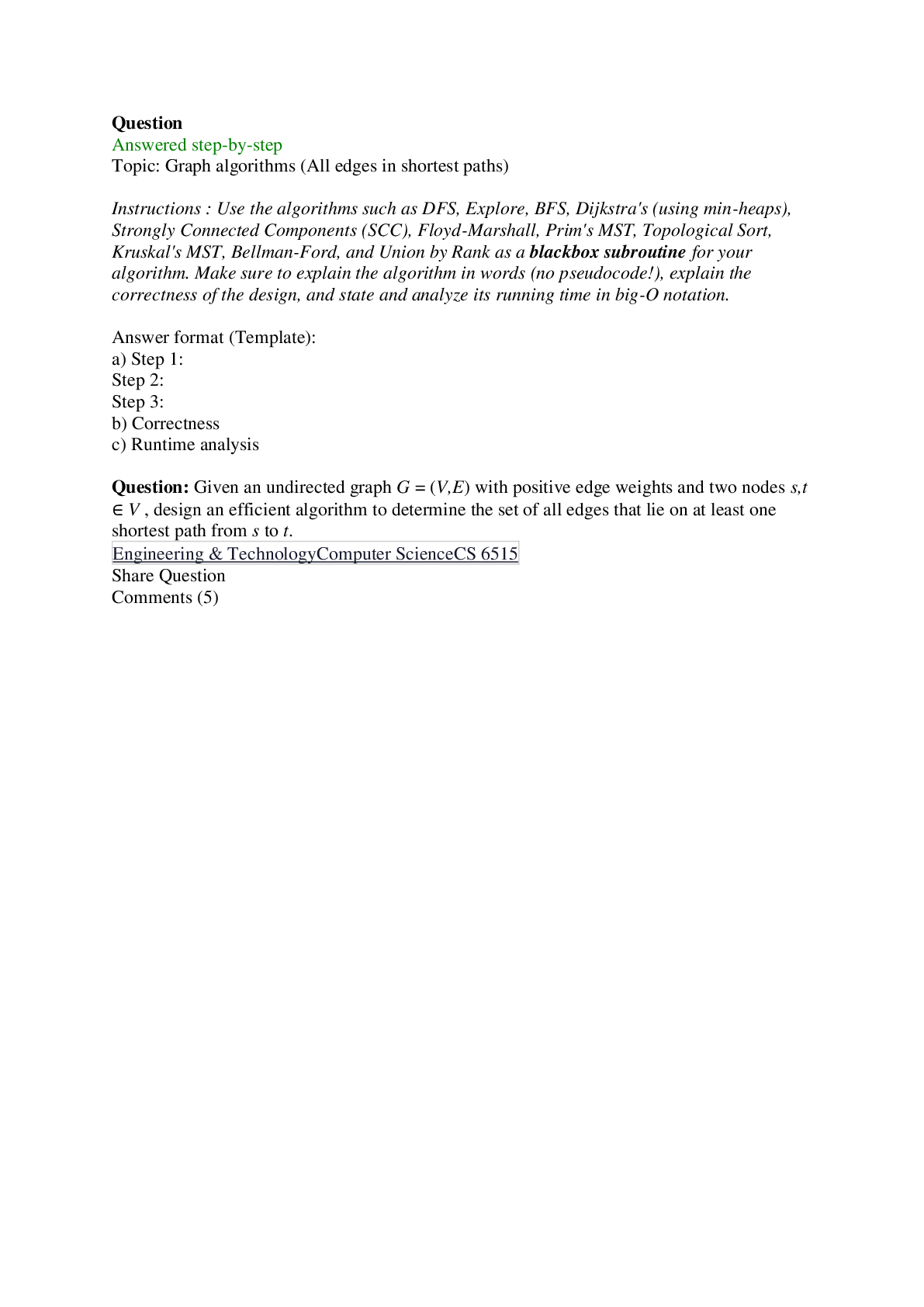


BIOD 171 or BIOL271 Microbiology w/Lab 2025 | Module 1 Exam R...
Biological Psychology 12th Edition By James Kala ISBN: 9781305...
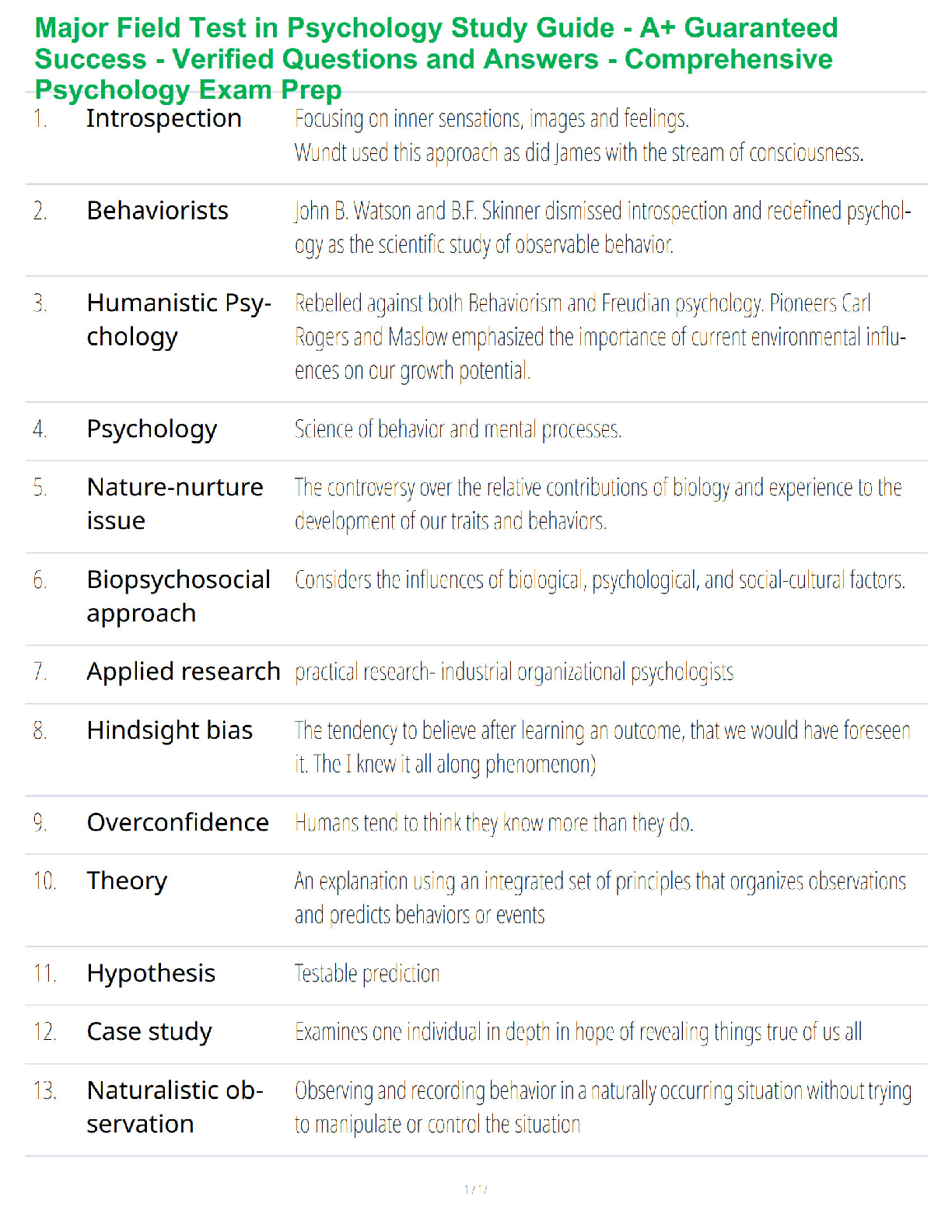
Major Field Test in Psychology Study Guide - A+ Guaranteed Suc...
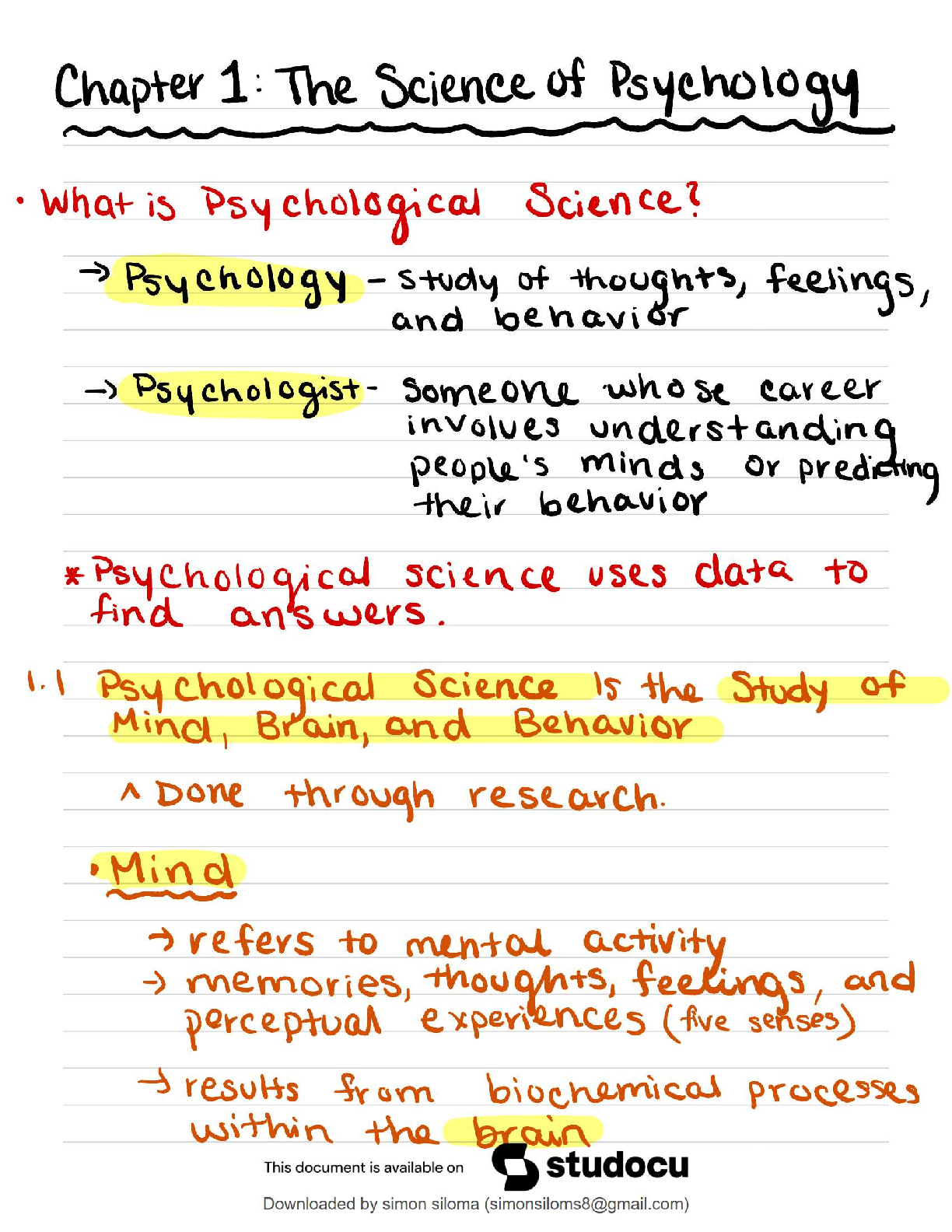
Psychological Science 7th Edition / Chapter 1 Notes Study Gu...


.png)

.png)