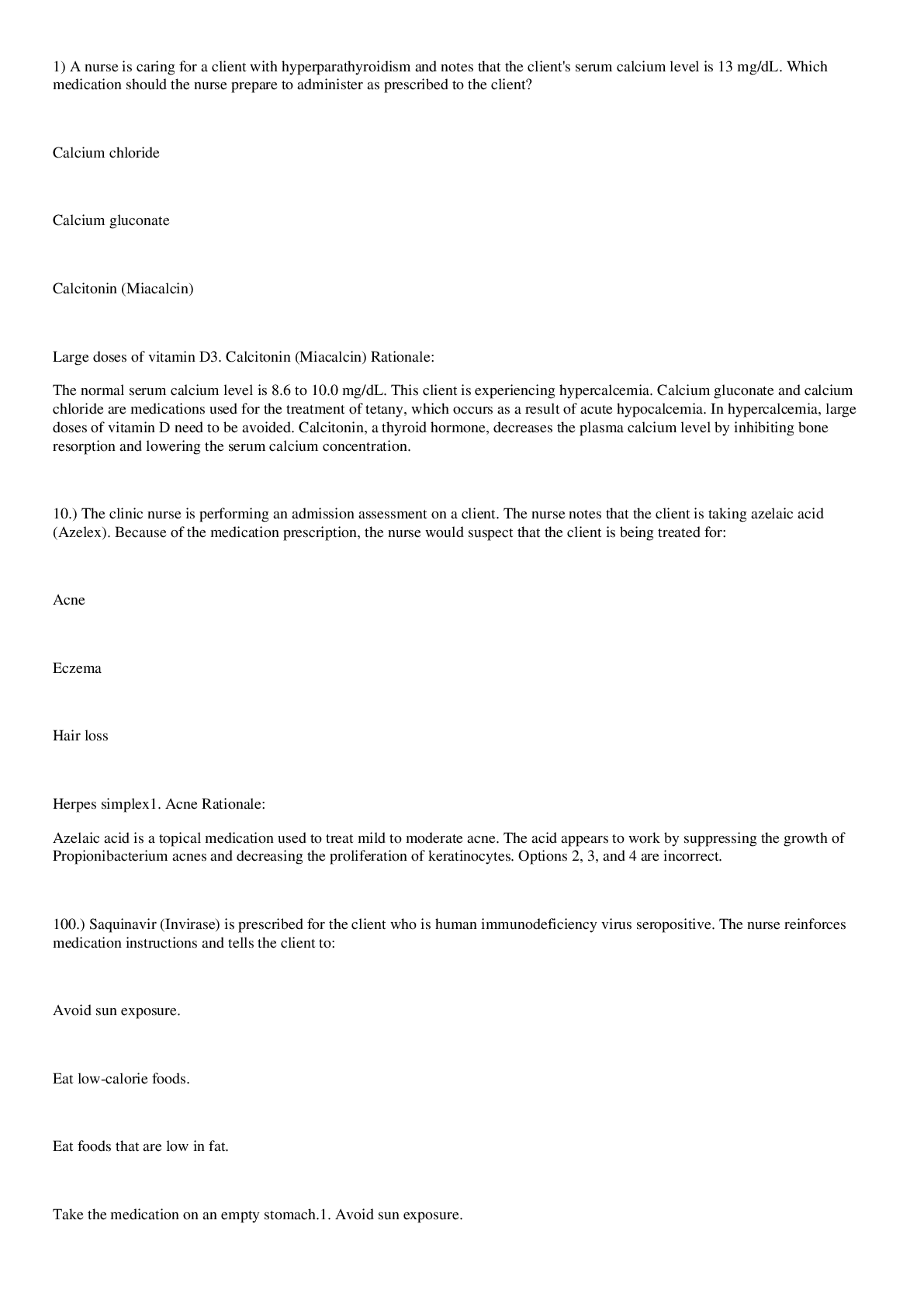
HESI Foundations Review. Comp Study Guide. Grade A+. All the Best
Document Content and Description Below
Ultimate study guide for ALL HESI Exams. Good Luck!!
Basic Nursing Skills – Vital Signs – Chapter 30
• BP cuff size (review what happens with wrong cuff size)
False-high diastolic readings on BP cuff
Deflating cuff t
...
[Show More]
Last updated: 3 years ago
Preview 1 out of 20 pages
Instant download

Buy this Document to get the Full Access Instantly
Provided by Students Who Aced it
We Verify Document Content to Gurantee Accuracy
Reviews( 0 )
Document information
Connected school, study & course
About the document
Uploaded On
May 01, 2021
Number of pages
20
Written in
All

Additional information
This document has been written for:
Uploaded
May 01, 2021
Downloads
0
Views
52
Topic Tags
Recommended For You
Get more on HESI »
$25.5
396 Pages
NGN Nursing Med-Surg HESI Exit Exam – Latest 2025 Test Bank wi...
 Questions, Answers & Rationale, A+ Guide.png)
$29
961 Pages
HESI RN COMPREHENSIVE EXIT EXAM Compiled 14 Versions Answers...
$20.5
122 Pages
HESI MED SURG EVOLVE ELSERVIER EXAM || NEWEST ACTUAL ACCURATE...
.png)
$13
28 Pages
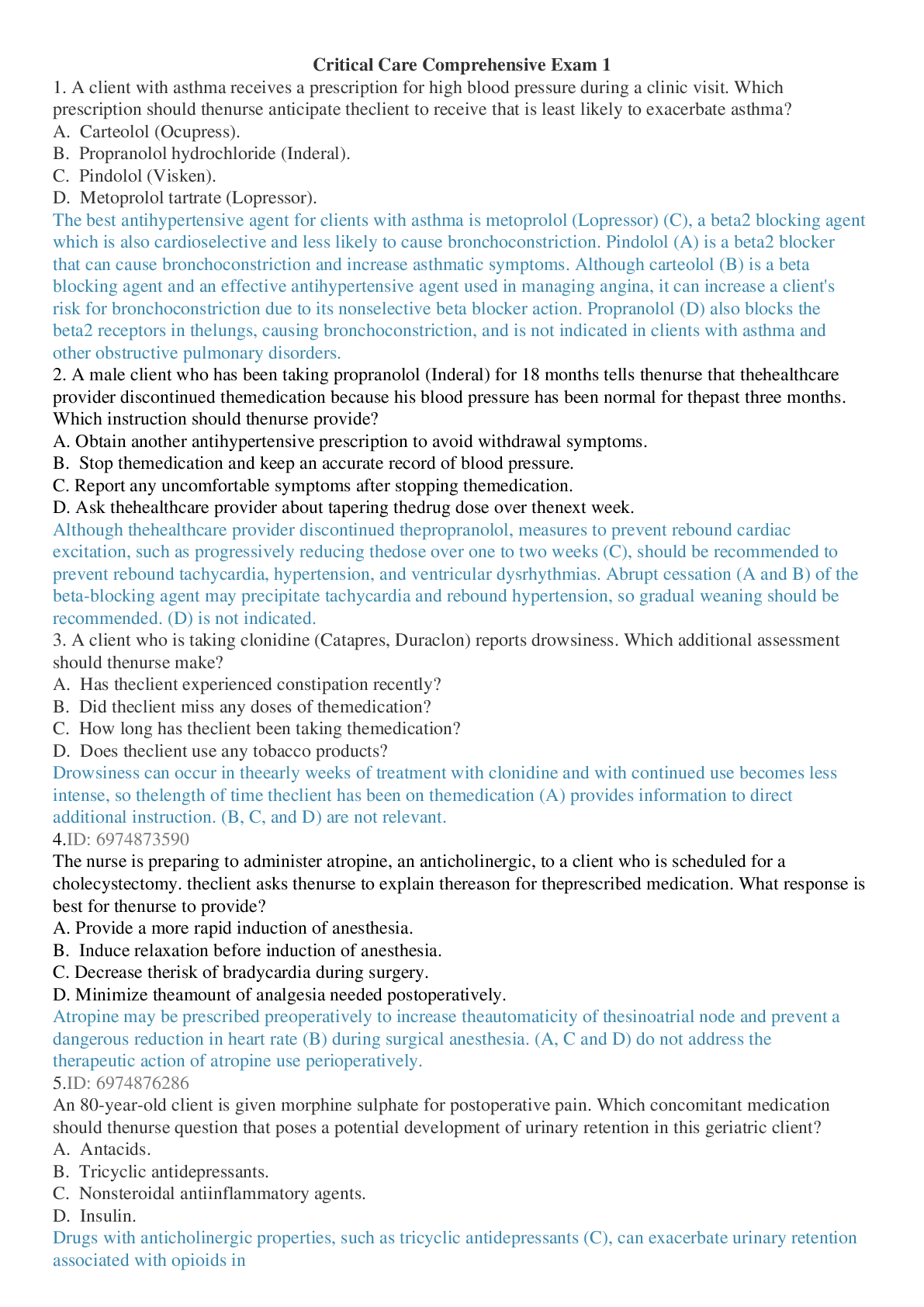
NURS 4345 HESI Critical Care Comprehensive Exam 1 Questions an...
$19
41 Pages
HESI LPN Medical-Surgical Nursing I & II Exam LPN/LVN Comprehe...

$17
333 Pages
Complete Test Bank For Lehnes Pharmacotherapeutics for Advance...
$24
993 Pages
Test Bank for Brunner & Suddarth's Textbook of Medical-Surgica...
$10.5
3 Pages
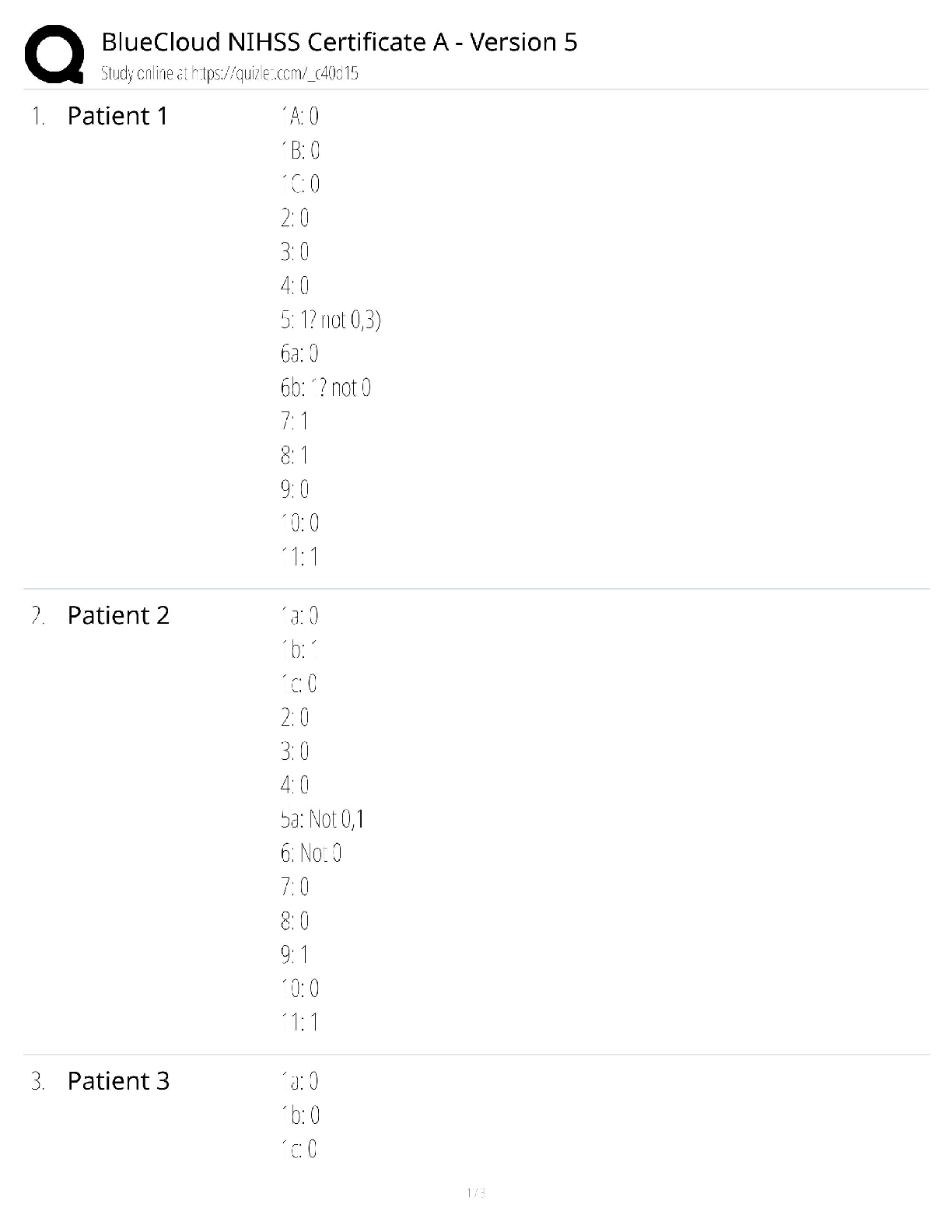
Blue Cloud NIHSS Certificate A (v5) Stroke Scale Certificatio...

$10
3 Pages
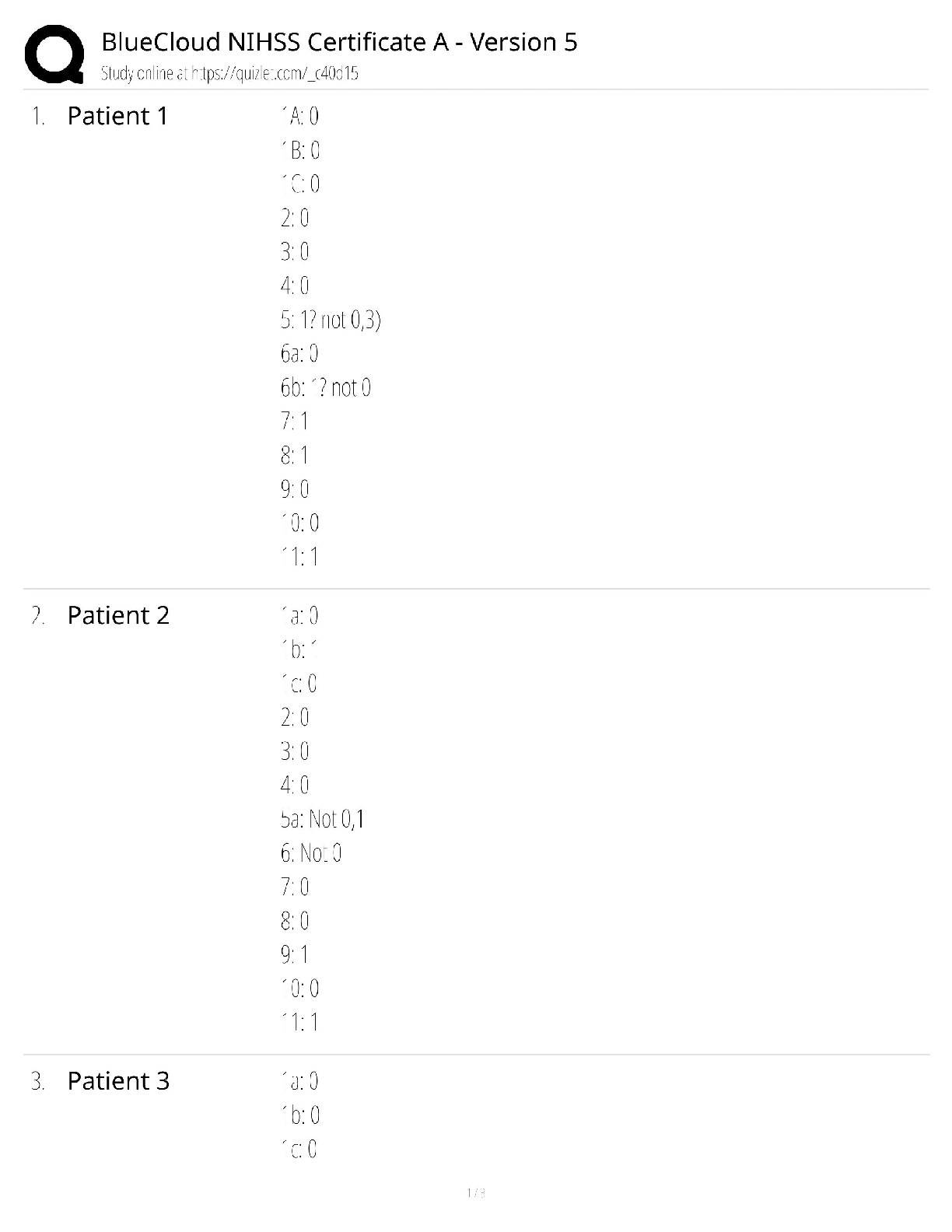
BlueCloud NIHSS Certificate A - Version 5 / Group A Patient An...
More related documents below