ATI Maternal Newborn Proctored Study Guide
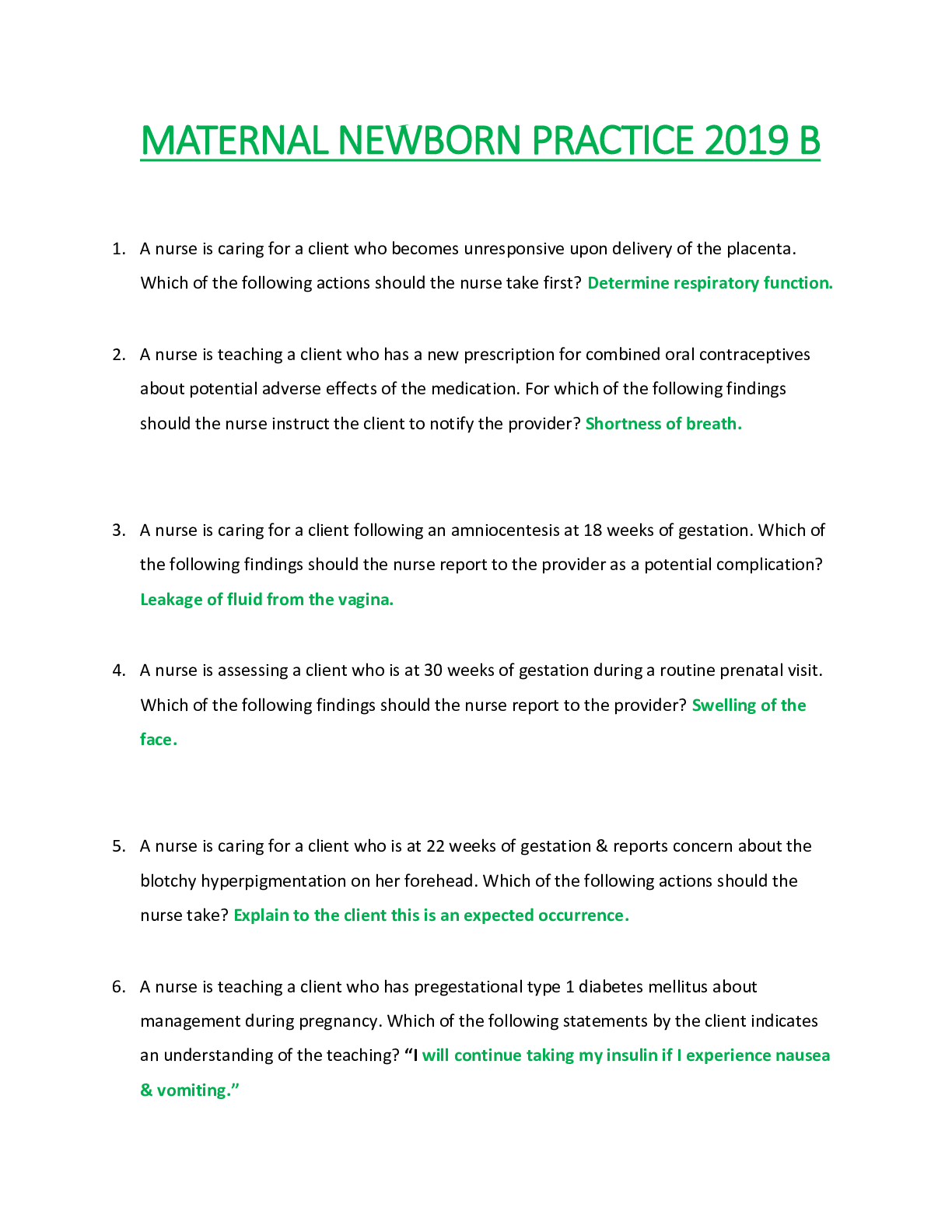
Ch.1 Oral Contraceptives
• Chest pain, SOB, leg pain (clot), headache, eye problems
• Can cause blood clots
• Hypertension
• Do not use with smokers
• Hx of blood clots,
...
ATI Maternal Newborn Proctored Study Guide
Ch.1 Oral Contraceptives
• Chest pain, SOB, leg pain (clot), headache, eye problems
• Can cause blood clots
• Hypertension
• Do not use with smokers
• Hx of blood clots, stroke, cardiac, breast or estrogen
• Depro-provera calcium and vitamin D
• IUD= increased risk of pelvic inflammatory disease, ectopic pregnancy
o Change in string length, foul smell, fever/chills, pain with intercourse notify provider
Ch.2 Infertility
• Inability for at least 12 months
• Male first (sperm analysis), then the woman (no hx of dye for test or seafood)
Ch.3
• Presumptive sign: things that can be explained by other means
o Nausea, amenorrhea, N/V, Fatigue
• Probable signs
o Abdominal enlargements, Hagar sign, chad wicks sign, goodwill sign, ballottement, Braxton hick contractions, positive pregnancy test, fetal outline
• Positive sign
o FHR
• Nagele’s rule: add 9 months and a week
• GTPAl: Gravidity (# of times of pregnancy), Term births (38 weeks or more), Preterm births, Abortions/miscarriages, Living children
Ch. 5 Nutrition During Pregnancy
• Normal: 25-30 pounds
• Overweight: 15-25 pounds
• Underweight: 28-40 pounds
• First trimester: no more than 2-4 pounds for entire trimesters.. then 1 lb/week
• 340 calories/day for second trimester…450 for third trimester (even during breastfeeding)
• Folic acid (dark leafy green veggies) fetal neuro tube defects
• 2-3 L of water, limit amount of caffeine
Ch.6 Assessment of Fetal Well being
• Ultrasound want bladder full **non-invasive**
• When poking stomach empty bladder (amniocenteses)
• Biophysical profile: 0-10 score, 8-10 is normal
o Reactive HR (0-2)
o Breathing
o Body movement
o Fetal tone
o Amniotic fluid volume
• Nonstress test: measures fetal well-being in last trimester, response to FHR to fetal movement; reactive if FHR accelerates; non reactive if no FHR acceleration
o YOU WANT REACTIVE
• Contraction stress test
o Want a contraction to occur ocycotcin, nipple stimulation; monitor FHR to see if decelerations occur
o You want late decelerations
• Amniocentesis
o You want an empty bladder
o AT 14 WEEKS
o Levels of AFP (high nuero tube defects; low down syndrome)
o L/S ratio: 2:1 ratio is fetal lung maturity (2:5:1 or 3:1 for a client who has diabetes mellitus)
o Complications: amniotic fluid emboli, hemorrhage, infection
• Chorionic callus sampling
o Taking a piece of placenta
o Can be done earlier to identify abnormalities ( 11 WEEKS)
Ch. 7 Bleeding During Pregnancy
• Ectopic: Unilateral stabbing pain; Lower abdominal quadrant pain
• Molar: bleeding that resembles prune juice
• Placenta previa: lower segment of uterus instead of fundus; PAINLESS bright red during 2nd or 3rd trimester may hemorrhage
o Complete: cervical is completely covered by placental attachment
o Partial
o Incomplete
• Abruptio placentae: sudden onset of intense localized pain with dark red vaginal bleeding
Ch. 8 Infections
• Yeast infection pretty common
Ch. 9 Medical Conditions
• Incompetent cervix cervical cerclage (placed at 12-14 weeks & removed at 37 weeks)
• Hyperemesis: excessive N/V past 12 weeks; IV fluids, pyridoaxine (B6) administrations, antiemetic meds (Zofran)
• Iron deficiency anemia: iron supplements with food rick in vitamin C (orange juice)
• Gestational diabetes: higher risk for developing diabetes after pregnancy, (will likely do biophysiol profile and non-stress test)
o Insulin to control sugar levels
o Test b/w 24-28 wks one-hour glucose (no fasting required) over 140 will proceed with next test OTGG (requires fasting) 3 hours
• Gestational hypertension: caused by vasospasm poor tissue perfusion
o After 20 week; 0ber 140/90 positive
o No protein in the urine
o Mild preeclampsia: 1+
o Severe preeclampsia: 3+
o Eclampsia: seizures
o HELLP syndrome:
o Antihypertensive meds: methyldopa, nifedipine, hydralazine, labetalol
o Magnesium!! to prevent seizures (monitor mg toxicity no reflexes, low urine output, low level of consciousness, low resp)
▪ Magnesium toxicity calcium gluconate (antidote)
Ch. 10 Early onset of Labor
• Preterm labor: 20-37 weeks
o Swab of vaginal secretions (fetal fibronectin)
o Administer nifidepine (calcium channel blocker) block calcium to suppress contractions
o Magnesium sulfate- relax smooth muscle (watch for mg toxicity)
o Indomethacin
o Betamethasone (steroids) promote fetal lung maturity
• Premature rupture of membrane
o Nitrazine paper test (should turn blue) *yellow would be just urine*
o Positive ferning test to conduct on amniotic fluid to verify rupture
o May put on an antiobiotic (infection can cause rupture) (betamethasone)
Ch.11 Labor and Delivery Processes
• Back ache, weight loss (1-3 lbs), lightening (fetal to pelvis), contractions (Braxton hicks), increased vaginal discharge or bloody show, energy burst, GI changes
• Labs: Group B streptococcus, urinalysis
• Stages of labor:
o Onset-complete dilation (10 cm):
▪ Latent: irregular (mild-moderate); every 5-30 min lasting 30-45 sec
▪ Active: regular (moderate-strong); every 3-5 min lasting 40-70 sec
▪ Transition: (strong-very strong); every 2-3 min lasting 45-90 sec (feeling of needing to poop)
o Fully dilates-birth:
o Birth-delivery of placenta:
o Delivery to placenta-normal vital signs:
[Show More]



.png)
 (1).png)

.png)


.png)