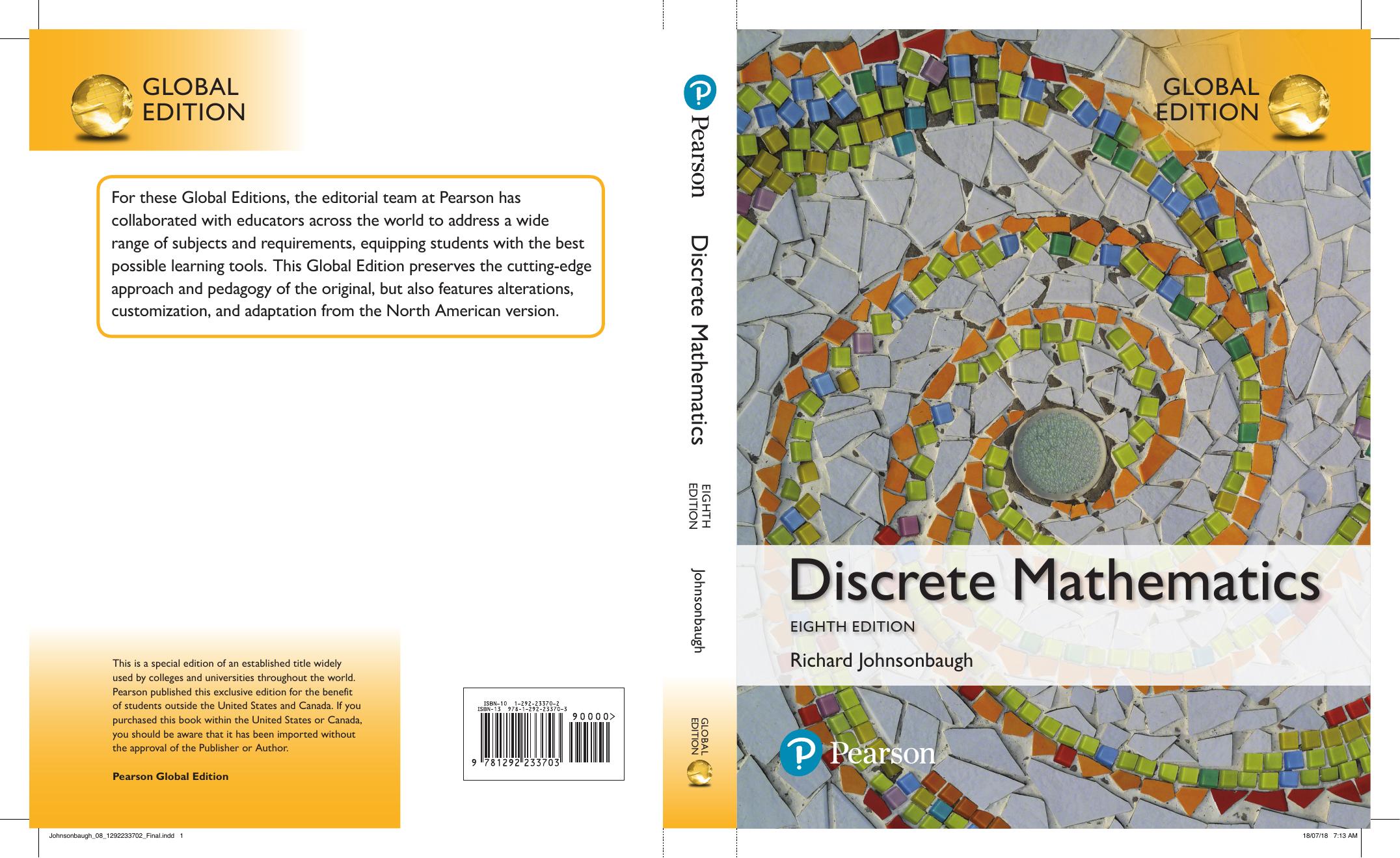
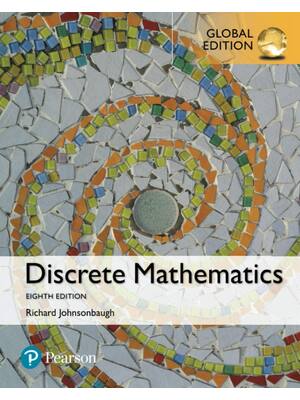
eBook [PDF] Discrete Mathematics 8th Global Edition By Richard Johnsonbaugh eBook [PDF] Discrete Mathematics 8th Global Edition By Richard Johnsonbaugh Discrete Mathematics, Global Edition (8th Edition) by Richard Johnso
...
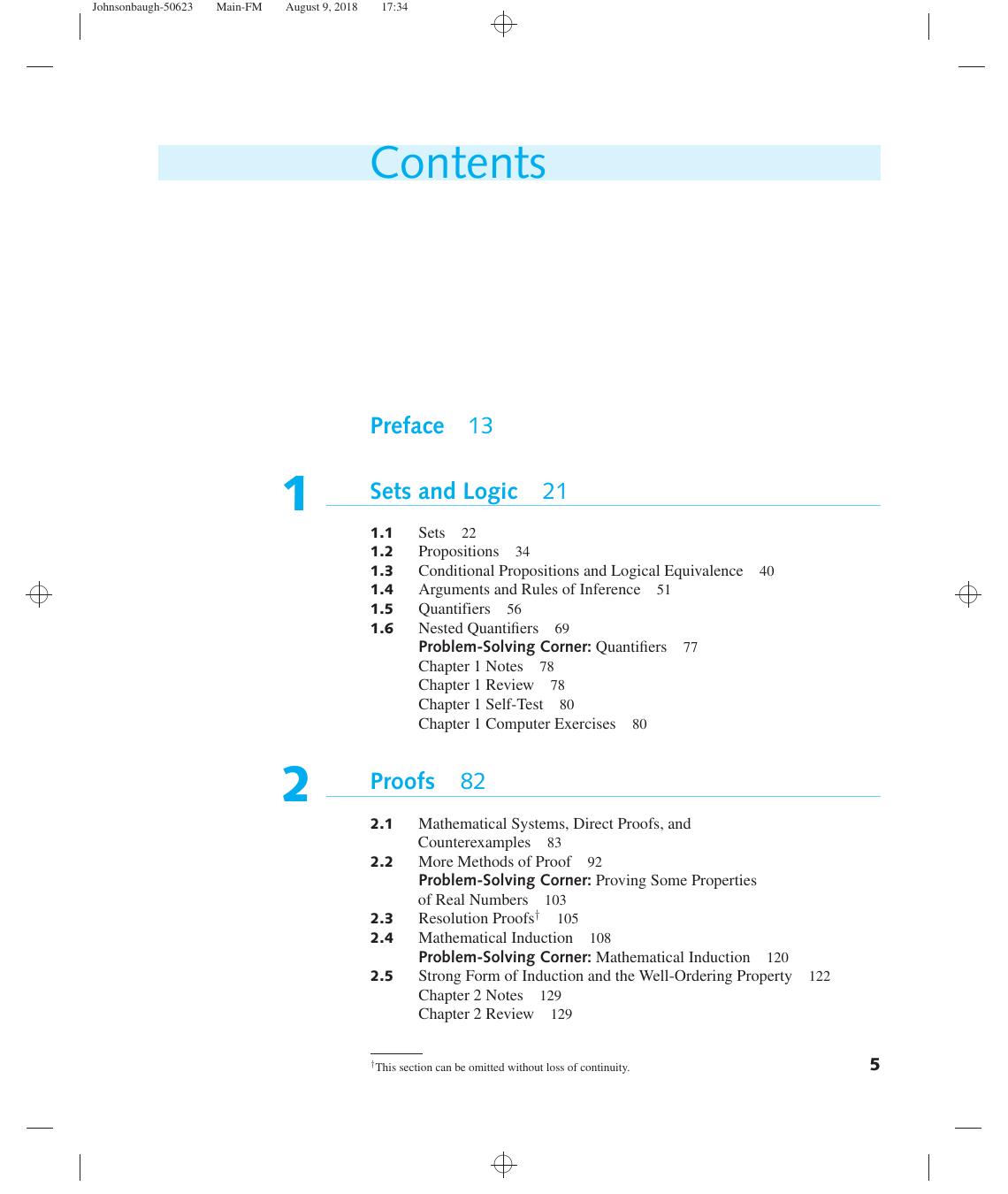
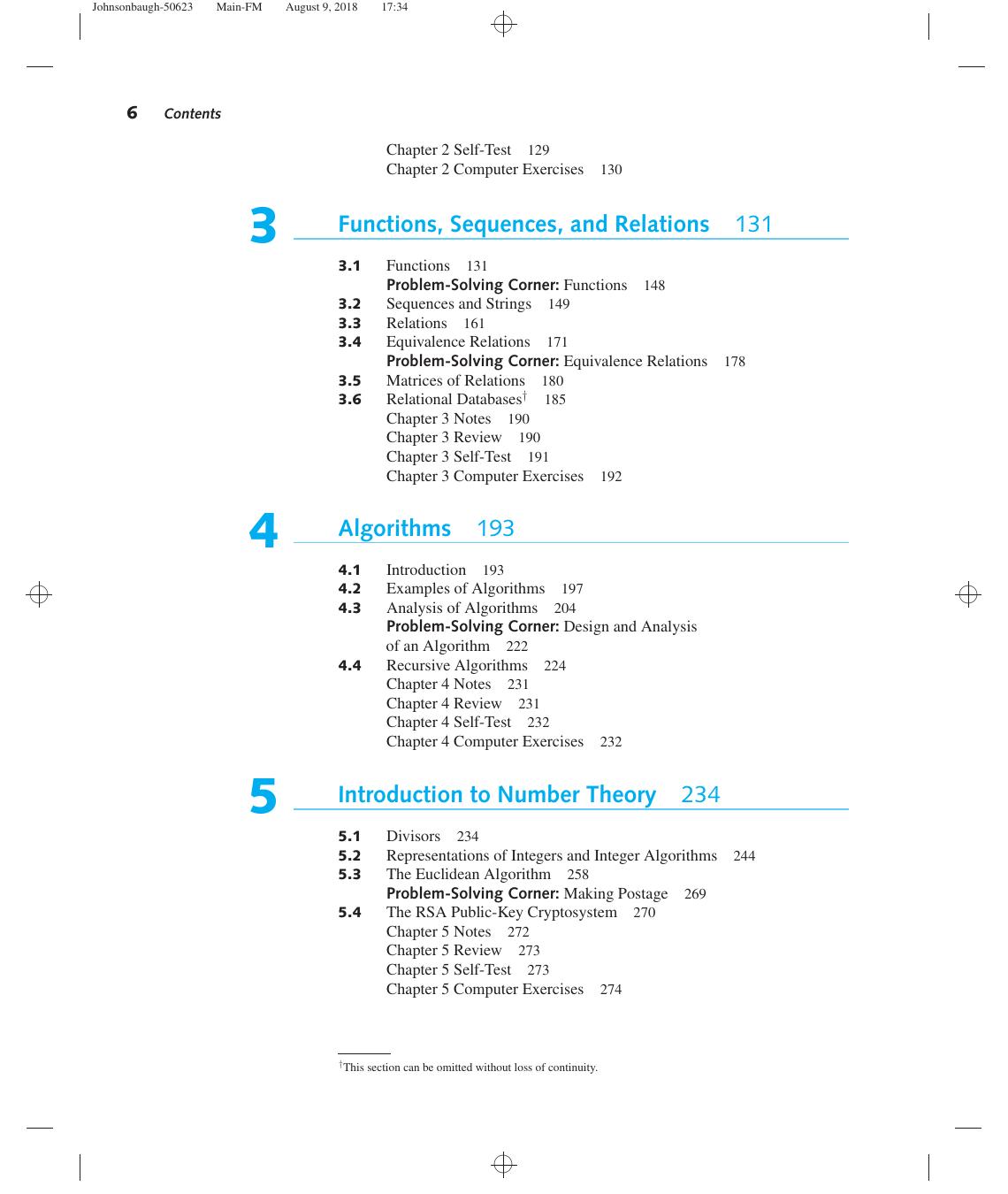
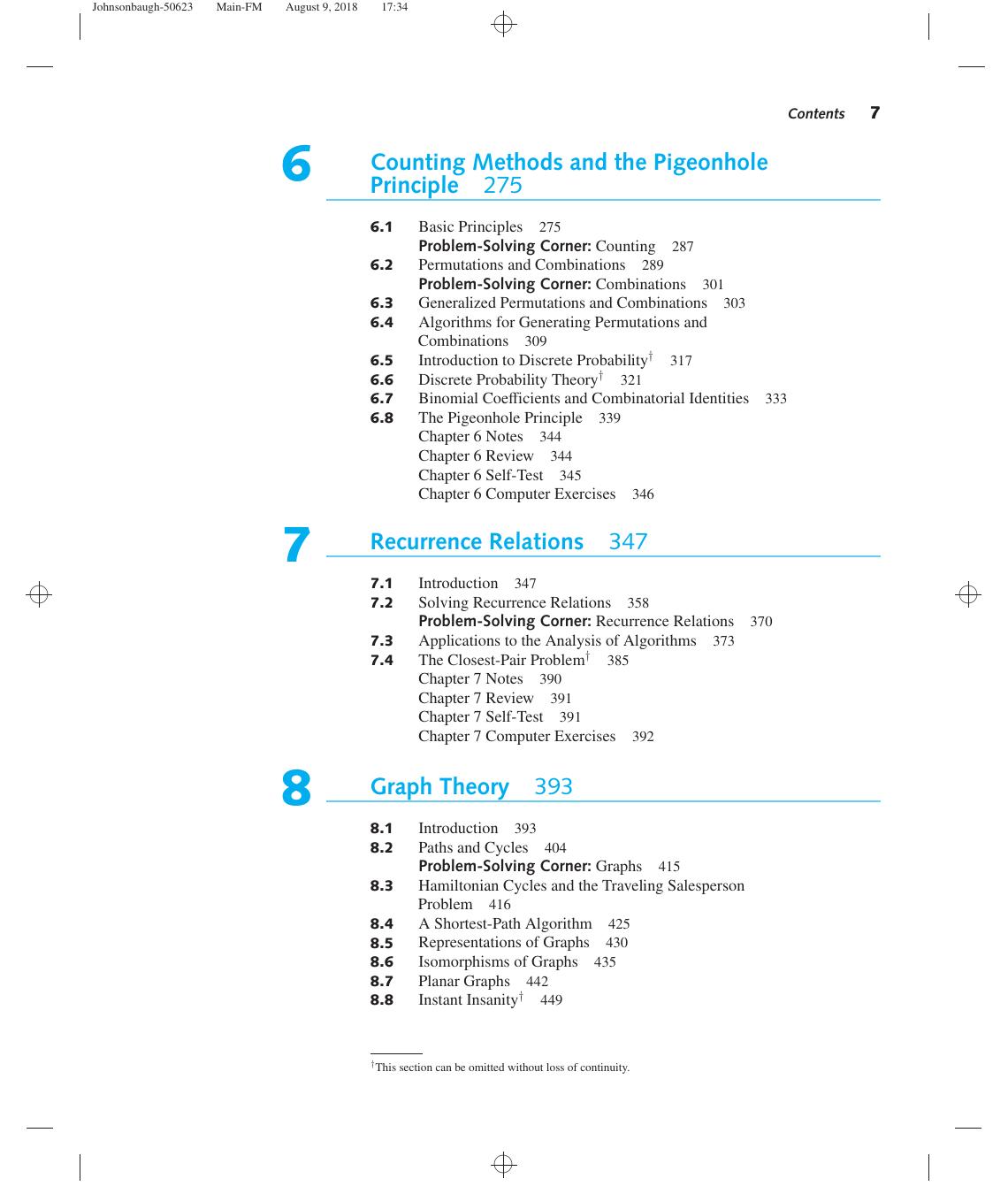
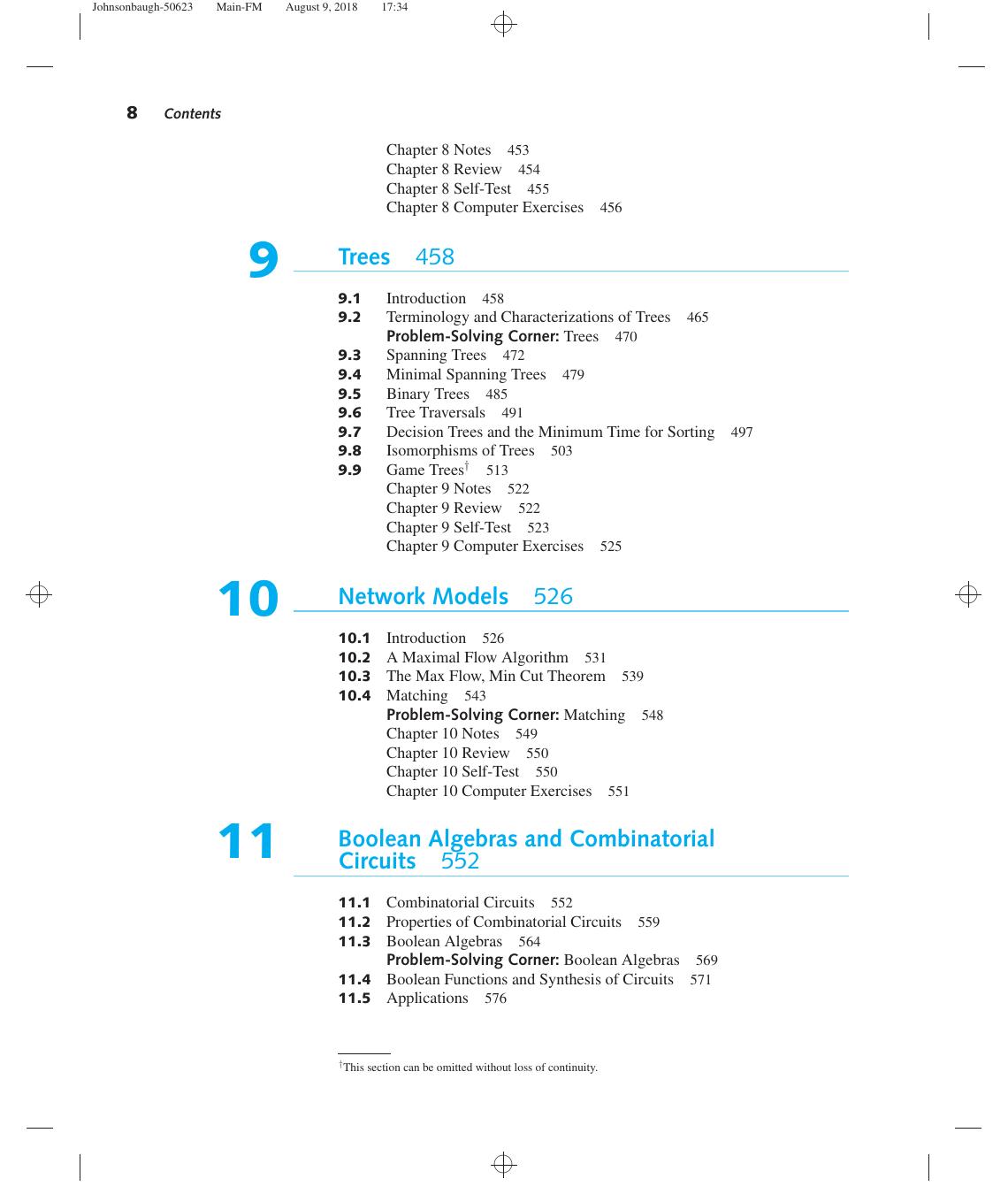
eBook [PDF] Discrete Mathematics 8th Global Edition By Richard Johnsonbaugh eBook [PDF] Discrete Mathematics 8th Global Edition By Richard Johnsonbaugh Discrete Mathematics, Global Edition (8th Edition) by Richard Johnsonbaugh, published by Pearson, is a premier introductory textbook designed for computer science and mathematics students. The book balances formal mathematical logic with practical computing applications. Key Specifications • Author: Richard Johnsonbaugh (DePaul University, Chicago) • Publisher: Pearson Education • Print ISBN: 9781292233703 (1292233702) • Digital/eTextbook ISBN: 9781292233727 • Page Count: 770 pages Core Focus Areas & Features • Content Volume: Includes nearly 4,500 exercises and roughly 650 fully worked examples. • Mathematical Maturity: Strongly emphasizes how to read, understand, and construct mathematical proofs. • Computer Science Focus: Problems and exercises highlight real-world applications in computer science algorithms and data structures. • Interactive Learning: Features "tiny URLs" in the margins linking directly to relevant code, programs, and extension modules. Main Chapter Overview 1. Logic and Proofs: Propositional logic, quantifiers, and rules of inference. 2. The Language of Mathematics: Sets, sequences, functions, and string properties. 3. Relations: Equivalence relations, matrices of relations, and relational databases. 4. Algorithms: Growth of functions (Big-O notation) and analysis of algorithms. 5. Introduction to Number Theory: Divisibility, prime numbers, and the Euclidean algorithm. 6. Counting Methods and the Pigeonhole Principle: Permutations, combinations, and probability. 7. Recurrence Relations: Solving linear recurrence relations and divide-and-conquer algorithms. 8. Graph Theory: Paths, cycles, Eulerian and Hamiltonian graphs, and shortest-path problems. 9. Trees: Terminology, traversal, minimal spanning trees, and decision trees. 10. Network Models: Flows, matching problems, and Petri nets. 11. Boolean Algebras and Combinatorial Circuits: Logic gates and minimization of circuits. 12. Automata, Grammars, and Languages: Finite-state machines and formal languages
[Show More]
Preview 10 out of 772 pages