Financial Management > QUESTIONS and ANSWERS > FIN 3716 LSU Examination/ WITH 100% CORRECT ANSWERS (All)
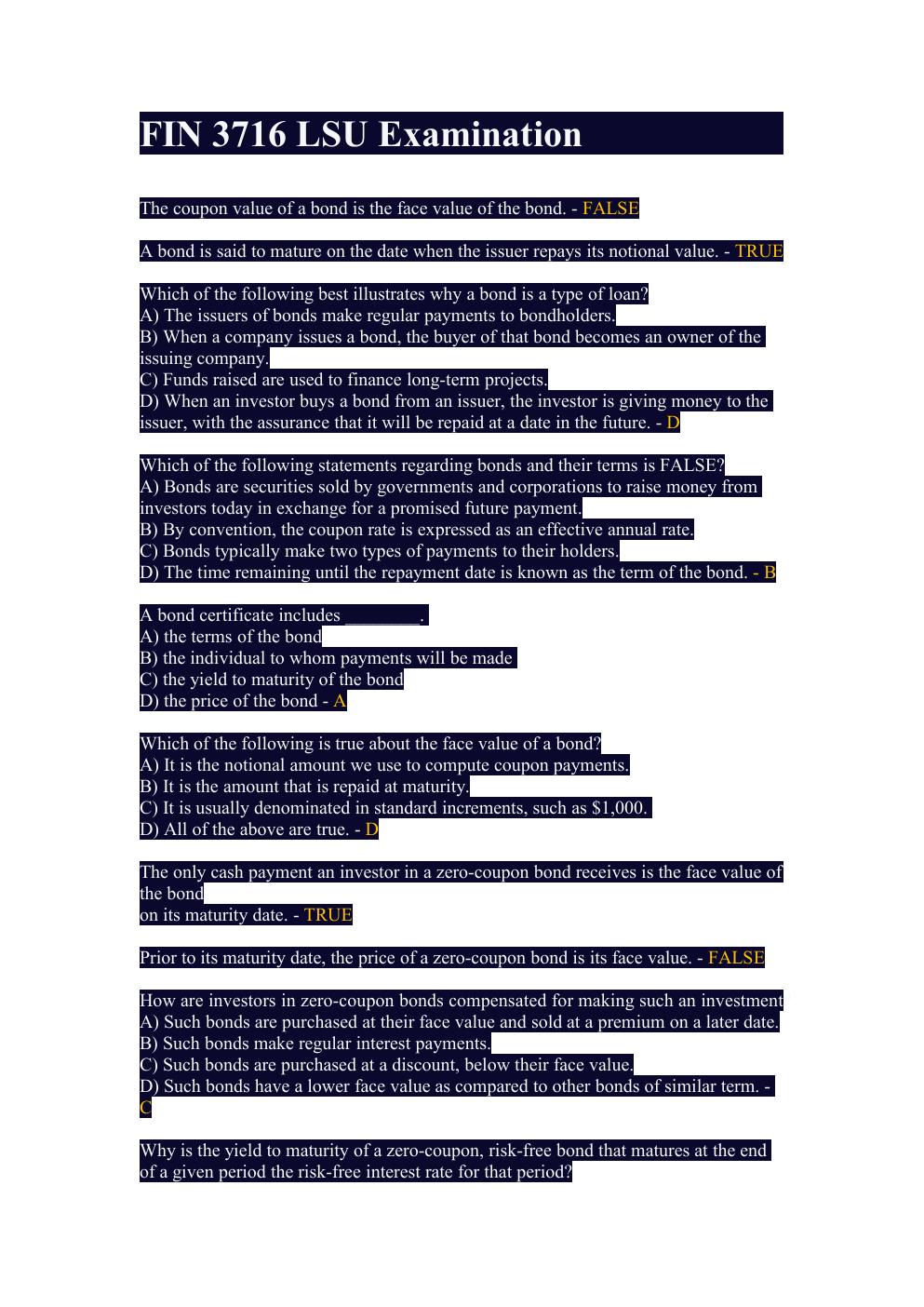
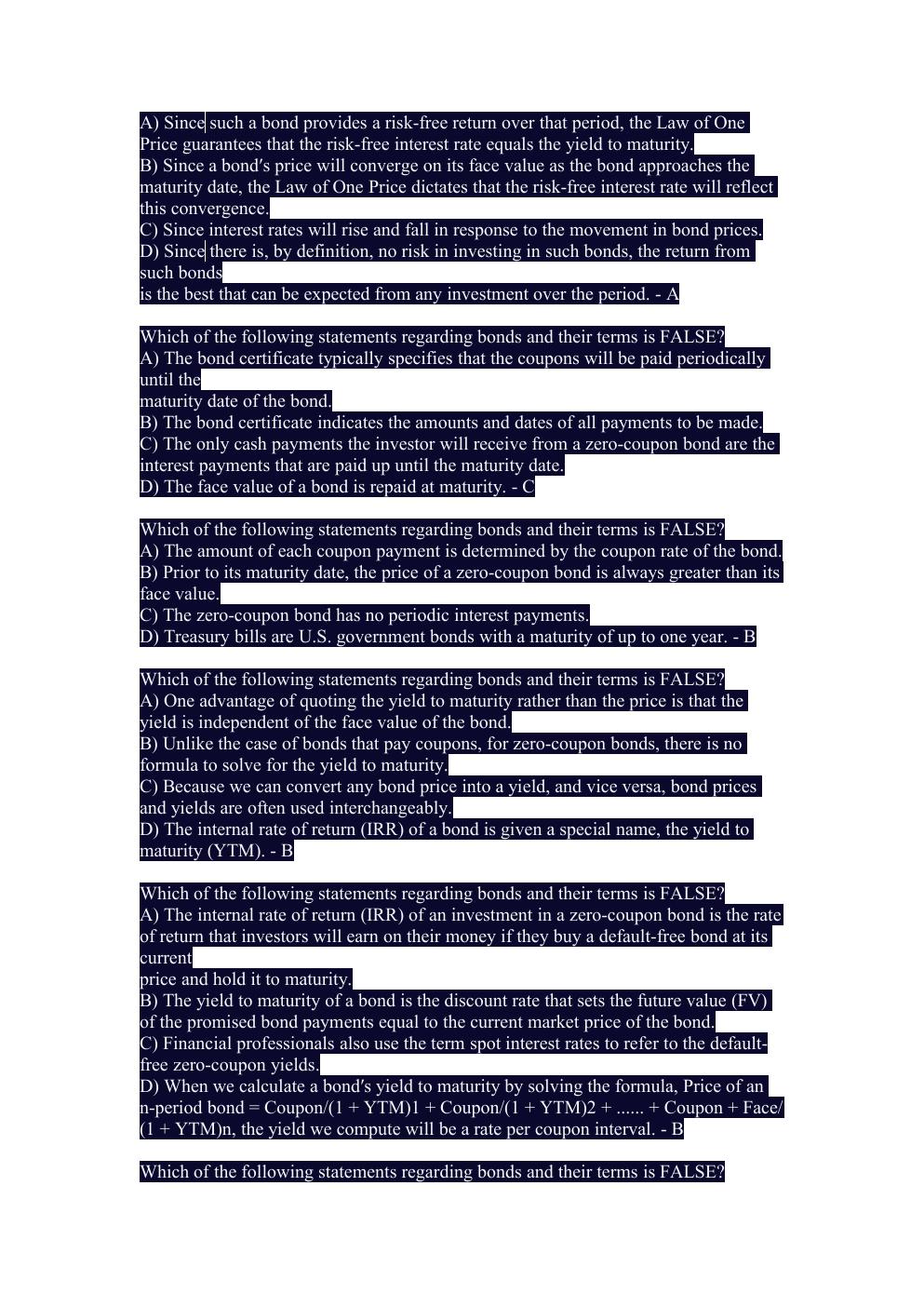
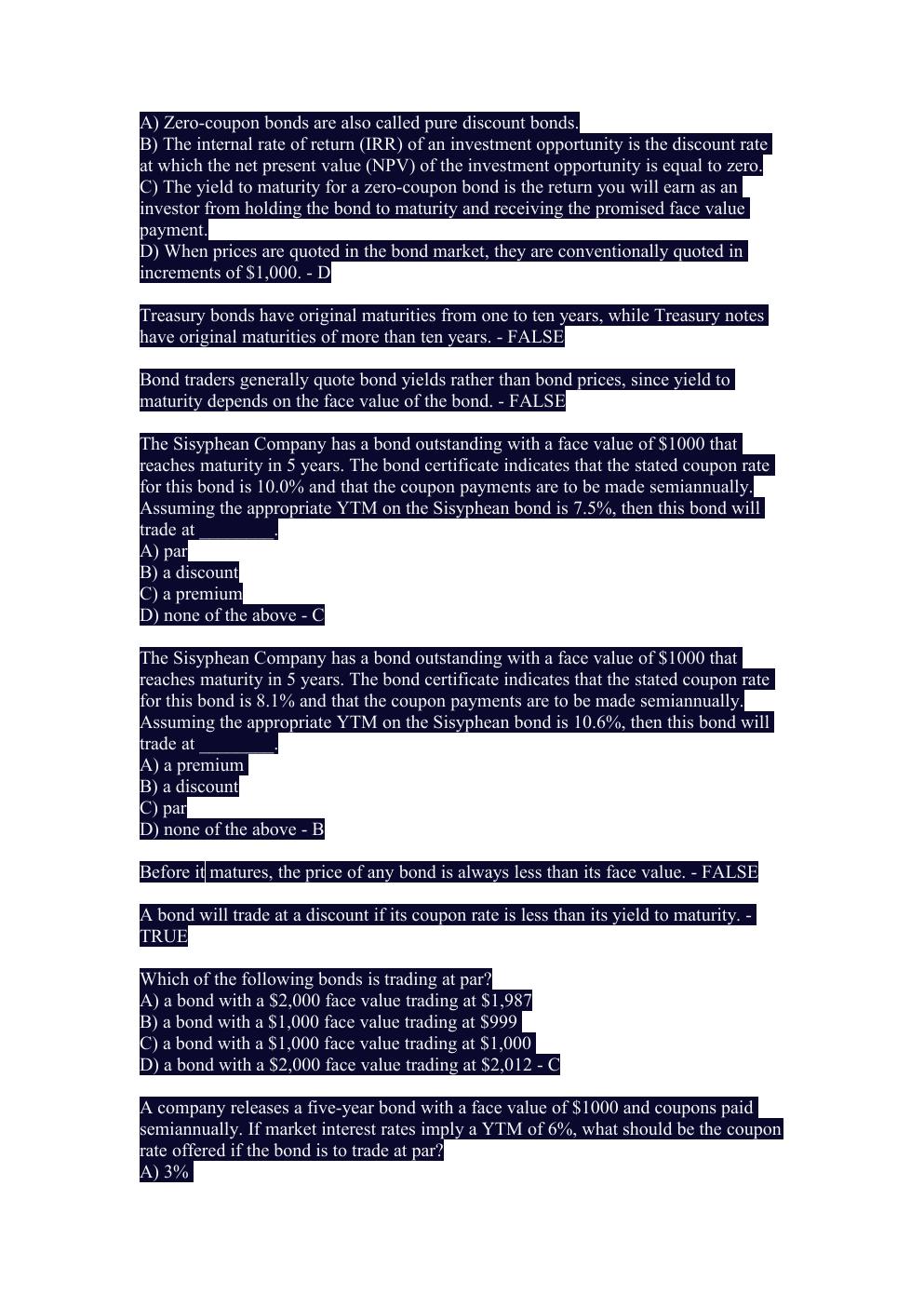
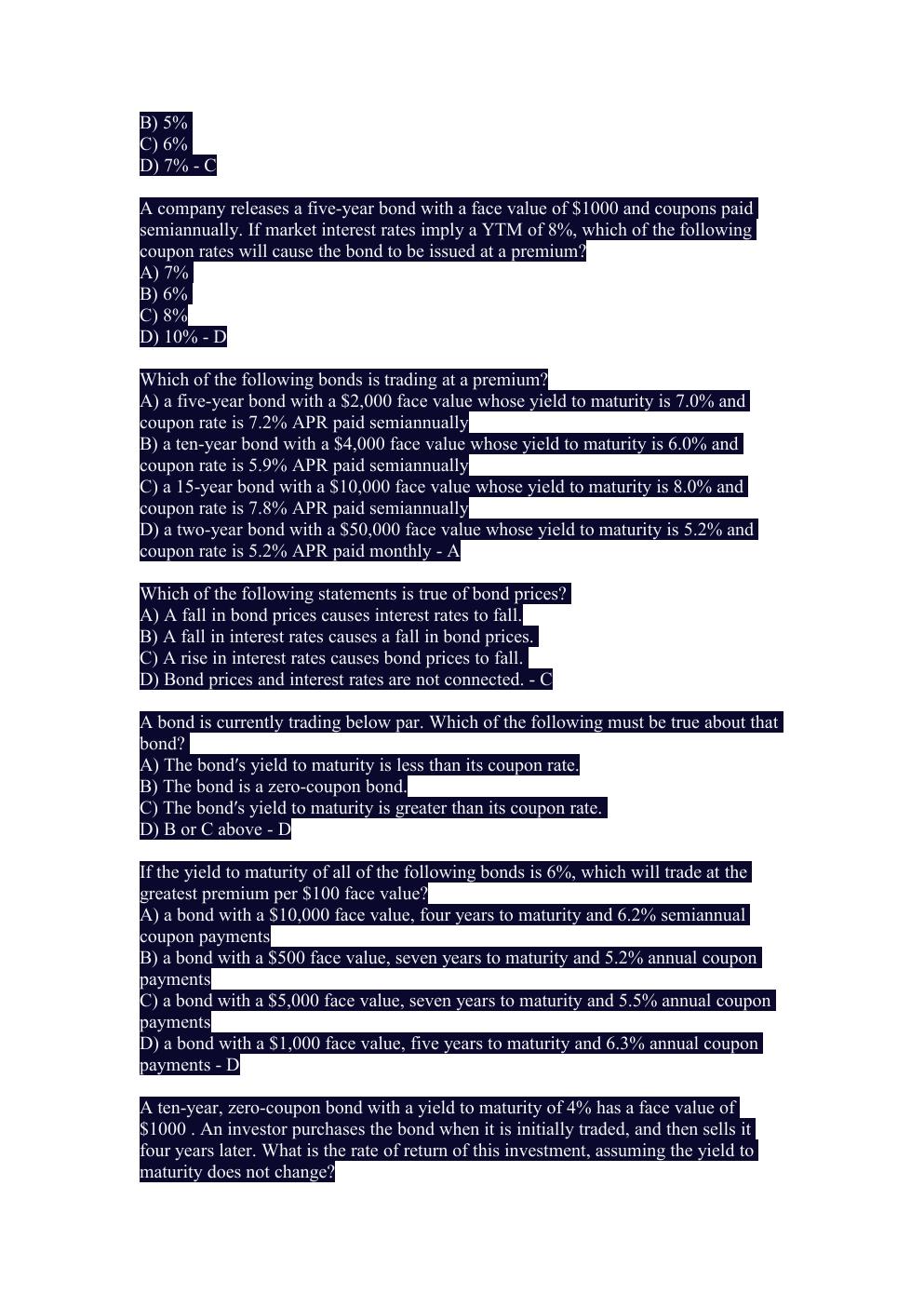
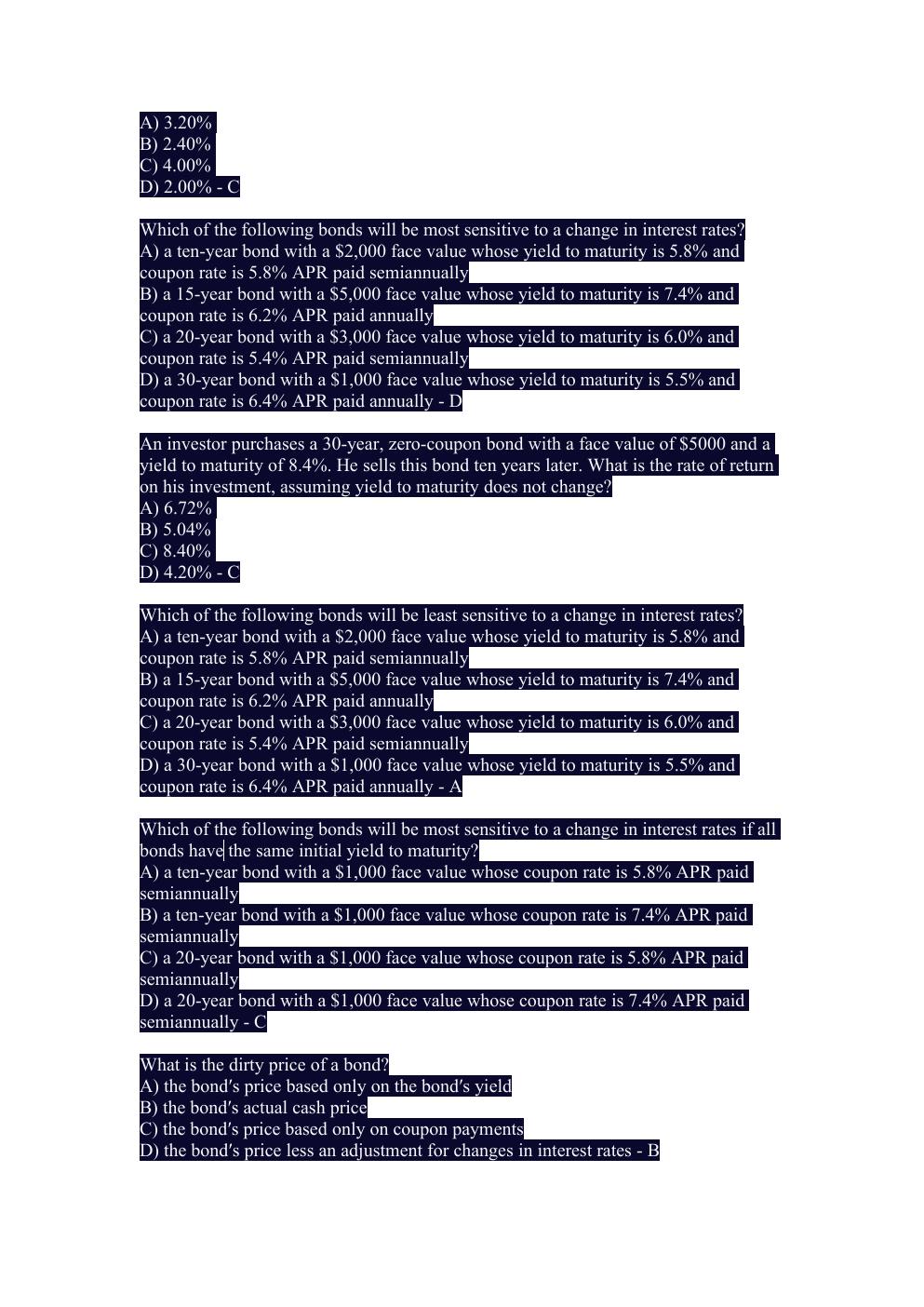
FIN 3716 LSU Examination/ WITH 100% CORRECT ANSWERS
Document Content and Description Below
Last updated: 1 month ago
Preview 5 out of 23 pages
Instant download
Buy this Document to get the Full Access Instantly
Provided by Students Who Aced it
We Verify Document Content to Gurantee Accuracy
Also available in bundle (1)
Click Below to Access Bundle(s)
LSU FIN 3716: Final Exam
What is the model called that determines the present value of a stock based on its next annual dividend, the dividend growth rate, and the applicable discount rate? A. zero growth B. dividend growt...
By MARIA J 1 month ago
$1.5
3
Reviews( 0 )
Document information
Connected school, study & course
About the document
Uploaded On
Aug 19, 2026
Number of pages
23
Written in
All

Additional information
This document has been written for:
Uploaded
Aug 19, 2026
Downloads
0
Views
18
Topic Tags
Recommended For You
Get more on QUESTIONS and ANSWERS »
Test Bank For Fundamentals of Financial Management (Concise) 1...
Solutions Manual For Fundamentals of Financial Management 17th...
Solutions Manual International Financial Management 15th Editi...

Solutions Manual for International Financial Management 9th Ed...
SOLUTION MANUAL FOR Foundations of Financial Management, 18th...