NURSING > STUDY GUIDE > docx (9)patho.pdf-Exam (elaborations) NURS 3093-Pathophysiology Concepts of Disease (NURS 3093) (All)
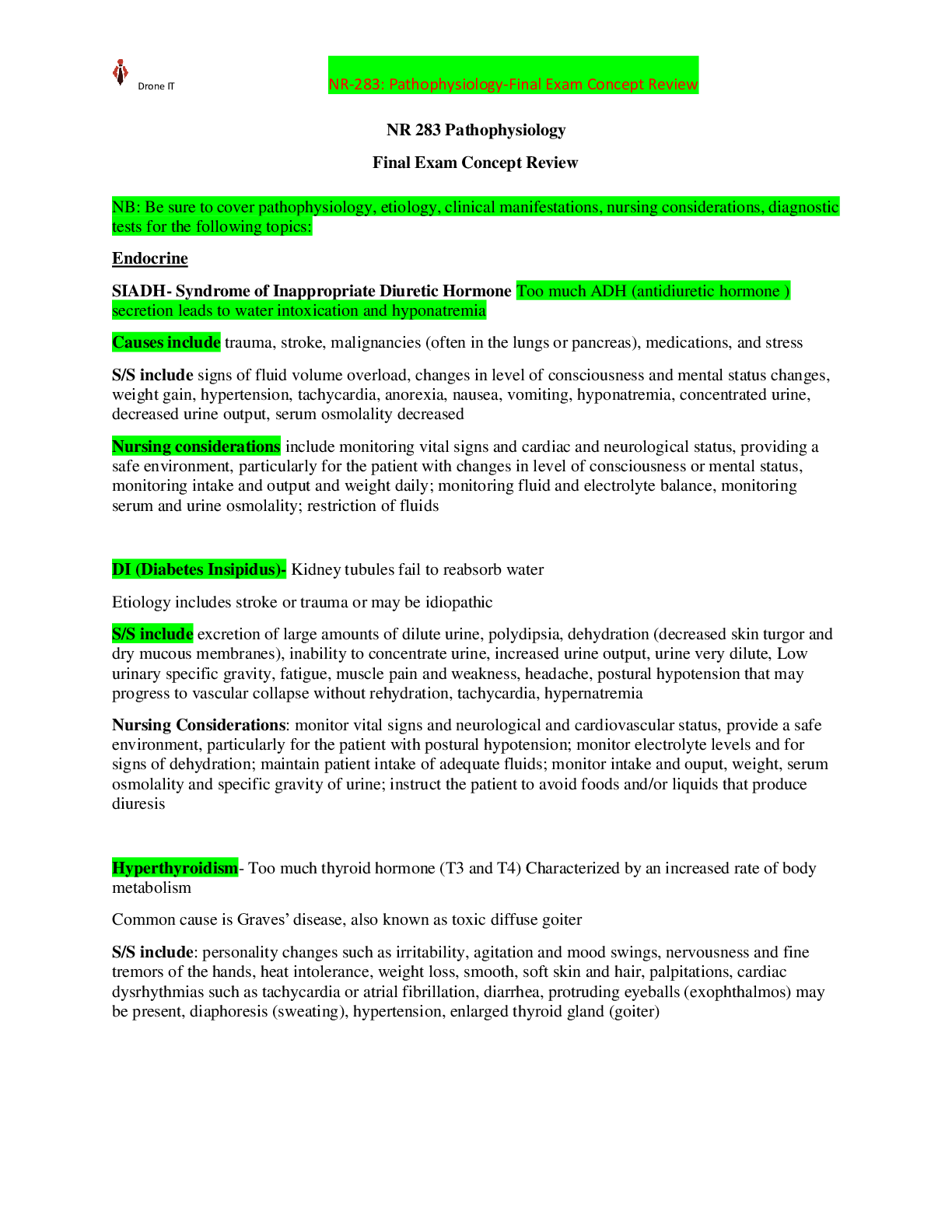
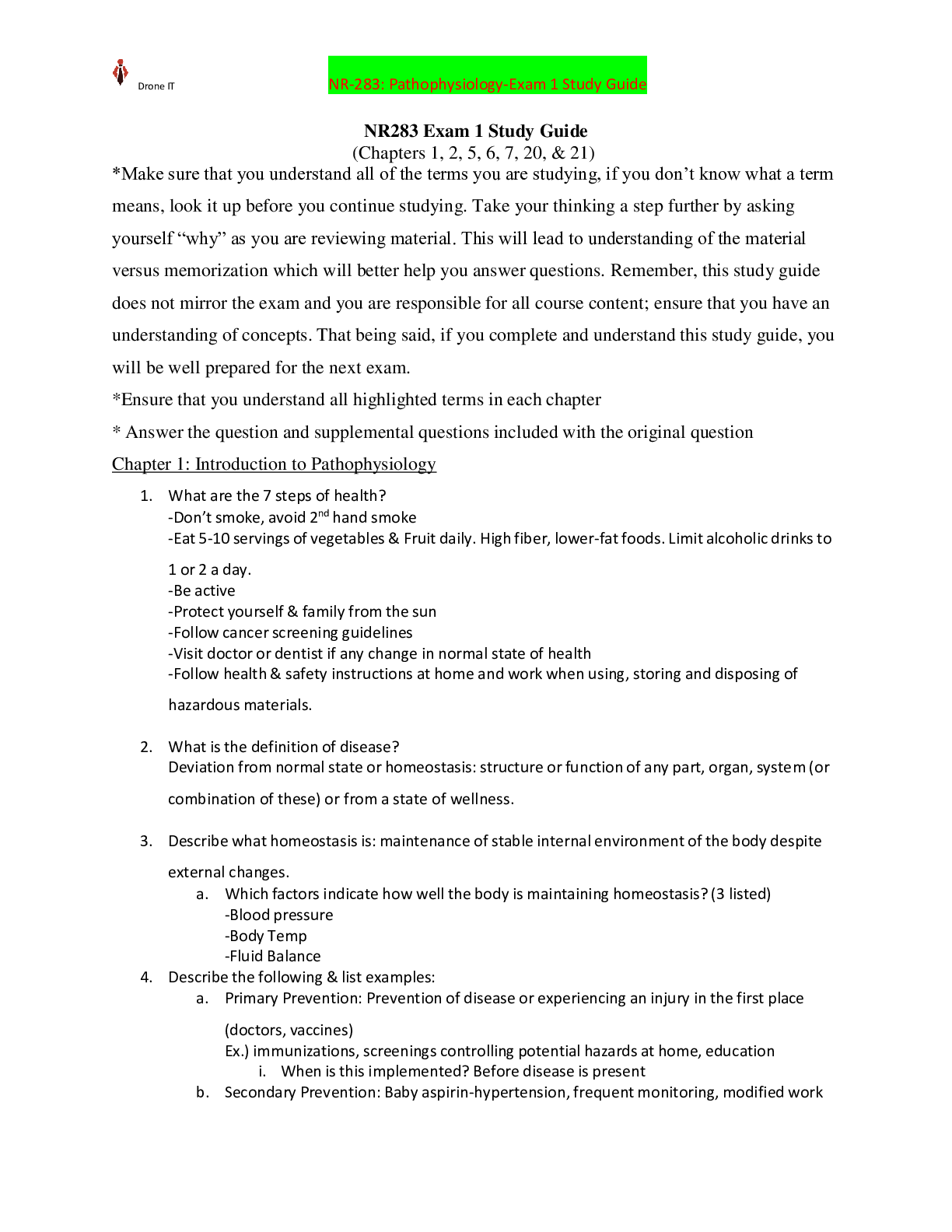
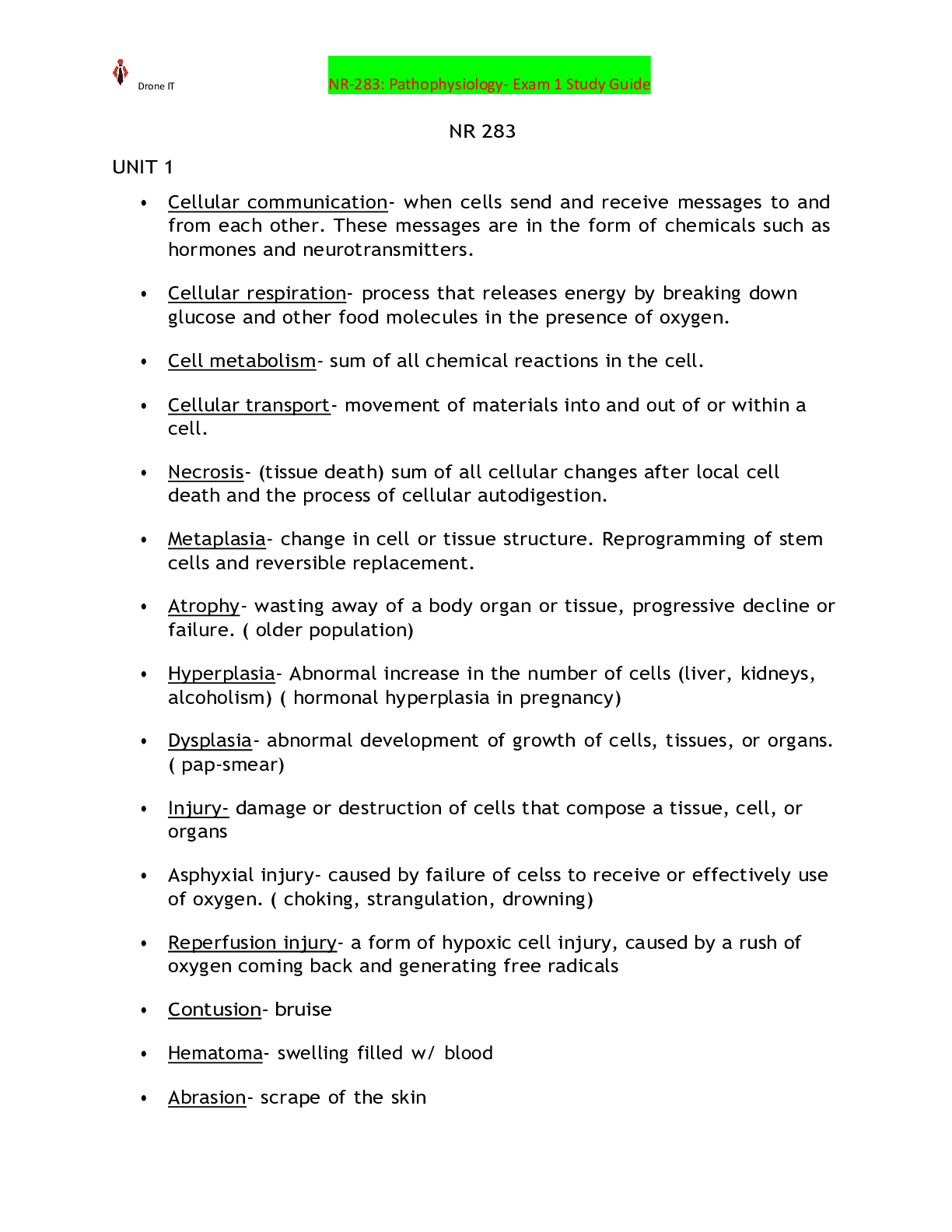
docx (9)patho.pdf-Exam (elaborations) NURS 3093-Pathophysiology Concepts of Disease (NURS 3093)
Document Content and Description Below
Last updated: 4 years ago
Preview 1 out of 62 pages
Instant download
patho.png)
Buy this Document to get the Full Access Instantly
Provided by Students Who Aced it
We Verify Document Content to Gurantee Accuracy
Reviews( 0 )
Document information
Connected school, study & course
About the document
Uploaded On
May 05, 2021
Number of pages
62
Written in
All

Additional information
This document has been written for:
Uploaded
May 05, 2021
Downloads
0
Views
46
Topic Tags
Recommended For You
Get more on STUDY GUIDE »
Lipscomb University - NURS 3093 Study guide for pathophysiolog...
.png)
.png)
.png)
.png)
.png)

Answered Final Exam-Pathophysiology2021- Requires Respondus Lo...
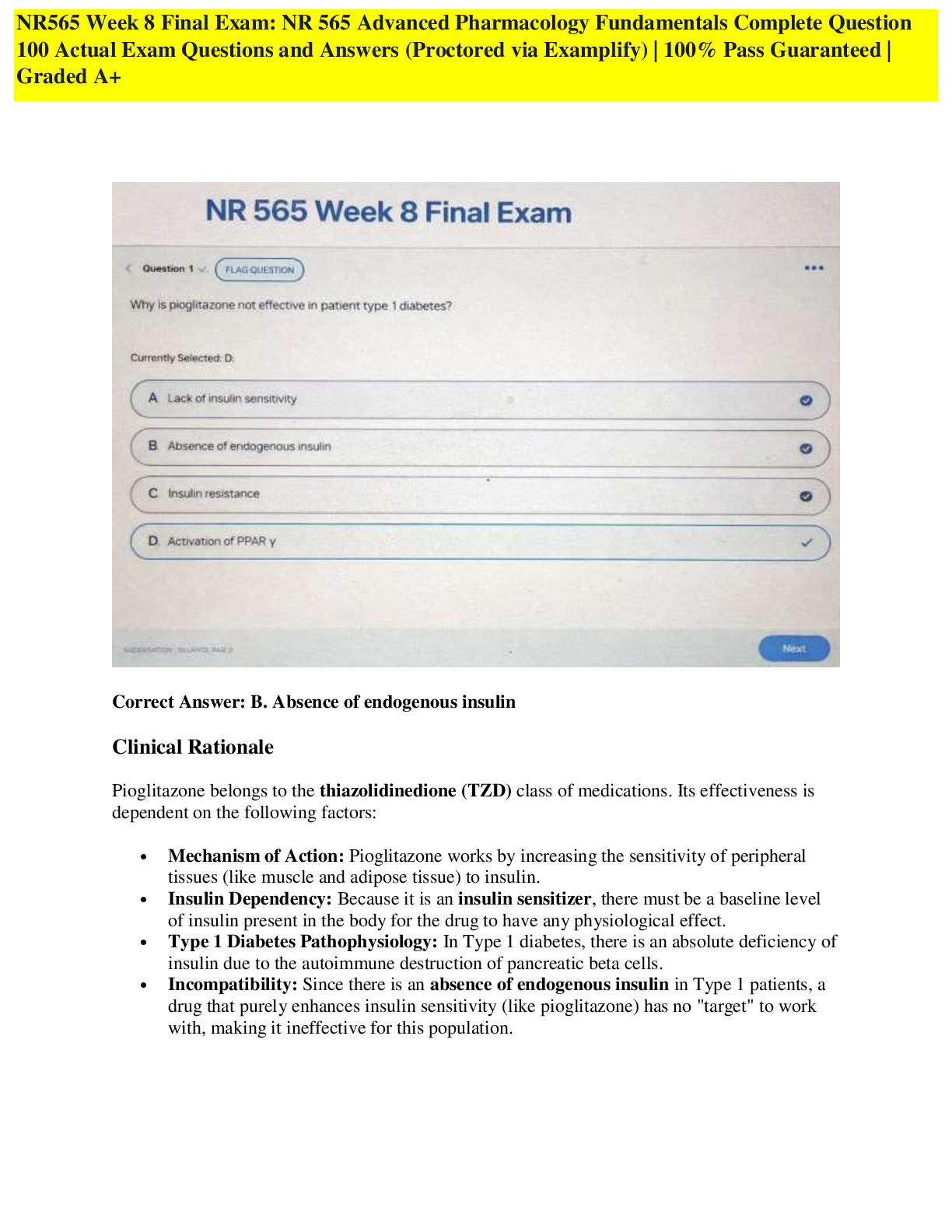
NR565 Week 8 Final Exam Complete with 100 Questions and 100% C...

NR 661 Week 3 APEA Module: Endocrine / Disorders – APEA Practi...
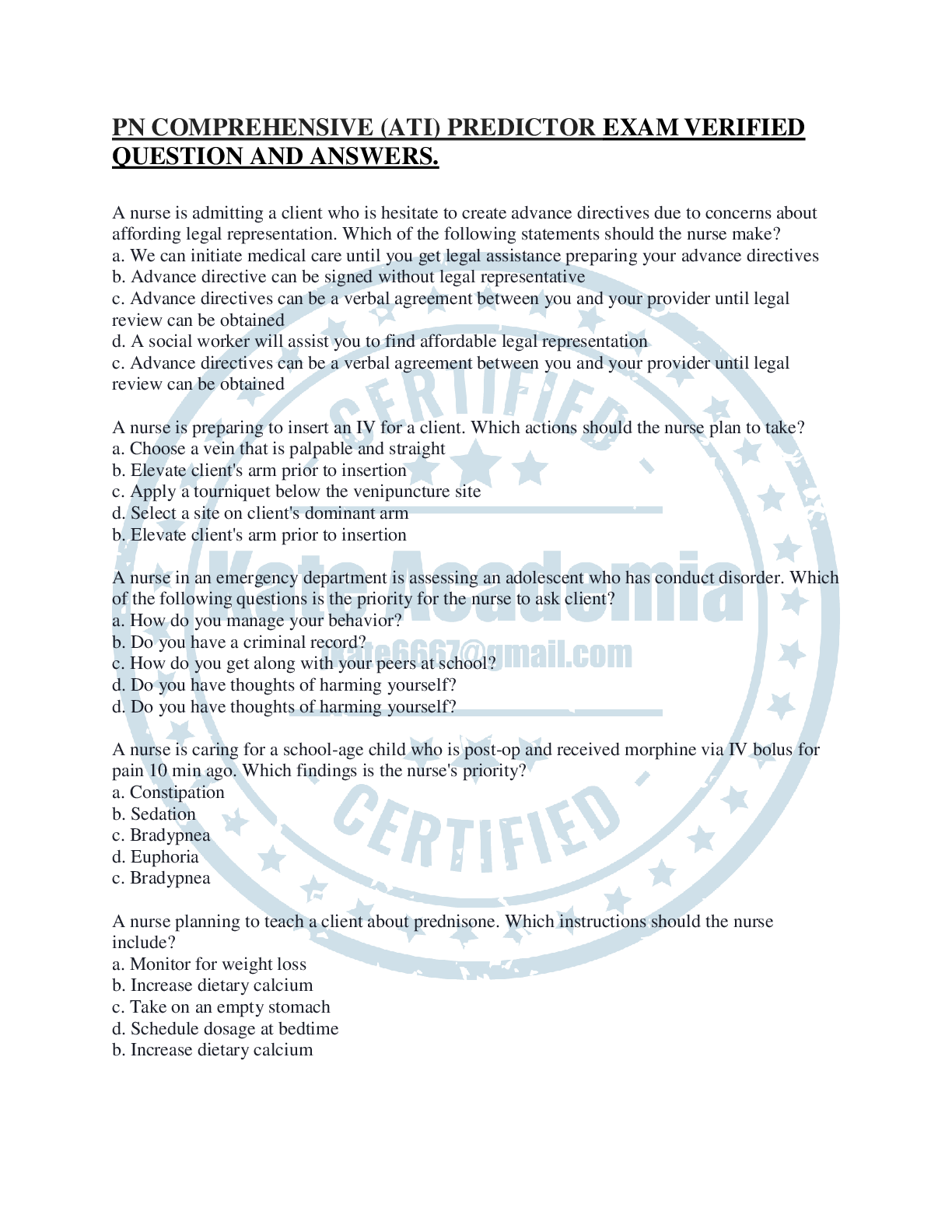
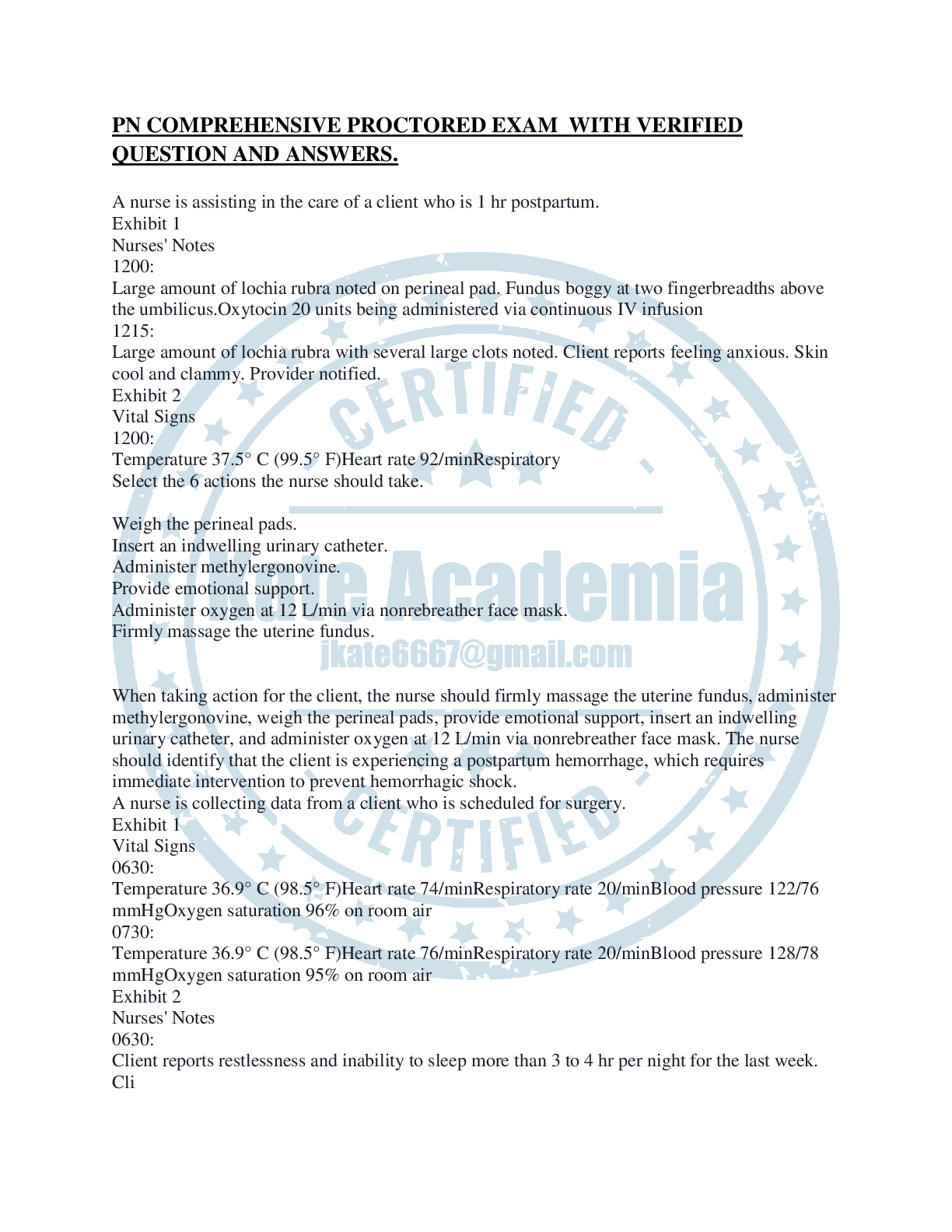
PN COMPREHENSIVE PROCTORED EXAM WITH VERIFIED QUESTION AND AN...

AGNP BOARD EXAM QUESTIONS Endocrinology Prescription | 89 Ques...




 A Graded.png)