NR 511 Week 2 Quiz With All Latest Answers Graded A
Document Content and Description Below
Question: A 72-year-old male patient presents to the clinic for his annual physical. He states that he is worried because he only has a bowel movement every three days. How should the clinician respond?
Question: In a
...
[Show More]
Last updated: 3 years ago
Preview 1 out of 5 pages
Instant download

Buy this Document to get the Full Access Instantly
Provided by Students Who Aced it
We Verify Document Content to Gurantee Accuracy
Reviews( 0 )
Document information
Connected school, study & course
About the document
Uploaded On
Jun 30, 2020
Number of pages
5
Written in
All

Additional information
This document has been written for:
Uploaded
Jun 30, 2020
Downloads
0
Views
386
Topic Tags
Related Subjects & Courses
Explore similar study resources and related concepts.
Recommended For You
Get more on EXAM »
$12.5
136 Pages
NR 511 Test Bank Solution Questions and Answers (Verified A...
$12.5
39 Pages
NR 511 Midterm Exam Differential Diagnosis & Primary Care Pr...
$18
91 Pages
NR 511 CEA Final Exam (2026) Chamberlain Primary Care Actual...
$12.5
67 Pages
NR 511 Midterm Exam - Chamberlain College of Nursing Questi...
$17
16 Pages
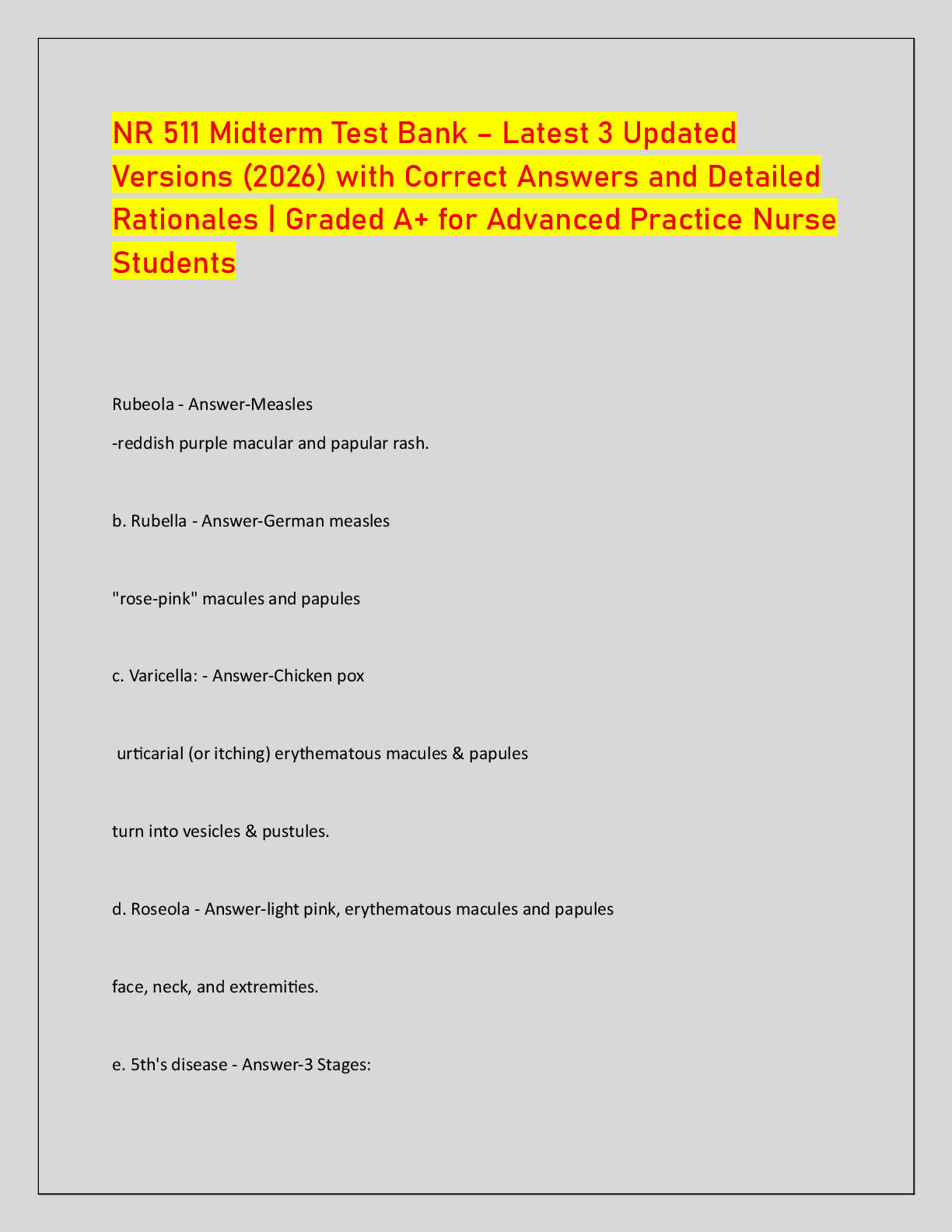
NR 511 Midterm Test Bank – Latest 3 Updated Versions (2026) w...
$10
7 Pages
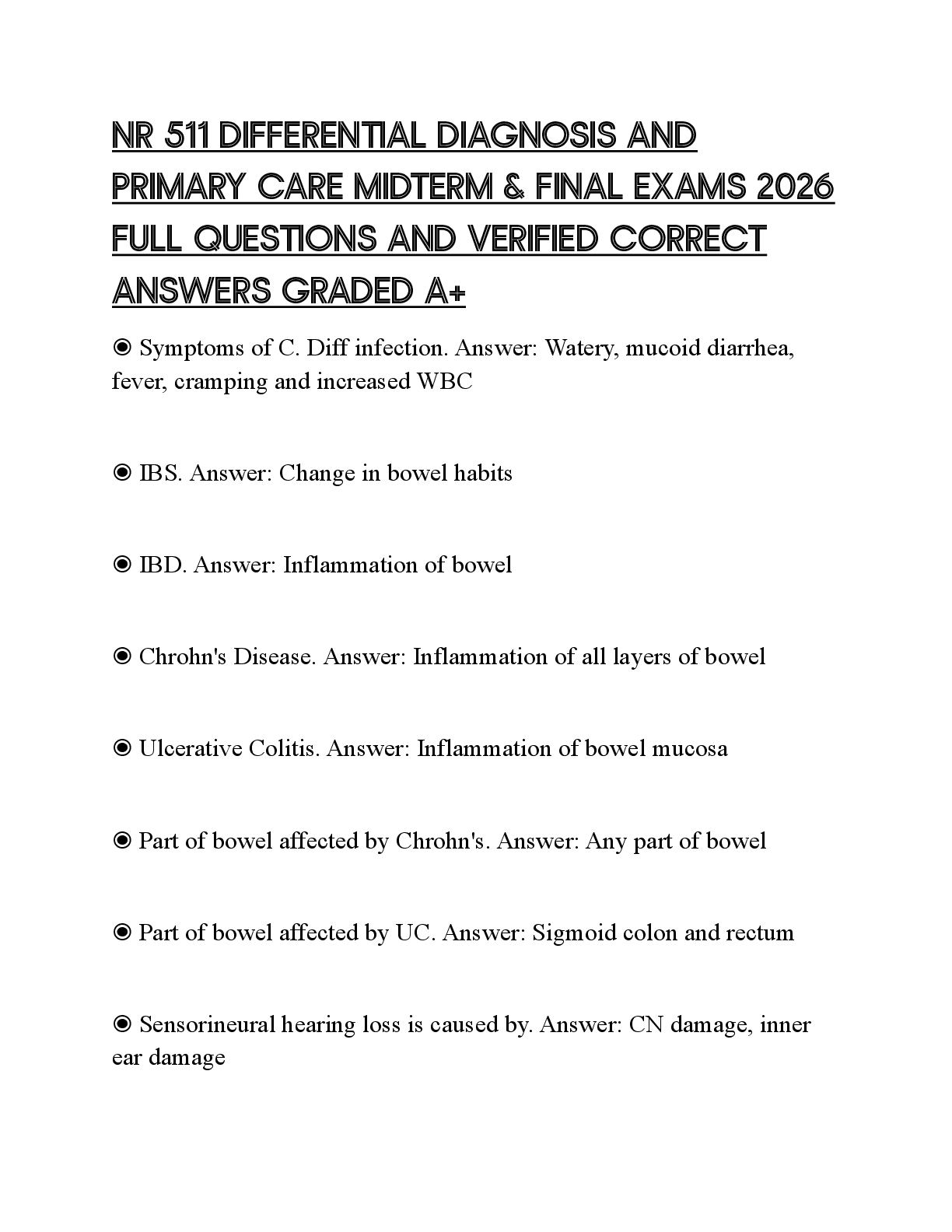
NR 511 DIFFERENTIAL DIAGNOSIS AND PRIMARY CARE MIDTERM & FINAL...
$10
15 Pages
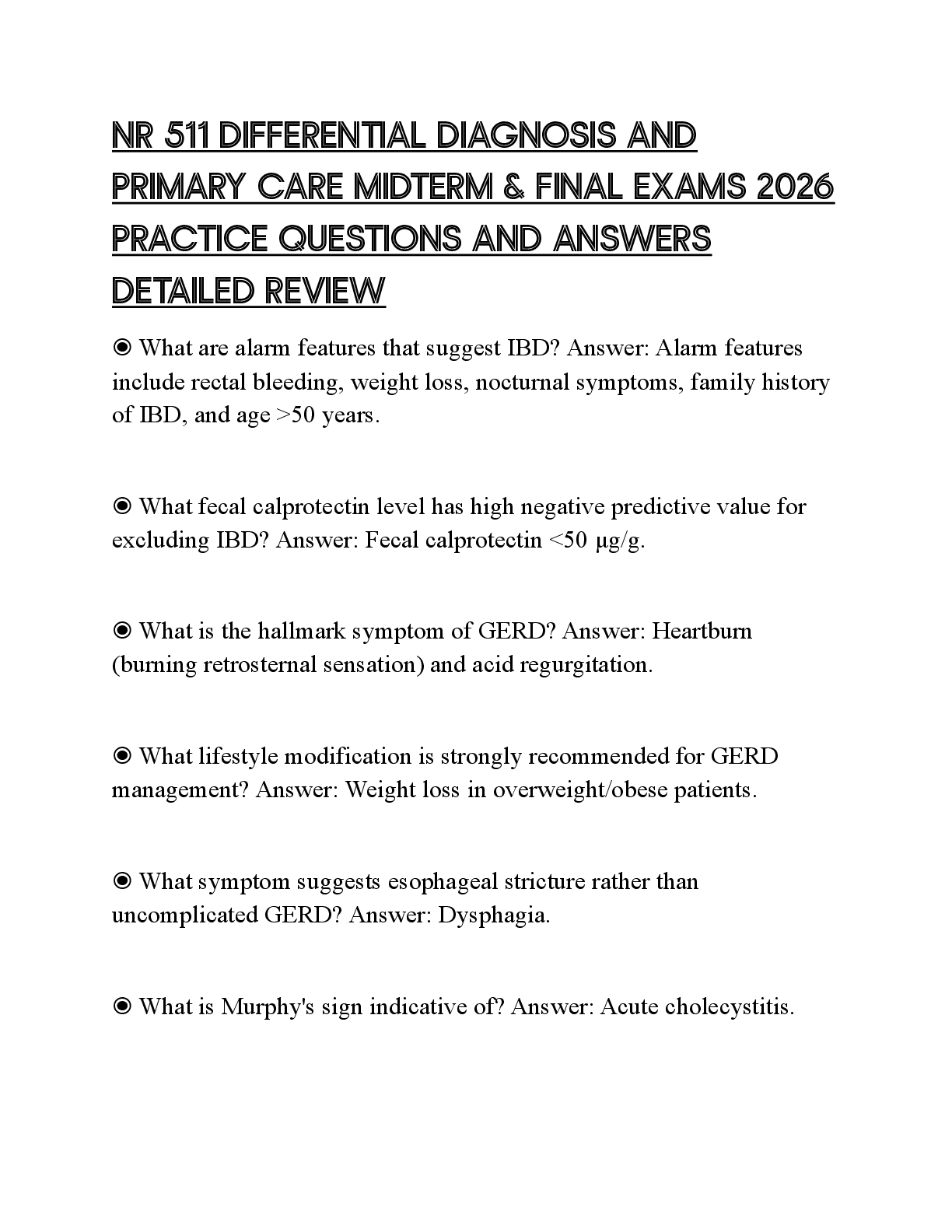
NR 511 DIFFERENTIAL DIAGNOSIS AND PRIMARY CARE MIDTERM & FINAL...
$12
40 Pages
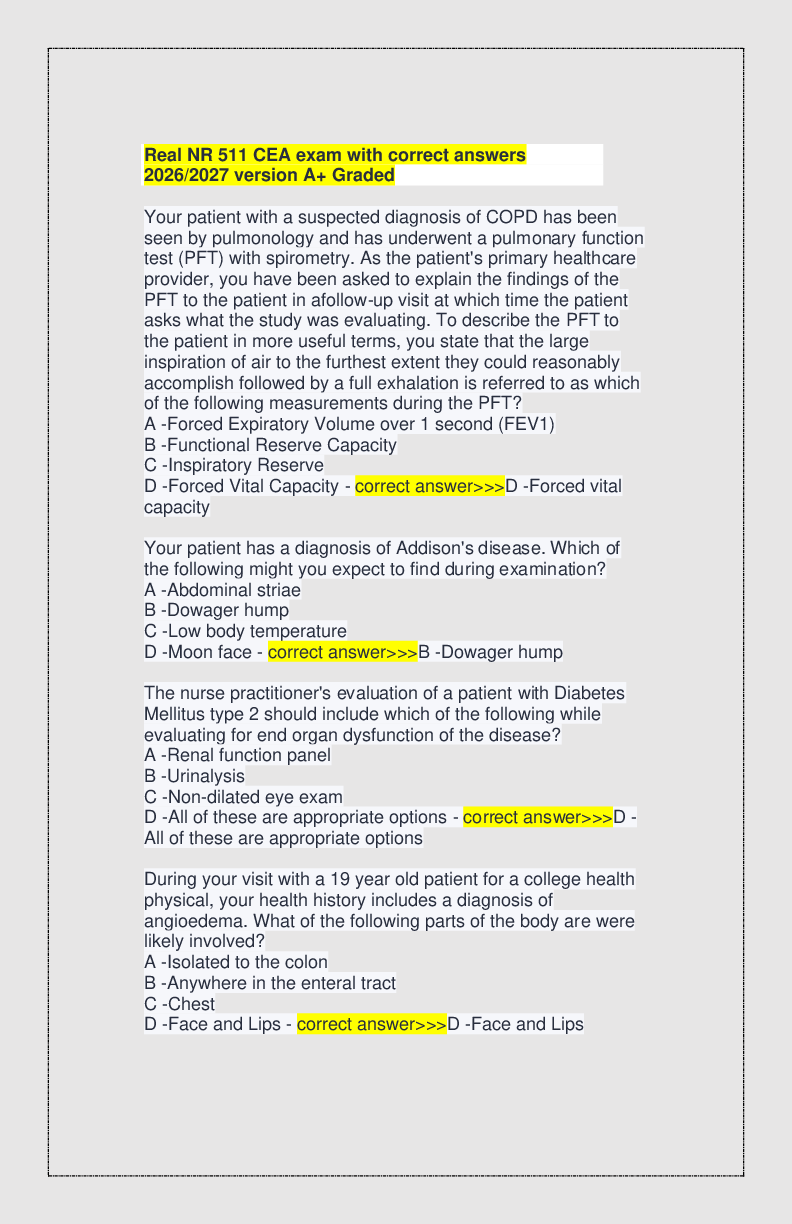
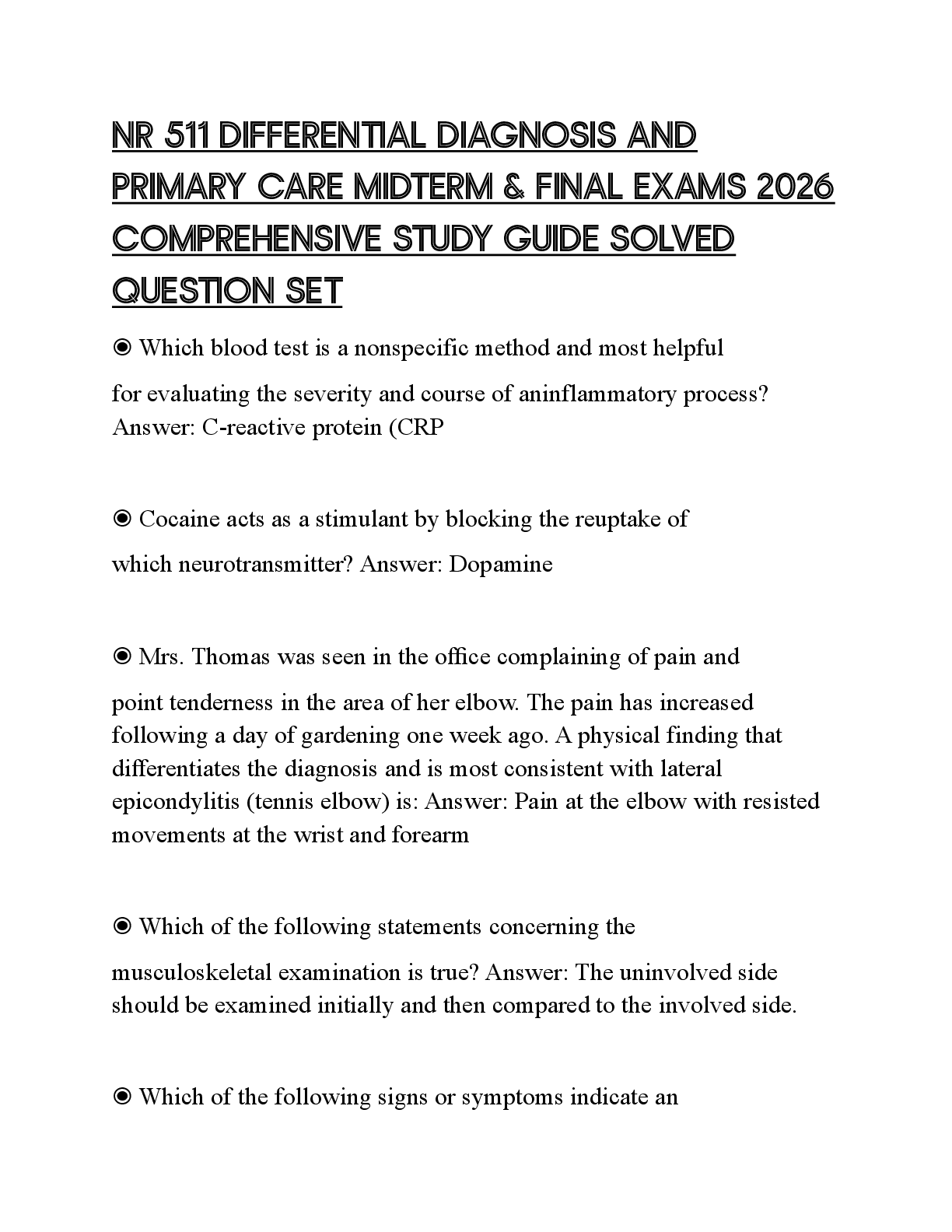
Real NR 511 CEA exam with correct answers 2026/2027 version A+...
$10
21 Pages
NR 511 DIFFERENTIAL DIAGNOSIS AND PRIMARY CARE MIDTERM & FINAL...

$21.5
12 Pages
Chamberlain University COLLEGE OF NURSING. NR 511-NP Café Mid...
$15
43 Pages
NR 511 Differential Diagnosis & Primary Care Practicum Final E...
$15
48 Pages
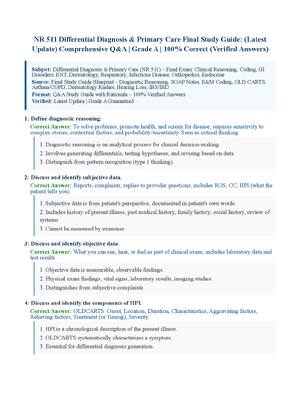
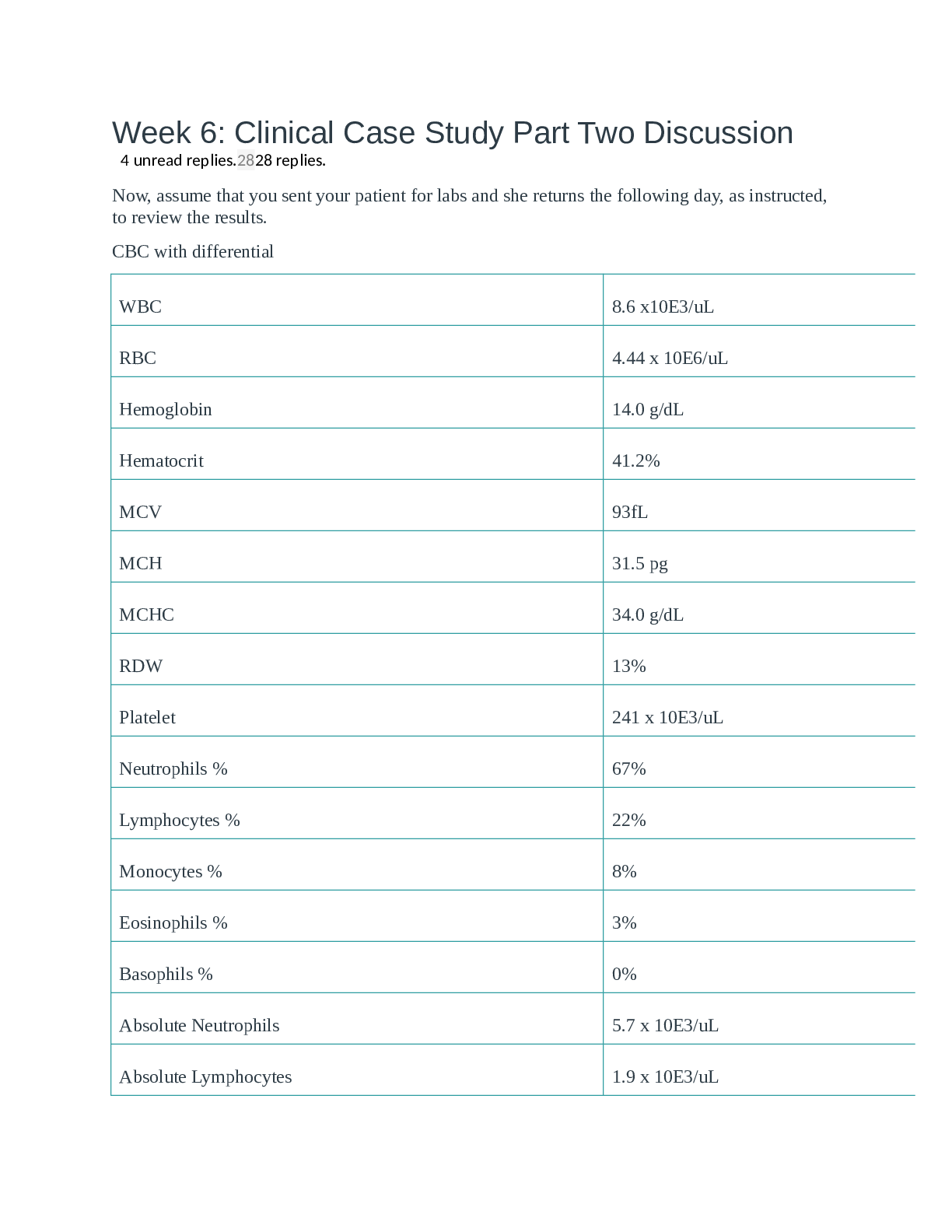
NR 511 Final Exam Study Guide (Wk1- Wk 6) -Questions and Answe...




$25
493 Pages
Test Bank for Abrams Clinical Drug Therapy Rationales for Nurs...

$14
499 Pages
TEST BANK FOR VARACOLIS' FOUNDATIONS OF PSYCHIATRIC - MENTAL H...
More related documents below
.png)



.png)


