Kenneth Bronson 12:14:2020.,GRADED A.
Document Content and Description Below
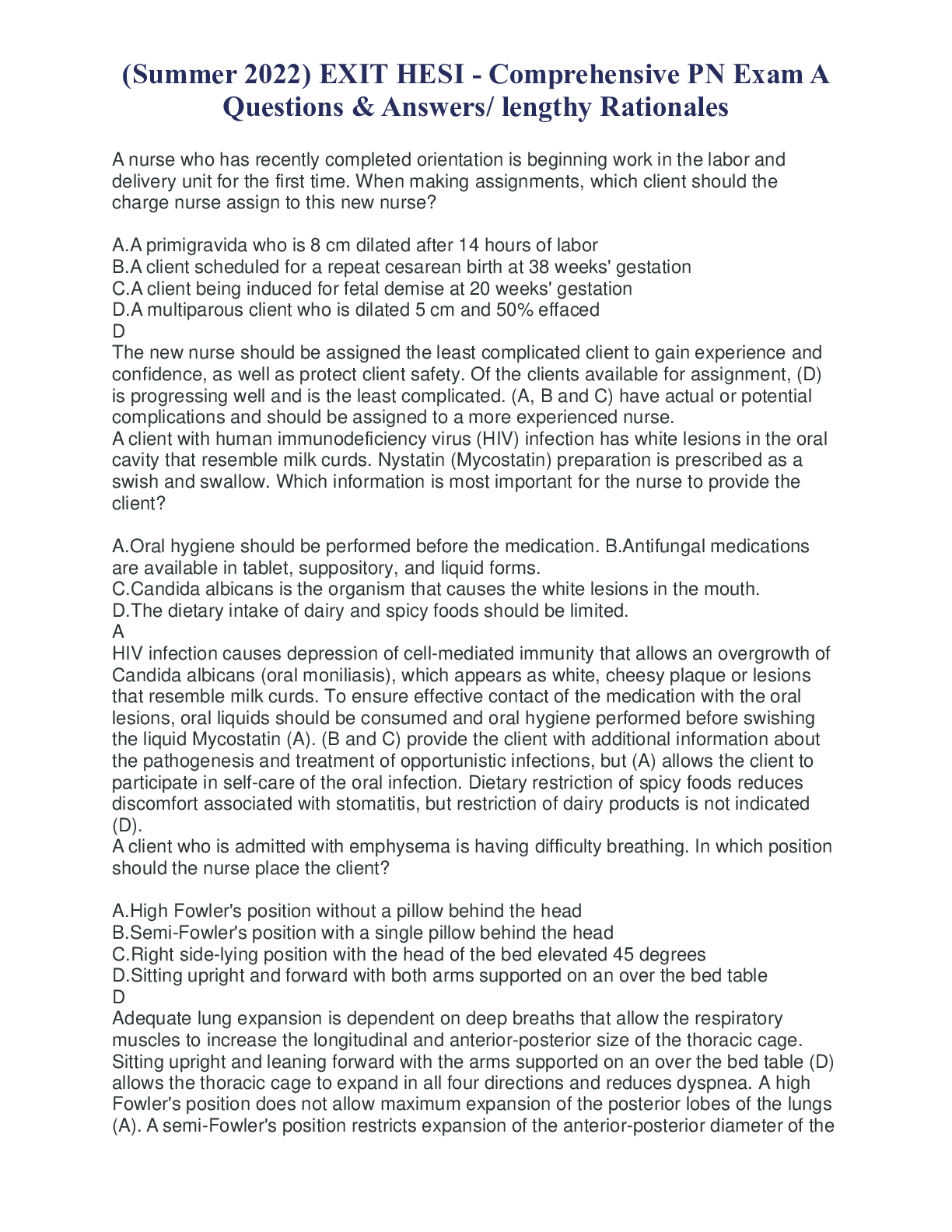
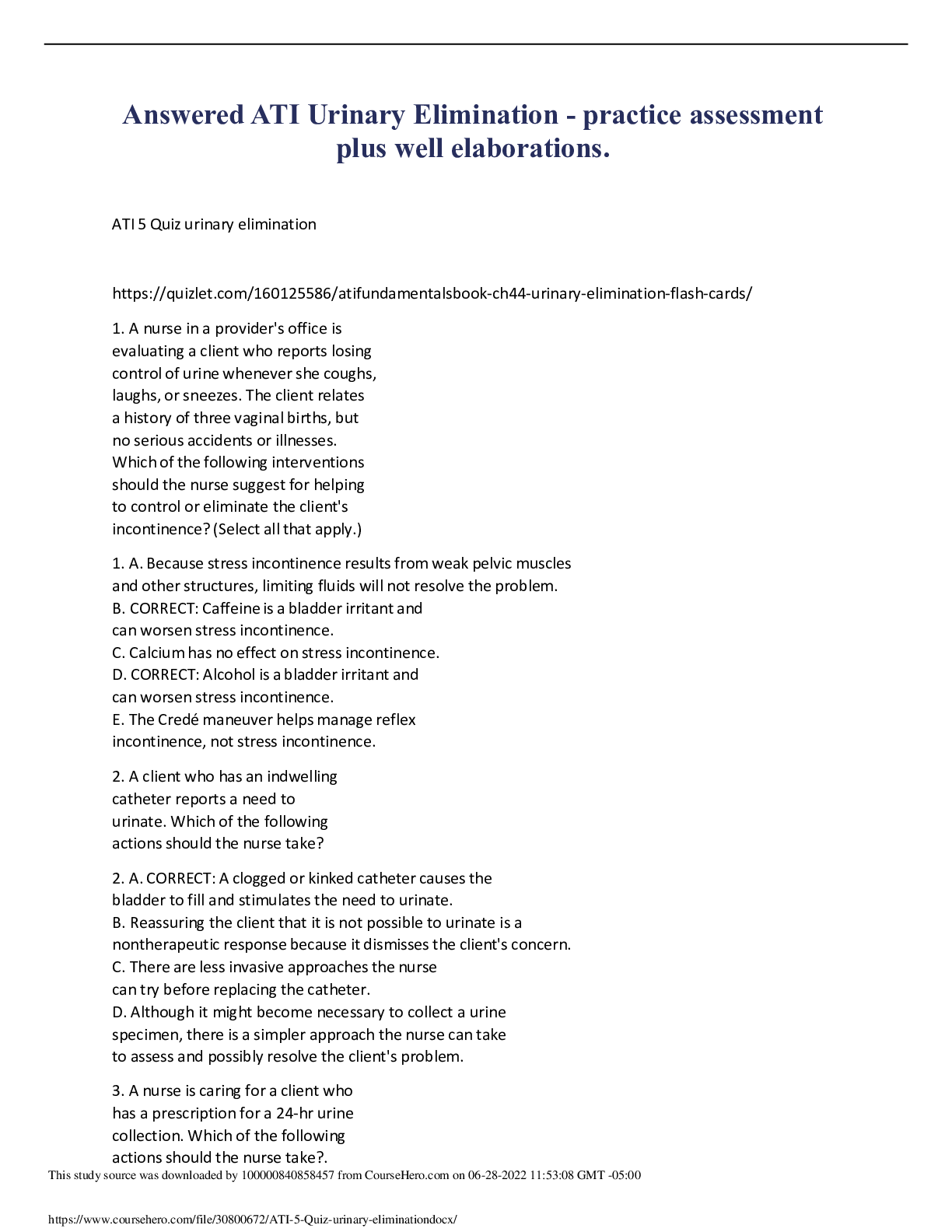
Pneumonia is inflammation of the lungs caused by bacteria or viral agents. The normal flora found in the lungs is usually altered or resistant which causes a loss of host defenses in the body. Inflammation impairs oxygen
...
[Show More]
Last updated: 3 years ago
Preview 1 out of 12 pages
Instant download

Buy this Document to get the Full Access Instantly
Provided by Students Who Aced it
We Verify Document Content to Gurantee Accuracy
Reviews( 0 )
Document information
Connected school, study & course
About the document
Uploaded On
May 11, 2021
Number of pages
12
Written in
All

Additional information
This document has been written for:
Uploaded
May 11, 2021
Downloads
0
Views
201
Topic Tags
Related Subjects & Courses
Explore similar study resources and related concepts.
Recommended For You
Get more on EXAM »
$8.5
82 Pages
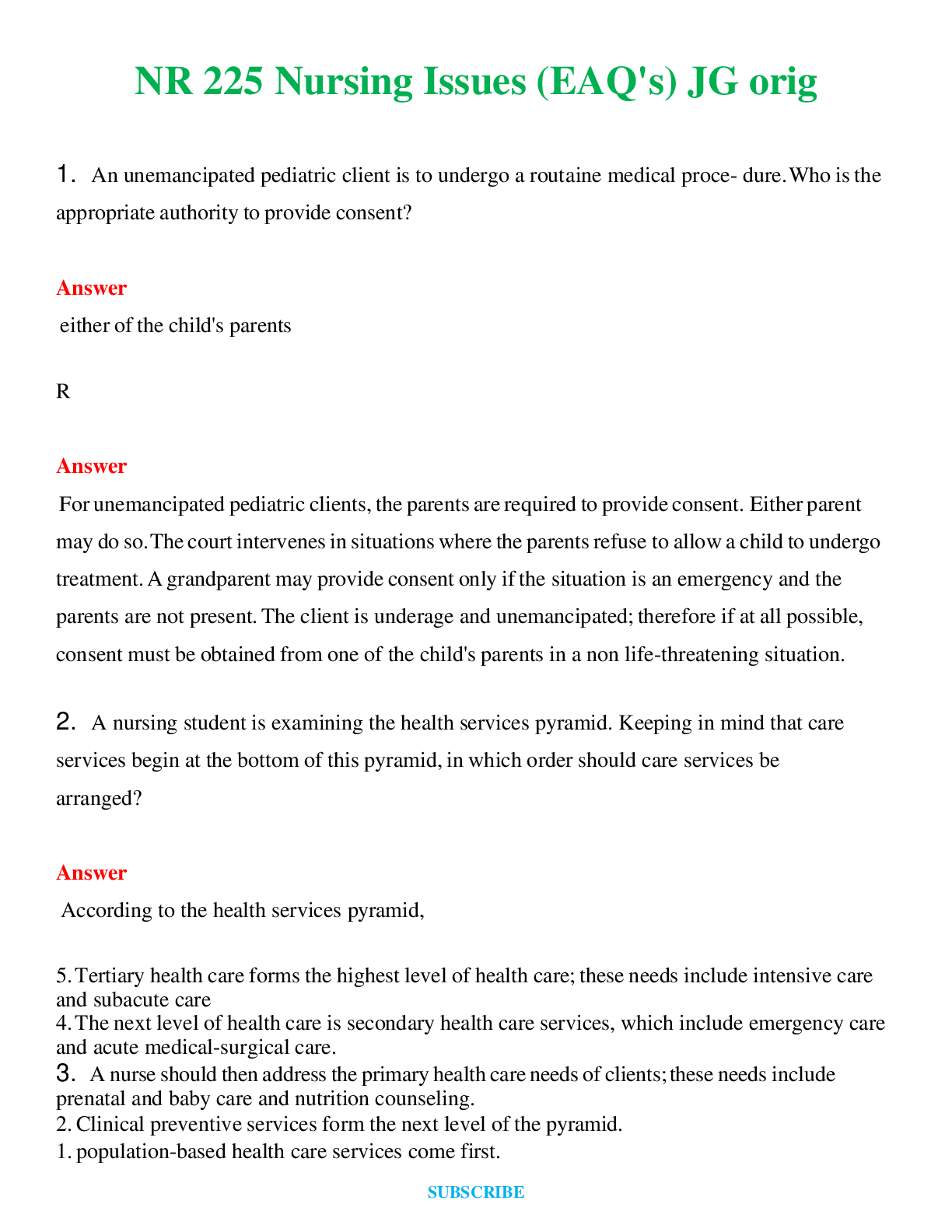
NR 225 Nursing Issues (EAQ's) JG orig Questions and Answers...

$8.5
16 Pages
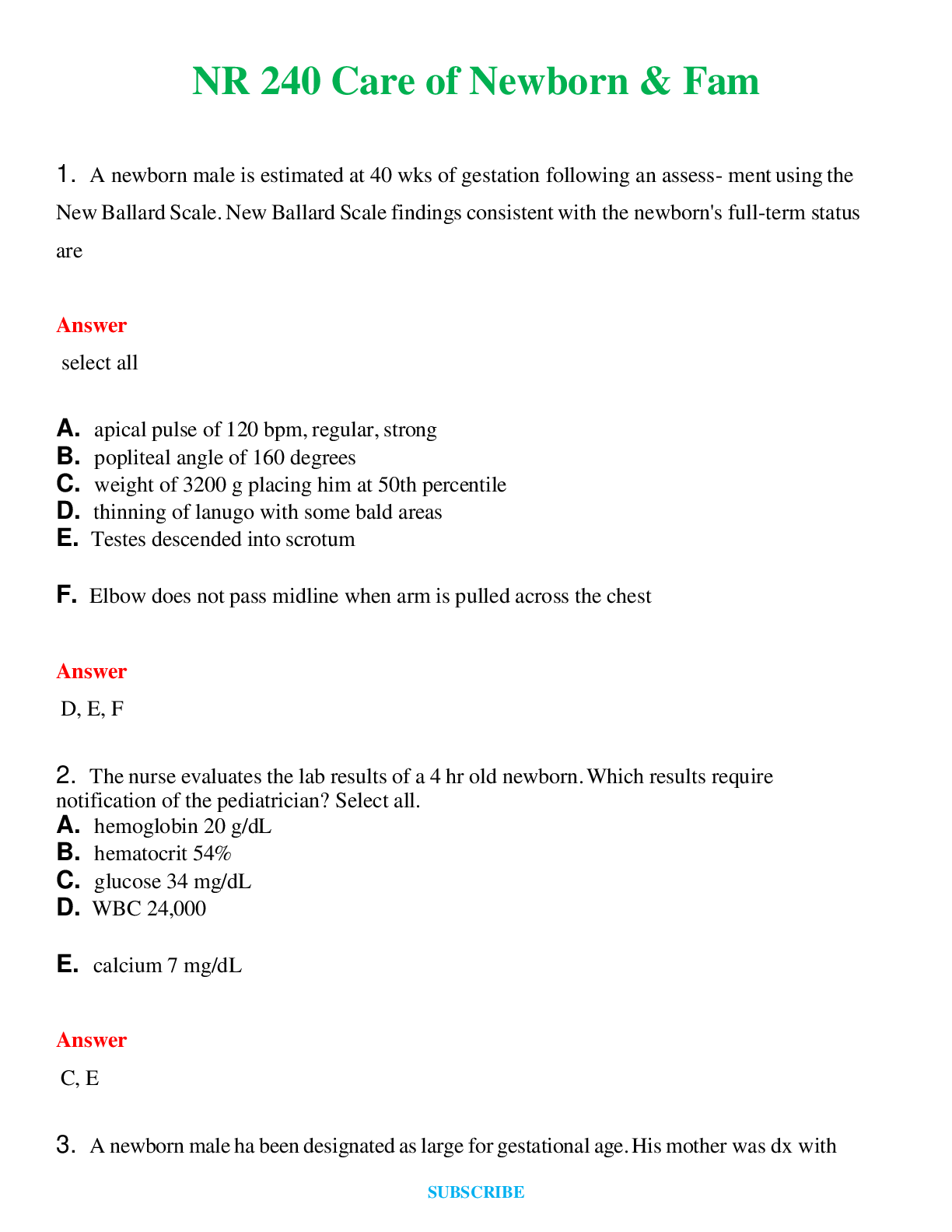
NR 240 Care of Newborn & Fam Questions and Answers (Verifie...
$8.5
15 Pages
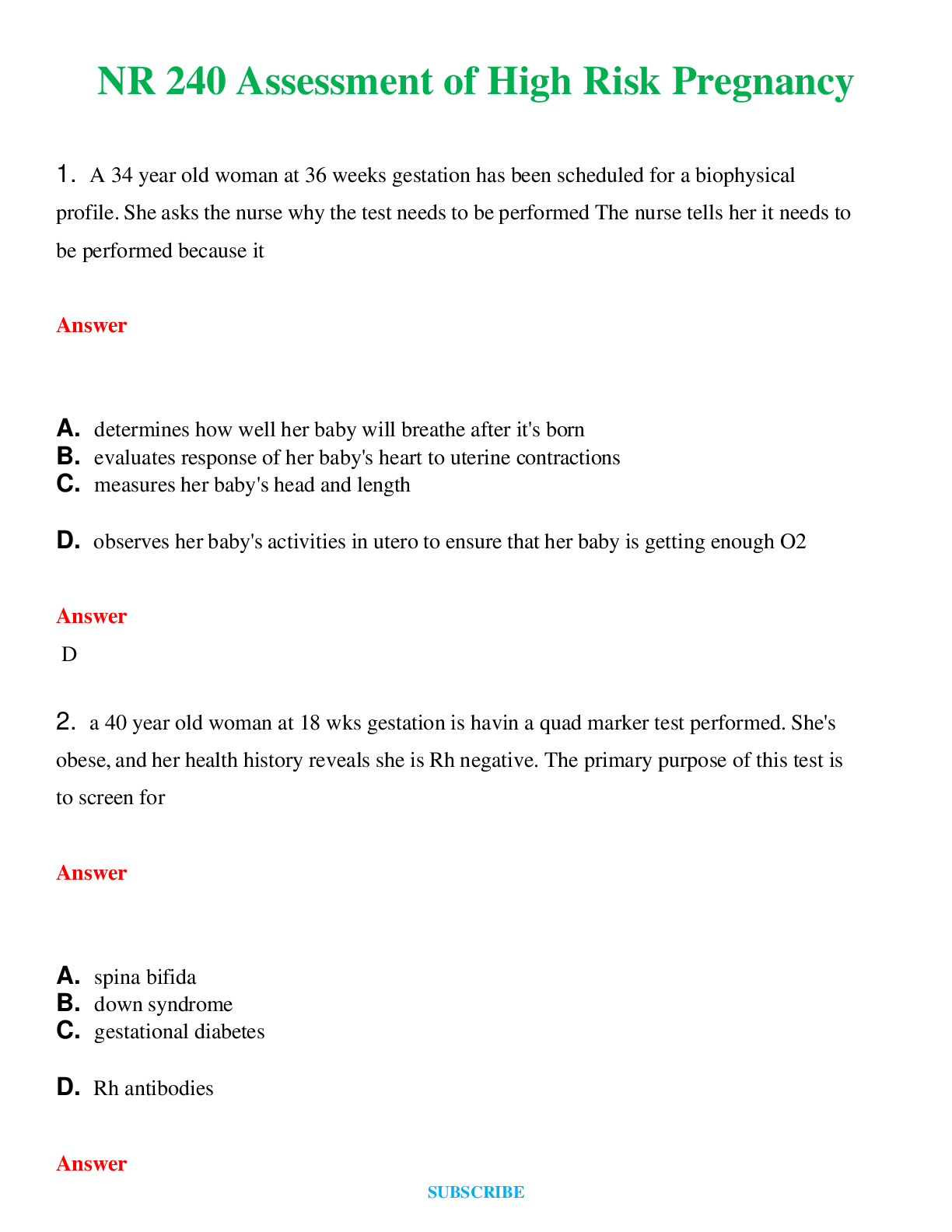
NR 240 Assessment of High Risk Pregnancy Questions and Answ...
$8.5
45 Pages
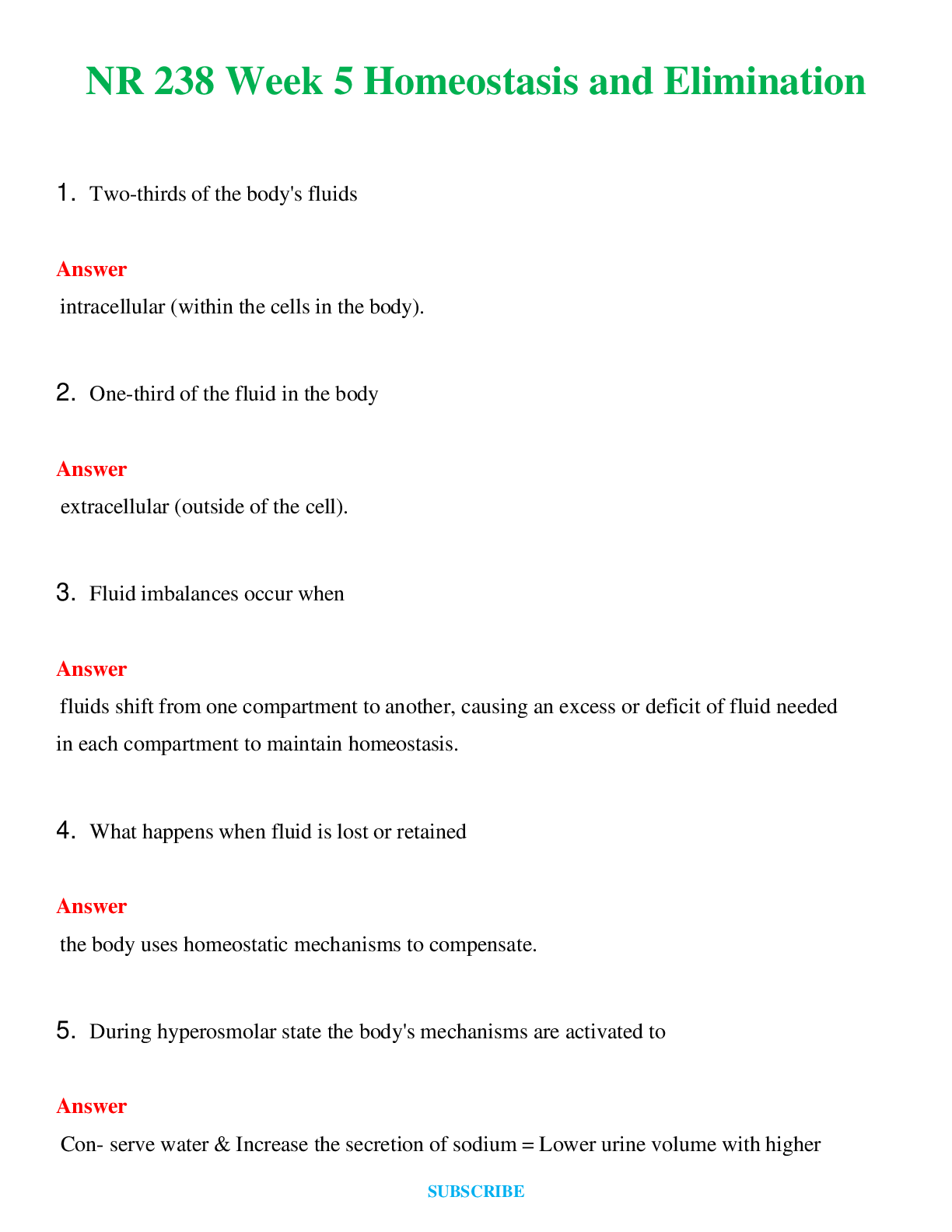
NR 238 Week 5 Homeostasis and Elimination Questions and Ans...
$8.5
14 Pages
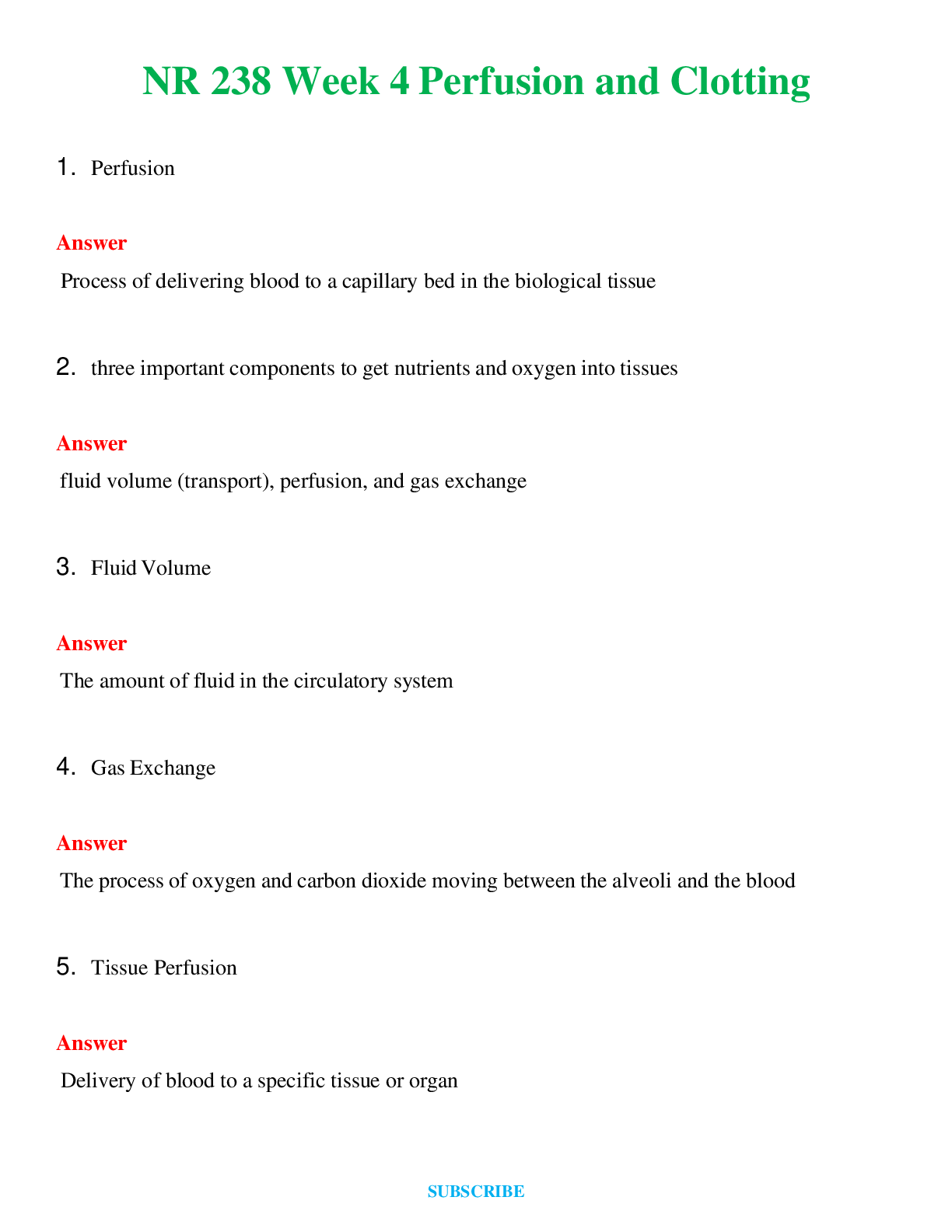
NR 238 Week 4 Perfusion and Clotting Questions and Answers...
More related documents below