Chemistry > Lab Report > CHM 120CHM 120 Lab 1 Experiment #1: Qualitative Analysis of Cations (All)
CHM 120CHM 120 Lab 1 Experiment #1: Qualitative Analysis of Cations
Document Content and Description Below
Last updated: 4 years ago
Preview 1 out of 7 pages
Instant download

Buy this Document to get the Full Access Instantly
Provided by Students Who Aced it
We Verify Document Content to Gurantee Accuracy
Reviews( 0 )
Document information
Connected school, study & course
About the document
Uploaded On
May 16, 2021
Number of pages
7
Written in
All

Additional information
This document has been written for:
Uploaded
May 16, 2021
Downloads
0
Views
185
Topic Tags
Recommended For You
Get more on Lab Report »
OCC433 Lab Report –Experiment 3 MeOH External Standard Analysi...

Achieve for Interactive General Chemistry, 1e by Macmillan Lea...
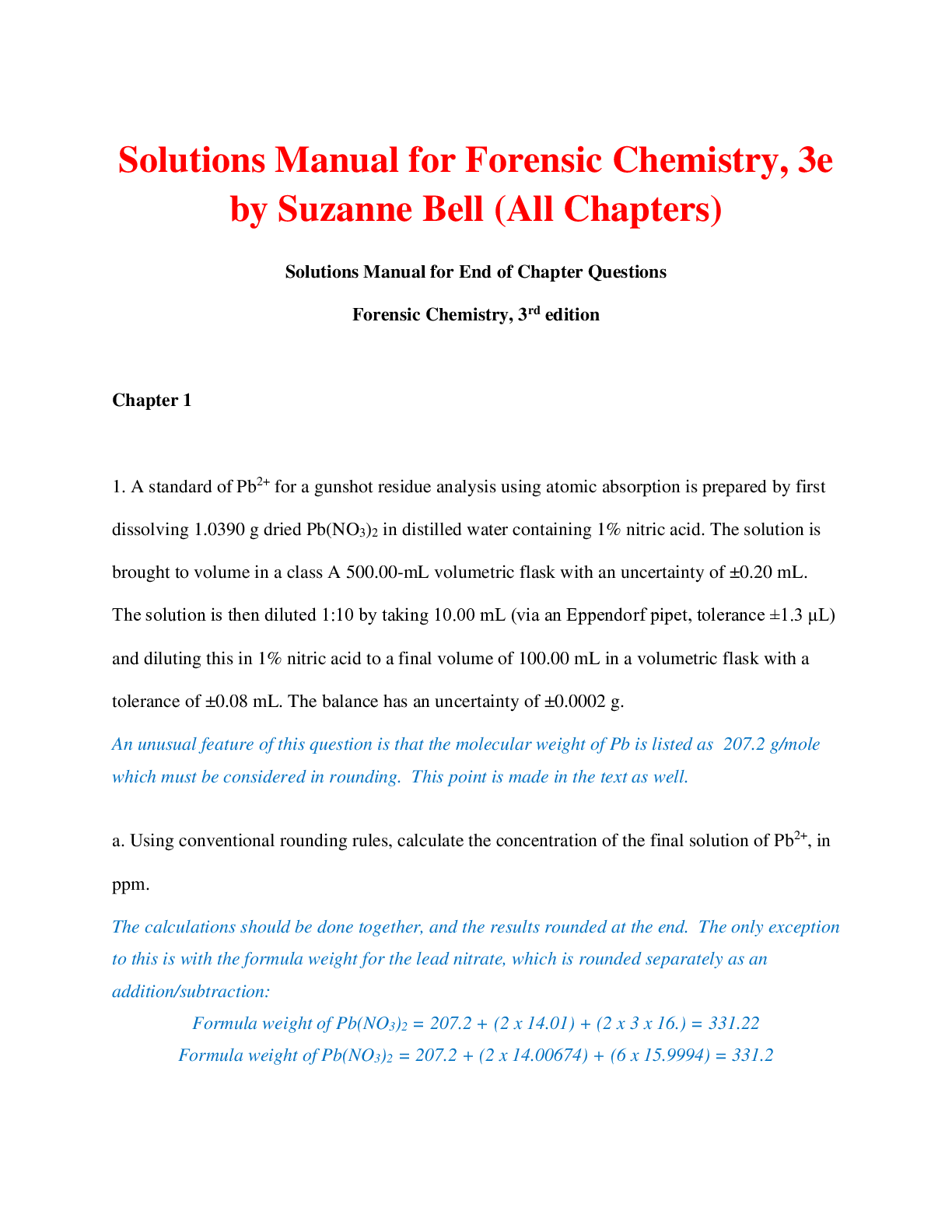
Forensic Chemistry 3rd Edition by Suzanne Bell | Solutions Man...
Solution Manual for Elementary Principles of Chemical Processe...

Separation process principles 2nd edition By J. D. Seader, Ern...
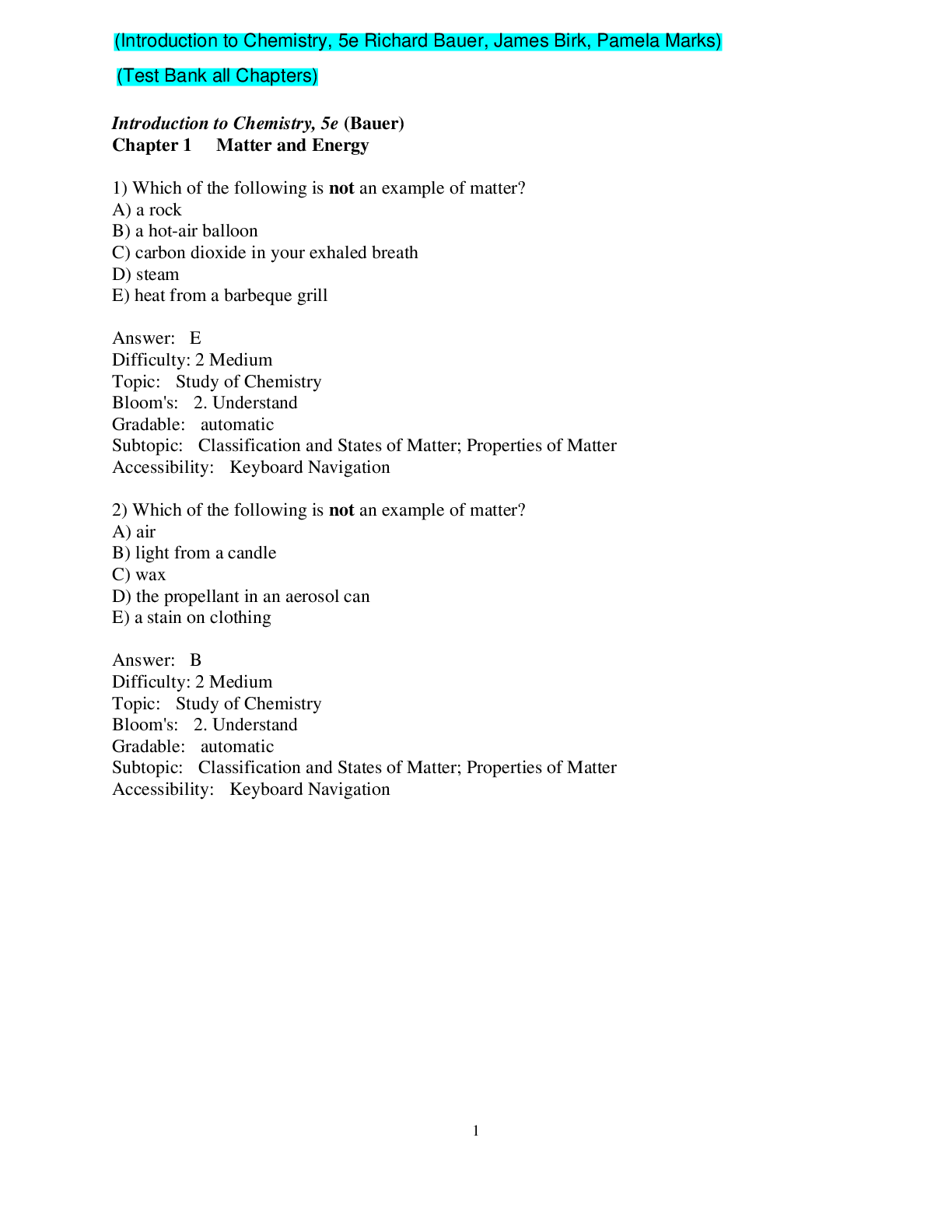
Introduction to Chemistry 5th Edition By Richard Bauer, James...

Introduction to Chemistry 5th Edition By Richard Bauer, James...
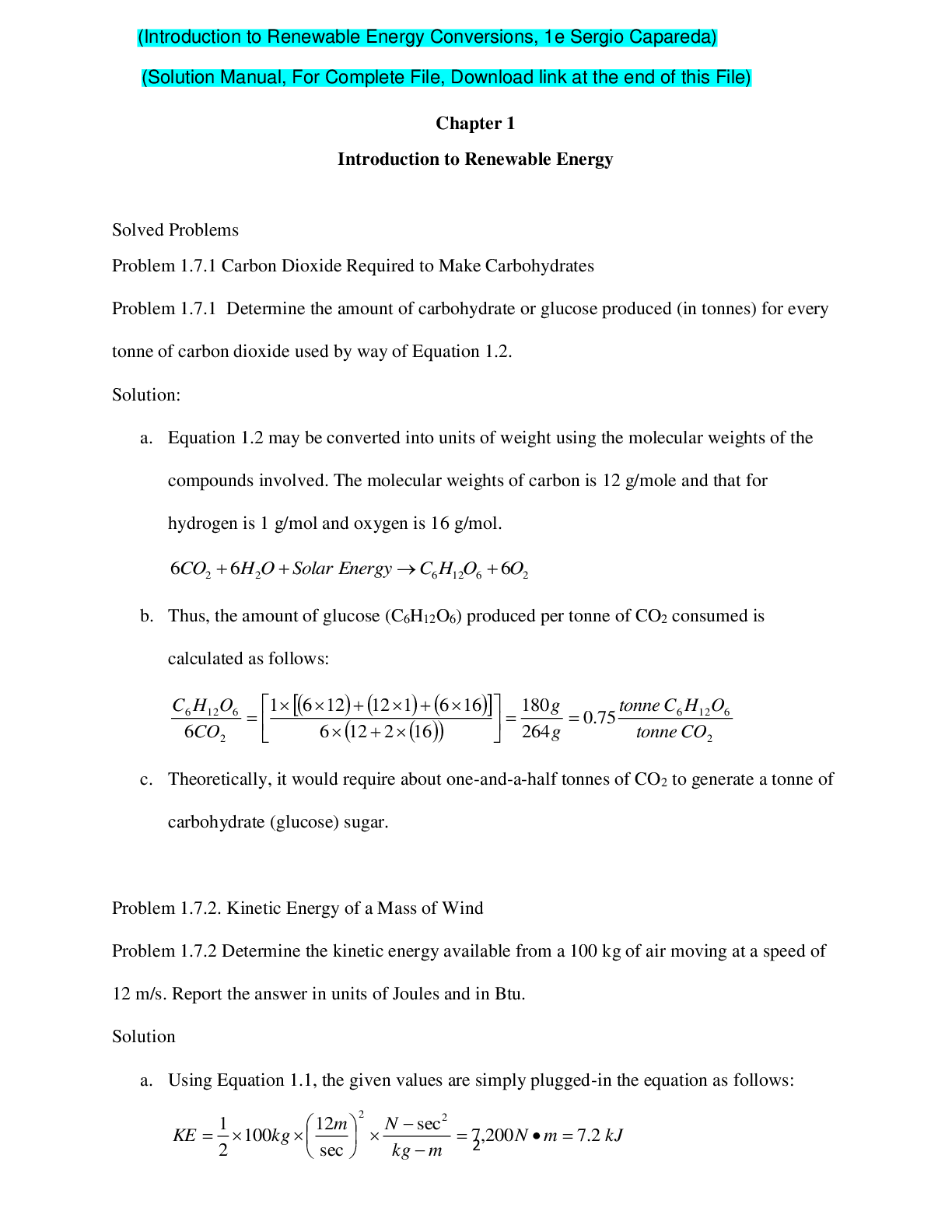
Introduction to Renewable Energy Conversions 1st Edition By Se...
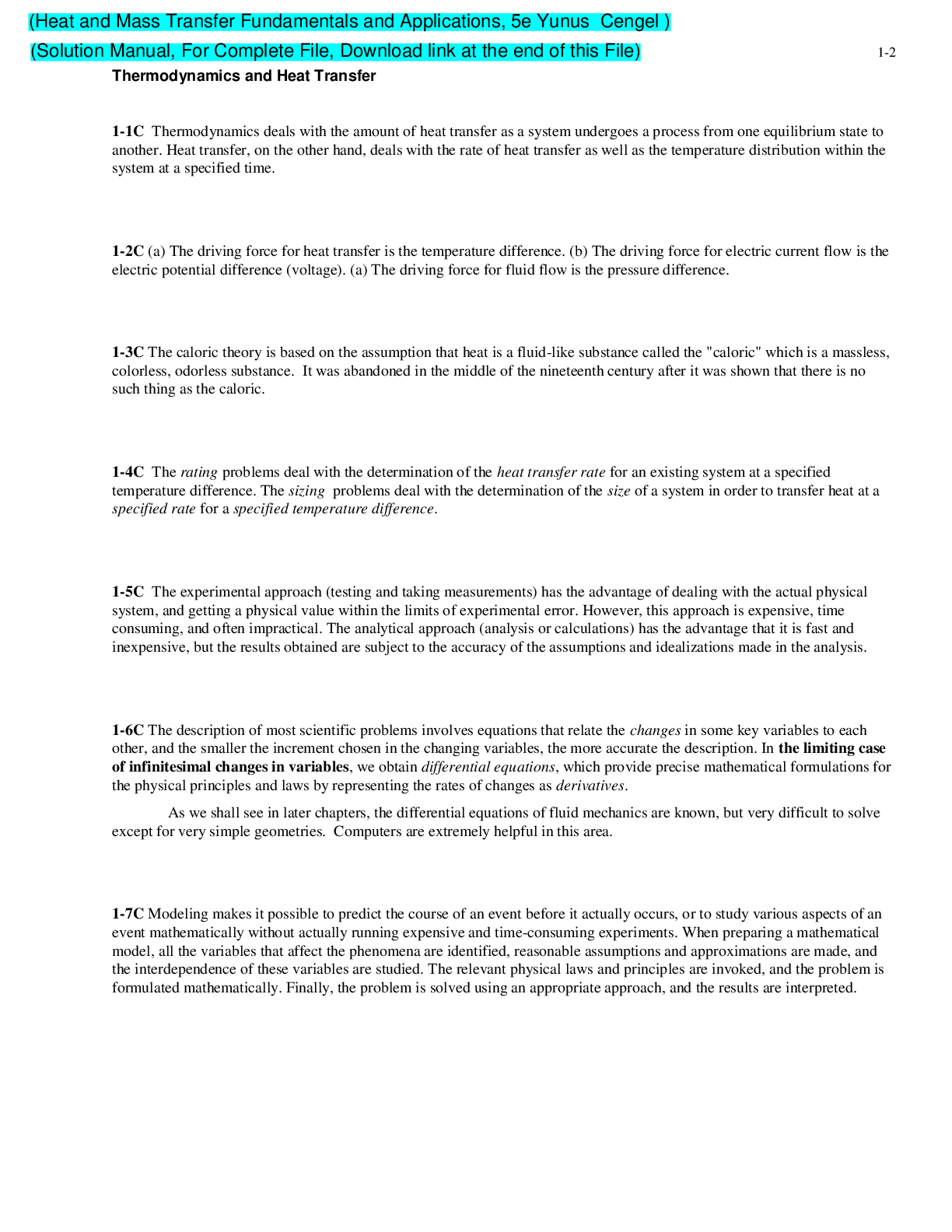
Heat and Mass Transfer Fundamentals and Applications, 5e Yunus...
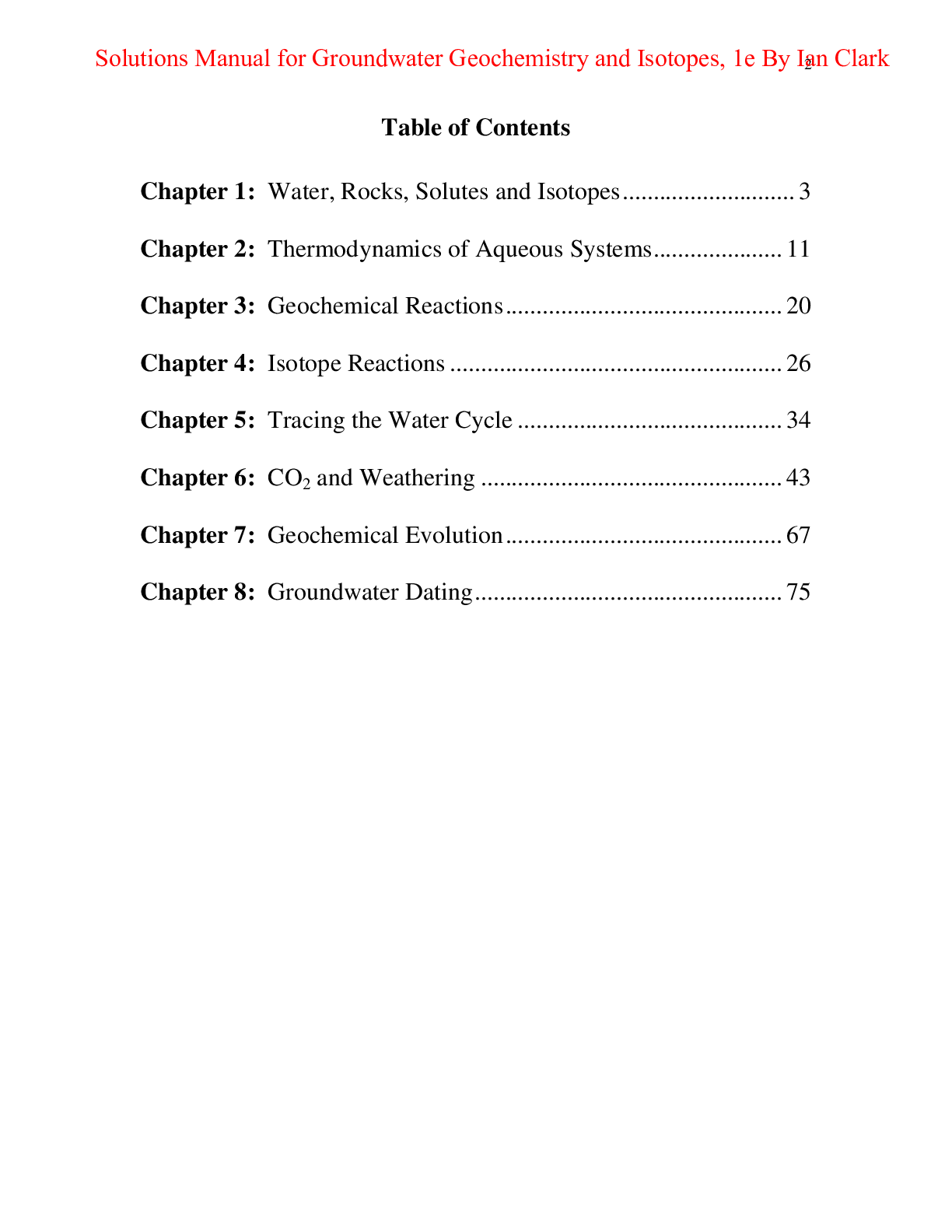
Groundwater Geochemistry and Isotopes, 1e Ian Clark (Solution...
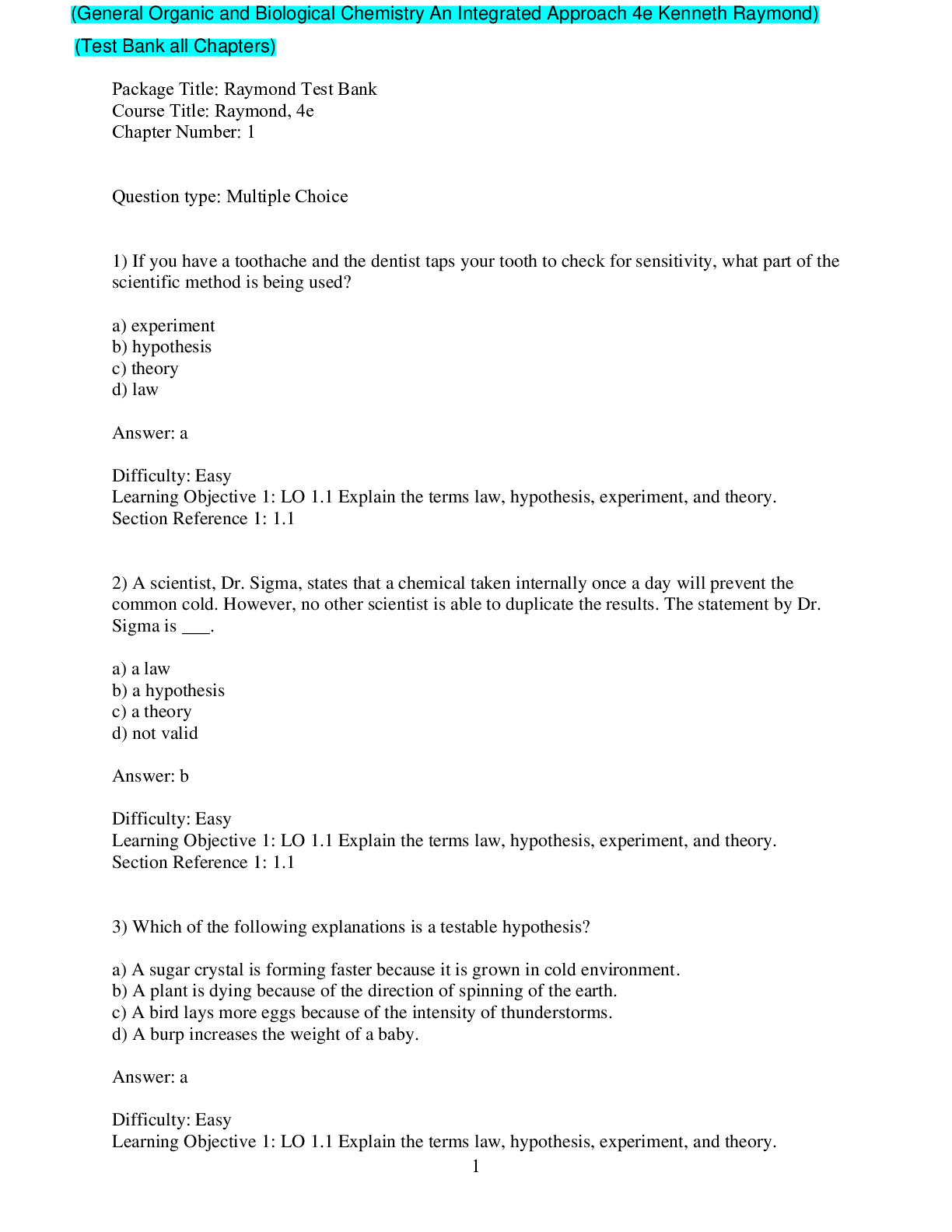
General Organic and Biological Chemistry An Integrated Approac...
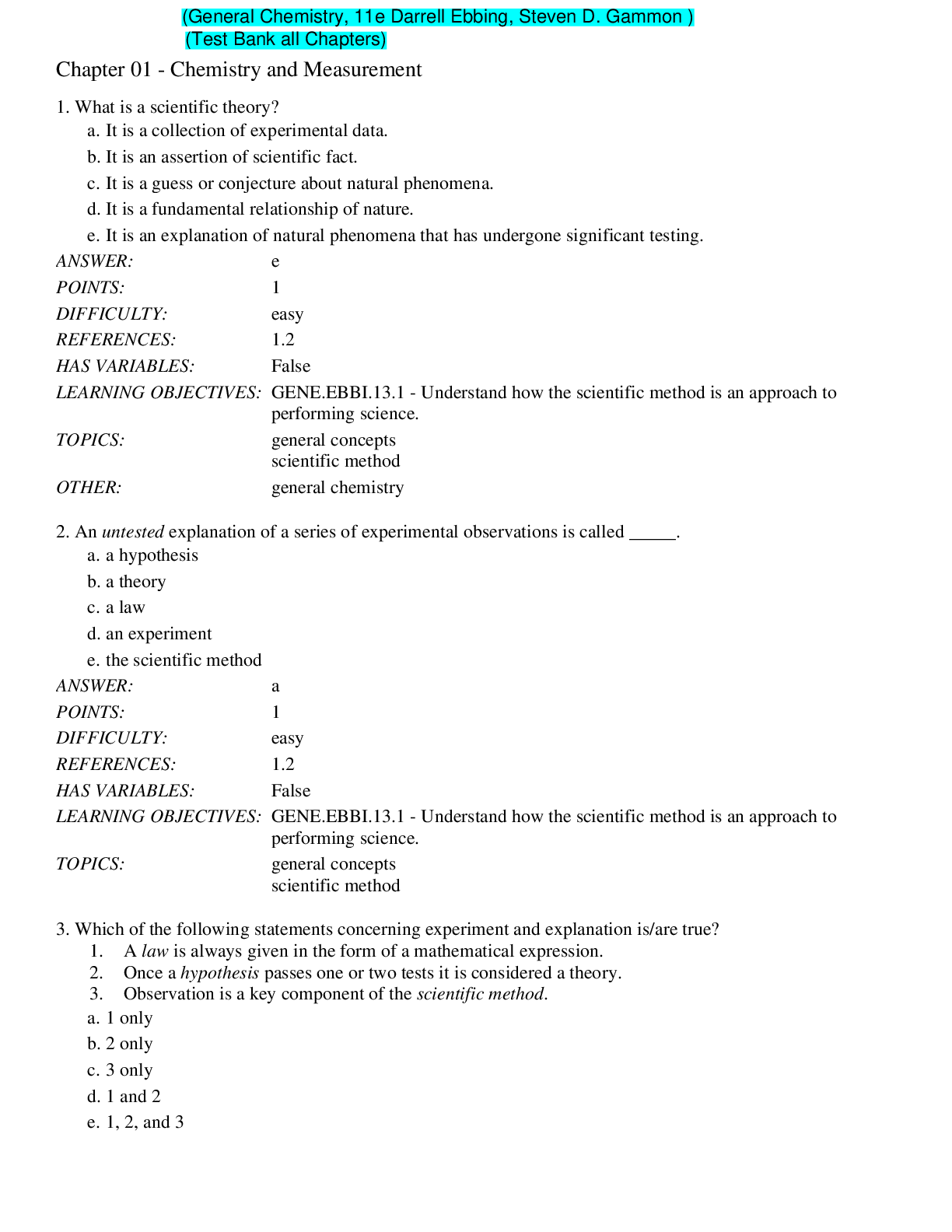
General Chemistry, 11e Darrell Ebbing, Steven D. Gammon (Test...
General Chemistry, 11e Darrell Ebbing, Steven D. Gammon (Solut...
General Chemistry The Essential Concepts, 7e Raymond Chang, Ke...
General Chemistry Atoms First, 2e John McMurry, Robert Fay (Te...
Fundamentals of Soft Matter Science, 2e Linda S Hirst (Solutio...
Solution Manual for Fundamentals of Heat and Mass Transfer 7th...
Foundations for Nanoscience and Nanotechnology, 1e Nils Peter...
.png)
Foundations of College Chemistry, 15e Morris Susan, Arena Will...
.png)
.png)