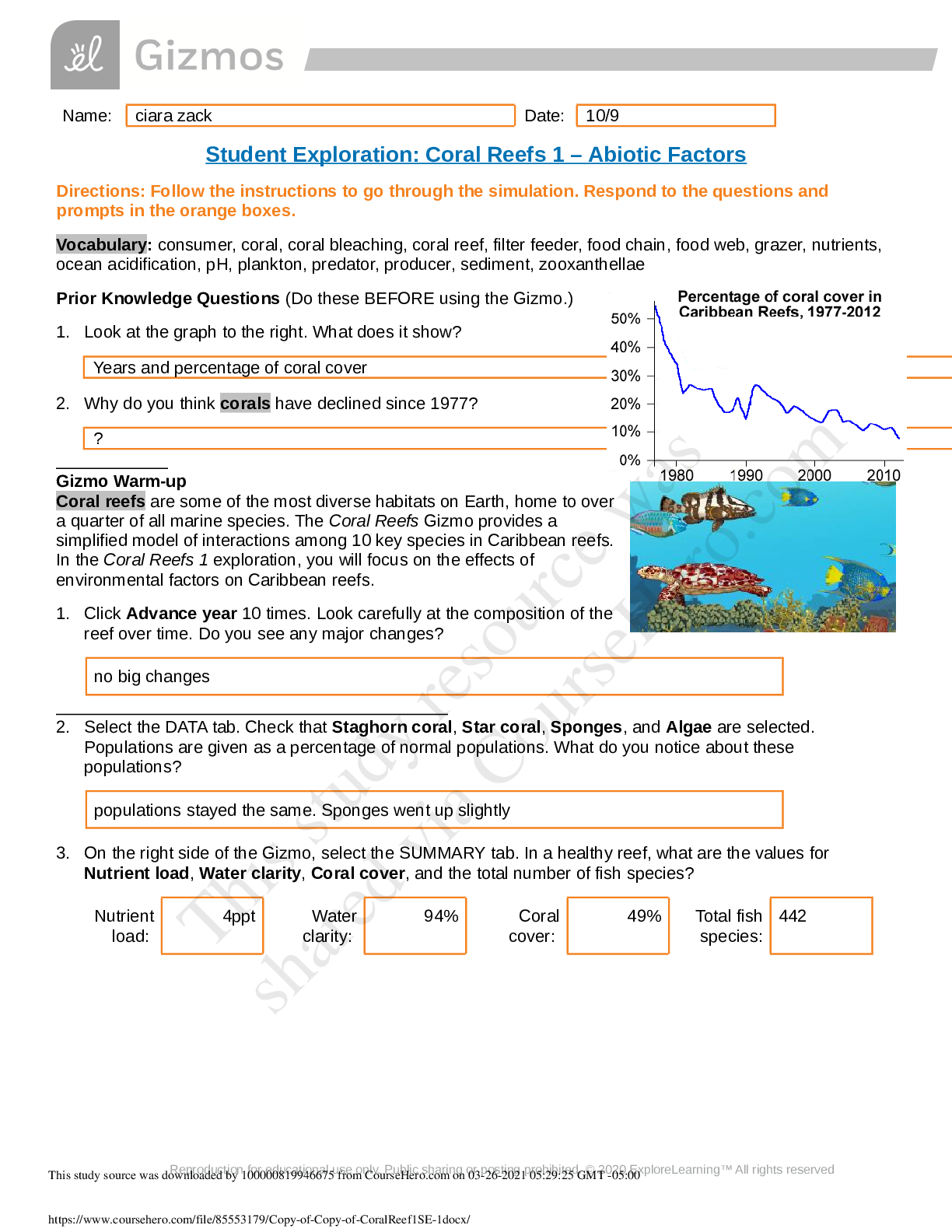
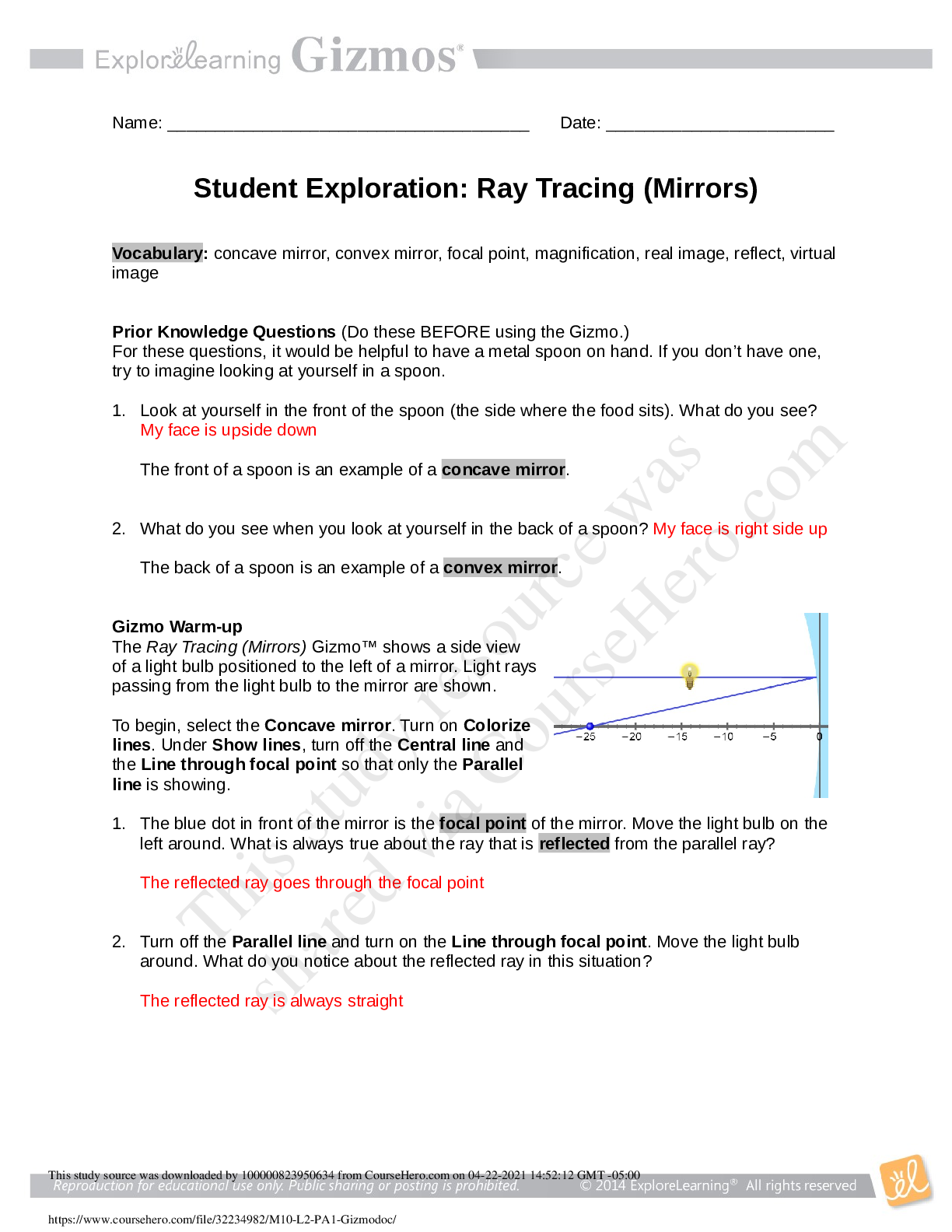
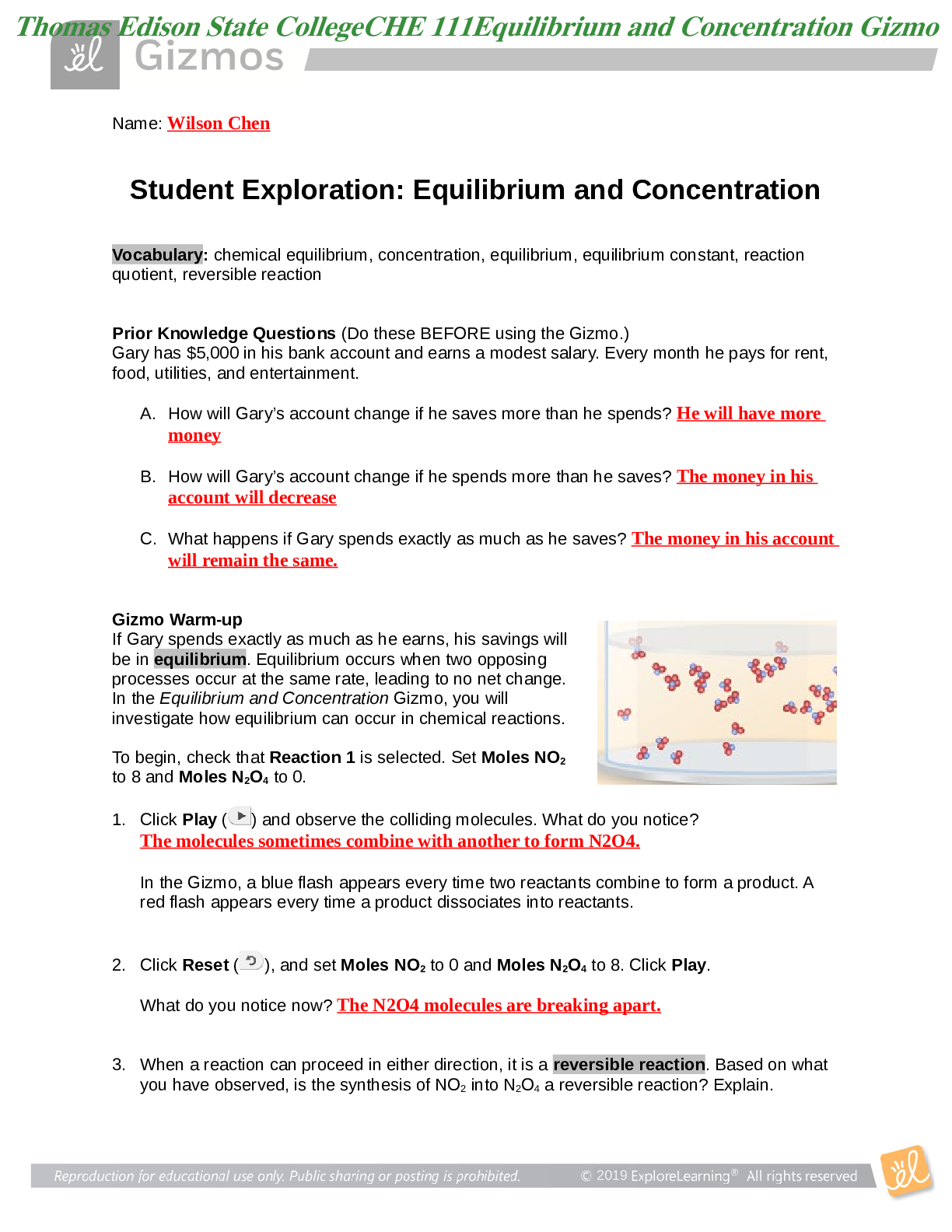
M1L2: Gizmo Lab | Star Spectra
Document Content and Description Below
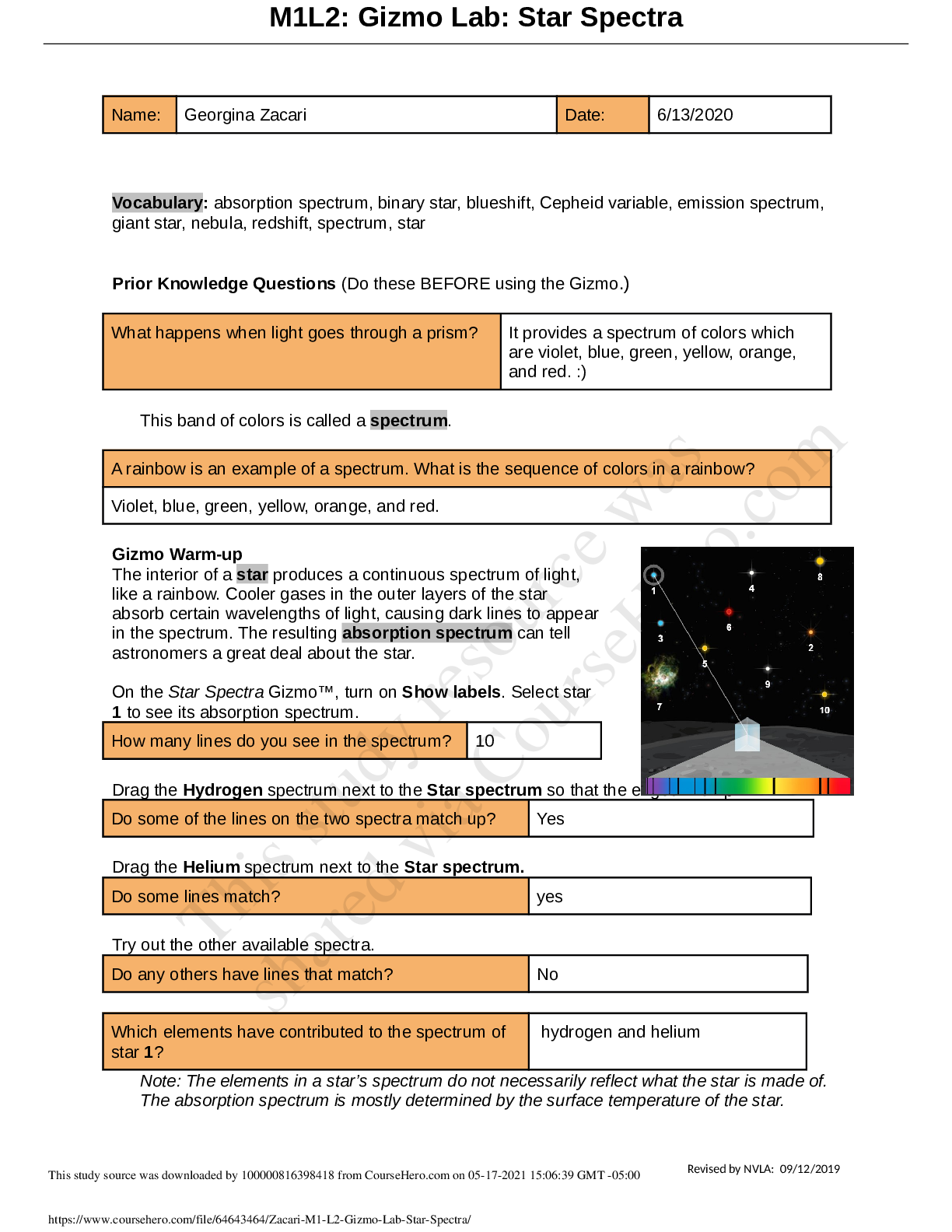
M1L2: Gizmo Lab: Star Spectra
Name: Georgina Zacari Date: 6/13/2020
Vocabulary: absorption spectrum, binary star, blueshift, Cepheid variable, emission spectrum,
giant star, nebula, redshift, spectrum, star
Prior Kno
...
[Show More]
Last updated: 6 months ago
Preview 1 out of 4 pages
Instant download
Buy this Document to get the Full Access Instantly
Provided by Students Who Aced it
We Verify Document Content to Gurantee Accuracy
Reviews( 0 )
Document information
Connected school, study & course
About the document
Uploaded On
May 17, 2021
Number of pages
4
Written in
All

Additional information
This document has been written for:
Uploaded
May 17, 2021
Downloads
0
Views
365
Topic Tags
Related Subjects & Courses
Explore similar study resources and related concepts.
Recommended For You
Get more on GIZMOS »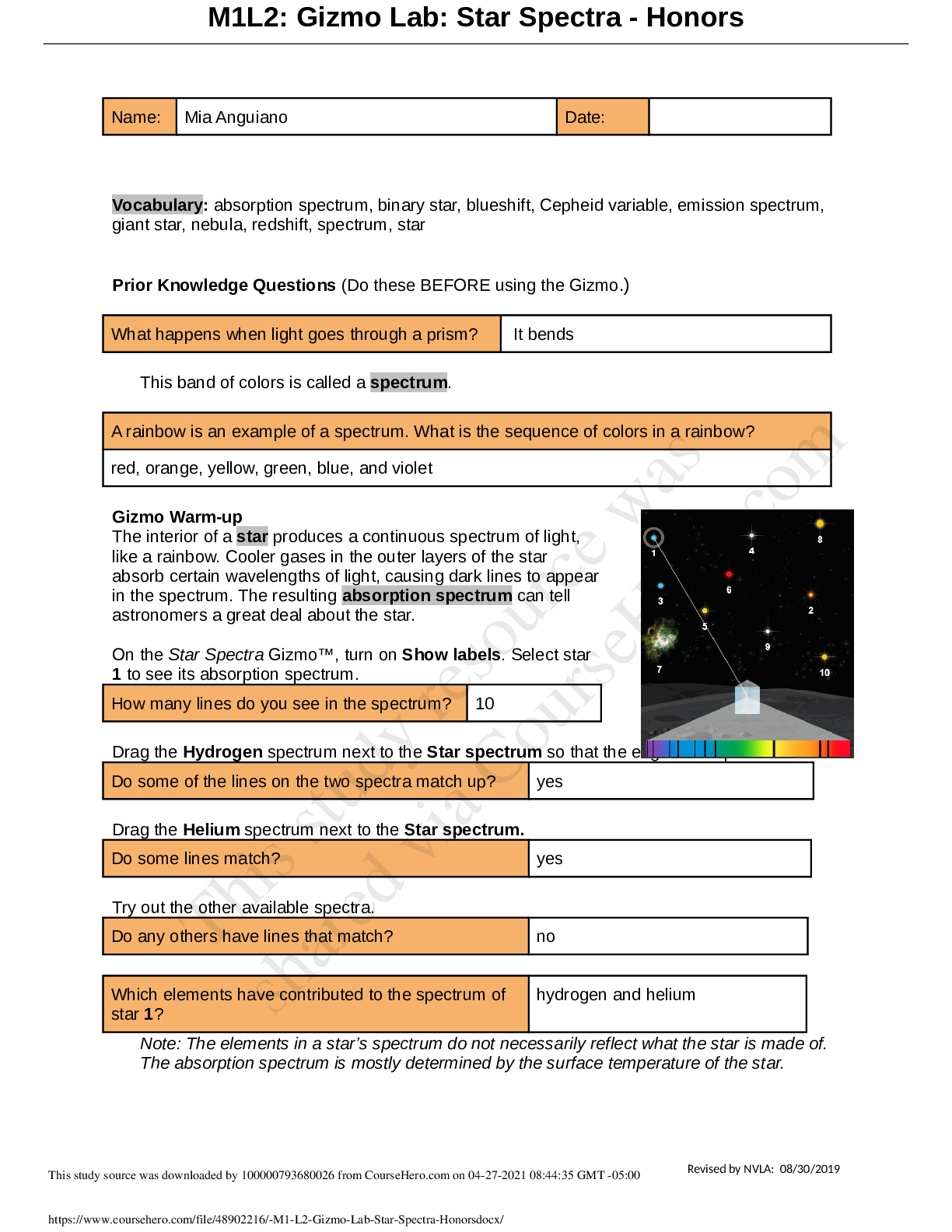


$22
713 Pages
Test Bank for Physics for Scientists and Engineers A Strategic...

$25
100 Pages
Plasma Physics, 2e by Richard Fitzpatrick (Solutions Manual)

$25
37 Pages
College Physics, 3e Roger Freedman, Todd Ruskell, Philip Keste...

$25
79 Pages
A Concise Introduction to Thermodynamics for Physicists, 1e by...
.png)
$25
19 Pages
How Things Work The Physics of Everyday Life, 6e Louis Bloomfi...
.png)
$25
224 Pages
How Things Work The Physics of Everyday Life, 6e Louis Bloomfi...
$20
177 Pages
An Introduction to Applied Electromagnetics and Optics 1st Edi...
$20
319 Pages
Solution Manual for Principles & Practice of Physics 2nd Editi...
$25
18 Pages
Principles & Practice of Physics, 2e Eric Jr. Ma (Solution Man...

$25
177 Pages
Applied Physics, 11e Dale Ewen, Neill Schurter, Erik Gundersen...
$25
975 Pages
College Physics Reasoning and Relationships, 2e (Volume 2) By...
$25
1256 Pages
College Physics Reasoning and Relationships, 2e (Volume 1) By...
$25
57 Pages
College Physics Reasoning and Relationships, 2e (Volum1+ 2) By...

$25
88 Pages
College Physics, 11th Edition Raymond Serway, Chris Vuille (So...
More related documents below
.png)