NR293 Pharmacology for Nursing Running Review
o Unit 1 Introduction to Pharmacology
▪ Labs
▪ Sodium (Na+) 135-145
▪ Potassium (K+) 3.5-5
▪ Albumin 3.5-5
▪ Total protein: 6-8.3
▪ Ch. 1 The Nursing Process and Drug
...
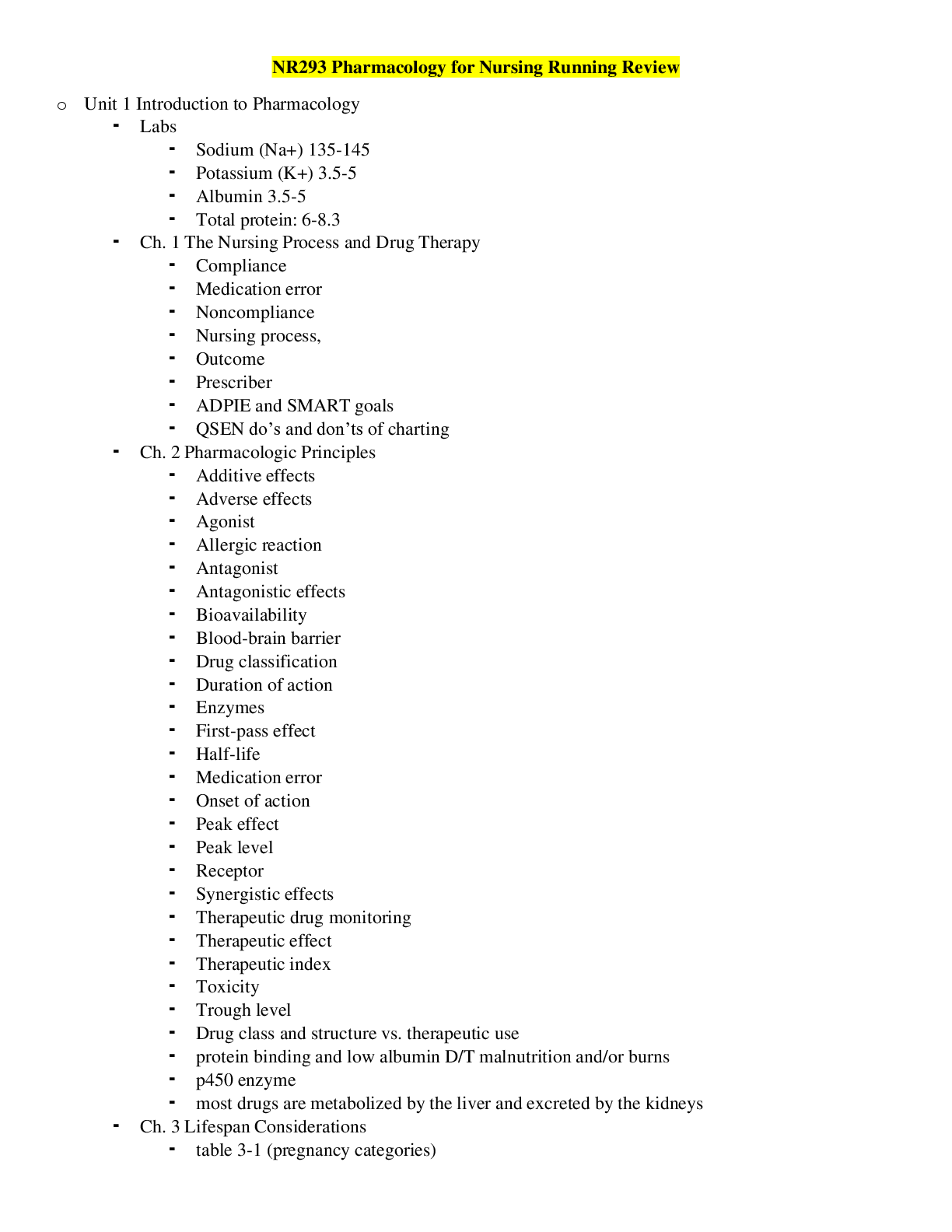
NR293 Pharmacology for Nursing Running Review
o Unit 1 Introduction to Pharmacology
▪ Labs
▪ Sodium (Na+) 135-145
▪ Potassium (K+) 3.5-5
▪ Albumin 3.5-5
▪ Total protein: 6-8.3
▪ Ch. 1 The Nursing Process and Drug Therapy
▪ Compliance
▪ Medication error
▪ Noncompliance
▪ Nursing process,
▪ Outcome
▪ Prescriber
▪ ADPIE and SMART goals
▪ QSEN do’s and don’ts of charting
▪ Ch. 2 Pharmacologic Principles
▪ Additive effects
▪ Adverse effects
▪ Agonist
▪ Allergic reaction
▪ Antagonist
▪ Antagonistic effects
▪ Bioavailability
▪ Blood-brain barrier
▪ Drug classification
▪ Duration of action
▪ Enzymes
▪ First-pass effect
▪ Half-life
▪ Medication error
▪ Onset of action
▪ Peak effect
▪ Peak level
▪ Receptor
▪ Synergistic effects
▪ Therapeutic drug monitoring
▪ Therapeutic effect
▪ Therapeutic index
▪ Toxicity
▪ Trough level
▪ Drug class and structure vs. therapeutic use
▪ protein binding and low albumin D/T malnutrition and/or burns
▪ p450 enzyme
▪ most drugs are metabolized by the liver and excreted by the kidneys
▪ Ch. 3 Lifespan Considerations
▪ table 3-1 (pregnancy categories)
▪ Ch. 4 Cultural, Legal, and Ethical Considerations
▪ Black box warning
▪ Controlled substances
▪ Health Insurance Portability and Accountability Act (HIPAA)
▪ Malpractice
▪ Narcotic
▪ Negligence
▪ beneficence
▪ Ch. 5 Medication Errors Preventing and Responding
▪ Medication reconciliation
▪ QSEN med error prevention
▪ Ch. 6 Patient Education and Drug Therapy
▪ Ch. 7 Over-the-Counter Drugs and Herbal Dietary Supplements
▪ Ch. 29 Fluid & Electrolytes
▪ Blood
▪ Colloid
▪ Colloid oncotic pressure
▪ Crystalloids
▪ Dehydration
▪ Edema
▪ Extracellular fluid (ECF)
▪ Gradient
▪ Hyperkalemia
▪ Hypernatremia
▪ Hypokalemia
▪ Hyponatremia
▪ Interstitial fluid (ISF)
▪ Intracellular fluid (ICF)
▪ Intravascular fluid (IVF)
▪ Isotonic
▪ Osmotic pressure
▪ Plasma
▪ Serum
▪ Solute
▪ Transcellular fluid
o Unit 2 Anti-Infective and Chemotherapeutics (Ch. 38-40, 42, 45-48)
o Oprelvekin stimulates the bone marrow to produce platelets. For clients receiving chemotherapy, thrombocytopenia is minimized so these clients will require fewer platelet transfusions.
o
▪ Labs
▪ WBC 5,000-10,000
▪ Ch. 38 Antibiotics Part 1 The nurse should identify that an antibiotic can be administered 30 min before or after the scheduled time to maintain therapeutic blood levels without requiring an incident report
▪ Diseases and Terms
o Beta-lactam
o Beta-lactamase
o Empiric Therapy
o Prophylactic Antibiotic Therapy
o Subtherapeutic
o Therapeutic
▪ Drugs
o Sulfonamides
▪ *Sulfamethoxazole/trimethoprim (Bactrim, Septra) - The nurse should instruct the client to increase water intake to 1,920 to 2,400 mL (64 to 80 oz) a day to decrease the chance of kidney damage from crystallization.
▪
o Beta-Lactam Antibiotics
▪ Penicillins if severe allergy, contraindication for taking ceftazidime, a cephalosporin antibiotic, due to the potential for cross-sensitivity. Shortness of breath can indicate the client is developing anaphylaxis.
• Penicillin G & *V
• Nafcillin
• *Amoxicillin - Manifestations of urticaria after taking a penicillin- based medication indicate a mild allergic reaction. Therefore, it is appropriate for the nurse to request a change in the type of antibiotic.
• Ampicillin/sulbactam (Unasyn)
• Piperacillin/tazobactam (Zosyn)
▪ Cephalosporins
• First Generation
o Cefazolin (Ancef) - Gentamicin, an aminoglycoside antibiotic, can damage renal function. When combined with a penicillin or cephalosporin, such as cefazolin, the client is at increased risk for nephrotoxicity.
o *Cephalexin (Keflex)
• Second Generation
o Cefoxitin (Mefoxin)
• Third Generation
o *Cefdinir (Omnicef)
o Ceftriaxone (Rocephin)
• Fourth Generation
o Cefepime (Maxipime)
• Fifth Generation
o Ceftaroline (Teflaro)
▪ Carbapenems
• Iminipenem/cilastatin (Primaxin)
▪ Monobactams
• Aztreonam (Azactam)
o Macrolides
▪ Erythromycin
▪ *Azithroymycin (Zithromax) and Clarithromycin (Biaxin)
o Tetracyclines
▪ Demeclocycline (Declomycin)
▪ *Doxycycline (Doryx, Vibramycin) - Doxycycline is a tetracycline antibiotic and is contraindicated for a client who is pregnant because the medication is a category D medication of the FDA pregnancy risk categories, which
indicates the medication has fetal risks that can cause fetal damage. The client should only take doxycycline for a life-threatening condition.
▪ Tigecycline (Tygacil)
▪ Ch. 39 Antibiotics Part 2
▪ Disease and Terms
o Methicillin-Resistant Staphylococcus aureus (MRSA)
o Minimum Inhibitory Concentration (MIC)
o Nephrotoxicity
o Ototoxicity
▪ Drugs
o Aminoglycosides - ototoxic
▪ Amikacin (Amikin)
▪ Gentamicin (Garamycin) - Aminoglycosides, such as gentamicin, are ototoxic, which can manifest as tinnitus and deafness. The nurse should monitor the client for high pitched ringing in the ears and headaches and should notify the provider if these occur.
▪
▪ Tobramycin (Nebcin)
▪ Neomycin (Neo-Fradin)
o Quinolones
▪ *Ciprofloxacin (Cipro) - a fluoroquinolone, is associated with a risk of tendon rupture. This risk is increased in older adult clients, so the client should notify the provider at the onset of tendon pain or swelling.
▪ The nurse should identify tendonitis is a contraindication for taking
ciprofloxacin due to the risk of tendon rupture.
▪ Ciprofloxacin is a quinolone antibiotic. Therefore, the client who has a sulfa allergy can take this medication.
▪ Can cause diarrhea
▪ *Levofloxacin
...........................................................continued...............................................................
[Show More]