Law > STUDY GUIDE > CCJ3024 Tests 1-8 Q&A and Study Guides 1-8 University of Florida (All)
CCJ3024 Tests 1-8 Q&A and Study Guides 1-8 University of Florida
Document Content and Description Below
Last updated: 4 years ago
Preview 1 out of 206 pages
Instant download

Buy this Document to get the Full Access Instantly
Provided by Students Who Aced it
We Verify Document Content to Gurantee Accuracy
Reviews( 0 )
Document information
Connected school, study & course
About the document
Uploaded On
May 21, 2021
Number of pages
206
Written in
All

Additional information
This document has been written for:
Uploaded
May 21, 2021
Downloads
0
Views
332
Topic Tags
Recommended For You
Get more on STUDY GUIDE »
CCJ3024 Tests 1-8 Questions/answers and Study Guides 1-8 | Lat...
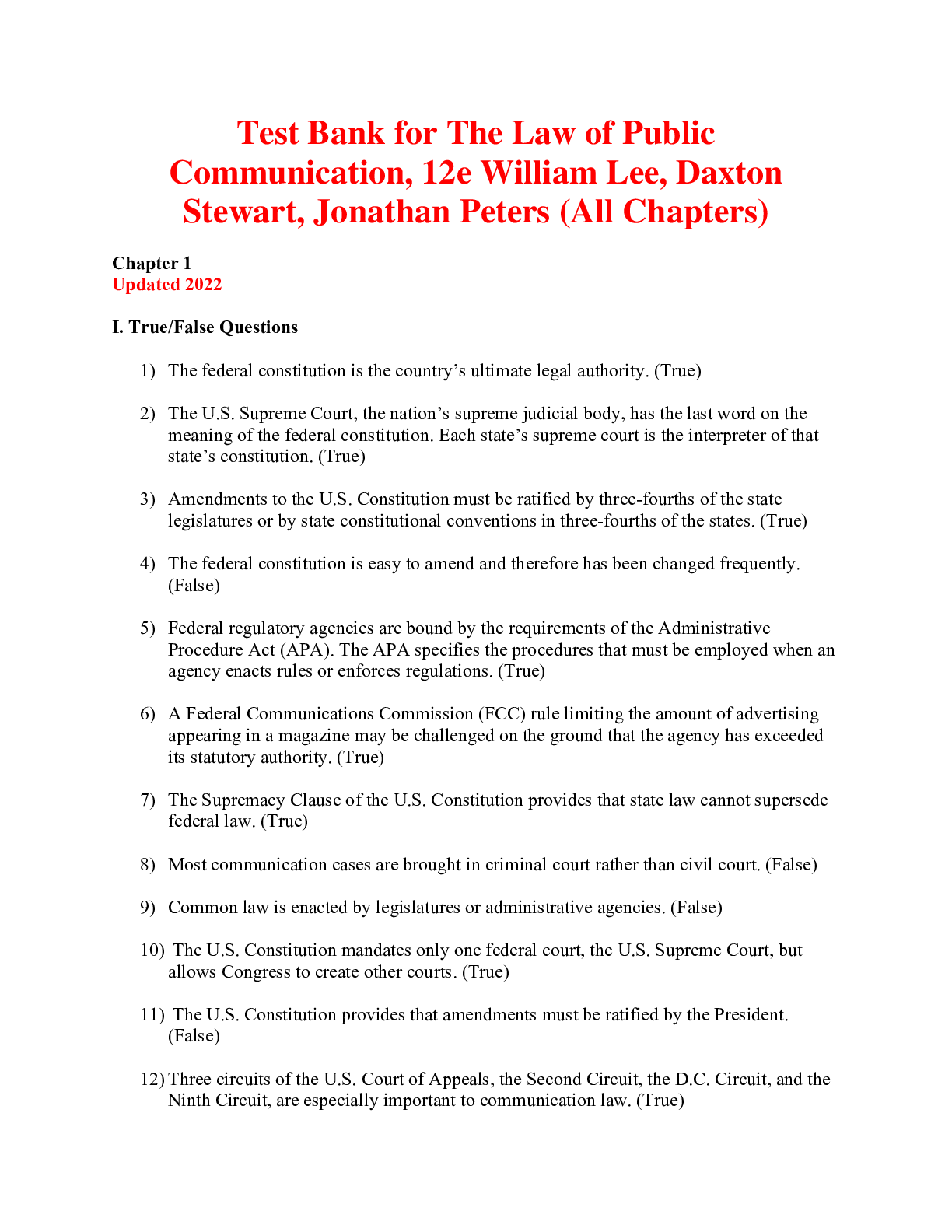
The Law of Public Communication, 12th Edition William, Daxton...
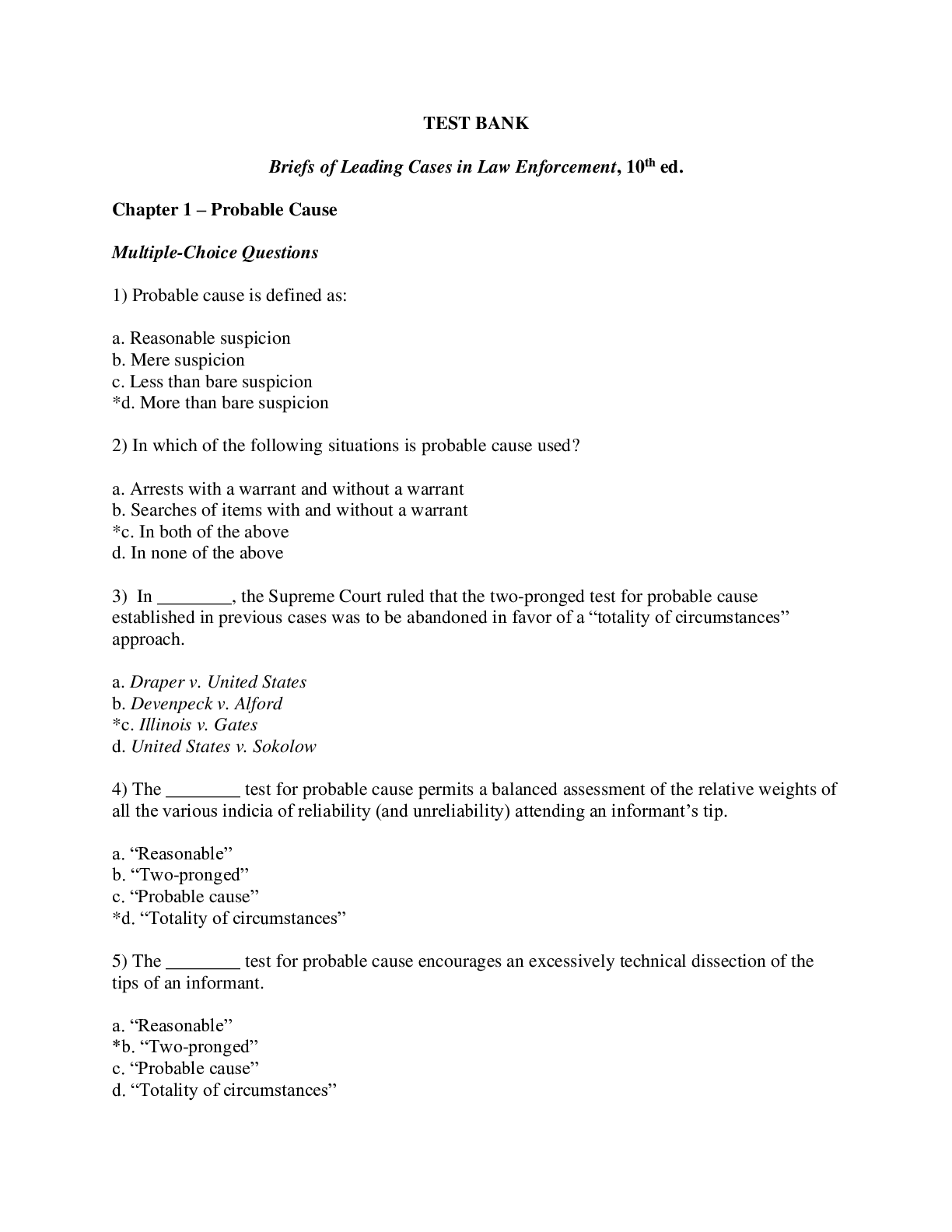
Briefs of Leading Cases in Law Enforcement, 10e Rolando Del Ca...
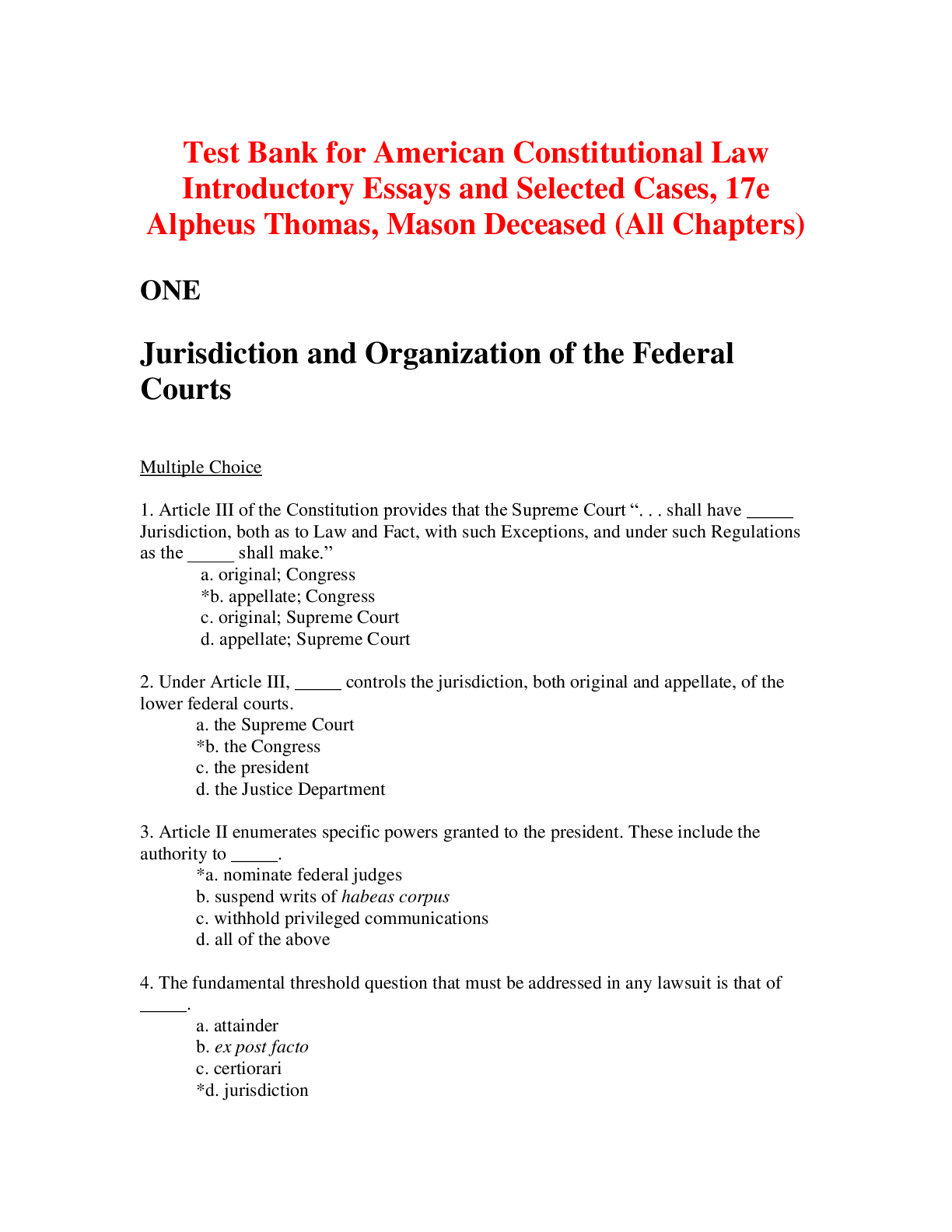
Test Bank for Paralegal Today The Legal Team at Work 7th Edit...


 A Graded.png)