Information Technology > Final Exam Review > MIS 505|Essentials Of Information Systems And Programming| Final Exam Review Chapter 3: Understandin (All)
MIS 505|Essentials Of Information Systems And Programming| Final Exam Review Chapter 3: Understanding Structure
Document Content and Description Below
Last updated: 3 years ago
Preview 1 out of 7 pages
Instant download
Buy this Document to get the Full Access Instantly
Provided by Students Who Aced it
We Verify Document Content to Gurantee Accuracy
Reviews( 0 )
Document information
Connected school, study & course
About the document
Uploaded On
May 22, 2021
Number of pages
7
Written in
All

Additional information
This document has been written for:
Uploaded
May 22, 2021
Downloads
0
Views
157
Topic Tags
Recommended For You
Get more on Final Exam Review ».png)
CH03|Elaborations)|MIS 505 Essentials Of Information Systems A...

MIS 505 Final Exam Review/(100% Correct)?(Download To Score An...

CH04 |Elaborations| MIS 505 Essentials Of Information Systems...

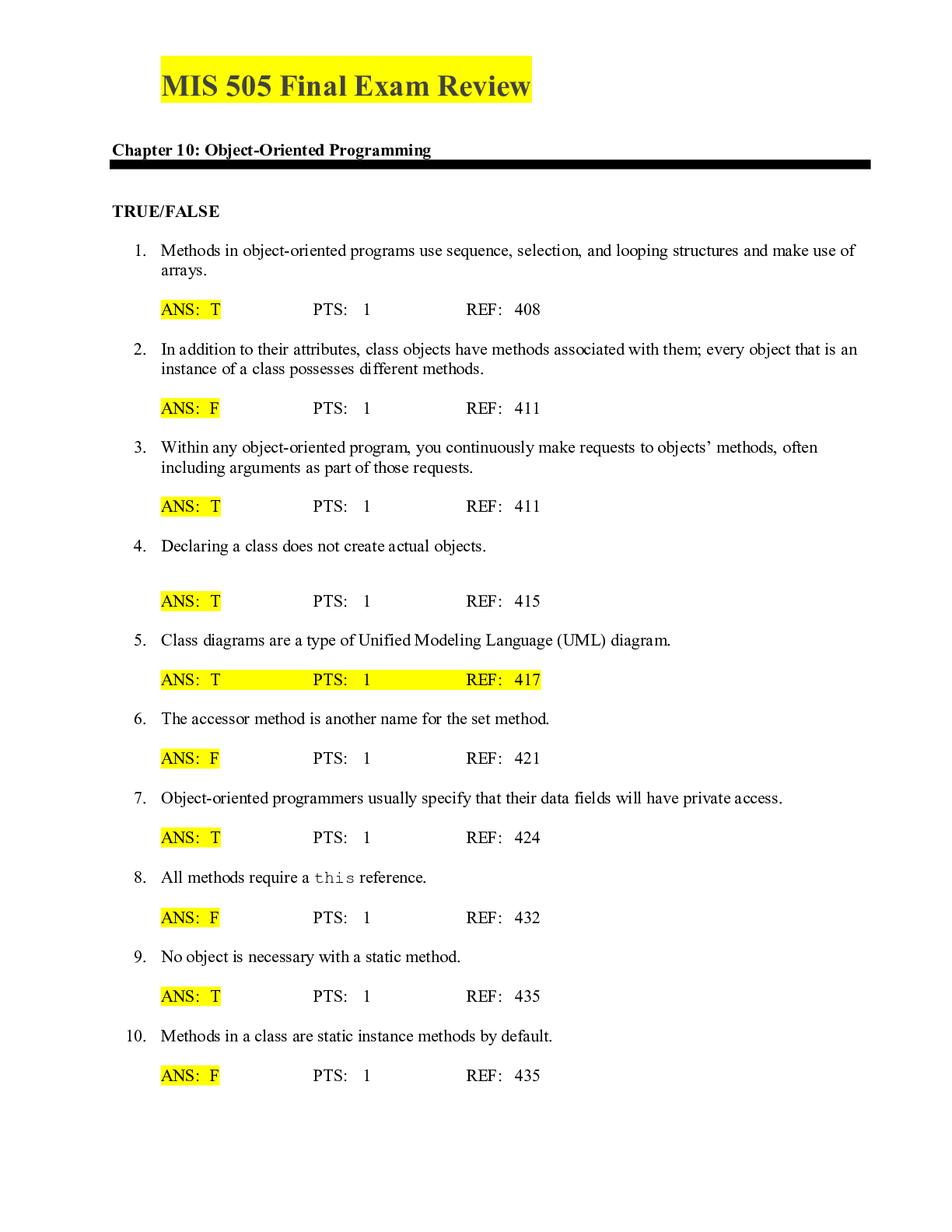
MIS 505 Final Exam Review/(100% Correct)(Download To Score An...
MIS 505 Final Exam Review 7 Chapter 4: Making Decisions > late...
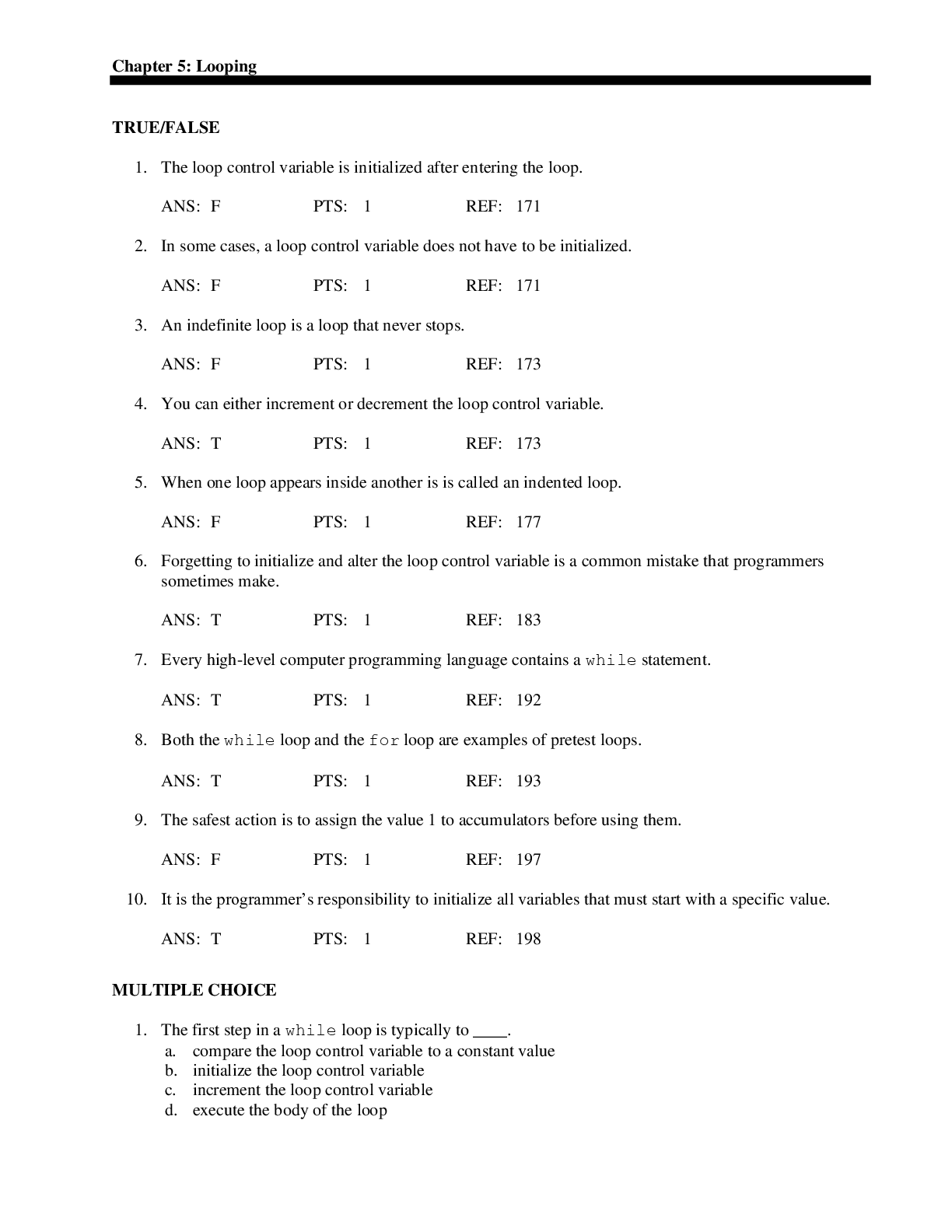
MIS 505 Final Exam Review Chapter 5: Looping | Chapter 5: Loop...

MIS 505 Final Exam Review Chapter 6: Arrays|latest answered fa...
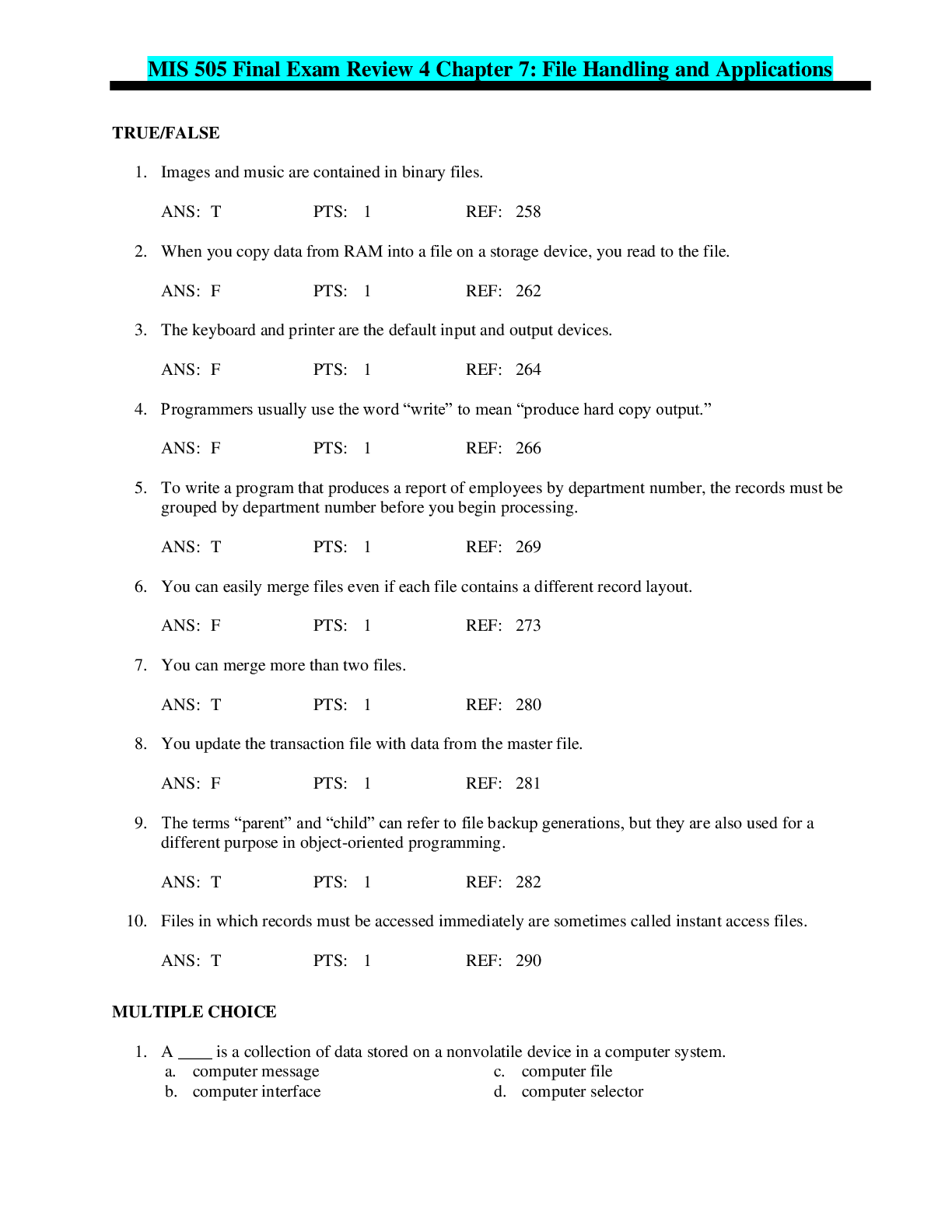
MIS 505 Final Exam Review 4 Chapter 7: File Handling and Appli...

MIS 505 Final Exam Review 3 Chapter 8: Advanced Data Handling...
MIS 505 Final Exam Review 2 Questions & Answers. Chapter 9: Ad...

MIS 505 Final Exam Review: 1 Questions & Answers, all answers...
MIS 505 Final Exam Review 7 Chapter 4: Making Decisions > late...