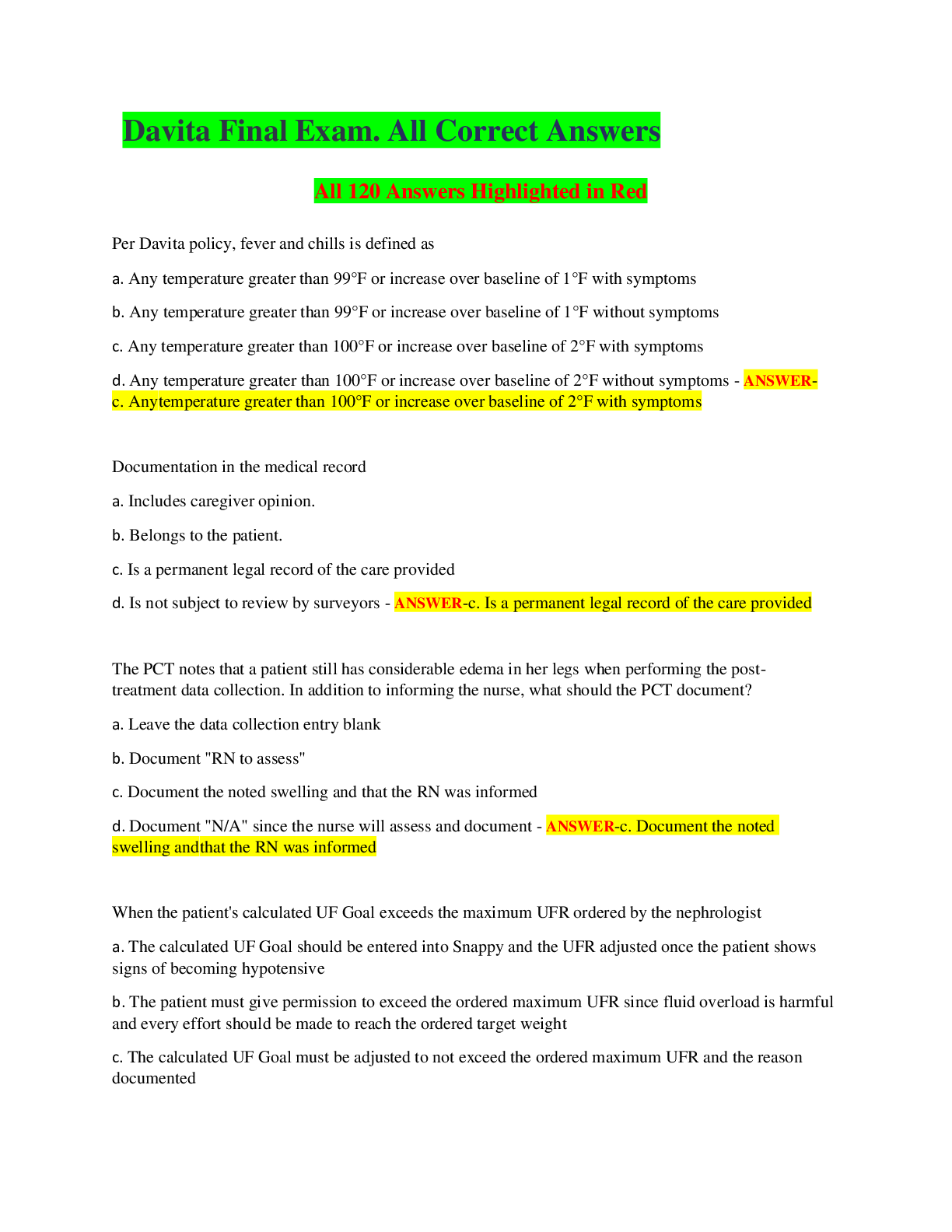
Nursing exam on pharmacology with answers.
Document Content and Description Below
1.a. Describe the differences between local and systemic routes of drug administration,
giving examples of each. (7)
b. Outline the actions a nurse can take to minimise the occurrence of side effects of drugs.
(7)
1a
...
[Show More]
Last updated: 3 years ago
Preview 1 out of 3 pages
Instant download

Buy this Document to get the Full Access Instantly
Provided by Students Who Aced it
We Verify Document Content to Gurantee Accuracy
Reviews( 0 )
Document information
Connected school, study & course
About the document
Uploaded On
May 22, 2021
Number of pages
3
Written in
All

Additional information
This document has been written for:
Uploaded
May 22, 2021
Downloads
0
Views
50
Topic Tags
Recommended For You
Get more on EXAM »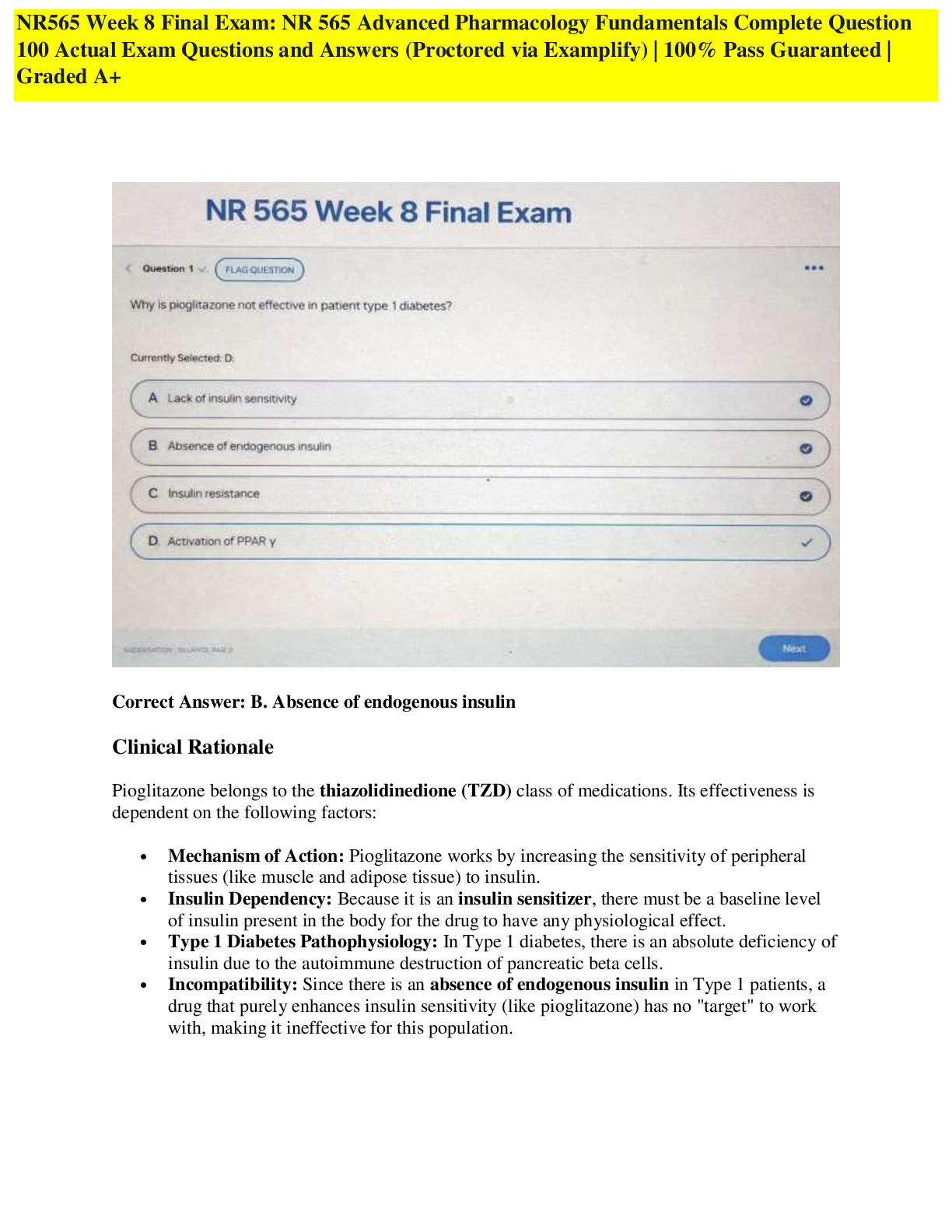
$80
29 Pages
NR565 Week 8 Final Exam Complete with 100 Questions and 100% C...

$9
3 Pages
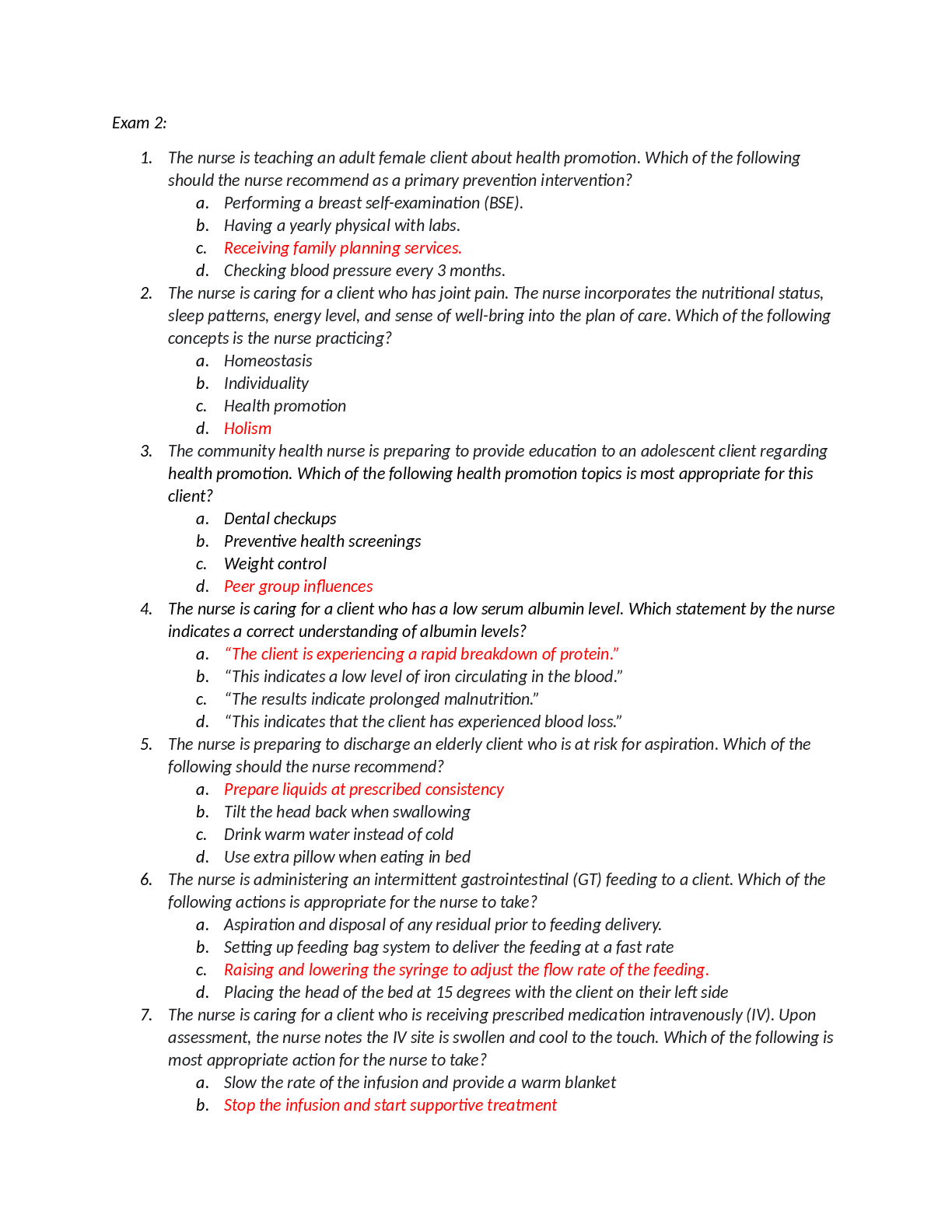
NR 661 Week 3 APEA Module: Endocrine / Disorders – APEA Practi...


More related documents below