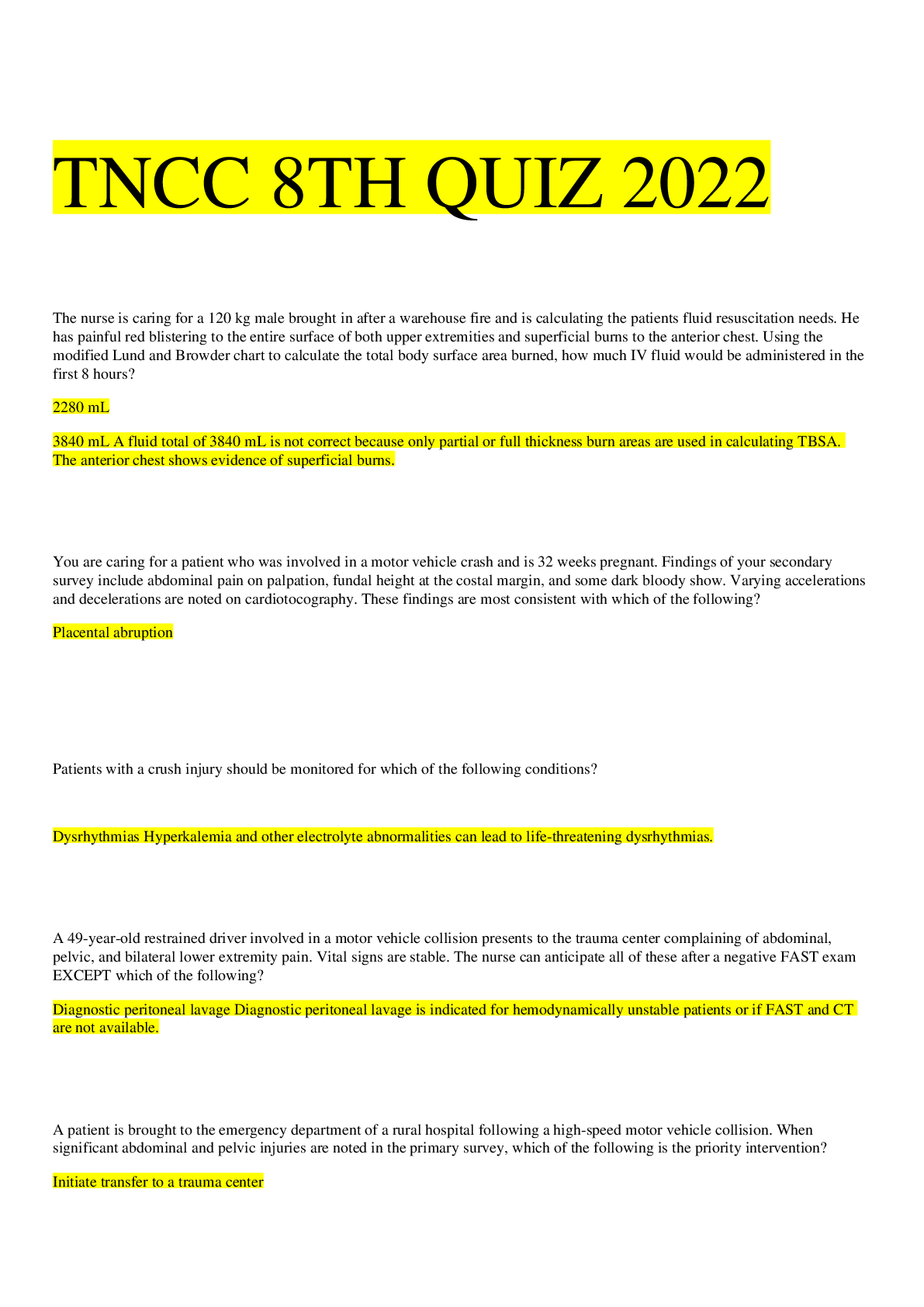
ENGLISH 102 POETRY EXAM Graded A 2021
Document Content and Description Below
Answer:eQuestion 71.6 out of 1.6 pointsA character expresses great pride. In which poem does he appear?Selected Answer:"My Last Duchess"Question 81.6 out of 1.6 pointsThe term used for rhymes that occur at the ends of
...
[Show More]
Last updated: 4 years ago
Preview 1 out of 7 pages
Instant download

Buy this Document to get the Full Access Instantly
Provided by Students Who Aced it
We Verify Document Content to Gurantee Accuracy
Reviews( 0 )
Document information
Connected school, study & course
About the document
Uploaded On
May 24, 2021
Number of pages
7
Written in
All

Additional information
This document has been written for:
Uploaded
May 24, 2021
Downloads
0
Views
120
Topic Tags
Recommended For You
Get more on EXAM »
$8
2 Pages
East Los Angeles College ENGLISH ENGLISH 102 Select one or...

$15
61 Pages
NR 602 WOMENS HEALTH FINAL EXAM QUESTIONS AND ANSWERS GRADED A...

$5
3 Pages
NR 509 Week 6 Midweek Comprehension QUIZ (July 2020-v1) GRADED...

.png)


$12
24 Pages
NR566 Advanced Pharmacology Care of the Family Midterm Exam -g...

.png)
$20
273 Pages
Revised Exam Q n A 2021-2022 Elsevier eBook on Vital Source St...

$32
129 Pages
Maternity Final-Maternity, Newborn and Womens Health Nursing 2...

$6
13 Pages
The Irony of Survival | ENGLISH 102 AP English Literature and...

 Block 1 to 7.png)
$18
128 Pages
PPME Block 1-7 - Primary Professional Military Education (Enli...


More related documents below

.png)