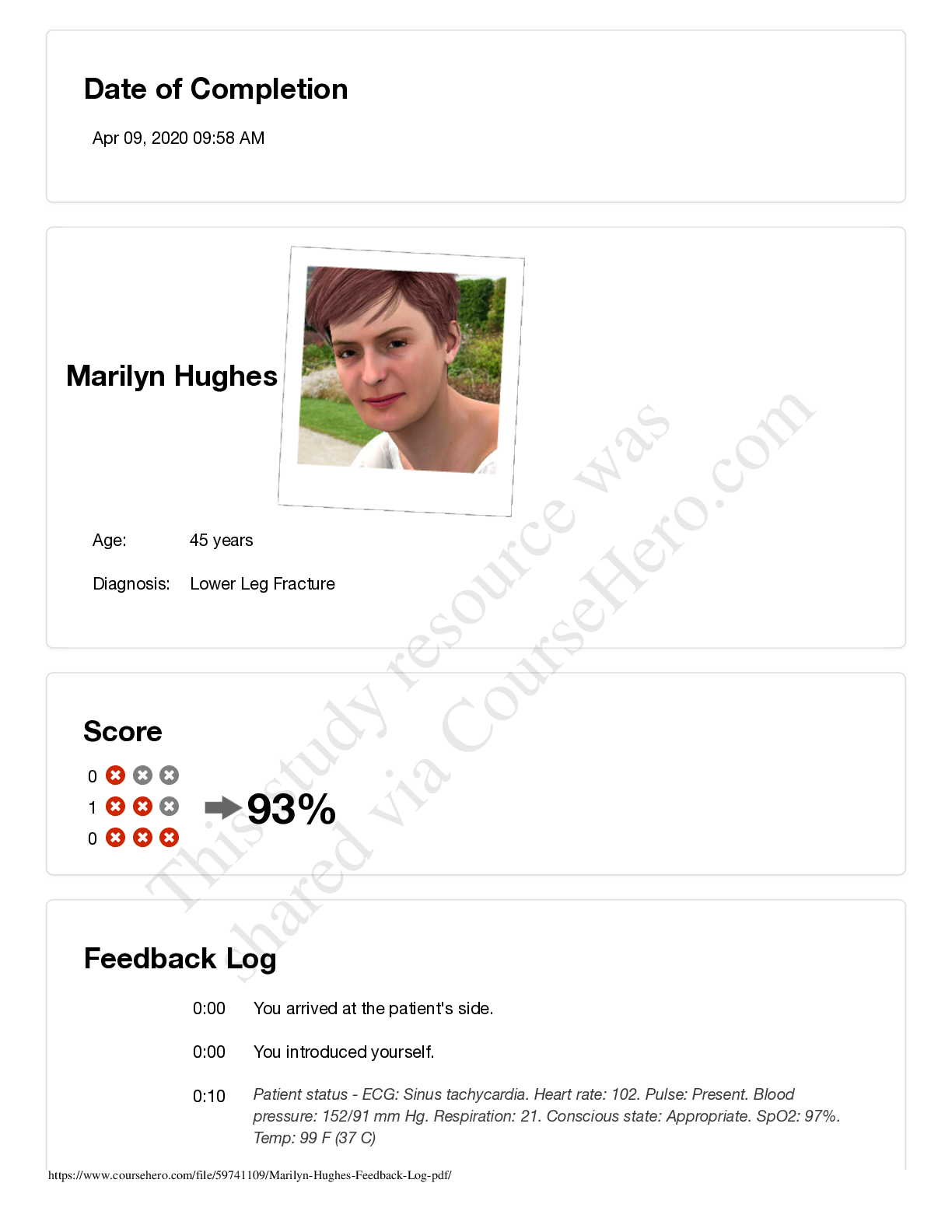
NURSING > vSim For Nursing > Marilyn Hughes Feedback Log: Differential Diagnosis & Primary Care Practicum ( NR-511) (All)
Marilyn Hughes Feedback Log: Differential Diagnosis & Primary Care Practicum ( NR-511)
Document Content and Description Below
Last updated: 3 years ago
Preview 1 out of 4 pages
Instant download
Buy this Document to get the Full Access Instantly
Provided by Students Who Aced it
We Verify Document Content to Gurantee Accuracy
Reviews( 0 )
Document information
Connected school, study & course
About the document
Uploaded On
May 26, 2021
Number of pages
4
Written in
All

Additional information
This document has been written for:
Uploaded
May 26, 2021
Downloads
0
Views
149
Topic Tags
Related Subjects & Courses
Explore similar study resources and related concepts.
Recommended For You
Get more on vSim For Nursing »

Marilyn Hughes Age: 45 years Diagnosis: Lower Leg Fracture Com...
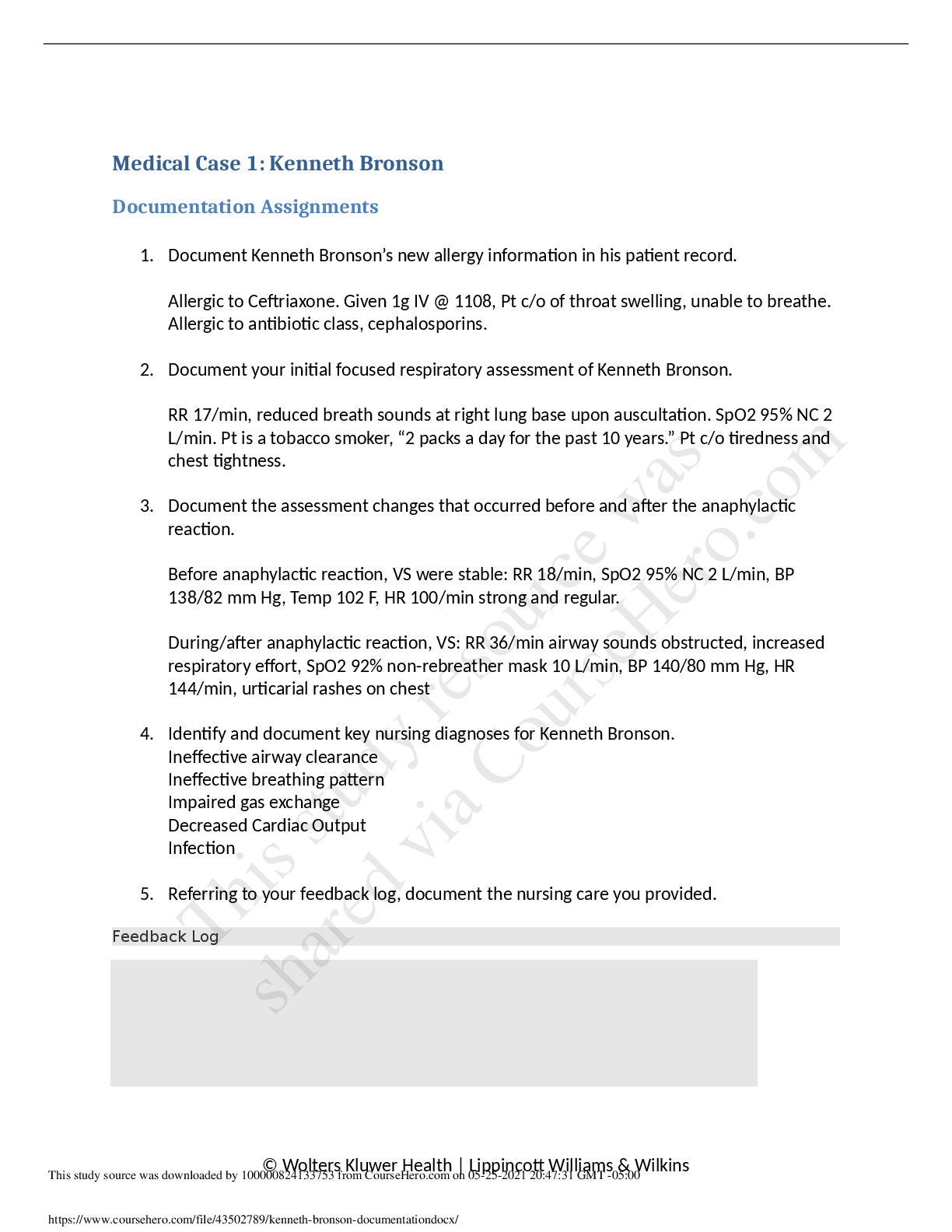
Kenneth Bronson Common Diagnosis & Management in Acute Care Pr...
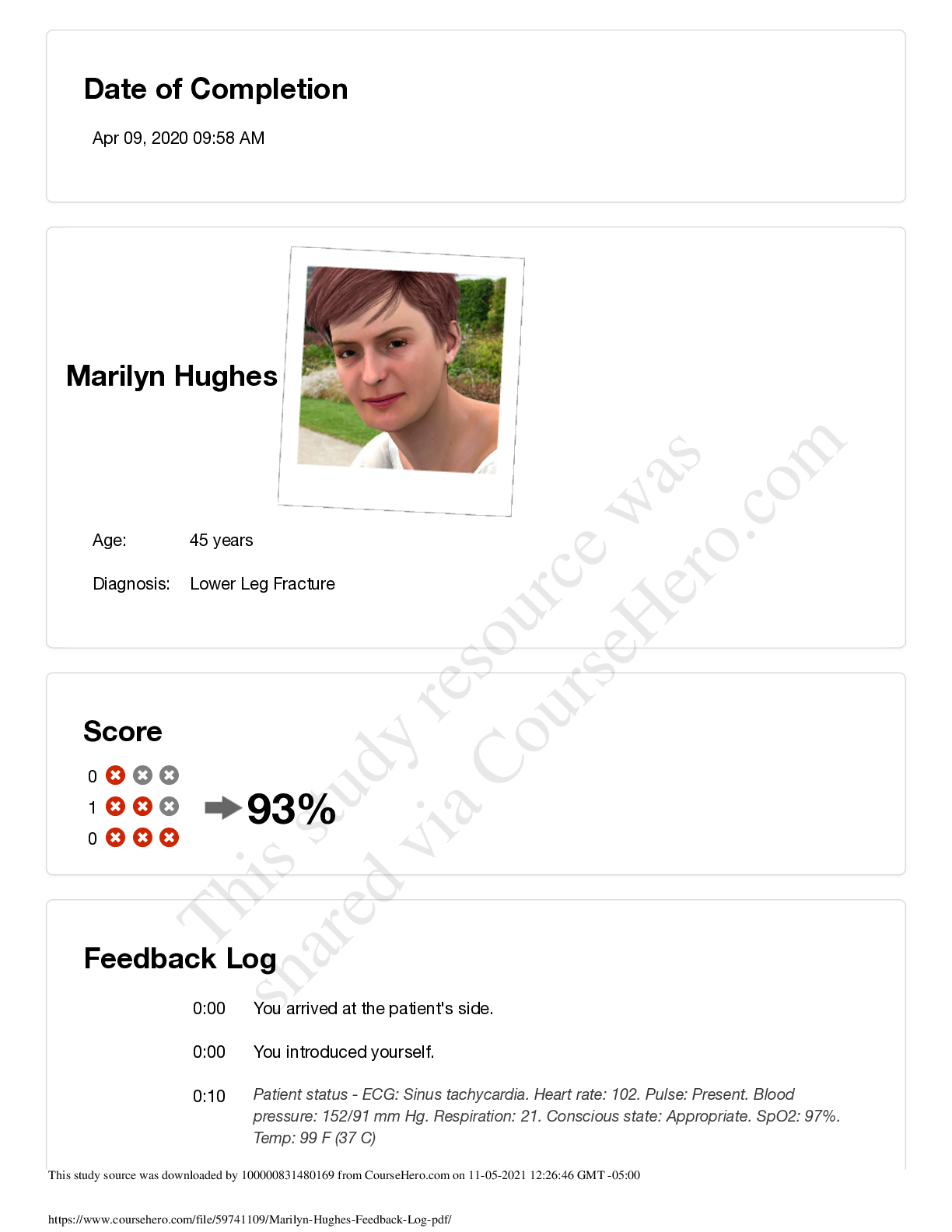
Marilyn Hughes Feedback Log Age:45 years Diagnosis:Lower Leg F...
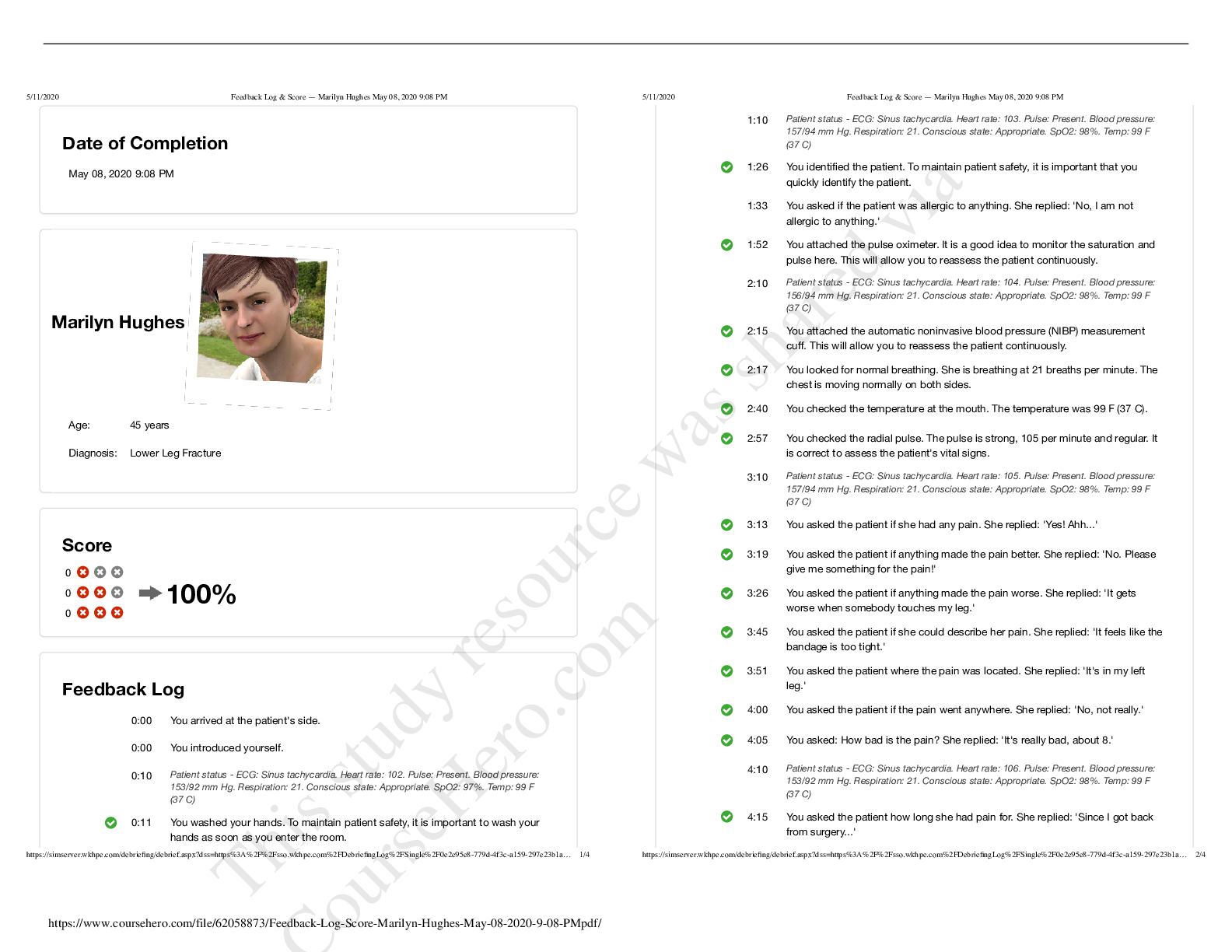
Vsim_Summary Marilyn Hughes Age: 45 years Diagnosis: Lower Leg...
Pediatric Case 5: Charlie Snow Guided Reflection Questions and...
Test Bank for PRINCIPLES OF HUMAN PHYSIOLOGY 4TH EDITION by Ci...
NR 509/ NR509 Advanced Physical Assessment Final Practice Que...
HCB Test 10 COMPLETE QUESTIONS AND VERIFIED ANSWERS ALREADY G...
NR511 Week 8 Final Exam ACTUAL 2025/2026 QUESTIONS AND 100% CO...

Charlie Snow vSim For Nursing Pediatric Case 5_ Guided Reflect...

Jody Rush, 20 Y/O Female; SBAR,SOAP NOTE AND CAREPLAN (Answere...
.png)