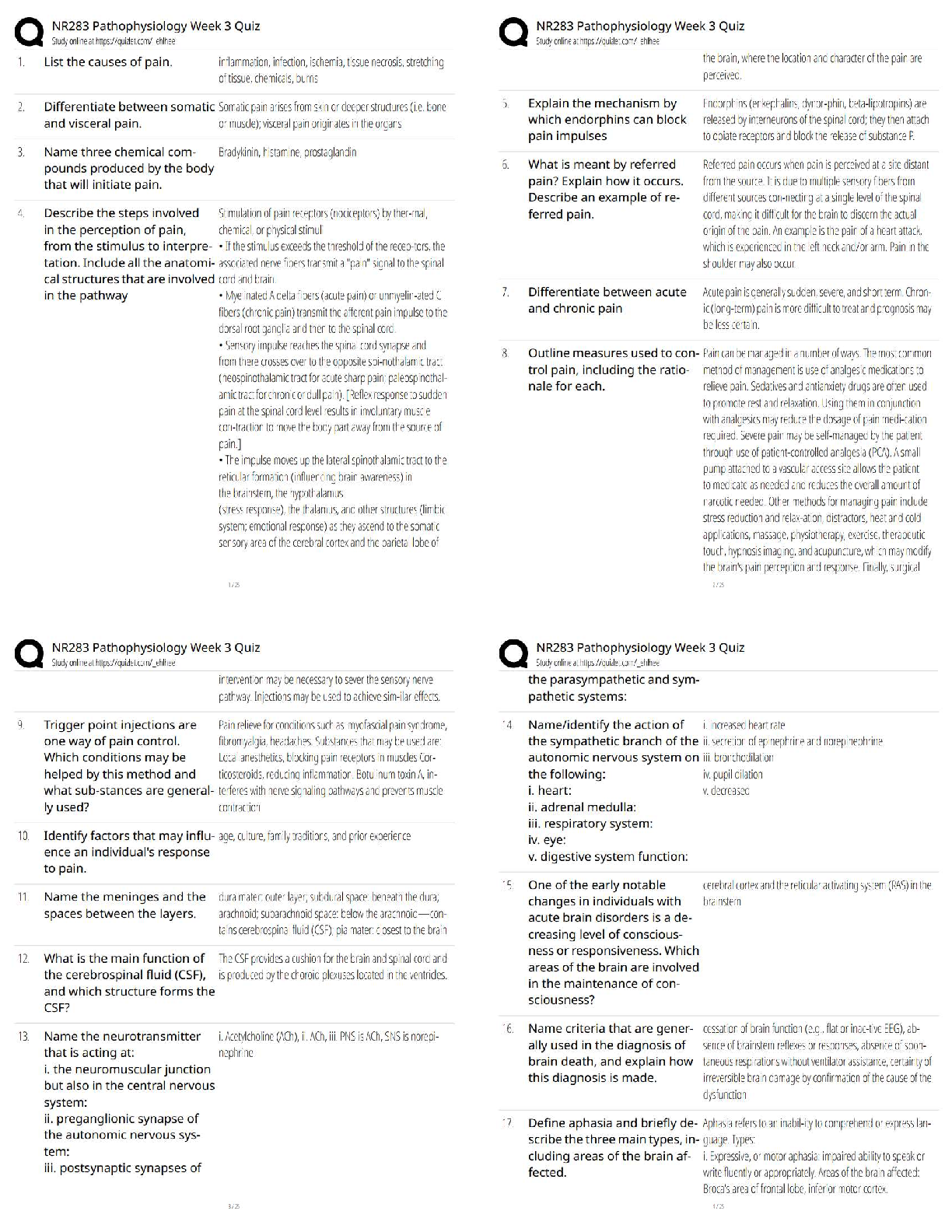
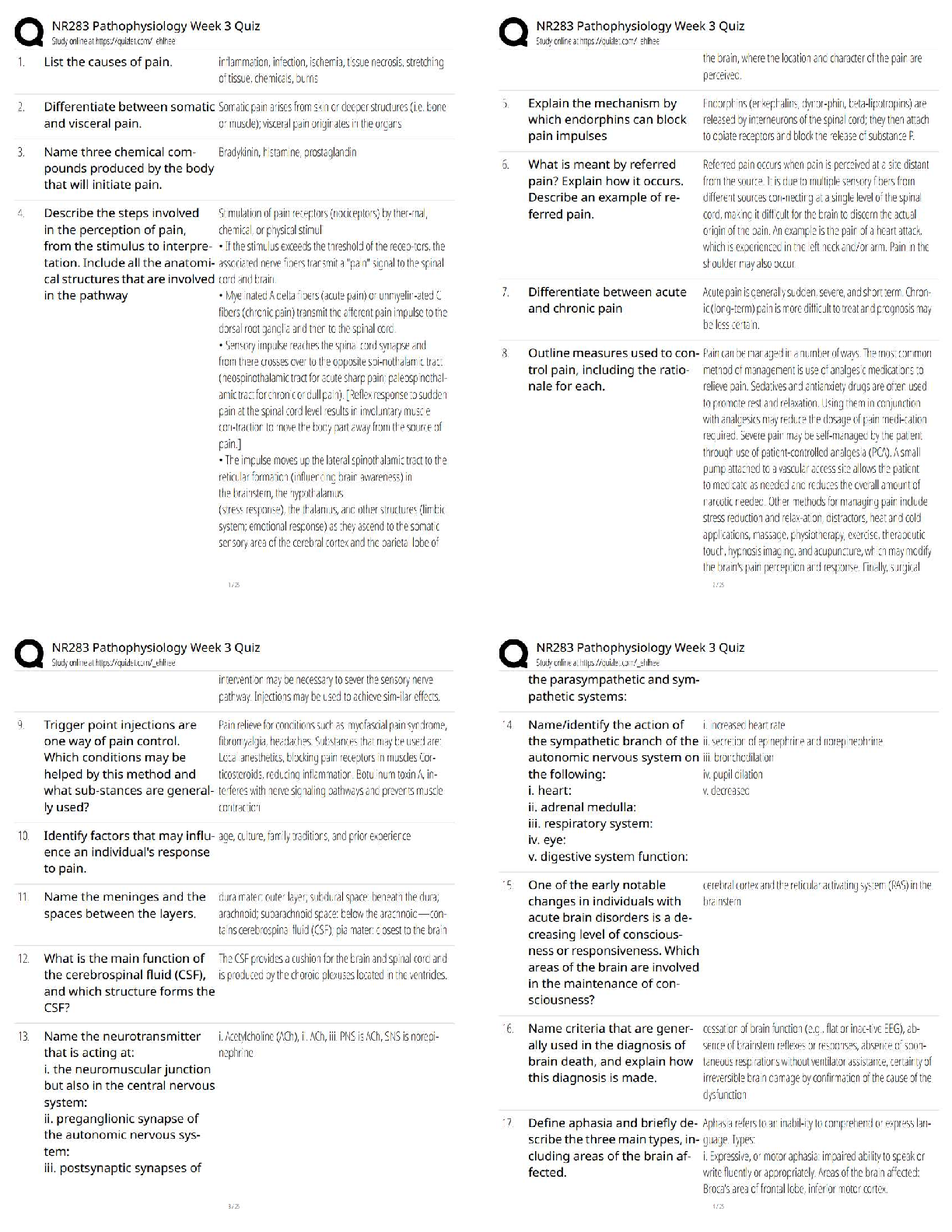
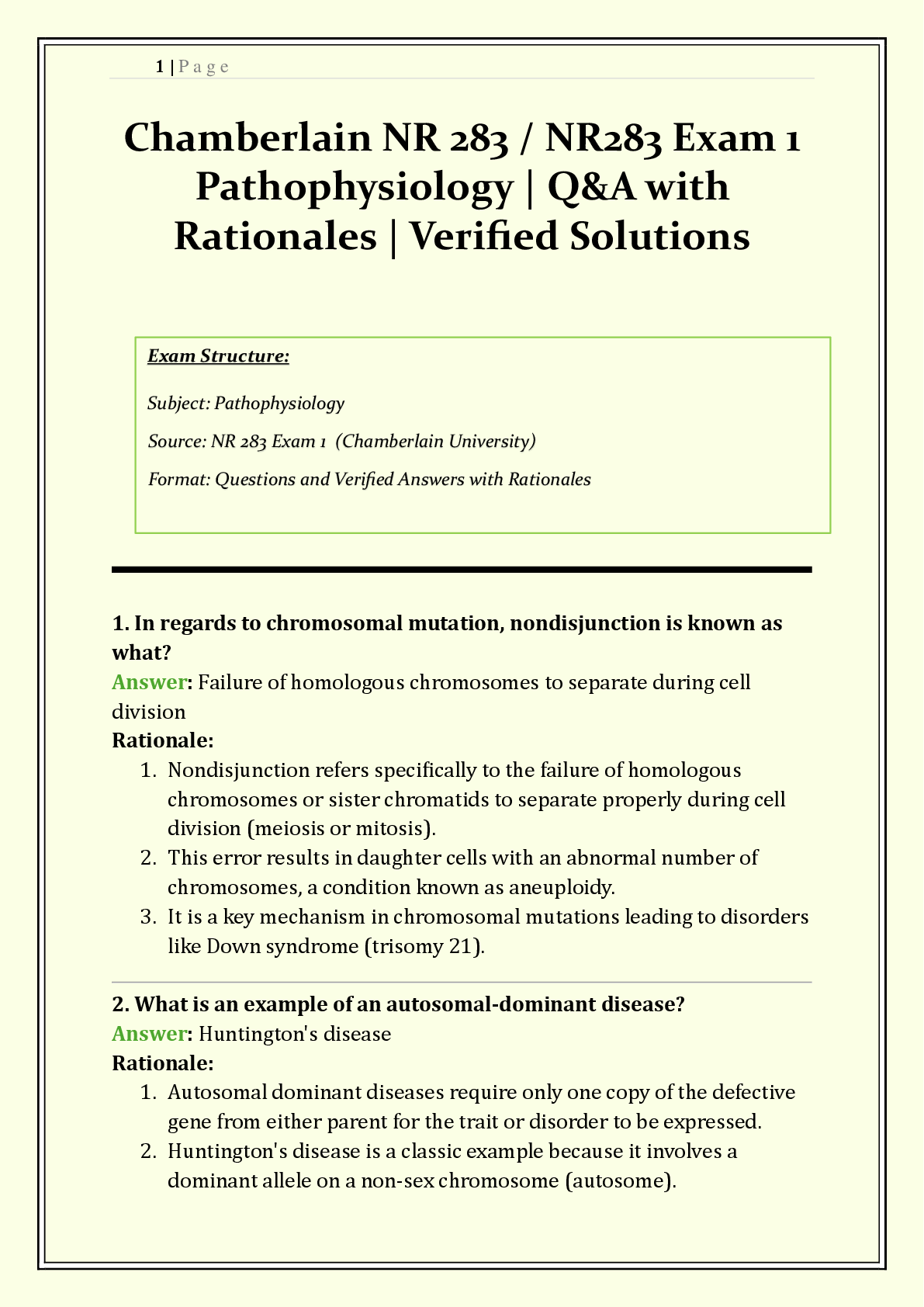
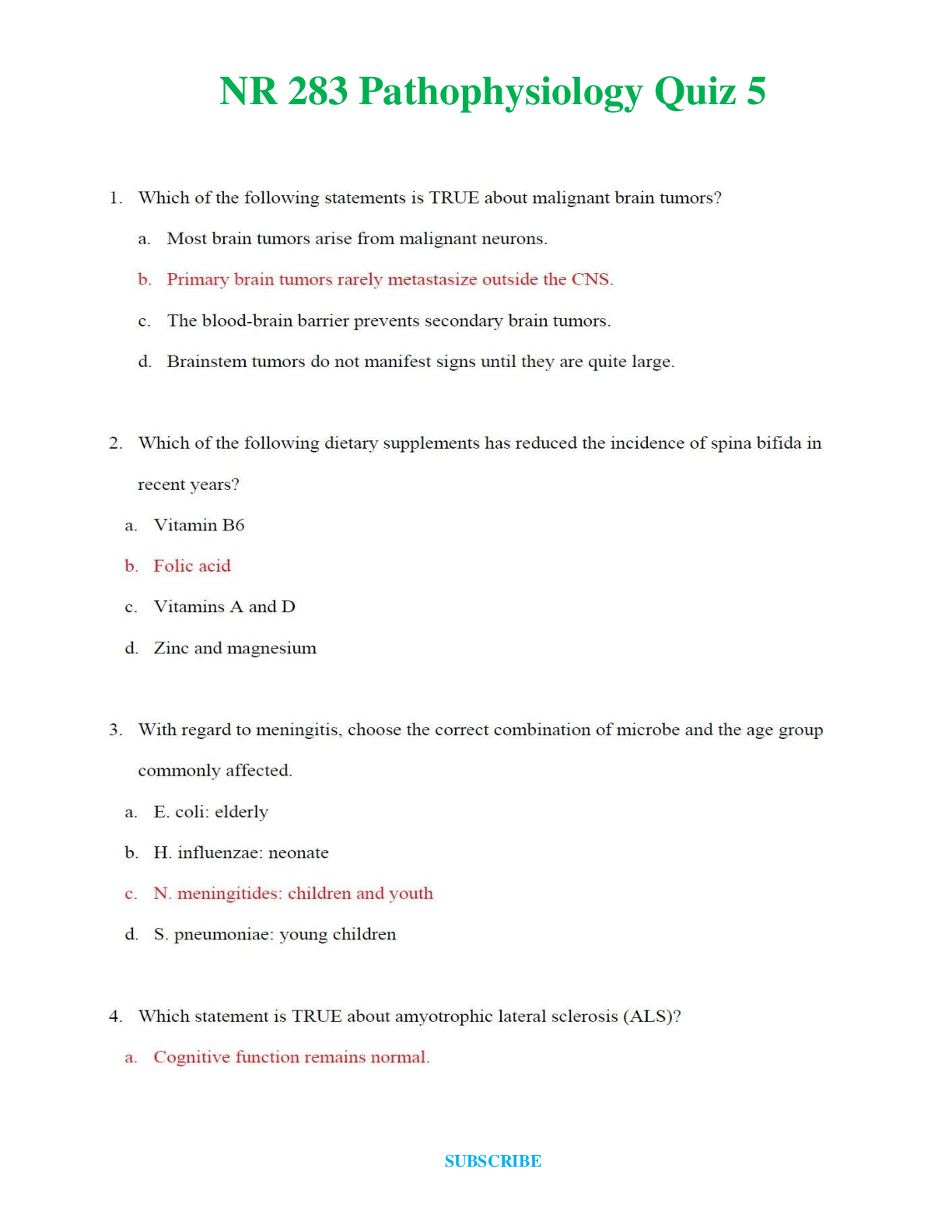
Pathophysiology > TEST BANKS > NR 283 PATHOPHYSIOLOGY TEST QUESTION BANK (All)
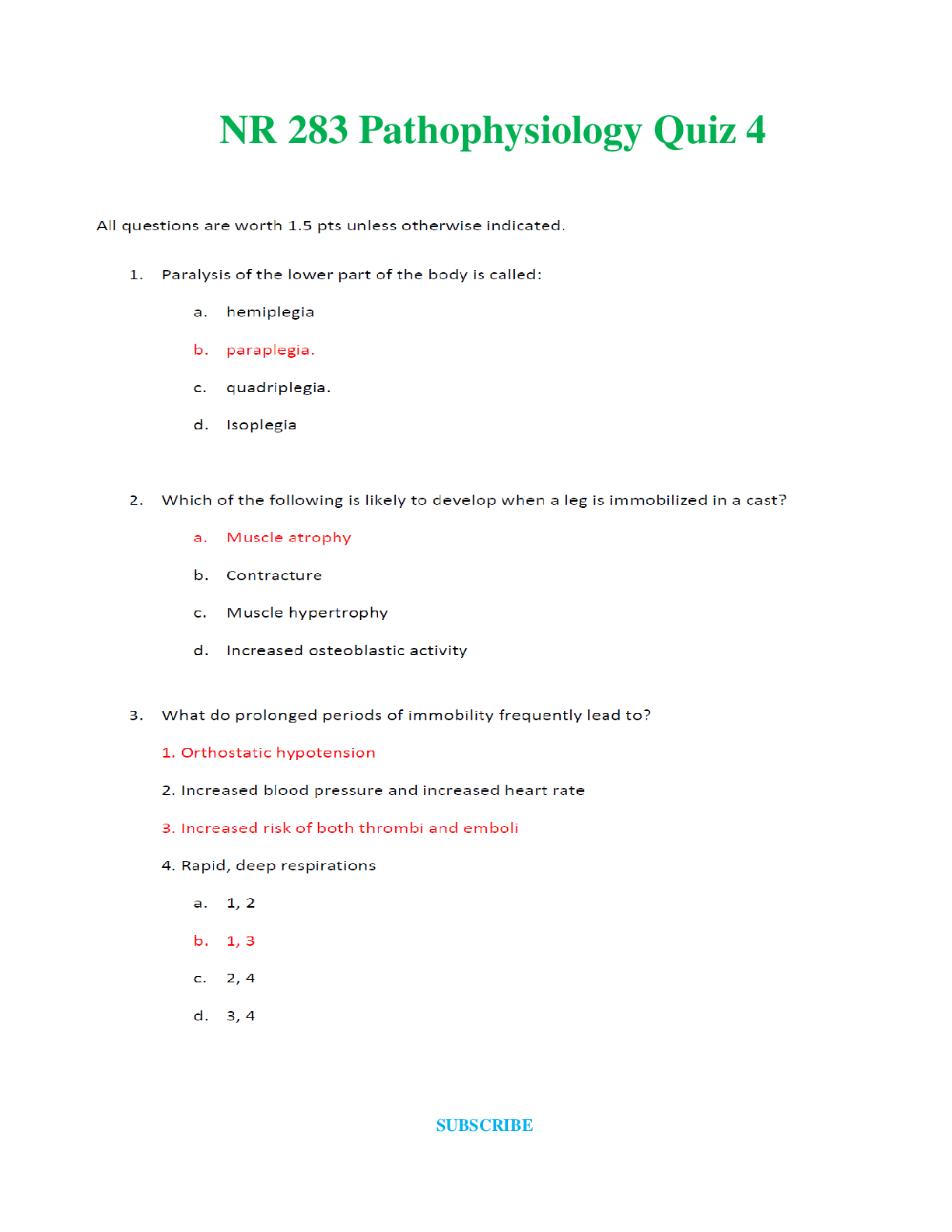
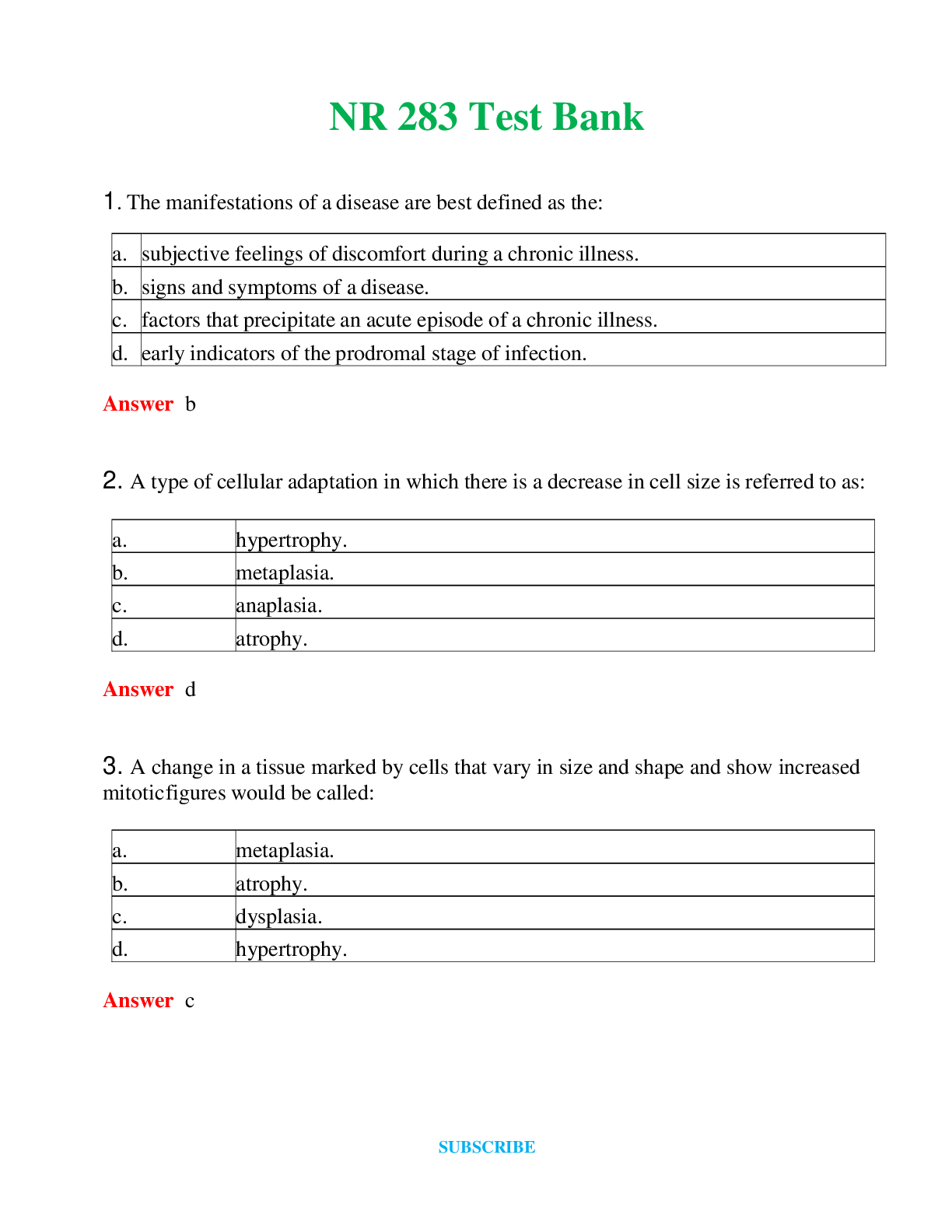
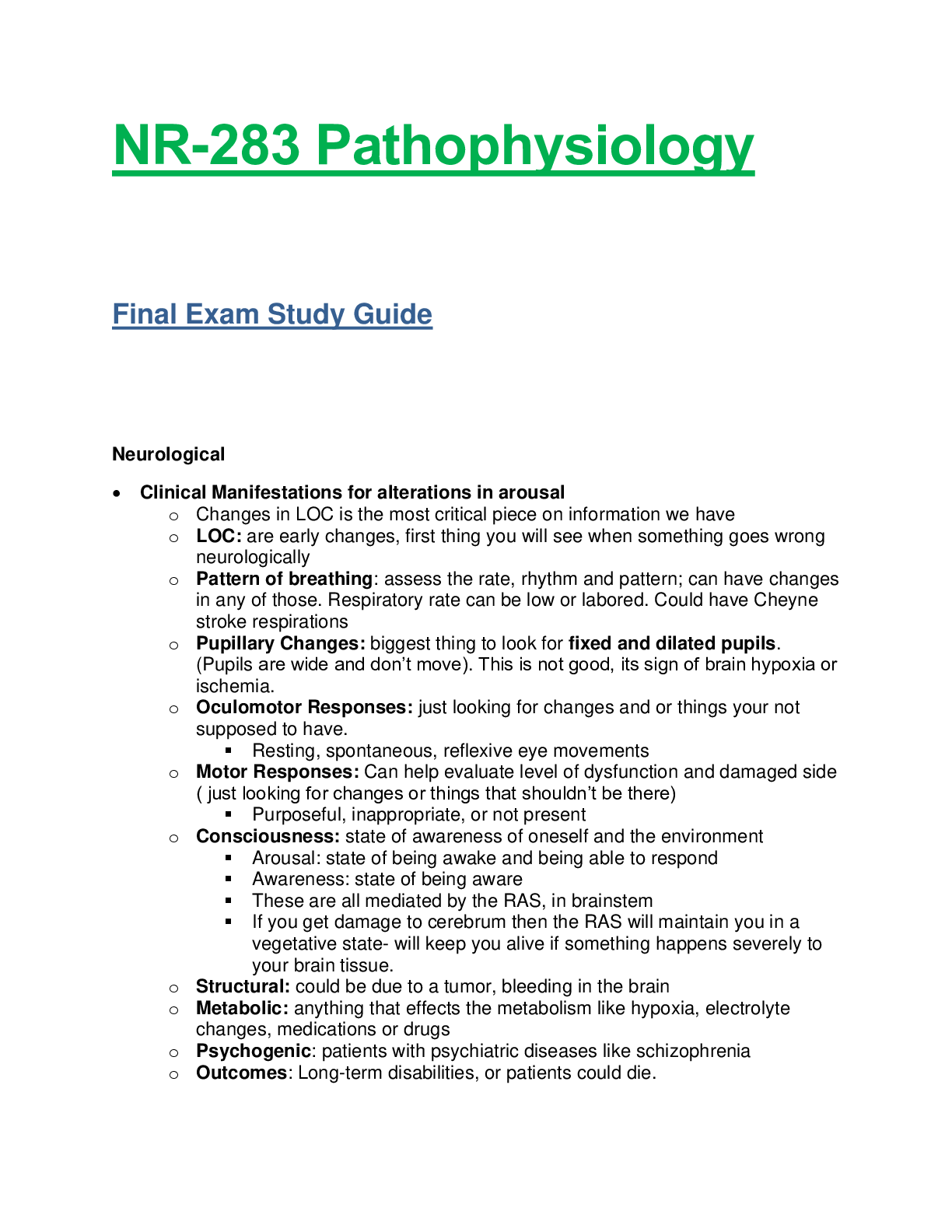
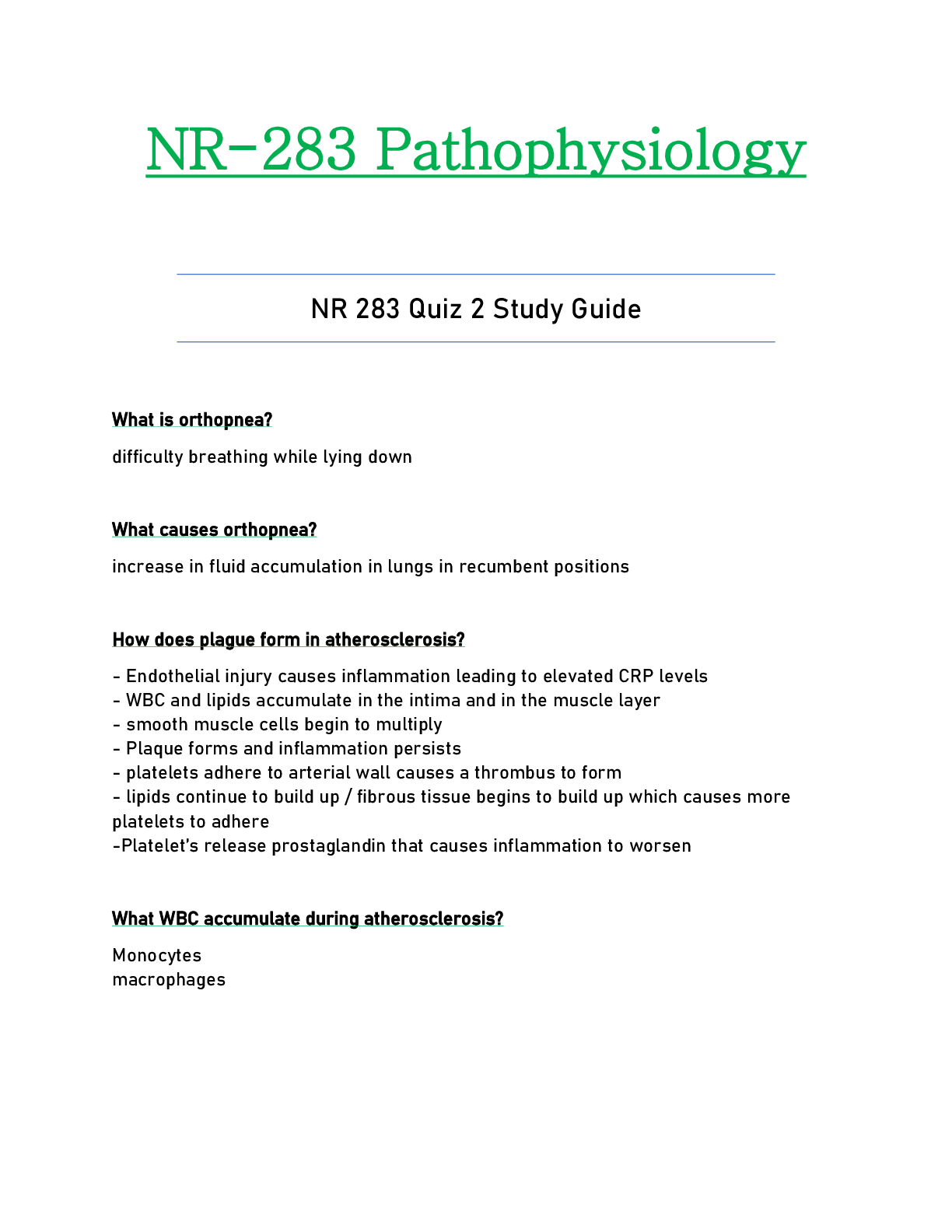
1. Which of the following areas lacks blood vessels and nerves? a. Epidermis b. Dermis c. Subcutaneous tissue d. Fatty tissue ANS: A REF: 142 2. What is a raised, thin- ... walled lesion containing clear fluid called? a. Papule b. Pustule c. Vesicle d. Macule ANS: C REF: 143 3. Which of the following is a common effect of a type I hypersensitivity response to ingested substances? a. Contact dermatitis b. Urticaria c. Discoid lupus erythematosus d. Psoriasis ANS: B REF: 145 4. What change occurs in the skin with psoriasis? a. Recurrent hypersensitivity reactions b. Autoimmune response c. Increased mitosis and shedding of epithelium d. Basal cell degeneration ANS: C REF: 147 5. Which of the following best describes the typical lesion of psoriasis? a. Purplish papules that can erode and become open ulcers b. Firm, raised pruritic nodules that can become cancerous c. Moist, red vesicles, which develop into bleeding ulcers d. Begins as a red papule and develops into silvery plaques ANS: D REF: 147 6. Why do secondary infections frequently develop in pruritic lesions? a. Loss of protective sebum b. Entry of resident flora while scratching the lesion c. Blockage of sebaceous glands d. Increased sweat production ANS: B REF: 148 7. Which disease is considered an autoimmune disorder? a. Pemphigus b. Erysipelas c. Contact dermatitis d. Scleroderma ANS: A REF: 147 8. Which of the following skin lesions are usually caused by Staphylococcus aureus? a. Furuncles b. Verrucae c. Scabies d. Tinea ANS: A REF: 148 9. Which of the following statements applies to impetigo? a. Lesions usually appear on the hands and arms. b. The cause is usually a virus. c. The infection is highly contagious. d. Scar tissue is common following infection. ANS: C REF: 148 10. What is the common signal that a recurrence of herpes simplex infection is developing? a. Severe pain around the mouth b. Malaise and fatigue c. Fever and severe headaches d. Mild tingling along the nerve or on the lips ANS: D REF: 150 11. Herpes virus is usually spread by all of the following EXCEPT: a. saliva during an exacerbation and for a short time thereafter. b. contact with the fluid in the lesion. c. contaminated blood. d. autoinoculation by fingers. ANS: C REF: 150 12. How are antiviral drugs effective in treating a viral infection? a. They destroy the virus if administered for at least 2 weeks. b. They limit the acute stage and viral shedding. c. They prevent any systemic effects of viruses. d. They prevent any secondary bacterial infection. ANS: B REF: 150 13. Tinea capitis is an infection involving the: a. trunk. b. feet. c. scalp. d. nails. ANS: C REF: 150 14. Plantar warts are caused by: a. the fungus aspergillus. b. a parasitic arthropod. c. human papillomavirus. d. the bacterium Streptococcus pyogenes. ANS: C REF: 150 15. Which of the following statements regarding acute necrotizing fasciitis is TRUE? a. Infection is localized in a small area of the epidermis. b. It is usually caused by S. aureus. c. Spontaneous recovery usually occurs in 48 hours. d. Infection rapidly causes extensive tissue necrosis and toxic shock. ANS: D REF: 149 [Show More]
Last updated: 2 years ago
Preview 1 out of 351 pages
Buy this document to get the full access instantly
Instant Download Access after purchase
Buy NowInstant download
We Accept:
Can't find what you want? Try our AI powered Search
Connected school, study & course
About the document
Uploaded On
Jun 04, 2021
Number of pages
351
Written in
All
This document has been written for:
Uploaded
Jun 04, 2021
Downloads
1
Views
290
Scholarfriends.com Online Platform by Browsegrades Inc. 651N South Broad St, Middletown DE. United States.
We're available through e-mail, Twitter, Facebook, and live chat.
FAQ
Questions? Leave a message!
Copyright © Scholarfriends · High quality services·