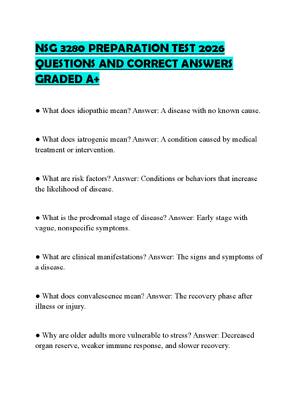
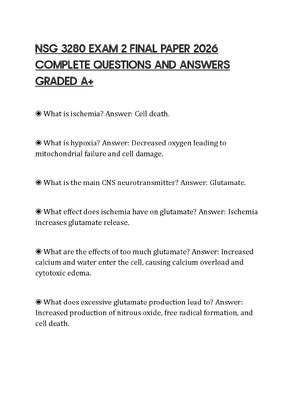
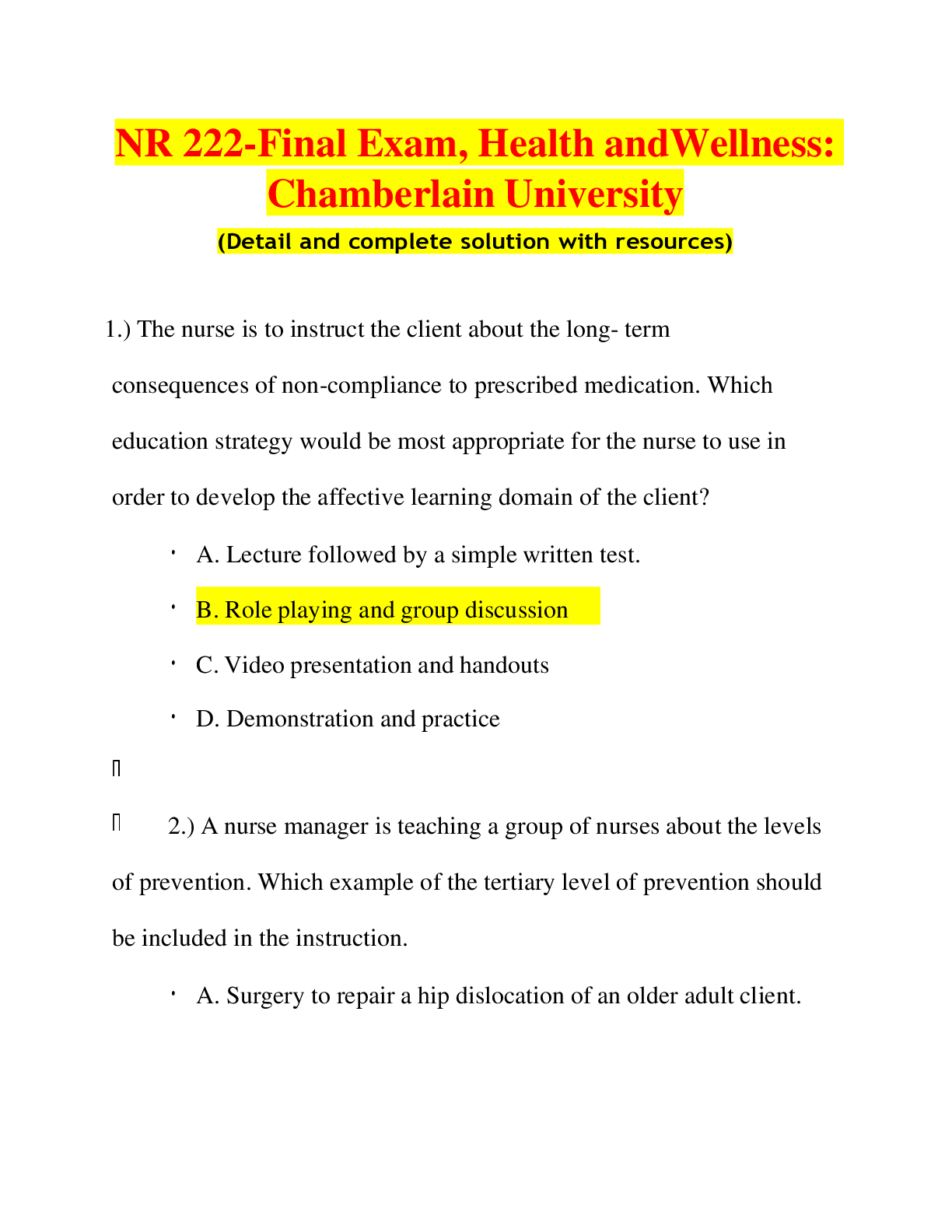
Chemistry Practice Exam-VERIFIED BY EXPERTS-GRADED A+
Document Content and Description Below
4U Chemistry Practice Exam
Multiple Choice
Identify the letter of the choice that best completes the statement or answers the question.
____ 1. Name CH3CH(OH)CH3.
a. iso-ethanol
b. tertiary-propanol
c. butanol
d.
...
[Show More]
Last updated: 3 years ago
Preview 1 out of 23 pages
Instant download

Buy this Document to get the Full Access Instantly
Provided by Students Who Aced it
We Verify Document Content to Gurantee Accuracy
Reviews( 0 )
Document information
Connected school, study & course
About the document
Uploaded On
Jun 06, 2021
Number of pages
23
Written in
All

Additional information
This document has been written for:
Uploaded
Jun 06, 2021
Downloads
0
Views
88
Topic Tags
Recommended For You
Get more on EXAM »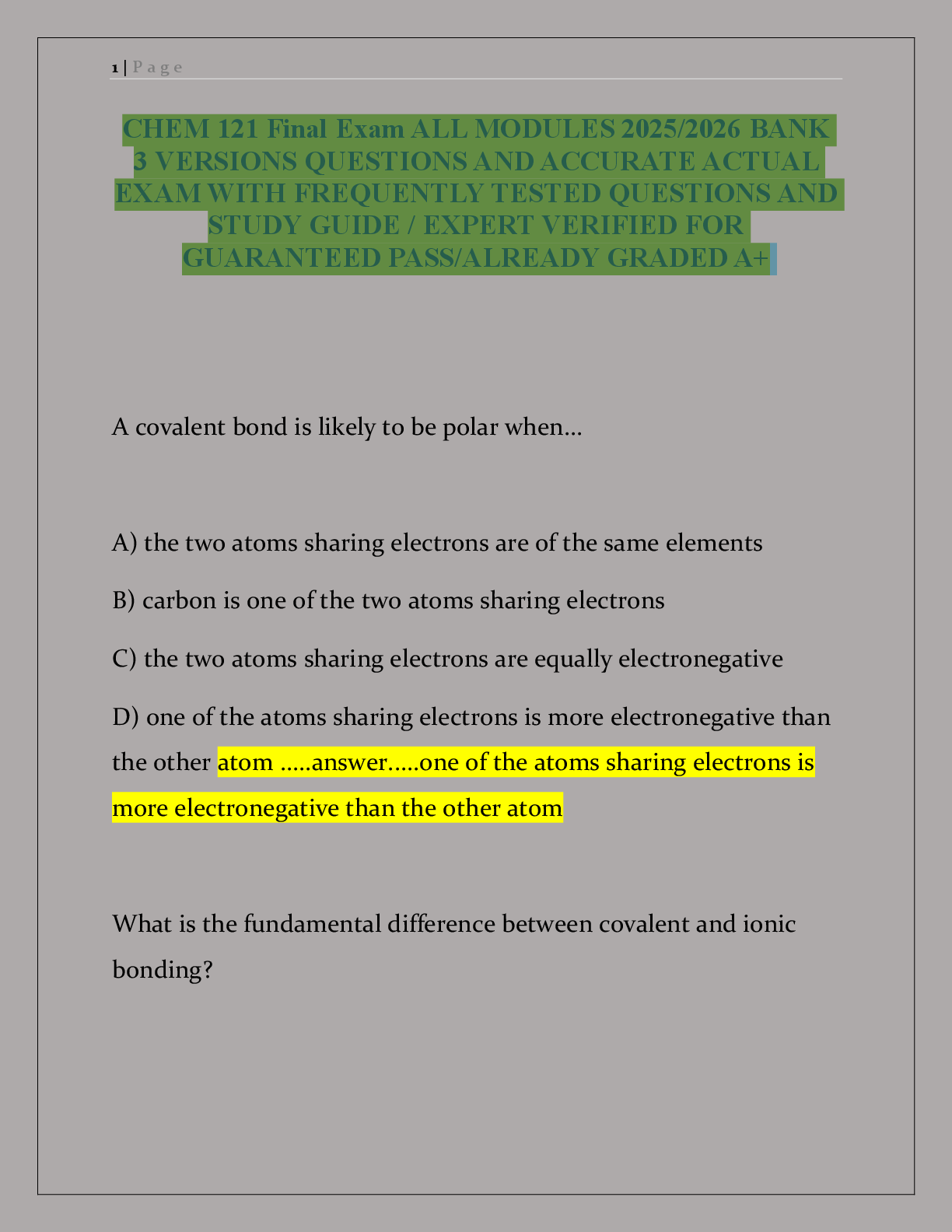
![Preview of eBook [PDF] Concepts of Inorganic Chemistry 1st Edition By Kharkwal M., Tyagi S.B.](https://browseimages.nyc3.digitaloceanspaces.com/paper-images/2024/Aug/30/VXk4GPhs2024-08-30-02-3566d1ae97a1666.png)
$26
453 Pages
eBook [PDF] Concepts of Inorganic Chemistry 1st Edition By Kha...
![Preview of eBook [PDF] Principles of General Chemistry 3rd Edition By Martin Silberberg](https://browseimages.nyc3.digitaloceanspaces.com/paper-images/2024/Aug/29/t09IEj8n2024-08-29-12-3666d041277c705.png)
$29
353 Pages
eBook [PDF] Principles of General Chemistry 3rd Edition By Mar...
$25
288 Pages
Advanced Experimental Inorganic Chemistry By Ahluwalia V.K.,...
$29
545 Pages
General Analytical Chemistry Separation and Spectral Methods...
$25
1248 Pages
eBook Organic Chemistry 12th Edition BY Francis Carey, Robert...

More related documents below