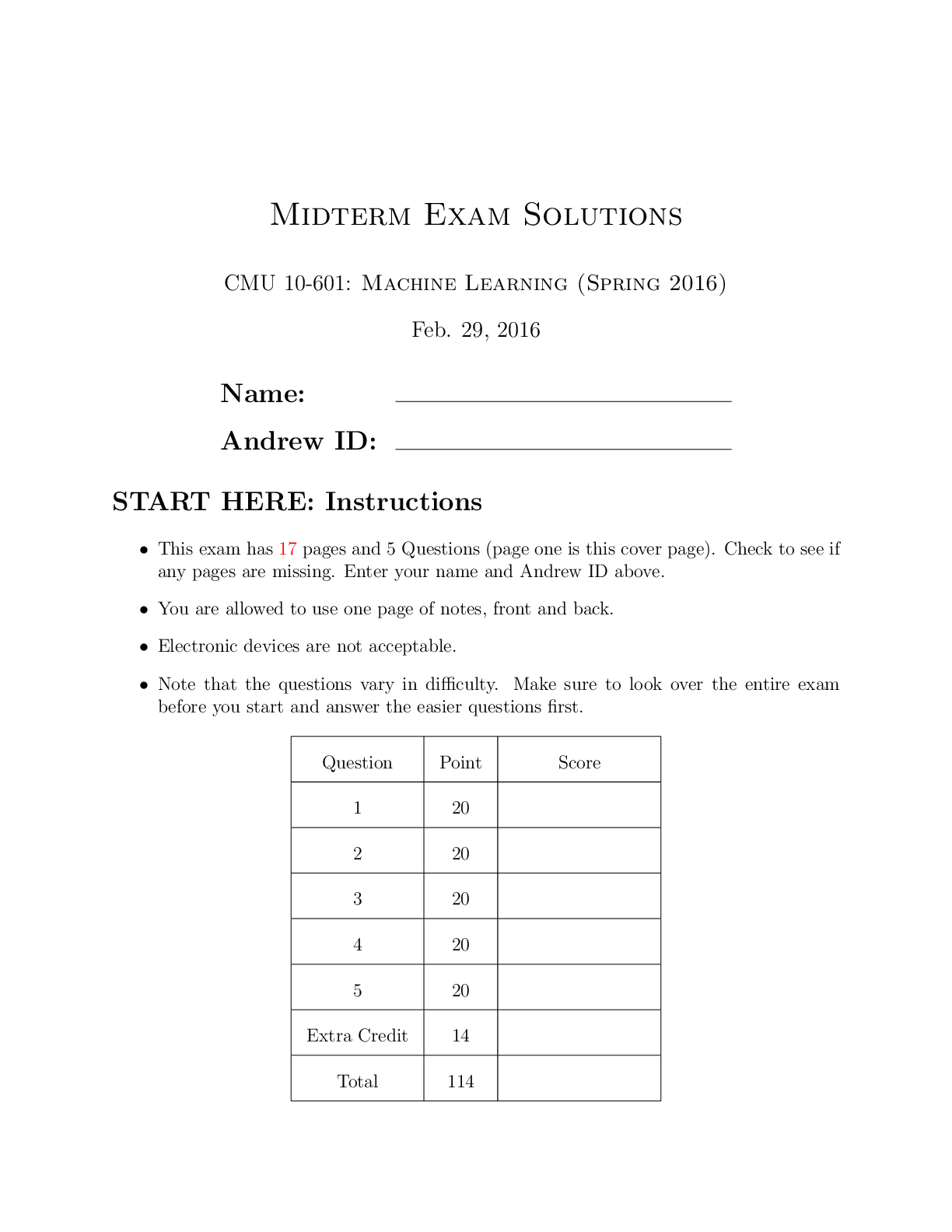
Computer Science > QUESTIONS & ANSWERS > University of Massachusetts, Amherst COMPSCI 589 Midterm Solution-VERIFIED BY EXPERTS 2021 (All)
University of Massachusetts, Amherst COMPSCI 589 Midterm Solution-VERIFIED BY EXPERTS 2021
Document Content and Description Below
Last updated: 4 years ago
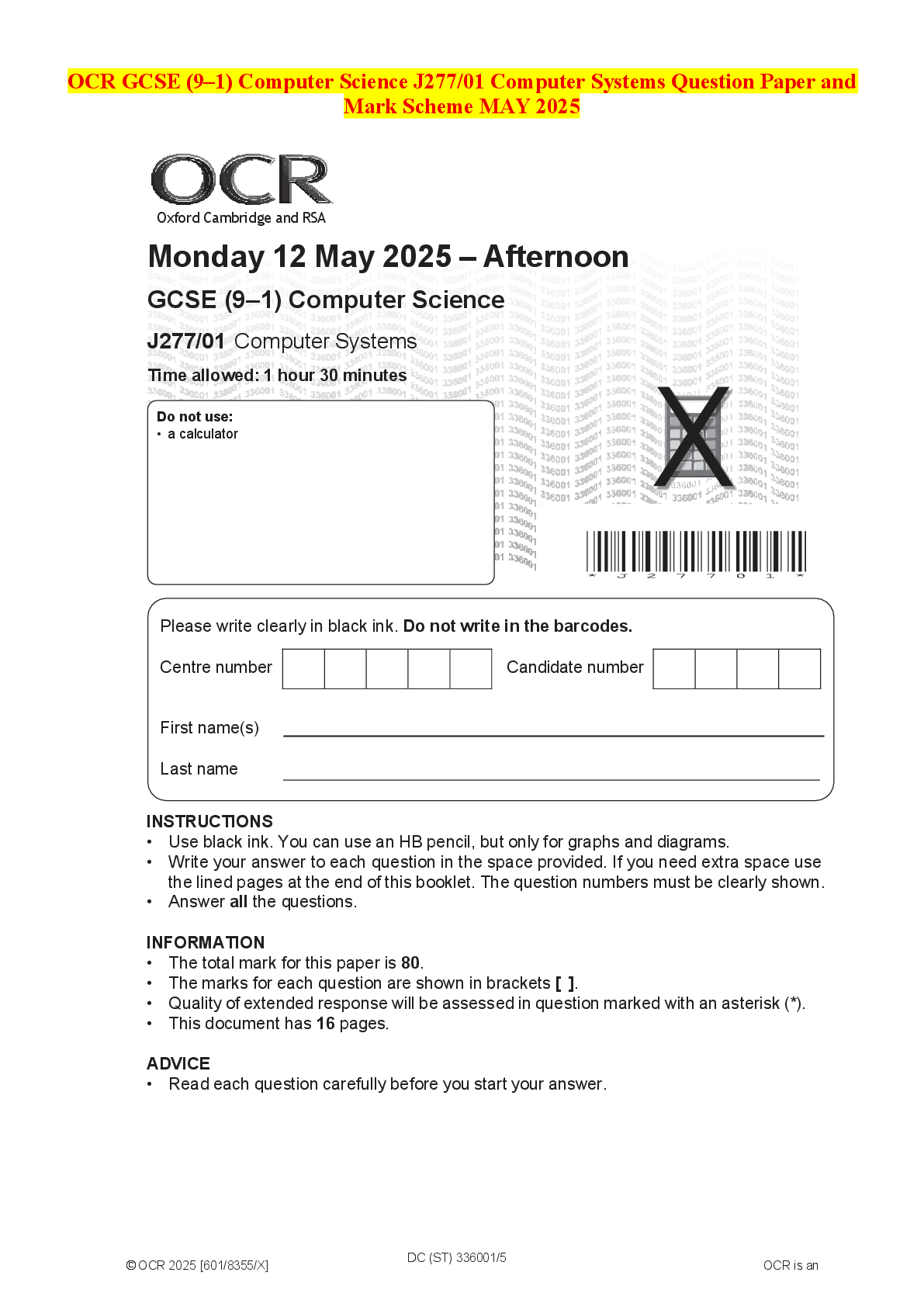
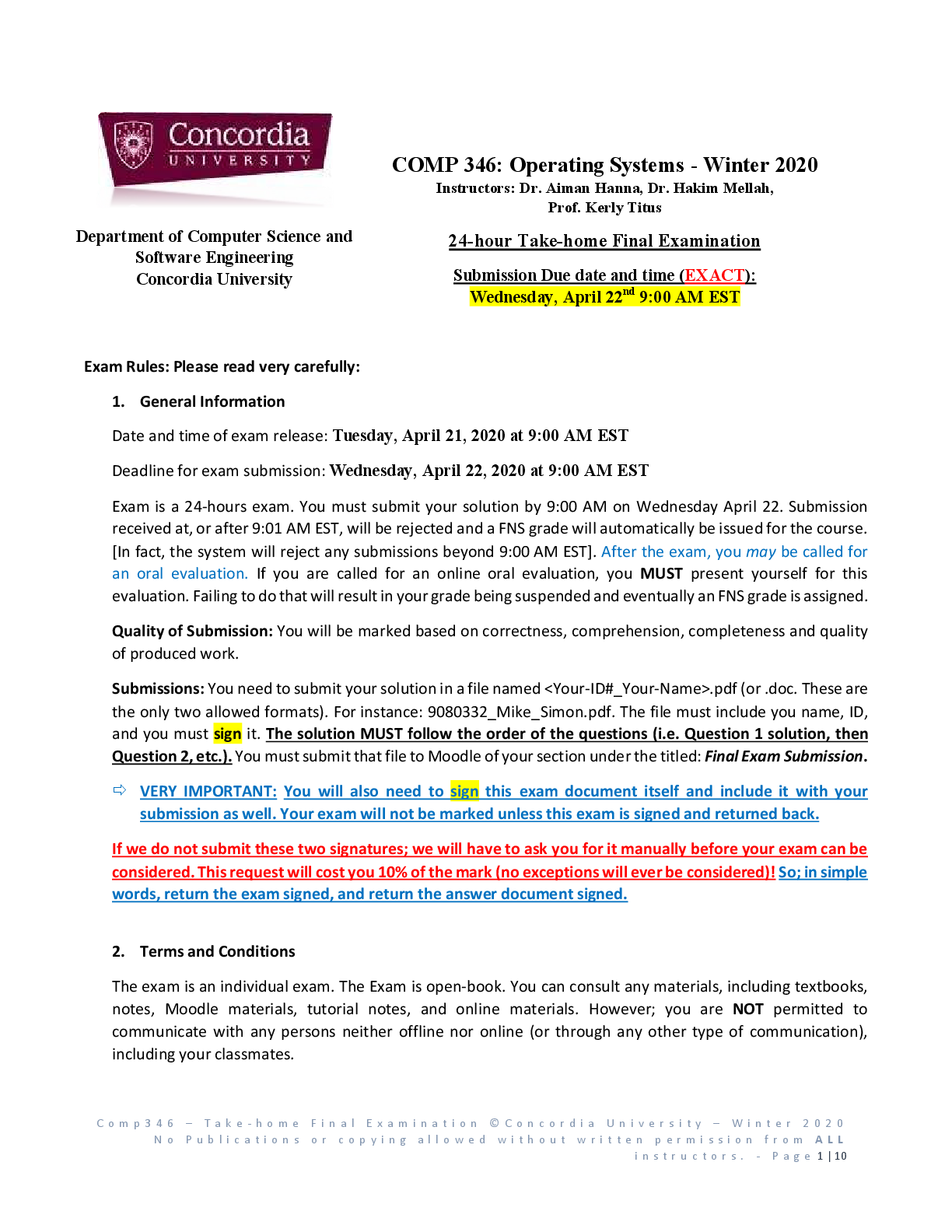
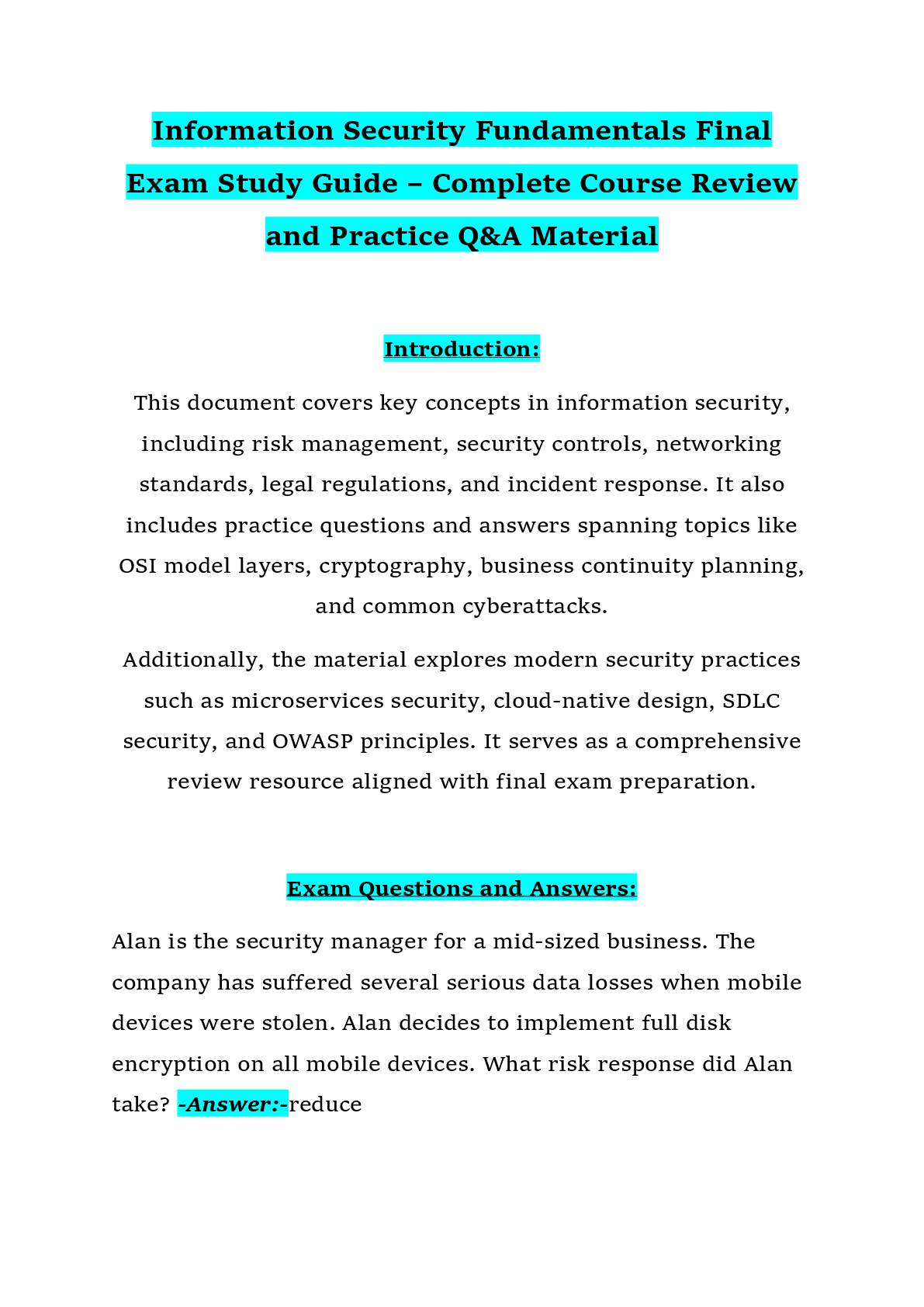
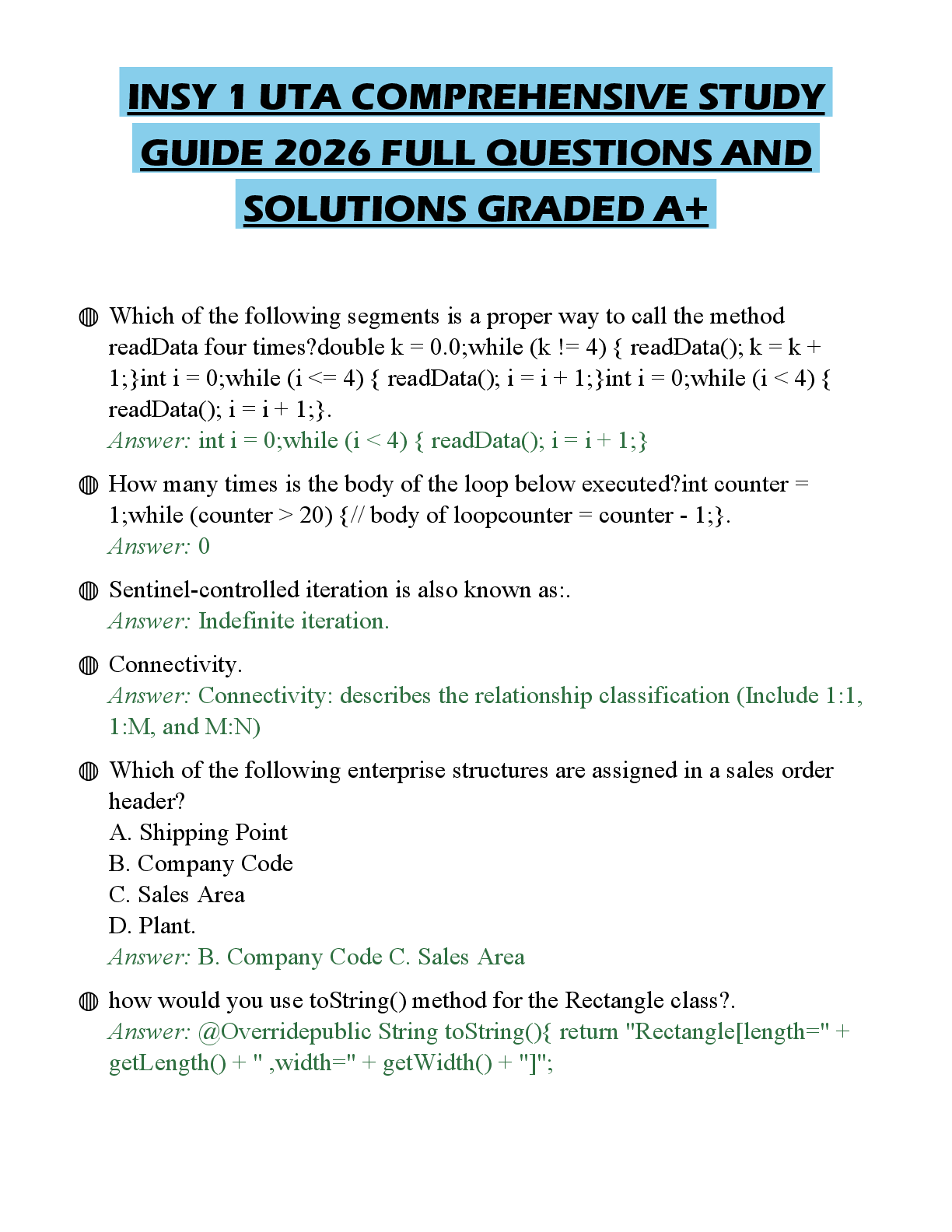
Preview 1 out of 10 pages
Instant download

Buy this Document to get the Full Access Instantly
Provided by Students Who Aced it
We Verify Document Content to Gurantee Accuracy
Reviews( 0 )
Document information
Connected school, study & course
About the document
Uploaded On
Jun 06, 2021
Number of pages
10
Written in
All

Additional information
This document has been written for:
Uploaded
Jun 06, 2021
Downloads
0
Views
103
Topic Tags
Recommended For You
Get more on QUESTIONS & ANSWERS »
CS589 Machine Learning - Fall 2019 Homework 1: Classification...
CS589 Machine Learning - Fall University of Massachusetts, Amh...

Stansted Airport College DSA 4321 dnsblock.-reviewed abd edite...
CSCI 585 HW1-VERIFIED BY EXPERTS University of Southern Califo...

Perry Maternal Child Nursing Care 5th edition Test Bank-REVIEW...

Virtual Highh School PHYSICS SPH4U Unit 1 test-VERIFIED BY EXP...

NR 508 test bank pharmacology-REVIEWED BY EXPERTS 2021-GRADED...

Shadow Health Tina Jones Health History_Reviewed by Experts 20...