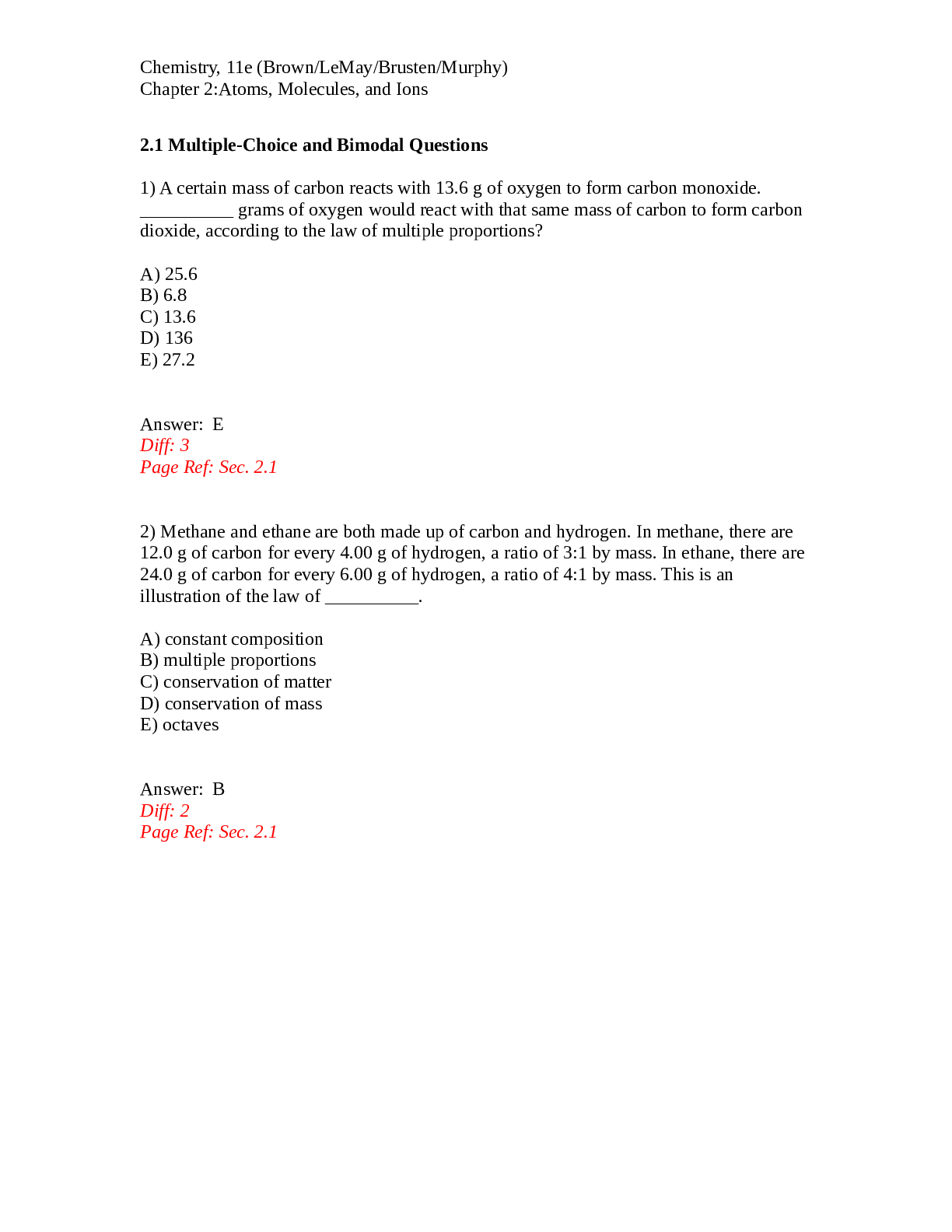
Chemistry > TEST BANKS > Springfield CollegeCHEM 205Ch02_Testbank (All)
Springfield CollegeCHEM 205Ch02_Testbank
Document Content and Description Below
Last updated: 6 months ago
Preview 1 out of 77 pages
Instant download
Buy this Document to get the Full Access Instantly
Provided by Students Who Aced it
We Verify Document Content to Gurantee Accuracy
Reviews( 0 )
Document information
Connected school, study & course
About the document
Uploaded On
Jun 07, 2021
Number of pages
77
Written in
All

Additional information
This document has been written for:
Uploaded
Jun 07, 2021
Downloads
0
Views
103
Topic Tags
Recommended For You
Get more on TEST BANKS »
General Organic and Biological Chemistry 1st Edition by Kalyn...
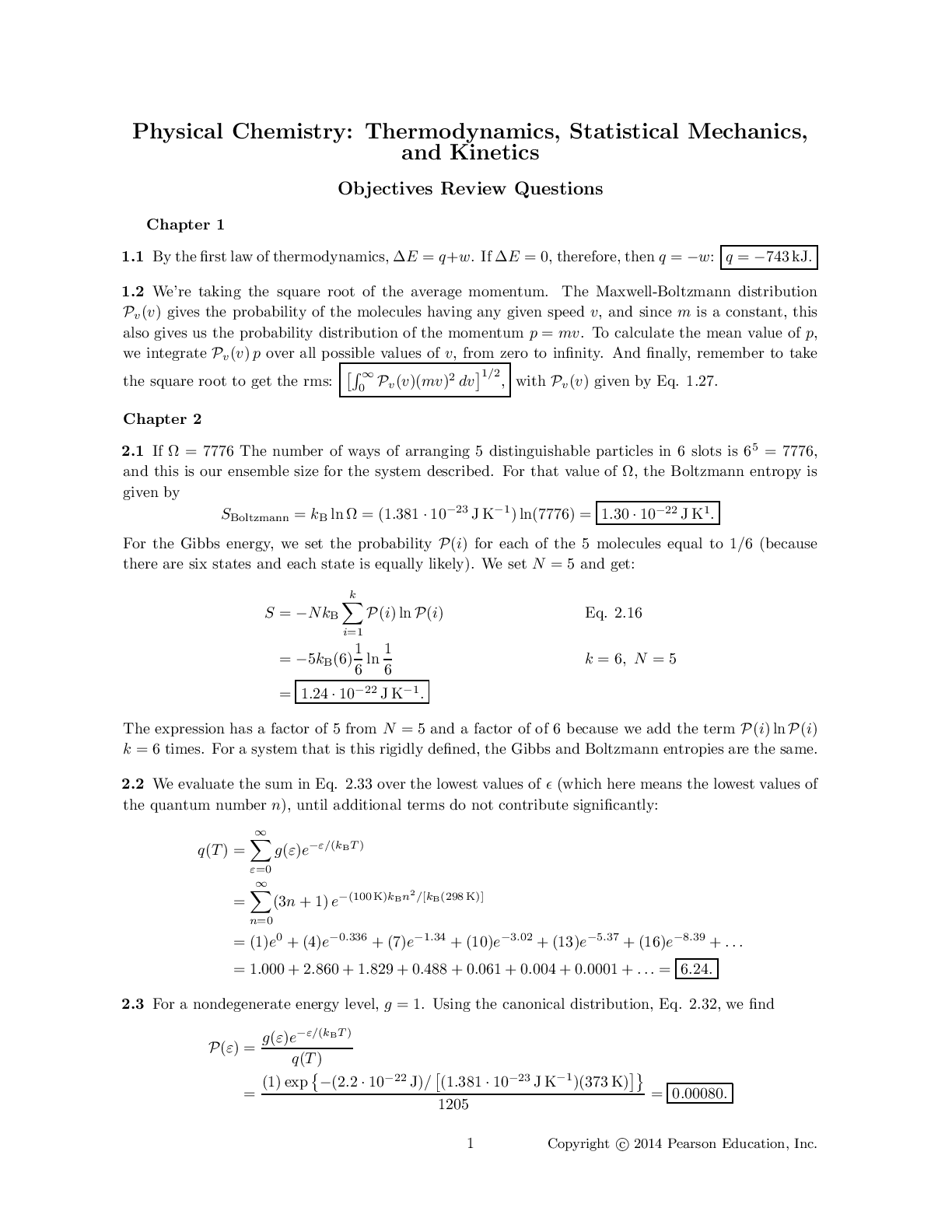
Physical Chemistry Thermodynamics Statistical Mechanics and Ki...
Solutions Manual for Organic Chemistry Student Study Guide 3rd...
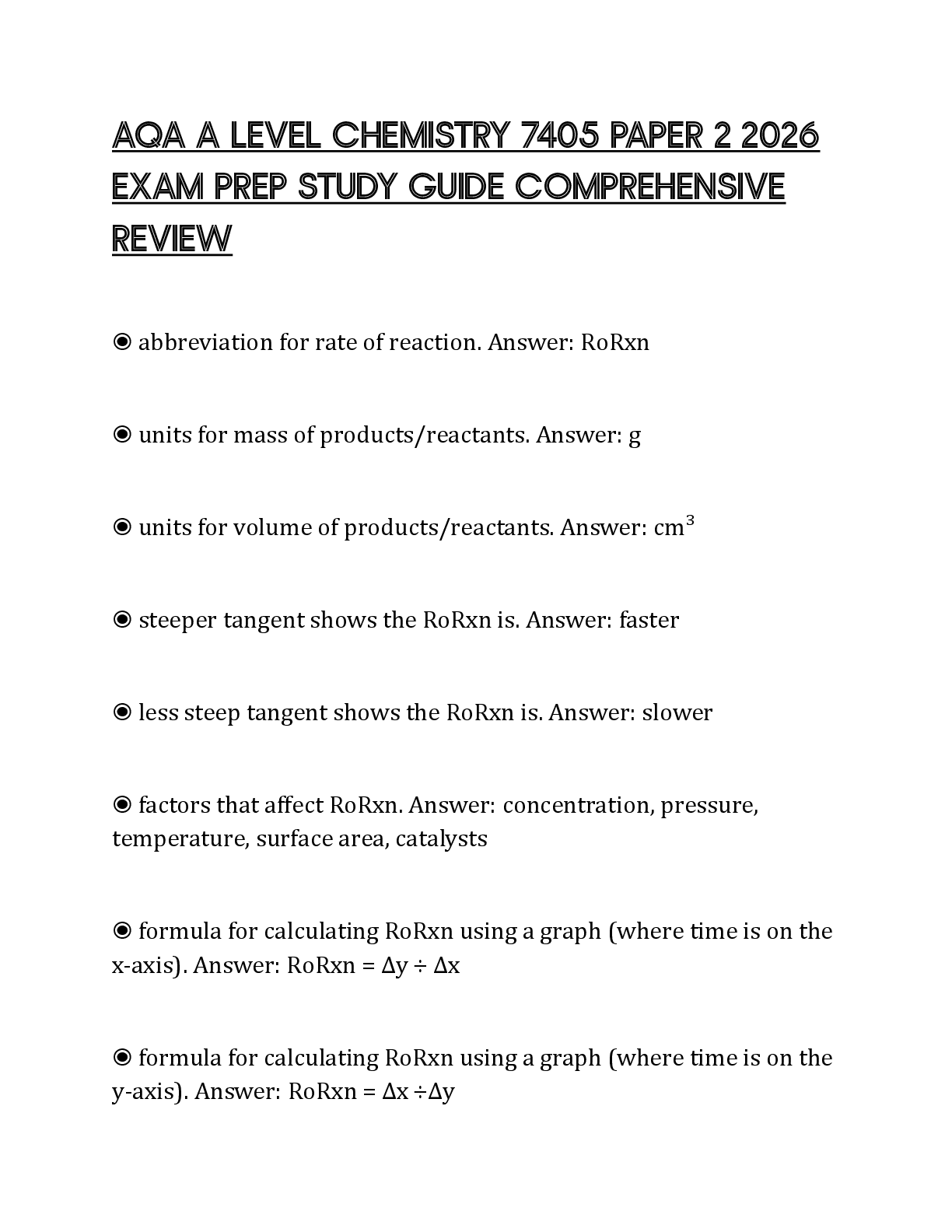
HESI A2 Chemistry (V1) What is true about water - Water is not...
.png)
Test Bank for Strategic Management Concepts and Cases, 4th Edi...

TEST BANK for Davis Advantage for Psychiatric Mental Health Nu...

Test Bank for Business and Professional Ethics 9th Edition by...

Test Bank for Police Administration, 11th Edition by Gary Cord...


.png)