Pathophysiology  >  EXAMs  >  NUR 2063 pathophysiology-final-exam-review PATHO FINAL (All)

NUR 2063 pathophysiology-final-exam-review PATHO FINAL

Document Content and Description Below

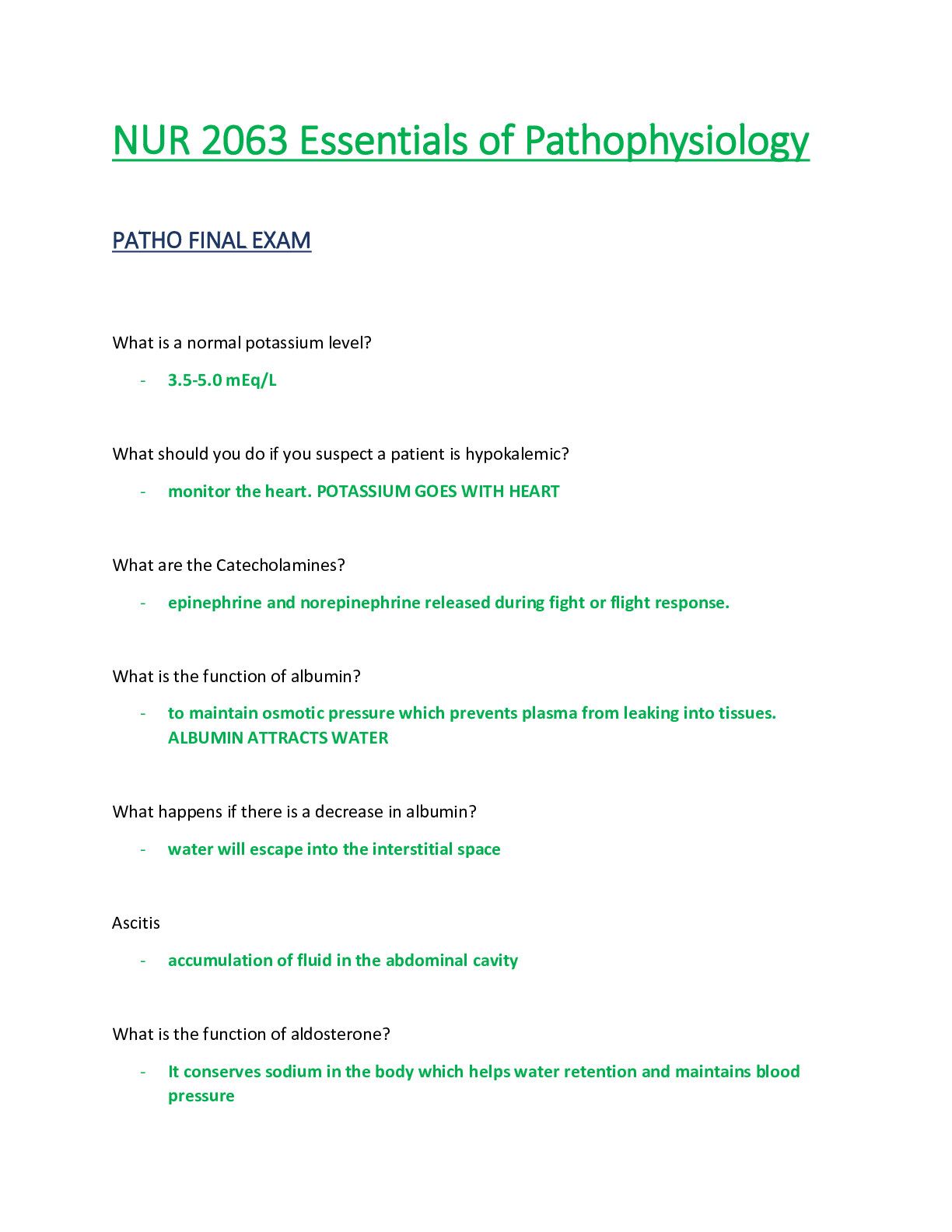
NUR 2063 pathophysiology-final-exam-review PATHO FINAL ⦁ Differences b/w dysplasia, hyperplasia, physiological (6 q) ⦁ Dysplasia = deranged growth immature cells of a specific tissue that results ... in atypical cells (cells vary in size, shape, and appearance) ⦁ often a precursor of cancer (ex. cervical dysplasia – cells start to change + become precancerous or cancerous) ⦁ * Google: Dysplasia refers to an abnormality in the maturation of cells within a tissue; consists of an increase in immature cells with a corresponding decrease in mature cells. Dysplasia is often indicative of an early neoplastic process (neoplasia is the process underlying cancer and some benign tumors) ⦁ Hyperplasia = increase in the # of cells in an organ or tissue ⦁ an organ can get enlarged as a result ⦁ normal cells but there are more in number compared to normal human body ⦁ CONTROLLED process that occurs in response to an appropriate stimulus (could be physiologic or non) and goes away once the stimulus leaves. ⦁ Physiologic hyperplasia: ⦁ Ex. Hormonal – breast and uterine enlargement during pregnancy ⦁ Ex. Compensatory – liver regeneration after partial liver removal HYPERTROPHY: ⦁ Compensatory – liver part cut off and regrows? ⦁ Adaptive – CHF + bladder ⦁ Non-physiologic hyperplasia: due to excess hormonal stimulation or the effects of growth factors on target tissues ⦁ Metaplasia = reversible! one cell type converts into another cell type that can better endure the change/stress (occurs when body goes into new “environment”, if the stimulus is no longer present, cells will come into their original type) ⦁ this occurs in response to chronic irritation or inflammation ⦁ allows for substitution of cells that are better able to survive under circumstances that a weak cell could not (must be same cell type…ex. epithelial cell could be converted into another type of epithelial cell, but NOT to a connective tissue cell) ⦁ ex. Barrett’s esophagus (squamous epithelial cells change to columnar cells) ⦁ Anaplasia = loss of cell differentiation (in cancerous tissue); [Show More]

Last updated: 3 years ago

Preview 1 out of 45 pages

Buy Now

Instant download

We Accept:

Payment methods accepted on Scholarfriends (We Accept)
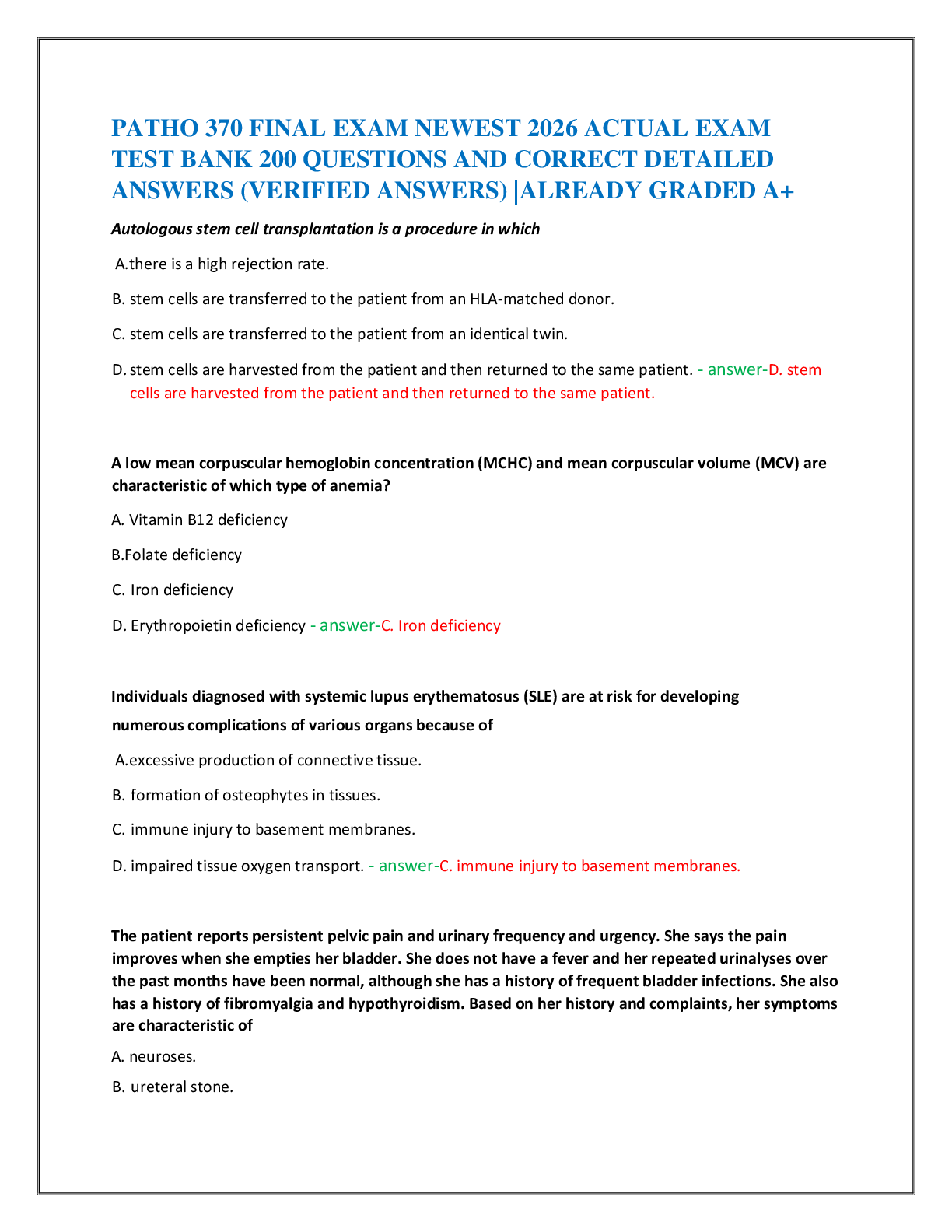
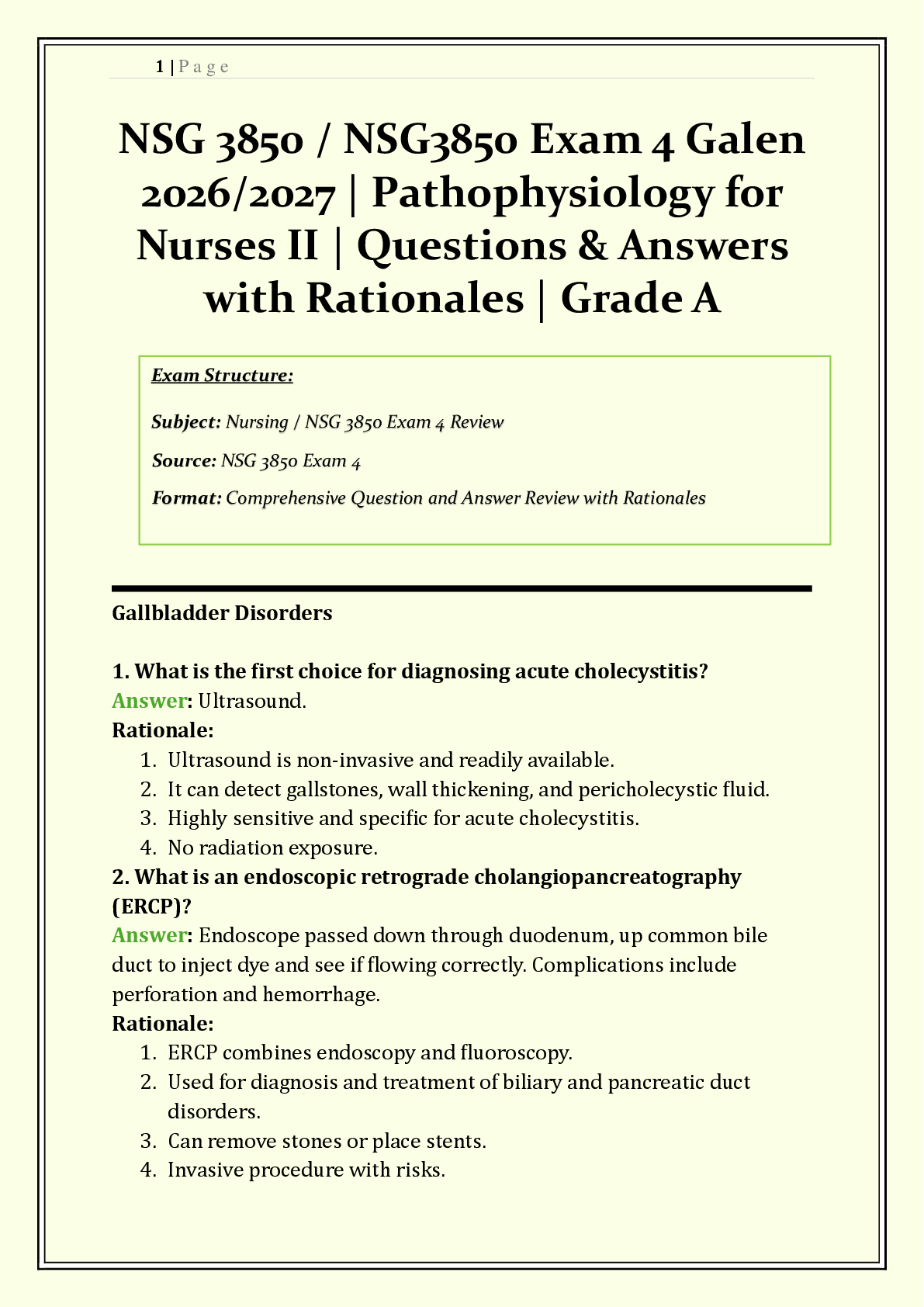
Preview image of NUR 2063 pathophysiology-final-exam-review PATHO FINAL document

Buy this document to get the full access instantly

Instant Download Access after purchase

Buy Now

Instant download

We Accept:

Payment methods accepted on Scholarfriends (We Accept)

Reviews( 0 )

$9.00

Buy Now

We Accept:

Payment methods accepted on Scholarfriends (We Accept)

Instant download

Can't find what you want? Try our AI powered Search

55
0

Document information


Connected school, study & course


About the document


Uploaded On

Jun 09, 2021

Number of pages

45

Written in

All

Seller


Profile illustration for QUIZ BIT
QUIZ BIT

Member since 4 years

86 Documents Sold

Reviews Received
8
3
2
2
2
Additional information

This document has been written for:

Uploaded

Jun 09, 2021

Downloads

 0

Views

 55

Document Keyword Tags

Recommended For You

Get more on EXAMs »

$9.00
What is Scholarfriends

Scholarfriends.com Online Platform by Browsegrades Inc. 651N South Broad St, Middletown DE. United States.

We are here to help

We're available through e-mail, Twitter, Facebook, and live chat.
 FAQ
 Questions? Leave a message!

Follow us on
 Twitter

Copyright © Scholarfriends · High quality services·