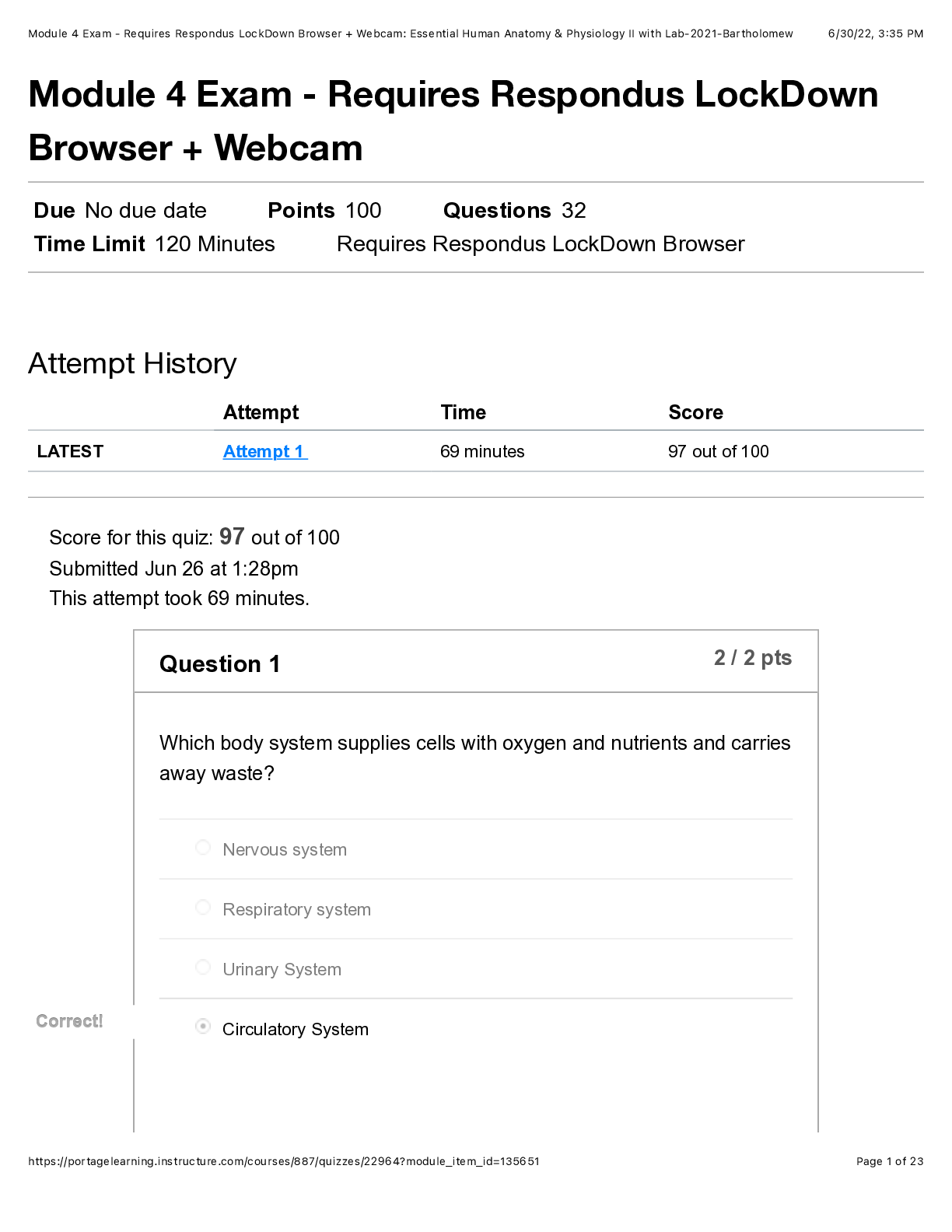
Question 1
1 out of 1 points
A nurse is working with a 16-year-old pregnant teen and assessing for
behavior that may put the baby at risk. The most important assessment
the nurse can make is
Selected
Answer:
B.
w
...
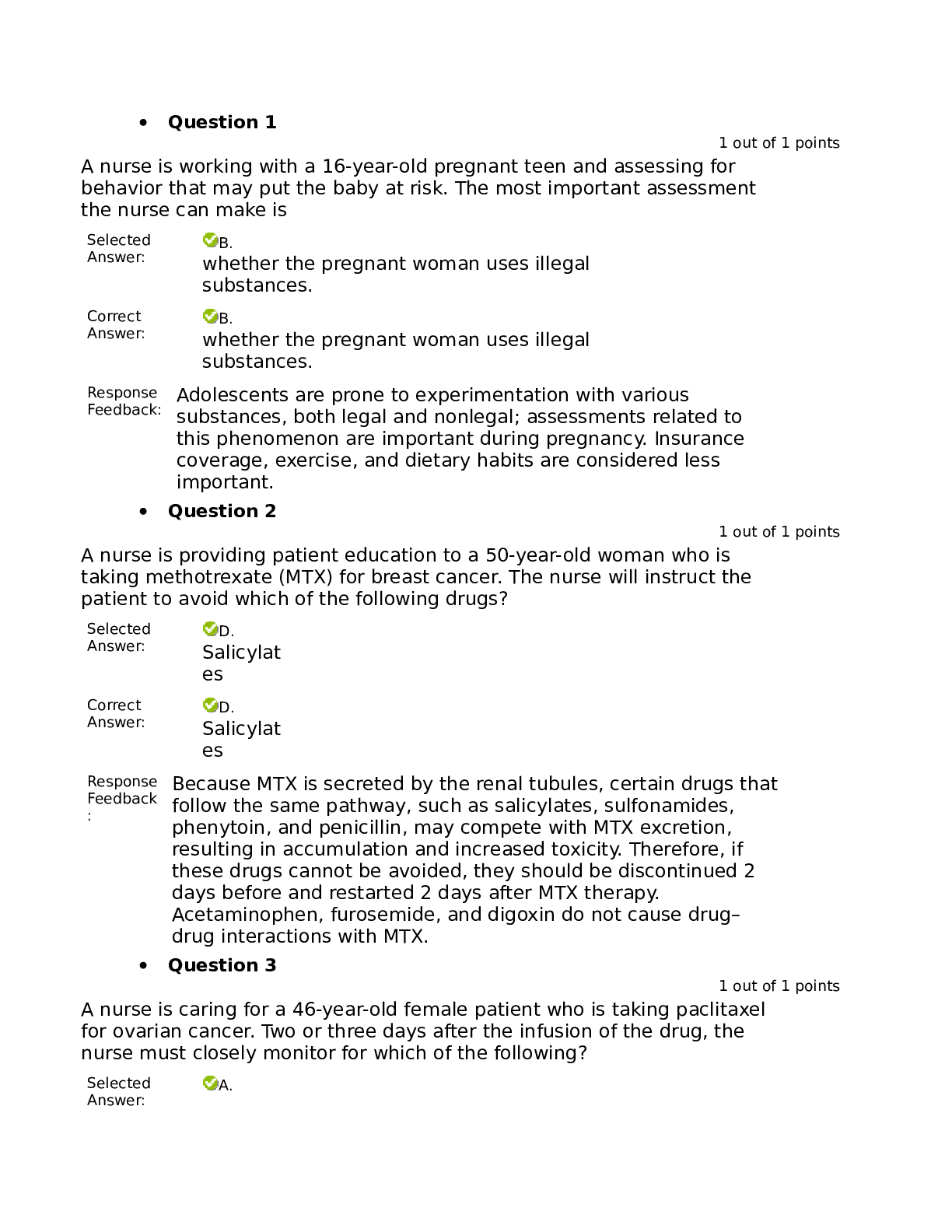
Question 1
1 out of 1 points
A nurse is working with a 16-year-old pregnant teen and assessing for
behavior that may put the baby at risk. The most important assessment
the nurse can make is
Selected
Answer:
B.
whether the pregnant woman uses illegal
substances.
Correct
Answer:
B.
whether the pregnant woman uses illegal
substances.
Response
Feedback:
Adolescents are prone to experimentation with various
substances, both legal and nonlegal; assessments related to
this phenomenon are important during pregnancy. Insurance
coverage, exercise, and dietary habits are considered less
important.
Question 2
1 out of 1 points
A nurse is providing patient education to a 50-year-old woman who is
taking methotrexate (MTX) for breast cancer. The nurse will instruct the
patient to avoid which of the following drugs?
Selected
Answer:
D.
Salicylat
es
Correct
Answer:
D.
Salicylat
es
Response
Feedback
:
Because MTX is secreted by the renal tubules, certain drugs that
follow the same pathway, such as salicylates, sulfonamides,
phenytoin, and penicillin, may compete with MTX excretion,
resulting in accumulation and increased toxicity. Therefore, if
these drugs cannot be avoided, they should be discontinued 2
days before and restarted 2 days after MTX therapy.
Acetaminophen, furosemide, and digoxin do not cause drug–
drug interactions with MTX.
Question 3
1 out of 1 points
A nurse is caring for a 46-year-old female patient who is taking paclitaxel
for ovarian cancer. Two or three days after the infusion of the drug, the
nurse must closely monitor for which of the following?
Selected
Answer:
A.
Neurotoxic
ity
Correct
Answer:
A.
Neurotoxic
ity
Response
Feedback:
Neurotoxicity is a major problem associated with paclitaxel
therapy, and close monitoring is needed. Neurotoxicity generally
begins 2 to 3 days after the infusion. Cardiotoxicity is observed
in less than 1% of patients. The drug is not known to cause
[Show More]








 (1).png)