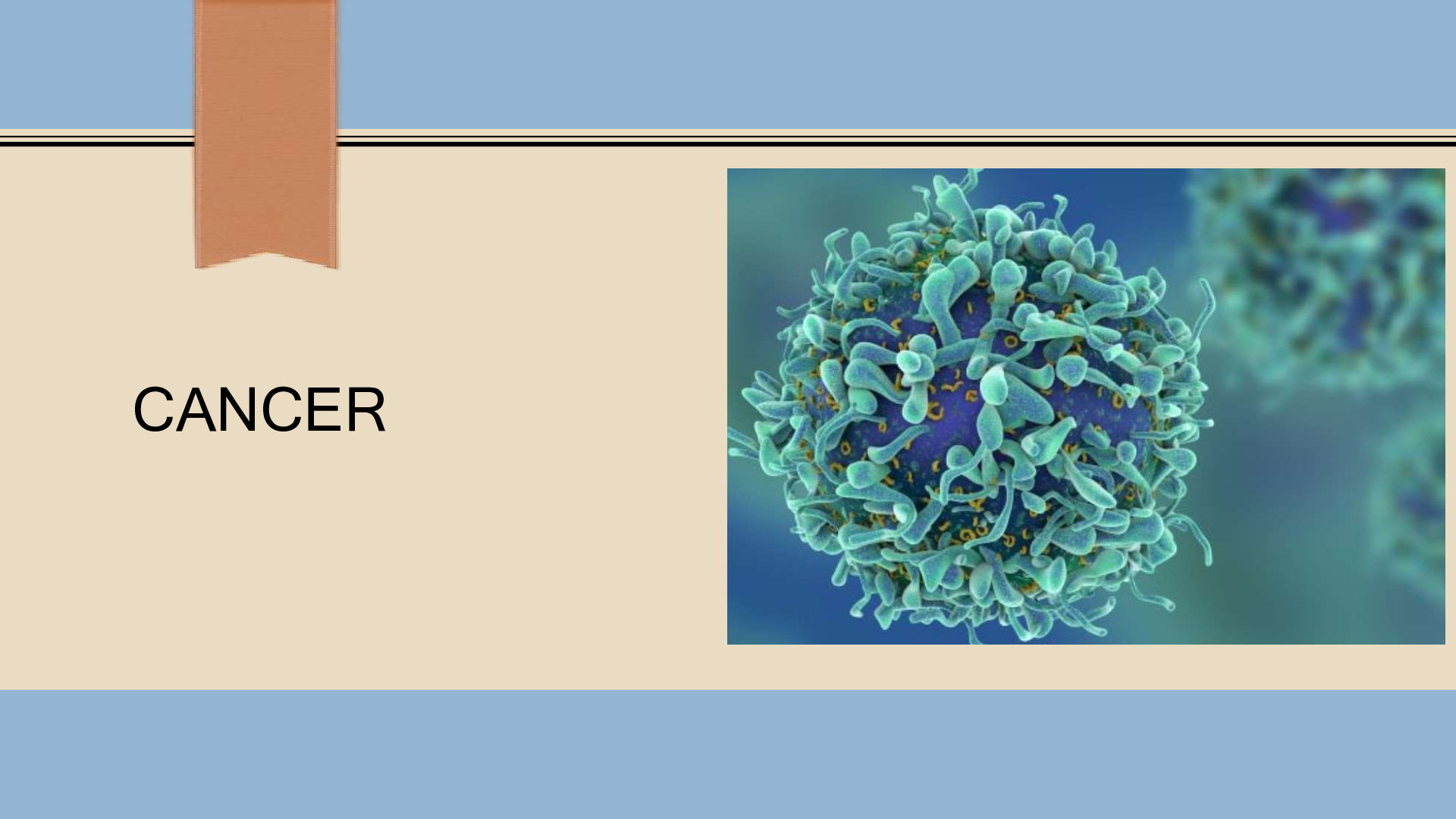
CANCER
Objectives
▪ Differentiate between normal and tumor cells
▪ Define cancer classifications
▪ Give examples of cancer risks, including genetic risks
▪ Nursing care and interventions for oncological diso
...
CANCER
Objectives
▪ Differentiate between normal and tumor cells
▪ Define cancer classifications
▪ Give examples of cancer risks, including genetic risks
▪ Nursing care and interventions for oncological disorders
▪ Palliative and Hospice care
Cells
Normal
▪ Specific shapes and functions
▪ Tight adherence
▪ Contact inhibition
▪ Non-migratory
▪ Orderly and regulated growth
▪ Normal chromosome structure & mitosis
▪ Apoptosis
Tumor (benign)
▪ Normal cells in wrong location or wrong time
▪ Results due to small problem with cellular regulation
▪ Specific functions
▪ Tight adherence
▪ Non-migratory
▪ Orderly growth
▪ Normal chromosomes
▪ Examples
▪ Moles, uterine fibroids, skin tags, nasal polyps, endometriosis
Malignant cell characteristics
▪ Abnormal morphology
▪ No specific function in body
▪ Harmful to normal tissues
▪ Loose adherence
▪ Migrate (metastasis)
▪ No contact inhibition
▪ Rapid or continuous cell division
▪ Chromosome abnormalities
Tumors
▪ Primary
▪ Identified by parent tissue, such as lung, pancreas, brain
▪ Secondary
▪ Metastasized cells
▪ Moved from primary location
▪ Form additional tumors
Types of Cancers
▪ Carcinoma
▪ Cancer of epithelial cells
▪ Skin, mouth, throat, breasts, and lungs
▪ Sarcoma
▪ Cancer of bone, muscle, or connective tissue
▪ Leukemia
▪ Cancer of blood-forming organs
▪ Lymphoma
▪ Cancer of infection-fighting organs
Carcinogenesis
▪ Initiation- loss of cellular regulation
▪ Damaged cellular DNA → loss of cellular regulation
▪ Promotion –enhanced growth of cells
▪ Progression – further growth; detection of cancer requires at least 1 billion cells (1cm tumor)
Steps of metastasis
Cancer classification
▪ Grading
▪ Compares cancer cell with parent cell
▪ Low to high rating (low resembles parent cell; high – barely resemble)
▪ Allows health care professionals to evaluate results of management
▪ Ploidy
▪ Description of cancer cells by chromosome number & appearance
▪ Forms the basis of ‘targeted’ therapy
▪ Staging
▪ Exact location and whether metastasis has occurred
▪ Influences selection of therapy
..................................................................continued.......................................................................
[Show More]