1) A nurse is caring for a client who has hepatc encephalopathy that is being treated with
lactulose. The client is experiencing excessive stools. Which of the following fndings is
an adverse effect of this medicaton?
...
1) A nurse is caring for a client who has hepatc encephalopathy that is being treated with
lactulose. The client is experiencing excessive stools. Which of the following fndings is
an adverse effect of this medicaton?
a. Hypokalemia
b. Hypercalcemia
c. Gastrointestnal bleeding
d. Confusion
2) A nurse is caring for a client who has emphysema and is receiving mechanical
ventlaton. The client appears anxious and restless, and the high-pressure alarm is
sounding. Which of the following actons should the nurse take frst?
a. Obtain ABGs
b. Administer propofol to the client
c. Instruct the client to allow the machine to breathe for them.
d. Disconnect the machine and manually ventlate the client
3) A nurse is teaching a client who has family history of colorectal cancer. To help mitgate
this risk, which of the following dietary alteratons should the nurse recommend?
a. Add full-fat yogurt to the diet
b. Add cabbage to the diet
c. Replace buter with coconut oil
d. Replace shellfsh with red meat
4) A home health nurse is assigned to a client who was recently discharged from a
rehabilitaton center afer experiencing a right-hemispheric stroke. Which of the
following neurological defcits should the nurse expect to fnd when assessing the client?
(Select all that apply)
a. Expressive aphasia
b. Visual spatal defcits
c. Lef hemianopsia
d. Right hemiplegia
e. One-sided neglect
5) A nurse is caring for a client who has viral pneumonia. The client’s pulse oximeter
readings have fluctuated between 79% and 88% for the last 30 min. Which of the
following oxygen delivery systems should the nurse initate to provide the highest
concentraton of oxygen?
a. Nonrebreather mask
b. Venturi mask
c. Simple face mask
d. Partal rebreather mask
6) A nurse is caring for a client who has bilateral pneumonia and an SaO2 of 85%. The client
has dyspnea with a productve cough and it using accessory muscles to breathe. Which
of the following actons should the nurse take frst?
a. Obtain a prescripton for ABGS
b. Administer IV antbiotcs to the clientc. Instruct the client to use the incentve spirometer
d. Place the client in high-Fowler’s positon
7) A nurse is planning care for a client who has extensive burn injuries and is
immunocompromised. Which of the following precautons should the nurse include in
the plan of care to prevent a Pseudomonas aeruginosa infecton?
a. Encourage the client eat raw fruits and vegetables.
b. Avoid placing plants or flowers in the client’s room
c. Limit visitors to members of the client’s immediate family
d. Wear an N95 respirator mask when providing care to the client.
8) An older adult client is brought to an emergency department by a family member. Which
of the following assessment fndings should cause the nurse to suspect that the client
has hypertonic dehydraton?
a. Serum sodium level 145 mEq/L
b. Forearm skin tents when pinched
c. Respiratory rate decreased
d. Urine specifc gravity 1.045
9) A nurse is an emergency department is reviewing the provider’s prescriptons for a client
who sustained a ratlesnake bite to the lower leg. Which of the following prescriptons
should the nurse expect?
a. Apply ice to the client’s puncture wounds.
b. Initate cortcosteroid therapy for the client
c. Keep the client’s leg above heart level
d. Administer an opioid analgesic to the client
10) A nurse is assessing a client who has had a suspected stroke. The nurse should place the
priority on which of the following fndings?
a. Dysphagia
b. Aphasia
c. Ataxia
d. Hemianopsia
11) A nurse is teaching a young adult client how to perform testcular self-examinaton.
Which of the following instructons should the nurse include?
a. Compare both testcles by examining them simultaneously
b. Roll each testcle between the thumb and fngers
c. Perform testcular self-examinaton before a warm bath or shower
d. Perform self-examinaton of the testcles every 2 weeks
[Show More]


.png)



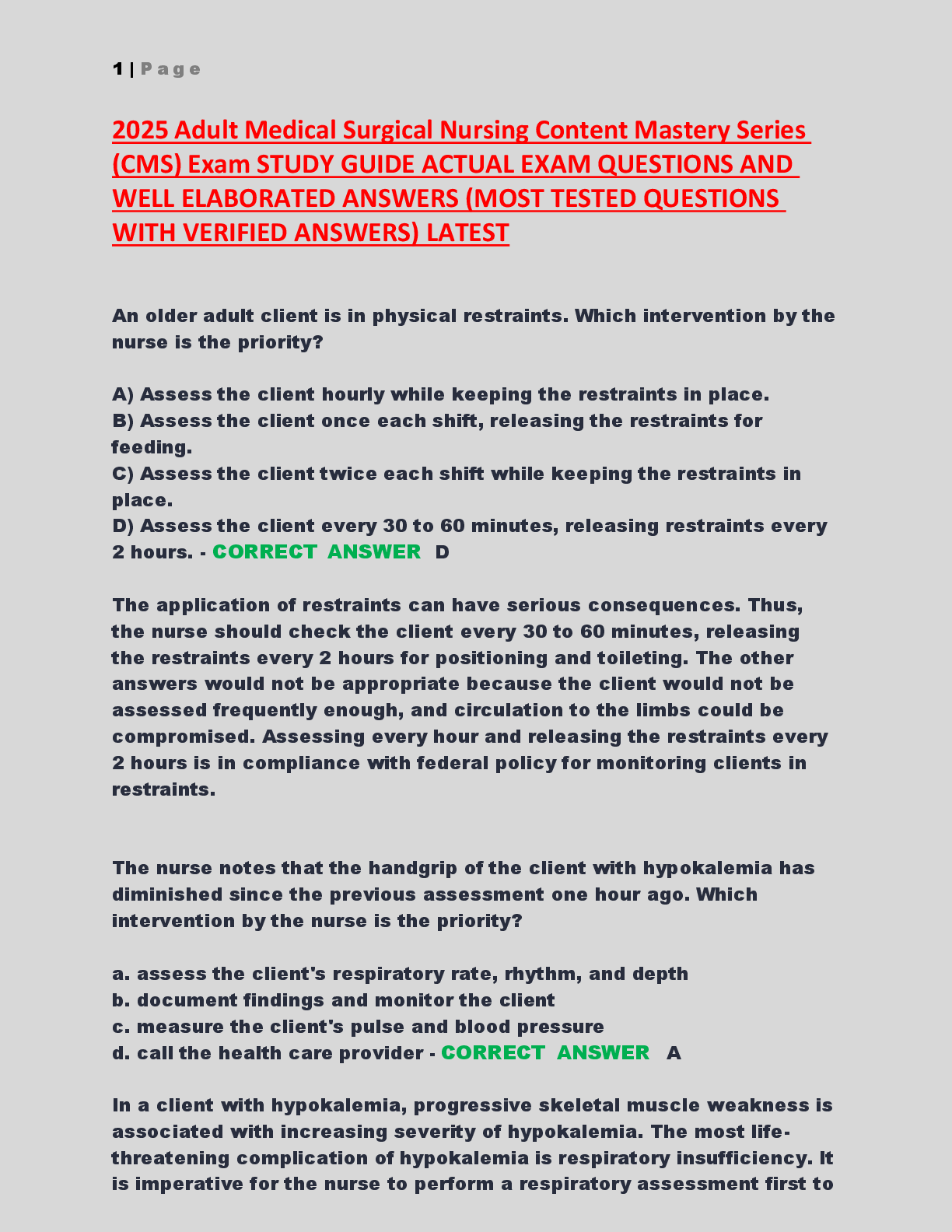
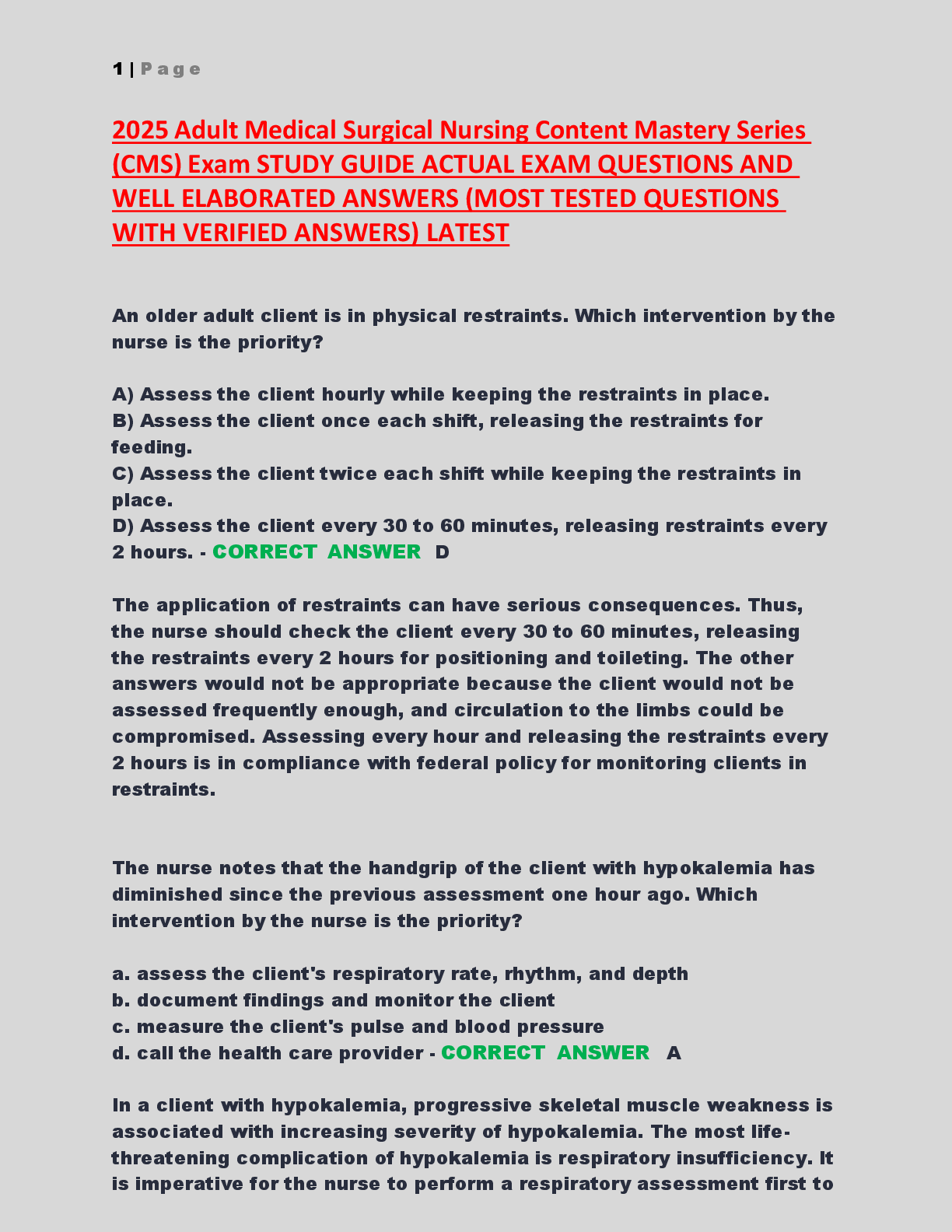
 Adult Medical Surgical.png)






.png)
.png)


