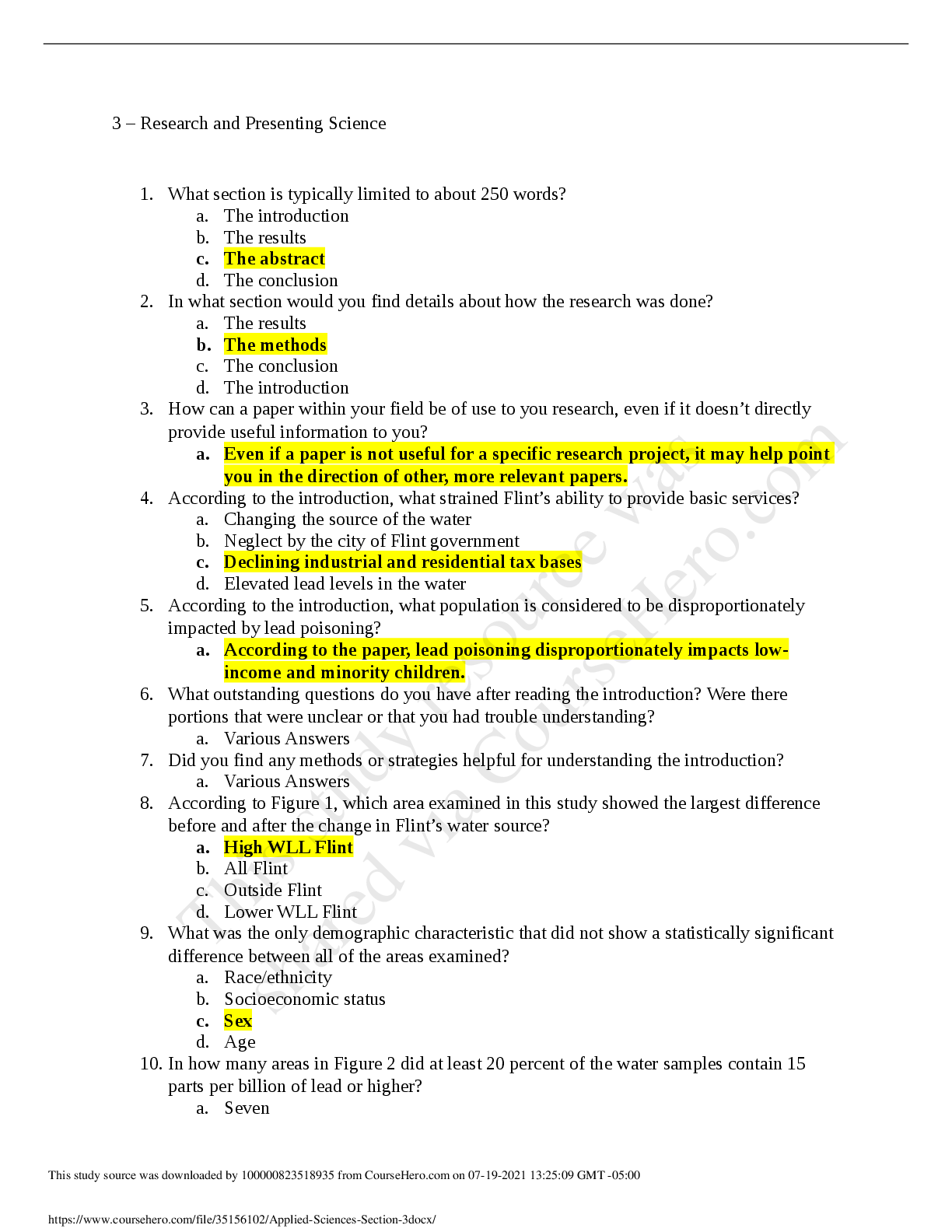
SITXCCS008 Develop and manage quality customer service practices
AssessmentSITXCCS008 – Assessment
Instructions to Students:
Student name:
Complete the cover sheet and ensure you accept, sign and date the student dec
...
SITXCCS008 Develop and manage quality customer service practices
AssessmentSITXCCS008 – Assessment
Instructions to Students:
Student name:
Complete the cover sheet and ensure you accept, sign and date the student declaration on the Student
Learning Management System (LMS).
Read through and follow all instructions provided.
Complete each assessment task/activity.
Submit your assessment to the Student Learning Management System (LMS) by the due date.
Ensure your submission identifies your name, unit code and title.
You are required to:
Plagiarism is ‘a practice that involves the using of another person’s intellectual output and presenting it
as one’s own’. This includes the presentation of work that has been copied, in whole or part, from other
sources (including other students’ work, published books or periodicals, the Internet, unpublished
works or unauthorised collaboration with other persons), without due acknowledgement.
PLAGIARISM AND COLLUSION
A student found to have plagiarised material will be instantly graded Not Yet Competent (NYC) and may
be subject to one or all of the following:
Referral of the matter to the Academic Coordinator for: an intervention meeting, issuing of written
warning, clarification regarding assessment re-submission requirements and allocation of additional
assessment tasks.
Referral of the matter to the Director for: official disciplinary action by Frontier Education and/or
suspension from the course.
CONSEQUENCES OF PLAGIARISM AND COLLUSION
Page|2
Name: SITXCCS008 – Assessment Version: V.2019.1 Last Reviewed: January 2019 Page|2SITXCCS008 – Assessment
Unit description
This unit describes the performance outcomes, skills and knowledge required to develop, monitor and adjust
customer service practices. It requires the ability to consult with colleagues and customers, develop policies and
procedures for quality service provision, and manage the delivery of customer service.
The unit applies to senior managers who operate independently, have responsibility for others and are responsible
for making a range of operational and strategic decisions.
For a student’s performance
to be deemed satisfactory for
the whole unit of
competence, they must
demonstrate satisfactory
performance in this
assessment.
If part of a task is not
satisfactorily completed the
assessor will arrange for the
student to complete further
assessment to demonstrate
competence. Students are
permitted three (3) attempts
to demonstrate competency.
Overall student performance
in the unit is to be recorded as
either Competent or Not Yet
Competent.
Assessment tasks
In this assessment task
students are required to read
the questions and either
select the one correct answer
from a number of alternatives
or write a response in the
space provided.
This assessment contains a
series of questions designed
to allow students to
demonstrate competence in
the unit.
To complete the written
assessment, students must
successfully complete the
following:
Task A – Short answer
Task B – Project
Task C - Role-play
Written assessment
At the successful completion
of this assessment, a
Competent result will be
awarded. The overall unit
result and feedback are
recorded at the end of this
documentation.
Unit outcome
Page|3
Name: SITXCCS008 – Assessment Version: V.2019.1 Last Reviewed: January 2019 Page|3SITXCCS008 – Assessment
TASK A – SHORT ANSWER
INSTRUCTIONS:
You are to answer all questions.
Read each question carefully.
Ensure you have provided all required information.
SECTION 1: DEVELOP QUALITY CUSTOMER SERVICE PRACTICES:
Q1: List five (5) principles or characteristics of quality management.
1. Factual decision-making
2. Customer feedback
3. Quality standards
4. Teamwork
5. Continuous improvement
Satisfactory ☐ Unsatisfactory ☐
Q2: List four (4) types of external customers.
1. Business people
2. Groups
3. Individuals
4. New or regular visitors
Satisfactory ☐ Unsatisfactory ☐
Q3: List four (4) types of internal customers.
1. Staff from other branches or locations
2. Colleagues
3. Team members
4. Supervisors/managers
Satisfactory ☐ Unsatisfactory ☐
Q4: Why should you take the initiative to obtain information on customer needs and expectations?
Page|4
Name: SITXCCS008 – Assessment Version: V.2019.1 Last Reviewed: January 2019 Page|4SITXCCS008 – Assessment
Because it’s a way to satisfy the costumers needs above customers’ expectations, satisfied customers have a positive
influence on your organisation and bring significant benefits to your business.
Satisfactory ☐ Unsatisfactory ☐
Q5: List three (3) formal and three informal ways to get information on customers’ needs and expectations.
1. Formal: Customer profile – Informal: talking to the costumer.
2. Formal: Customer preferences – Informal: Observation, If the costumer arrives with children.
3. Formal: Analysis of industry service trends – Informal: Actively listen to the costumer.
Satisfactory ☐ Unsatisfactory ☐
Q6: How you could obtain formal feedback from customers to research their satisfaction levels.
Conduct an overall customer satisfaction survey, hold a meeting to determine three satisfaction questions to ask
customers at check-out, Insert a short customer survey in the front pocket of the information folders in each room.
With a general comments section, Email formal surveys to customers, train staff in all areas of the organisation to ask
customers simple questions before, during and after product or service delivery.
Satisfactory ☐ Unsatisfactory ☐
Q7: What information do companies want to know about when conducting formal customer feedback?
Service quality, product packaging, service delivery commitments, price, communication, responsiveness to
complaints, staff accessibility and attitude.
Satisfactory ☐ Unsatisfactory ☐
Q8: Identify two (2) ways you could provide opportunities for staff to give you feedback on products and services.
1. General discussions
2. Suggestions box
Satisfactory ☐ Unsatisfactory ☐
Q9: State three (3) changes in the internal environment which could impact your quality service planning.
1. Recruitment practices
2. Management changes
3. Technological changes affecting service delivery
Satisfactory ☐ Unsatisfactory ☐
Q10: State two (2) changes in the external environment which could impact your quality service planning.
1. Trends in customer preferences
Page|5
Name: SITXCCS008 – Assessment Version: V.2019.1 Last Reviewed: January 2019 Page|5SITXCCS008 – Assessment
2. Economic climate
Satisfactory ☐ Unsatisfactory ☐
Q11: List some policies and procedures that are created to ensure quality customer service provision.
21 How to address, greet and farewell customers, who resolves complaints, disputes and service issues? Checking
availability, how to take bookings and how to process cancellations, what are preferred methods of payment,
receipting procedures?
Satisfactory ☐ Unsatisfactory ☐
Q12: Describe how you can protect your plans to ensure customer service outcomes.
22 By having an adequate number of trained staffs, have a safe, well-designed workspace, ensure you have sufficient
time, have adequate facilities and equipment, make sure you have enough funding and materials.
Satisfactory ☐ Unsatisfactory ☐
Q13: List two (2) professional service standards hospitality staff must adhere to.
1. Quality service is guarantee.
2. Refunds
Satisfactory ☐ Unsatisfactory ☐
Q14: What attitudes and attributes are expected by the service industry to work with customers?
Positive attitude, always willing to help, good personal presentation and manners, being proactive.
Satisfactory ☐ Unsatisfactory ☐
Q15: Provide three (3) reasons you should involve staff in developing customer service practices.
1. It encourages employees to make contributions to the workplace.
2. Staff have direct contact with customers
3. It develops loyalty by making them fell part of the organization plans.
Satisfactory ☐ Unsatisfactory ☐
Q16: How staff can participate in developing customer service practices.
By building rapport and establishing a friendly relationship with costumers, presenting a product or service that
meets costumers needs, by telling them to monitoring customer satisfaction and resolving any complaints.
Satisfactory ☐ Unsatisfactory ☐
Q17: Discuss the similarities and differences between standards, policies and procedures.
Page|6
Name: SITXCCS008 – Assessment Version: V.2019.1 Last Reviewed: January 2019 Page|6SITXCCS008 – Assessment
A policy is a guiding principle used as a guide to decision making under a given set of circumstances within the
framework of objectives, goals and management philosophies as determined by senior management, a procedure is
a particular way of accomplishing something, is a series of steps to be followed to accomplish an end result, they
both are used to guide an organisation to a desire goal.
Satisfactory ☐ Unsatisfactory ☐
Q18: List the steps involved in developing policies and procedures.
Get senior management support
Plan and consult
Research and define
Write the policy
Write the procedure
Satisfactory ☐ Unsatisfactory ☐
Q19: Write a procedure for a customer service duty you commonly perform in your work or training environment.
Page|7
Name: SITXCCS008 – Assessment Version: V.2019.1 Last Reviewed: January 2019 Page|7SITXCCS008 – Assessment
Customer feedback procedure:
1-Customer feedback forms are prominently displayed in the reception area and rooms.
2-Feedback forms are collated for entering into the Customer Feedback Register.
3-Staff must encourage customers to provide their feedback on all aspects of their experiences from their stay in the
hotel
4-Any feedback, whether recorded on the customer feedback form or provided verbally should be registered in the
Customer Complaints and Feedback file as close to literal as possible
5-Customer Complaints and Feedback file is utilised by Hotel management to:
-Further improve facilities, processes or procedures to enhance customer experiences
-Praise the work of staff who have provided exceptional service
-Gain statistical data as to the overall performance of the hotel against customer service
Satisfactory ☐ Unsatisfactory ☐
Q20: Provide a brief description of consumer protection laws in these categories and an organisation’s
responsibilities under it for the following.
Category Consumer protection law procedures
Cancellation fees The business must tell me in advance if there’s a cancellation fee, how much it
is, and in what circumstances they charge it.
Description of goods/services All descriptions of products and services should be accurate and match to
those described personally or in their catalogues, TV commercials, webpage.
Price of products and services Products and services are accurately priced on price tags, in brochures, in
advertisements, on websites
Refunds If a product came with a minor problem, the supplier can choose between
providing a repair, replacement or refund.
Satisfactory ☐ Unsatisfactory ☐
Q21: Describe what is meant by total quality management (TQM).
TQM is the continual process of detecting and reducing or eliminating errors in improving the customer experience,
and ensuring that employees are up to speed with training
Satisfactory ☐ Unsatisfactory ☐
Page|8
Name: SITXCCS008 – Assessment Version: V.2019.1 Last Reviewed: January 2019 Page|8SITXCCS008 – Assessment
SECTION 2: MANAGE THE DELIVERY OF QUALITY SERVICE
Q22: Which people in the workplace should you communicate policies, procedures and expectations to?
To all the internal customers including volunteers, casuals, part-time workers, full-time workers and even those on
maternity or long service leave.
Satisfactory ☐ Unsatisfactory ☐
Q23: Identify five (5) ways to communicate policies and procedures to staff.
1. Distribute hard copies
2. Send in emails
3. Organise informal coaching
4. Conduct staff information sessions
5. Incorporate into employee induction
Satisfactory ☐ Unsatisfactory ☐
Q24: State two (2) ways you can check that colleagues understand policies and procedures.
1. Ask workers to demonstrate practical tasks
2. Get the person to explain a common procedure step by step
Satisfactory ☐ Unsatisfactory ☐
Q25: List five (5) places you can keep policies so they’re readily available to both staff and customers.
1. In booking forms, both hard copy and online
2. On the hotel website
3. In all contracts provided to customers
4. In common staff areas
5. In staff manuals
Satisfactory ☐ Unsatisfactory ☐
Q26: What are the roles and responsibilities of management, supervisors and other employees in the monitoring
and provision of quality customer service?
Page|9
Name: SITXCCS008 – Assessment Version: V.2019.1 Last Reviewed: January 2019 Page|9SITXCCS008 – Assessment
Managers: They are supposed to be leading and motivating the staff to ensure they’re giving the
best customer service possible, they also have to know the organization products and
policies inside out and be able to communicate it to other members of staff.
Supervisors: Their responsibility is to aligning individual performance expectations with
organizational goals, developing performance goals collaboratively with their direct
reports, ensuring that performance goals are clearly communicated and current,
providing assistance, guidance, and coaching support as needed and conducting
performance evaluations according to established systems and policies
Employees: They are responsible of communicating the progress towards performance goal,
identifying and communicating professional development needs and opportunities
and achieving performance and professional development goals as identified in
individual work plans and individual development plans
Satisfactory ☐ Unsatisfactory ☐
Q27: Write two (2) open questions you could use to start a conversation with a colleague about customer service
problems or training needs.
1. So, what do you think of the new booking system?
2. Do you think that we require more training in customer service?
Satisfactory ☐ Unsatisfactory ☐
Q28: List four (4) types of internal or external staff training you could initiate to enhance customer service.
1. professional training consultants to provide in-house training
2. conferences
3. Vocational education and training
4. seminars
Satisfactory ☐ Unsatisfactory ☐
Q29: Your customer service team is concerned about a new colleague whose performance is not up to scratch.
They say the trainee’s bad attitude is affecting customer service outcomes. Describe what you would do.
I talk to him and express they colleagues concerns about his attitude and suggest for training in that area, if the issue
persist, I take the case to the hotel manager.
Satisfactory ☐ Unsatisfactory ☐
Q30: State the steps you would take to resolve any team disputes that have arisen from the issues with customer
service
[Show More]






 Charles Herrick - 100 Q&A About Alcoholism & Drug Addiction-Jones and Bartlett Publishers, Inc.png)