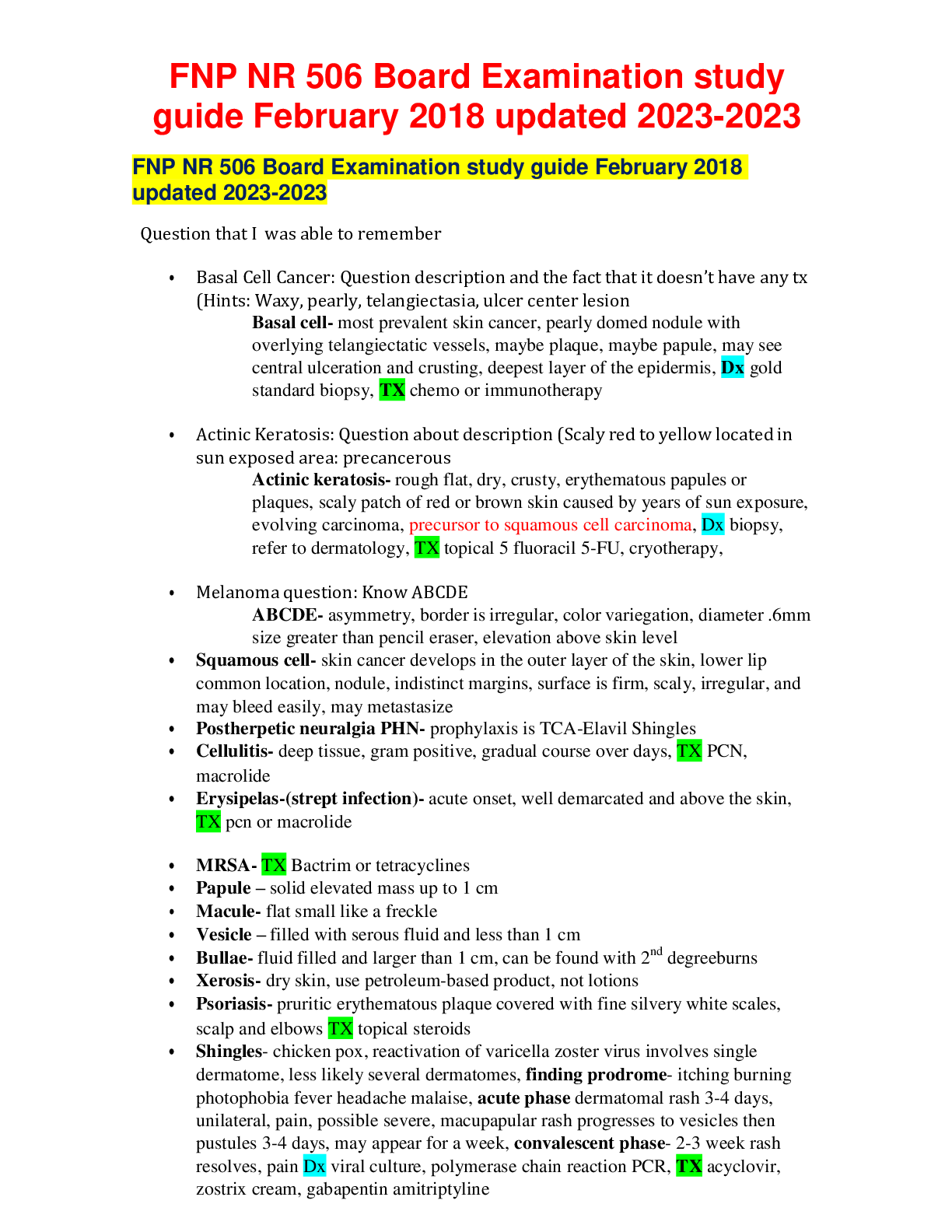
FNP NR-506Board Examination February2018
Question that I was able to remember
• Basal Cell Cancer: Question description and the fact that it doesn’t have any tx (Hints: Waxy, pearly, telangiectasia, ulcer center lesi
...
FNP NR-506Board Examination February2018
Question that I was able to remember
• Basal Cell Cancer: Question description and the fact that it doesn’t have any tx (Hints: Waxy, pearly, telangiectasia, ulcer center lesion
Basal cell- most prevalent skin cancer, pearly domed nodule with
overlying telangiectatic vessels, maybe plaque, maybe papule, may see central ulceration and crusting, deepest layer of the epidermis, Dx gold standard biopsy, TX chemo or immunotherapy
• Actinic Keratosis: Question about description (Scaly red to yellow located in sun exposed area: precancerous
Actinic keratosis- rough flat, dry, crusty, erythematous papules or
plaques, scaly patch of red or brown skin caused by years of sun exposure, evolving carcinoma, precursor to squamous cell carcinoma, Dx biopsy, refer to dermatology, TX topical 5 fluoracil 5-FU, cryotherapy,
• Melanoma question: Know ABCDE
ABCDE- asymmetry, border is irregular, color variegation, diameter .6mm size greater than pencil eraser, elevation above skin level
• Squamous cell- skin cancer develops in the outer layer of the skin, lower lip
common location, nodule, indistinct margins, surface is firm, scaly, irregular, and may bleed easily, may metastasize
• Postherpetic neuralgia PHN- prophylaxis is TCA-Elavil Shingles
• Cellulitis- deep tissue, gram positive, gradual course over days, TX PCN, macrolide
• Erysipelas-(strept infection)- acute onset, well demarcated and above the skin,
TX pcn or macrolide
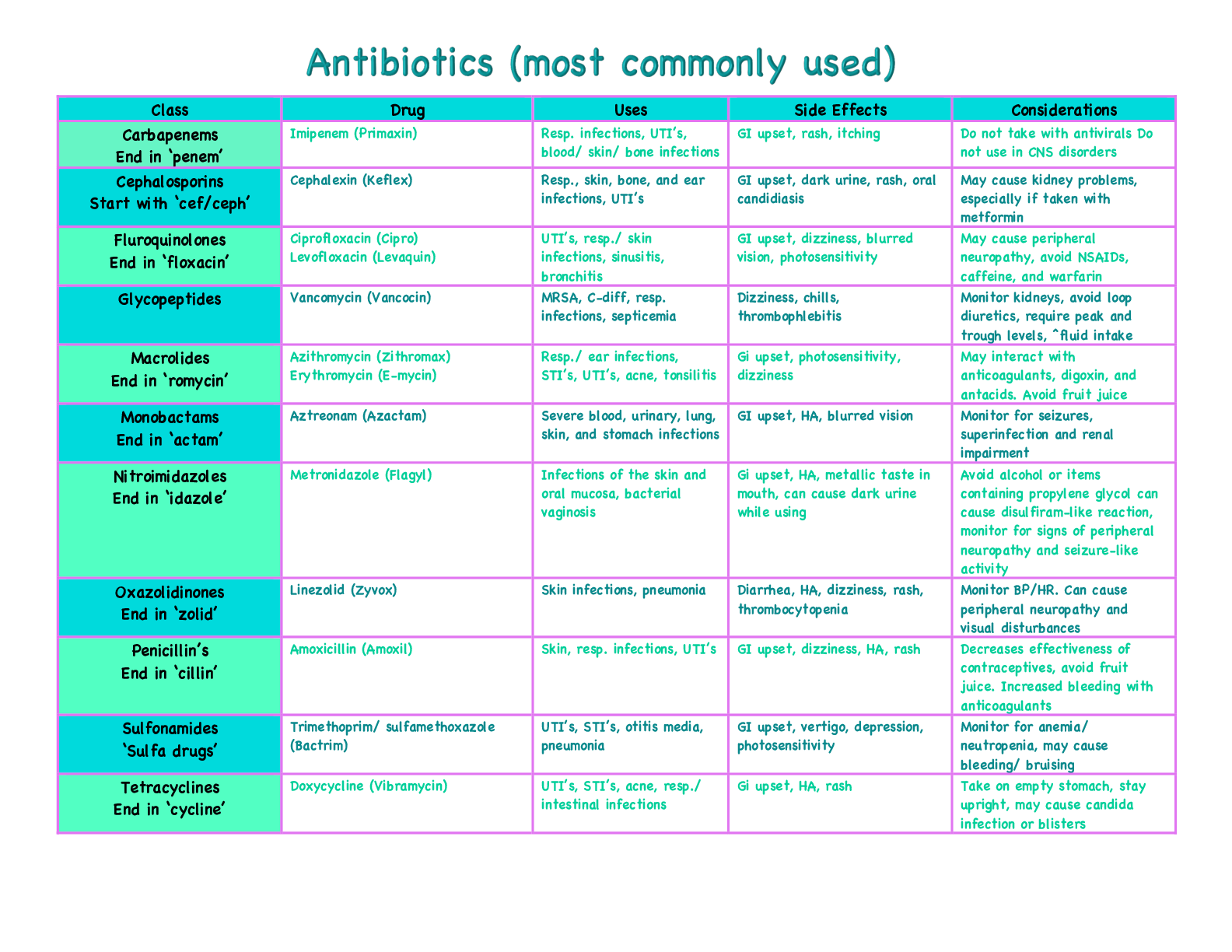
• MRSA- TX Bactrim or tetracyclines
• Papule – solid elevated mass up to 1 cm
• Macule- flat small like a freckle
• Vesicle – filled with serous fluid and less than 1 cm
• Bullae- fluid filled and larger than 1 cm, can be found with 2nd degreeburns
• Xerosis- dry skin, use petroleum-based product, not lotions
• Psoriasis- pruritic erythematous plaque covered with fine silvery white scales, scalp and elbows TX topical steroids
• Shingles- chicken pox, reactivation of varicella zoster virus involves single
dermatome, less likely several dermatomes, finding prodrome- itching burning photophobia fever headache malaise, acute phase dermatomal rash 3-4 days, unilateral, pain, possible severe, macupapular rash progresses to vesicles then pustules 3-4 days, may appear for a week, convalescent phase- 2-3 week rash resolves, pain Dx viral culture, polymerase chain reaction PCR, TX acyclovir, zostrix cream, gabapentin amitriptyline
• Varicella: Chicken pox, starts on the FACE, spreads to trunk, arms and scalp. Prodrome of fever, pharyngitis, malaise., followed by 24, eruption of puritic vesicular lesions. Exanthem, erthematous puritic maculars develop to papules and fluid filled vesicles”drewdrops on a rose petal” Hairline and spread
• Shingles: herpes zoster: varicella virus infection: elderly. One dermatone
• Spider bite- TX abx on wound, cold packs nsaids
• Dog bite- treat with analgesia (Tylenol, nsaids, Demerol), Augmentin/doxycycline/Bactrim, wound cleaning with soap and water, betadine, local anesthesia (lidocaine), irrigated with 2000ml normal saline, betadine, wound debridement, facial bites should be closed with sutures only, pack wound, tetanus immunization, antibiotic therapy,
• Lyme disease- erythema migrans, (Borrelia burgdorferi) bulls eye rash, start
within 72 hours of exposure, TX with doxycycline or amoxicillin, or azithromycin Dx two step test EIA and then western blot
• Lupus- multisystem autoimmune disease, characterized by remission and
exacerbations, affects organs, skin kidney, heart, and blood vessels, face butterfly rash, avoid sunlight exposure, photosensitivity TX refer to rheumatologist, topical and oral steroids, avoid sun and cover skin Less seen in Caucasians
• Pityriasis rosea- exanthem, Christmas tree pattern rash, herald patch, normally
on trunk, and limbs, oval erythematous-squamous scaly lesion. Pityriasis=bran, rosea=pink, last 5weeks
• Anthrax-bacterial infection, from animals, spores inhaled, caused dark scabs
difficult to breath. TX doxycycline/ fluoroquinolones (Cipro)
• Tinea versicolor- trunk and extremities sun spots, lighten areas over darker skin
• Tinea corporis-(ringworm) arms/legs or body, fungal, Tx: mupirocin ointment
• Tinea cruris- jock itch
• Tinea capitas- skin or scalp
• Tinea pedis-athletes foot
• Psoriasis- cause pitting in finger nails
• Erthema Multiforme- Bulls Eye Rash.Infection. erythematous macule evolves into a papuleSX: skin, mouth lesions that ave pink-red center surrounded by pale ring border, can be painful and puritic. Hands. Bulla on lips vesicle filled large lesions, Causes:herpes simplex, or sulfa drugs.seborrhe
• Subungal Hematoma tx: Make a hole and drain the blood
• A subungual hematoma is a collection of blood (hematoma) underneath a toenail or fingernail (black toenail). It can be extremely painful for an injury of its size, although otherwise it is not a serious medical condition. TX make hole and drain the blood (trephination)
• Tx for moderate acne
Moderate acne- TX oral abx + topical retinoid +/- benzoyl peroxide (tetracycline + tazarotene +/- Benz Pero Retin topical, oral tetracycline then Accutane (isotretinoin)
• Left Ventricle Failure: SX; crackles bibasilar rales, cough, dyspnea, orthopnea,
• Right Ventricle Failure: Jugular Vein Distention JVD) enlarged spleen, and liver, anorexia, nausea, abdominal px., lower extremity edema and cool. S3 gallop.
• Know Systolic and Diastolic Murmur (MR. ASS & MS. ARD). Mr. ASS question was asked about heart murmur with high pitch holosystolic and the other one is mid systolic.
• Systolic murmurs (audible between 1st and 2nd heart sound)
MR/mitral regurg (high pitch), heard at mitral area- radiates to left axilla AS/aortic stenosis (medium pitch) heard at AORTA area- radiates to neck MVP/mitral valve prolapse (midsystolic click) heard at mitral area
• Diastolic murmurs—ABNORMAL ASSOC WITH AORTIC/PULMONIC VALVES (audible between 2nd and 1st heart sound)
AR/aortic regurg (high pitch) heard at AORTA area
MS/mitral stenosis (low pitch with bell) heard at mitral area
• Mitral area- 5th ICS midclavicular, apex, apical area, PMI, apical pulse
• Aorta area- 2nd ICS to the right side of upper border of sternum,
• Grade of murmurs 1. Barely audible, 2 faints but audible, 3 Moderately loud no thrill palpable, 4 LOUD WITH PALPABLE THRILL, 5 very loud stethoscopes off chest, thrill palpable, 6 audible without stethoscope thrill palpable
• S1- closure of atrioventricular valves , state of systole
• S2- closure of semilunar valves
• S3- heard in pulmonic, sign of CHF, S3 gallop heard in pregnancy and thyrotoxicosis
• S4 – heard in elderly not associated with heart disease, normal
• Pulse deficit- apical/radial pulse taken at same time, find difference
• Hypertrophic cardiomyopathy- causes sudden death in young athletes
• Question about Grade III/VI Murmur: (Loud murmur easily heard)
Mitral regurgitation: holosystolic murmur-apex radiates to left axilla, loud, does not increase in inspirations, S3, Pansystolic, pathologic
• Coarctation of Aorta: Know that systolic BP on lower extremities is supposed to be higher compare to upper extremities. In COA case its vise versa. Look for weak radial and bounding femoral pulse
• Know the difference between Peripheral Arterial Disease and Chronic Venous Insufficiency. There was question about PAD and the answer was exercise by walking (Tx)
Peripheral arterial disease-impedance of arterial blood flow in lower extremities ankle brachial index <.90, plaque develops in in vessels due to atherosclerosis, pain with exercise, relief with rest, lack of hair growth on lower extremities, gangrene toes TX check pedal pulses, ABI test, exercise by walking, lifestyle modifications -smoking cessation, antiplatelet, cool to touch.
Chronic venous insufficiency- and varicose veins result from venous
incompetence secondary to valvular dysfunction, low extremity edema, skin discoloration, ulceration, DVT/PE are complications warm to touch, TX light exercise, stockings, weight loss, elevate legs
• Question about JVD causes?
right side heart fx, causes HF, pulm HTN, tricuspid valve stenosis, superior vena cava obstruction, constrictive pericarditis, hypervolemia, cardiac tamponade
• Know Bacterial endocarditis (There was a pt. with gradual onset of fever, hemorrhages on nail beds, painful raised red nodules) Osler’s nodes
Endocarditis is an infection of the endocardium, which is the inner lining
of your heart chambers and heart valves, Fever is the most common symptom of IE, it is often associated with chills, anorexia, and weight loss. Other common symptoms of IE include malaise, headache, myalgias, arthralgias, night sweats, abdominal pain, dyspnea, cough, and pleuritic pain [4]. Patients with IE associated with dental infection may report tooth pain or related symptoms. splenomegaly, Janeway lesions, which are red spots on the soles of your feet or the palms of your hands, Osler's nodes, which are red, tender spots under the skin of your fingers or toes, Petechiae which are tiny purple or red spots on the skin, whites of your eyes, or inside your mouth (gradual onset of fever, hemorrhages under nail beds, painful raised red nodules) Artificial heart valves. Germs are more likely to attach to an artificial (prosthetic) heart valve than to a normal heart valve. Risk factors- Congenital heart defects. If you were born with certain types of heart defects, such as an irregular heart or abnormal heart valves, your heart may be more susceptible to infection. A history of endocarditis. Endocarditis can damage heart tissue and valves, increasing the risk of a future heart infection. Damaged heart valves. Certain medical conditions, such as rheumatic fever or infection, can damage or scar one or more of your heart valves, A history of intravenous (IV) illegal drug use TX amoxicillin or macrolide
• RML CXR
• Chronic bronchitis description and treatment= Chronic bronchitis- production of sputum for at least 3 months annually for 2 consecutive years accompanied by cough,
stage 1-SABA (albuterol) or SAAC(ipratropium) and/or low dose theophylline,
<2 per month night awaking’s
stage 2- SABA or SAAC, and LABA(salmeterol), rehabilitation, nightly awakenings 3-4 per month
stage 3- SABA or SAAC, LABA, inhaled glucocorticoids(fluticasone), rehabilitation nighttime 1 per week
stage 4- SABA or SAAC, LABA, inhaled glucocorticoids, rehabilitation, long term oxygen, surgical treatments
•
• Hiv pt. PPD + (5mm)TB
• Croup/Epiglottitis: Question about what condition would make you order Lateral X-ray of the neck. Options include: Drooling, Unable to do ROM of the neck / stiff neck.
Croup=(hemophilus parainfluenzae) slow onset,viral respiratory infection characterized by cold symptoms, low fever, stridor, barking cough, and hoarseness, NO DROOLING,nasal flaring, abdominal breathing, use of accessory muscles, “steeple sign. Looks like a church steeple.
Epiglottis=( Hemophilus influenza)RAPID ONSET,acute Bacterial infection of inflammation characterized by high fever, (104)stridor, , nasal flaring,sore throat, respiratory distress. drooling, Head tilted back to breath, abdominal breathing, use of accessory muscles, “thumb sign used to describe swelling of epiglottis seen on lateral radiograph of neck” Emergency, 02,ER,
• Hyper and Hypothyroidism= Hyperthyroid- TSH is low <0.5 free t4, t3 is high,
• Hypothyroid- elevated TSH >0.5 free t4, t3, low
• Subclinical hypothyroid- slightly elevated TSH >5.0, t4 t3 normal DO NOT TREAT, RECHECK 6 MONTHS
• Hyperthyroid- Graves’ disease-, elevated free t4, t3, goiter, palpitation, cardiovascular symptoms (AFIB), insomnia, menstrual irregularities, diaphoresis, heat intolerance, anxiety, night sweats, blurred vision, lid lag, photophobia, double vision, diarrhea, tremors, weight loss, exophthalmos (bulging eyes), soft hair and nails, (complications: thyroid storm (life threatening), HF, visual disturbance)long term effects- heart disease, osteoporosis, mental illness, infertility. Dx TSH, thyroid panel, antibody test TX PTU propylthiouracil,
methimazole Tapazole, Radioactive iodine, RAI, BB for intial tachycardic, palpitations or tremors, anxiety (propranolol)
• Hypothyroid- Hashimoto’s thyroiditis produces antibodies to destroy thyroid
gland, lethargy, weight, gain, cold intolerance, constipation, heavy menses, myalgia, muscle cramps, headaches, weakness, dry skin, coarse hair, loss of lateral eyebrows, , alopecia, hoarseness, slight impairment of mental ability, depression, decreased libido, hypersomnia, thickened tongue, delayed deep tendon reflexes, middle aged woman, constipation, intolerance to cold, menstrual irregularities, memory loss, muscle cramps, coarse dry skin, hair loss, brittle nails, bradycardia, anemia, side effect swollen fingers, hyperlipidemia, complications osteoporosis/penia, mental retardation, myxedema coma, can lead to ovulation dysfunction and infertility. Hypothyroidism and PCOS normally include increased serum free testosterone, luteinizing hormone (LH), and high cholesterol. Dx tsh, tsh with t4, order TPO’s antibody test to confirm diagnosis, TX Synthroid 25- 50mcg, half for elderly recheck 6-8 weeks
• Hypothyroid- elevated TSH >0.5 free t4, t3, low
• Subclinical hypothyroid- slightly elevated TSH >5.0, t4 t3 normal DO NOT TREAT, RECHECK 6 MONTHS
• Hyperthyroid- TSH is low <.5 t4, t3 is high
• Dawn phenomenon- early morning increase in blood sugar between 2-8am
• Cotton Wool spots: DM, microaneurysm due to neovascularization diabetic retinopathy, hard exudates, considered moderate retinopathy.
• Metabolic syndrome: obesity, hypertension, hyperglycemia, and
dyslipidemia( Insulin resistant syndrome)
Diabetes Mellitus:type 2- Get on ASA. Risk factors:
• HTN
• Age>45
• Family Hx
• Inactivity
• HTN (140/90)>
• Women with PCOS
• Hx vascular disease
• Deliver big babies 9 plus pounds
• Minority
• A1C>5.7
3Ps=Polyuria, polyphagia, polydipsia with BS>200.
For A1C 5.7-6.4%, less than 60 y.0. BMI>35,female hx of gestational DM start Metformin
o
• Question about AV nicking (Arterioles pressing on vein of the eye): Its HTN retinopathy, fundoscopy,HTN stiffens vessels, arteries indent and displace
veins, veins pulse., considered Mild retinopathy. Arterioles pressing on the vein of the eye.
• Question causes of IOP
• Rovsing sign : deep palpation over the LLQ with sudden unexpected release of pressure, this causes tenderness on the RLQ which a positive sign for appendicitis
• McMurray test- knee pain and click, injury to medial meniscus, (Knee feels like
locking up) Dx gold standard test for joint damage is the MRI (supine raise knee twisting knee inward/outward while extending in/out)
• McMurray test- knee pain and click, injury to medial meniscus, (Knee feels like
locking up) Dx gold standard test for joint damage is the MRI (supine raise knee twisting knee inward/outward while extending in/out)
• Drawer sign test- for knee stability- positive anterior drawer sign test for ACL,
the positive drawers sign test for PCL
• Homans sign- lower leg pain on dorsiflexion of foot, assess for DVT
• Cullen’s sign- edema and bruising of the subcutaneous tissue around the umbilicus
• Grey-turners sign- bruising/bluish discoloration of the flank area that may
indicate retroperitoneal hemorrhage
• PSOAS- supine patient, patient uses resistance against examiners hand on straighten leg, side lying variation as well, test for pancreatitis/appendicitis
• Obturator sign- right side lying patient, inward rotation of hip, test for
pancreatitis/appendicitis
• Finklestein test- to diagnose de quervains tenosynovitis in wrist pain, thumb side,
• Dix-Hall pike test- tests benign positional vertigo (sitting twist head)
• Tinel test- tapping wrist for carpal tunnel
• Phalen’s test- upside down praying hands for carpal tunnel
• Murphy sign - gall bladder test (hook during inspiration)
• McBurney’s point- umbilicus to great trochanter, appendicitis test, knife hand technique, press and assess pain on rebound effect
• Sprains:
• Mild sprain:Grade 1: slight stretch, damage to ligament fiber, weight bearing, no instability to joint ambulation ok
• Moderate sprain:partical thickness tear, presents with ecchymosis, mod
swelling, px tender to palpate, wgt bearing painful, recovery 1-2 weeks
• 3rd degree severe rupture of ligaments, popping nosie, swelling pain unablity to walk. Recovery 1month+
• Pt. with GERD and Barrett’s esophagus: Refer to Oncologist
o Globus- feeling of foreign body in throat, lump in throat generally from GERD
o
Barret’s esophagus- metaplastic columnar epithelium replaces the stratified squamous epithelium that normally lines the distal esophagus
[1,2]. The metaplastic epithelium is acquired as a consequence of chronic gastroesophageal reflux disease and predisposes to cancer development. Dx upper endoscopy with biopsy, Refer to oncology! TX PPI omeprazole
• Question about pencil like stool: Options include problem with ascending colon, descending colon and couldn’t remember other options. It’s a thin narrow stool and possible causes include colon cancer, diarrhea, IBS. Refer for GI colonoscopy Pencil like stool- caused by constipation, colorectal cancer, fecal impaction, polyps, abdominal hernias, anorectal strictures, distended or stretched colon and twisted bowel or volvulus, crohns, ulcerative colitis, IBS, Refer to GI for colonoscopy
• Question about Hepatitis B active Immunology.
• Know your urinalysis result
It is a UTI if nitrates are present. Contamination with too many bacteria.
• Question about Pt. complaining of headache after trauma: (Options include post concussion headache, subarachnoid hemorrhage and Subdural hemorrhage). I think the answer is subdural hemorrhage
• Post-concussion headache-direct blow to the head or body with an impulsive
force transmitted to the head, self-reported loss of consciousness lasting <30 minutes, confusion, delayed response, change in sleep, visual disturbances, amnesia
• Subarachnoid hemorrhage- The primary symptom of aneurysmal SAH is a
sudden, severe headache classically described as the "worst headache of my life, brief loss of consciousness, nausea or vomiting, and meningismus, Meningismus and often lower back pain may not develop until several hours after the bleed since it is caused by the breakdown of blood products within the CSF, which lead to an aseptic meningitis. While many patients have an altered level of consciousness, coma is unusual. Seizures occur during the first 24 hours in less than 10 percent of patients but are a predictor of poor outcome. SAH may also present as sudden death; at least 10 to 15 percent of patients die before reaching the hospital.
• Subdural hemorrhage- presents with symptoms of elevated intracranial
pressure including headache, vomiting, anisocoria, dysphagia, cranial nerve palsies, nuchal rigidity, and ataxia. The insidious onset of headaches, light- headedness, cognitive impairment, apathy, somnolence, and occasionally seizures, may occur as a consequence of chronic SDH, patient on anticoagulants, bleeding between the epidura and subarachnoid of the brain.
• Temporal arteritis- (Giant Cell)The cause of the blood vessel inflammation is
unknown. In some cases, the swelling affects just part of an artery with sections of normal vessel in between. Symptoms include acute onset of headaches located on one temple, skin over artery is indurated, jaw pain, vision loss, fever, and weight loss, anorexia, fatigue. Dx usually requires biopsy of the temporal artery. Elevated
sed rate and c reactive protein, high risk with polymyalgia rheumatica, the condition needs prompt treatment with steroid medications to prevent permanent vision loss. TX prednisone, methyl prednisone, aspirin nsaids, refer to ophthalmology and rheumatologist
o
• Question about Migraine headache: Know the description and duration of headaches as well
• Migraines: Headaches last 4-72hours. Unilateral, pulsating, mod to severe,
aggravated by routine activity. n/v, photophobia, phonophobia. Imitrex, (Sumatriptan 5-HT-1) Immediate, prophylactic, Beta blocker, TCA, amitriptyline,colcholine
• Migraine with aura: metallic taste, hyperosmia(smell), blurred vision all prior to headache. NO COMBINATION BIRTH CONTROL PILLS
• Cluster headaches- occurs at time/night last 15 to 180 minutes, severe ice pick
lacerating pain, unilateral behind the eye or temporal pain accompanied by same side of the face sweating, lacrimation, nasal congestion, ptosis, rhinorrhea, eyelid edema, produce red teary eye, common middle aged-man TX O2, Imitrex, CCB for prophylaxis, resolve spontaneously
• Tension headaches- last several days mild to moderate bilateral no pulsating
pain, tightening pain that is not aggravated by physical activity, with no N/V or photosensitivity, spasms of trapezius muscle TX Nsaids, stress reduction
• Essential tremor- inherited tremor treat with propranolol or atenolol
• Cataracts- opacity in lens, difficulty with glare, halos around light, blurred vision, gradual onset of decreased night vision, red reflex disappears (Red reflex is now opaque gray instead of orange red glow) COMMON CAUSE OF BLINDNESS DEVELOPING COUNTRIES
• Macular degeneration- loss of center vision, loss of visual acuity, contrast
sensitivity but still have peripheral vision, may find Drusen bodies, Dx Amsler grid to evaluate central vision changes COMMON CAUSE OF BLINDNESS IN UNITED STATES
• Retinal detachment- sudden onset of shower floaters/specs with looking thru
curtain with sudden flashes of light, risk factors extreme nearsightness, cataract surgery, family history, TX laser surgery or cryopexy (freezing) refer to ED, lead to blindness
• Arcus senilis- an arc or circle around the cornea, common in older adults >50,
opaque grayish to white ring at the periphery of the cornea, not associated with visual changes, caused by cholesterol and fat deposit, Dx check lipid profile
• Open angle glaucoma- chronic form, before loss of peripheral visual fields, its
asymptomatic, excellent prognosis if TX early, seen in elderly
• Narrow Angle closure glaucoma-also called Acute closure glaucoma ill appearing, sudden decrease visual acuity, eyes reddened, profuse tearing, acute onset of eye pain, acute visual loss, severe headache, N/V, may lead to blindness,
halos around lights, cloudy cornea, TX refer to ED tonometry in ED to measure IOP
• IOP intraocular pressure - caused by obstruction of the outflow channels, especially the meshwork (affected by aging), or overproduction of the aqueous humor. Ocular trauma, inflammation of the uveitis, chronic steroid use, vasoproliferative retinopathy, and recurrent retinal hemorrhages
•
• Question about CN 3,4,6 (EOM)
• CN3: Oculomotor, initial eye movement, down:out movement,
• CN6:abducens, lateral rectus muscle moves the eye outward, if not working, internal strabismus leading to double vision,
• CN4:Trochlear: superior oblique, doral rear aspect of the brain.
• Anemia question, Vitamin B12 deficiency, Folate. Macrocytic hypochromic
• MCV-size, MCH-hemoglobin content,saturation of color MCHC- measure of avg color, decreased in iron-deficiency anemia and thalassemia, normal in macrocytic, RDW-indicates variation of RBC size,donuts vs donut holes serum iron- iron in blood, serum ferritin- iron storage, reticulocyte count- ability of bone marrow production Red blood cells TIBC- total iron binding capacity, if iron is low TIBC is high vice versa Red cell casts – indicate glomerulonephritis not UTI, acute/chronic renal fx nor urolithiasis
• RBC- lifespan is 3 months
• Bands- shift to the left means severe bacterial infection
• Eosinophilia- can indicate allergies, cancer, parasitic disease
• Neutrophils/Segs- biggest WBC then Lymphocytes
• Bilirubin- is the breakdown of rbc
• Thalassemia; microcytic, hypochromic but normal RDW, Dx electrophoresis Alpha- Philippine….Beta- Mediterranean descent, initial test is CBC Iron levels,
• A lot of Musculoskeletal questions: (Anteriorly ligament which is for ACL;
• Drawer sign test- for knee stability- positive anterior drawer sign test for ACL, the positive drawers sign test for PCL
•
• Apprehension test positive, - tests shoulder when anterior instability is suspected, patient lays supine examiner will flex elbow to 90 degrees .
• McMurray test- knee pain and click, injury to medial meniscus, (Knee feels like
locking up) Dx gold standard test for joint damage is the MRI (supine raise knee twisting knee inward/outward while extending in/out)
•
• lateral epicondylitis Tx, tennis/golfers elbow, pharm TX =nsaids, anti- inflammatory cream, intraarticular corticosteroid injection, nonpharm TX= rest, ice, brace, physical therapy, referral- ortho, PT/OT
• Morton’s Neuroma (Mulders test)description as someone with high heels and has a mass or nodule on the 4th/5th toe) painful condition hurts the ball of
your foot, between third and fourth toe, involves thickening of tissue around nerves leading to your toe, toe may sting, burn or feel numb, DX with clinical presentation and history, small nodule between third and fourth toe, linked to tight fitting shoes and high heels, TX with corticosteroid or surgery, avoid tight shoes,
•
• Osgood Schlatter Disease: Hint tibia tuberosity, occurs during growth spurt and affects superior tibia, when quadriceps exert stress on the patellar tendon (tibial tubercle), anterior knee pain increases over time
•
• Question about an 88/yr. old patient in for follow up secondary. She’s been treated with Tylenol for Joint arthritis. Her SED rate was checked after 6 weeks of treatment and it was 28. Normal range is from something to 25. How would you treat the pt. (Do nothing, Increase Tylenol, change to NSAID, and pt. is expected to have a high SED rate due to age). I think it should be changed to NSAID cuz SED rate is a sign of inflammation, Do nothing, old people have higher sed rates.
• Question about medial Tibia Stress; Medial tibial stress syndrome/fracture- injury of overuse of the muscles tendons and bone tissue of the tibia, shin splints, pain of overuse of the large front bone in lower leg, Dx bone scan or MRI, TX RICE, stretching, massage, nsaids,
• Bouchards node- typical in osteoarthritis, enlargement of proximal
interphalangeal joint
• Ankylosing spondylitis- (Bechterews disease) inflammatory arthritis affecting spine and large joints, pain improves with exercise not rest, low grade fever, fatigue, marked loss of ROM, humpback, uveitis, Dx labs sed rate, C reactive protein, spinal radiograph bamboo spine, TX refer to rheumatologist, first line is NSAIDS, postural training
• Cauda equina syndrome- medical emergency, spinal cord compression, B/B
dysfunction,saddle, TX refer to ED, needs decompression
• Arthritis TX- Tylenol first line, nsaids- Celebrex, topical nsaids
• Degenerative joint disease/OSTEOARTHRITIS- cartilage covering surface of joints becomes damage from overuse, obesity, affects distal interphalangeal joints, early morning stiffness<15 minutes, swollen tender joints, ASYMMETRIC symptoms, Bouchards nodes (Proximal) and Heberden’s nodes (Distal) DX physical exam or radiographs, TX first line treatment is Tylenol, nsaids, steroidal injections only, no oral steroids, glucosamine sulfate supplement
• Rheumatoid arthritis- autoimmune disorder inflammation of multiple joints plan
is to prevent the joint damage, presents with bilateral pain and swelling of proximal interphalangeal joinst, SYMMETRICAL DISTRUBUTION, signs of fatigue, low grade fever, body aches, myalgia, GENERALIZED joint pain, early morning stiffness >1 hour, weight loss, anorexia, neurophathic pain in the extremities or eyes, chest pain upon inspiration, warm and tender swollen fingers “sausage joints” Dx intital test is sed rate, Creactive protein, CBC, rheumatoid
factor, TX refer to rheumatologist, surgery, NSAIDS, steroids, Humira Anti TNF biologics, antimalarial- Plaquenil, can cause uveitis Severe RA go swimming
• Osteoporosis- deterioration of bone tissue caused by hormonal changes, calcium
vitamin d deficiency, risk factors- patients on PPI, patients with anorexia/bulimia females, family history, age; estrogen and testosterone deficiency, kyphosis, Caucasians and Orientals, small frame people, cigarette, alcohol, caffeine, medication- steroids anticonvulsants, thyroid supplements, eating disorder, sedentary life, Dx bone mineral density >-2.5 osteoporosis TX first line is bisphosphonates alendronate, Fosamax, calcium500 mg, vitamin d thru food and supplementation, testosterone, wt bearing exercise
• Osteopenia- increase calcium dark green vegetables, salmon, sardines, soy and
OJ
• slipped capital femoral epiphysis- is a medical term referring to a fracture through the growth plate (physis), which results in slippage of the overlying end of the femur (epiphysis).SCFE is also more likely to happen to teens who have specific stuff going on with their health, such as: obesity (carrying extra weight puts increased pressure on the growth plate) endocrine disorders like diabetes, thyroid disease, or growth hormone problems. kidney disease. TX in situ fixation. This is the procedure used most often for patients with stable or mild SCFE. The doctor makes a small incision near the hip, then inserts a metal screw across the growth plate to maintain the position of the femoral head and prevent any further slippage. Nonwt bearing, referral to ortho for pinning
•
• ADHD is a behavior disease
• Which medication causes low sperm count for a patient (SSRI)
• Question about grandiosity (Bipolar)
• Question about contraceptive pills, no birth controlpills on pt with migraine with aura,
• Question about, Trichomonas test wet mount was mentioned on the exam
• Question about a pt. pap’s smear noted with Low Grade Squamous Intraepithelial Lesions and High Grade Squamous Epithelia Lesion noted on the report, what should NP do?
• Low grad Intraepithelial lesions cervical cells that appear slightly abnormal but
not precancerous
• High grade squamous intraepithelial lesions- precancerous cells not cancer HPV testing and refer to colposcopy
• (Options are referring for colposcopy, repeat in 12 month and can’t remember
other options. My review book stated to order HPV test if not done. Refer for colposcopy.
• Question about NP palpating right ovaries on a 1-year postmenopausal woman. Options include (To refer for endocerviacal test, for ovarian cancer something, couldn’t remember other options). Answer is to r/o ovarian cancer
• Another question about who is at high risk for ovarian cancer (Options include Family history, previous abortion and cant remember the rest)Age >55, family hx, genetic mutation,previous cancer,breast, endometrial, colorectal, pregnancy>30 years old
• High risk for ectopic pregnancy: (Options include: Infertile, and cant remember the rest of the options)Ectopic pregnancy,PID,exposure to DES,smoking, endometriosis, tubal surgery, current IUD
• Question about chlamydia, cervical motion tenderness: TX;doxycycline, azithromycin.
• Question about CURBS: Which of the options does not require hospitalization for
pneumonia (Options are all except 1; all include one that’s not part of it) Review
CURBS: It’s a criteria for pneumonia hospital admission
• Confusion, blood urea, respiratory rate>30, Blood pressure <90 systolic and diastolic <60, age 65+
• Question about genital wart(Condyloma cicuminate) tx : Acyclovir first 72
hours.
Genital Warts=small flesh-colored or gray lesions and itching in genital area=HPV Genital Warts=cauliflower clusters, skin colored around vagina, anus and penis.no pain Tx: cauterizing, freezing, topical anti- tumors.
• Question about treating HIV pt. with antiviral and CD4 count still less than
200. What should NP tell the pt. (Different option but the best option is to tell the pt. that he is qualified to be diagnosed with AIDS according to CDC
• Most common cause of death in children (Options are poisoning, Motor vehicle accident, drowning, and cant remember the fourth one)
Accident
• Tanner stage questions
• Addison’s disease- hypercortisolism, darkening of skin,like a tan, crave salty foods, weight loss, decreased libido, hypoglycemia TX steroid cortisol
• Cushing’s disease- elevated cortisol, fatty hump, round face, pink purple stretch
marks, weight gain hair loss
• Finklestein test- to diagnose de quervains tenosynovitis in wrist pain, thumb side,
• Elisa test- screening for Lyme disease and HIV, confirmed by Western blot test
• Drawer sign test- for knee stability- positive anterior drawer sign test for ACL, the positive drawers sign test for PCL
• Homans sign- lower leg pain on dorsiflexion of foot, assess for DVT
• Obturator sign- right side lying patient, inward rotation of hip, test for pancreatitis/appendicitis
• Lachman sign- knee joint is laxity is positive, suggest ACL damage, more
sensitive than anterior drawer test instability of knee
• Apprehension test- tests shoulder when anterior instability is suspected, patient lays supine examiner will flex elbow to 90 degrees
• Mulder test- test for Morton’s neuroma, squeeze forefoot, positive test is hearing
click and pain from patient
• Kernig test- leg raise while supine/meningitis
• Brudinski test- head lift while supine/Meningitis
•
• Sensorineural (Presbyacus) high pitch hearing loss from aging, generally sensorineural not conductive
•
• Know types of Alzheimer’s: Question about a pt. expericieng memory loss, and increase in confusion and she has a history of stroke, HTN, What type of Alzheimer. Options include (Dementia with lewy bodies, Vascular dementia, frontotemporal dementia). I think the answer is vascular.
• Vascular dementia: also called multiinfarct dementia= brain damage from multiple strokes
• Question about Romberg test and how its done; Romberg test- stand in front of examiner feet touching, ask patient to extend arms forward palms facing up, if patient sways and has to move feet it’s a positive test
•
• Question about sensitivity; Sensitivity relates to the reliability of a technique to give a positive result when the finding is present. Specificity relates to the reliability of a technique to successfully rule out a finding.
• Explanation ;Sensitivity relates to the reliability of a technique to give a positive result when the finding is present. Specificity relates to the reliability of a technique to successfully rule out a finding. A technique is rarely both very sensitive and very specific; therefore, several techniques must be used for an appropriate assessment. A test of high sensitivity is useful for screening, but tends to produce false positive results. A test of high specificity will produce many false negative
• Question about Coombs test r/o bilirubin
RH negative-Rogram take at 28weeks and 72 hours after delivery.
• Hyperbiliribubin question risk (One of the option is extremely formulary feeding) TX phototherapy, hydration, breast feeding or formulary feeding
• Preeclampsia tx (bed rest, laying on her side and 20 weeks pregnant
• Question about a pregnant female at slightly above symphysis pubic and Fundal height is 32cm (above the umbilical. What should be done (I picked to have Ultrasound done to)
• HELLP syndrome- complication from eclampsia, third trimester presents with symptoms of severe preeclampsia, DX AST, ALT, bilirubin, decreased PLT H&H
o
• Question about molliscum tx
Molluscum contagious- poxvirus, smooth wax pearly skin colored, round, (dome shaped) papules 5 mm size, central umbilication with white plug, viral skin infection results in round firm painless bumps, contagious, TX resolve on own, wart medication (if near genitals in kids, suspects sexual abuse)
• Question about pyloric stenosis (Hint is non bilious vomiting, olive like firm mass palpated on right upper quadrant)
• Review your skin issues for adult and kids. Question about Rubeola (Koplick),
• Kolpik spots- are a prodromic viral enanthem of measles manifesting two to three days before the measles rash itself. They are characterized as clustered, white lesions on the buccal mucosa (opposite the lower 1st & 2nd molars) and are pathognomonic for measles.
• Measles (Rubeola) 10day measles,Viral,
• Scarlet fever, scaralatina-bacterial-cause strep throat- sandpaper textured pink rash with sore throat strawberry tongue
• Impetigo: Acute superficial skin infection, gram +, bacteria, strep pyogenes
(beta strep) contagious, puritic, bullous or non bullous. Tx;Kelfex (cephalexin)Dicloxacillin, Azithromycin if PCN allergy, honey colored crusted
• Fifth disease- (Erthema Infectiosum) Parvovirus B19, stages of rash, slap
cheek syndrome, erythema infection, A common and highly contagious childhood ailment causing a distinctive cheek rash, blanches, spreads to arms legs and trunk.
• Roseola infantum- Sixth disease, viral infection, young children, high fever rash,
TX bedrest, fluids, Tylenol
• Kawasaki disease- high fever enlarged lymph nodes red rash in groin area, conjunctivitis, dry cracked lips, strawberry tongue, swollen hands/feet, skin peels form hands/feet, TX high dose aspirin, gamma globulin
• Hand foot mouth disease- (under age 10) Coxsackie virus, direct contact, with nasal discharge, saliva, blister fluid, or stool, most contagious for first week, fever, severe sore throat, headache anorexia, blisters on the hands and feet, diaper area, ulcers mouth throat tonsils and tongue, pain with acidic foods, The main manifestations are fever, lymphadenopathy, followed by the appearance of 2–8-mm painful oval, gray vesicles on the palmar and plantar skin, buccal mucosa and tongue after 1–2 days. The vesicles are often arranged parallel to the dermatoglyphs, and may have a surrounding red halo. Papular and vesicular lesions can also occur on other parts of the body, and the buttocks may often
exhibit a nonspecific eruption prior to the onset of the vesicular exanthem. TX symptomatic treatment ibuprofen or Tylenol saltwater gargle, cold fluids
• Mononucleosis (Epstein-Barr) Human herpes virus 4, posterior cervical lymphnodes,Exantham: Tx: no amoxicillin
• Acanthosis nigricans- thickening of the skin, skin pigmentation disorder
(darkening) related to diabetes, colon cancer and obesity
Actinic keratosis- rough flat, dry, erythematous papules or plaques, scaly patch of red or brown skin caused by years of sun exposure, evolving carcinoma, precursor to squamous cell carcinoma, Dx biopsy, refer to dermatology, TX topical 5 fluoracil 5-FU, cryotherapy
• Contact dermatitis- allergy to something
• Seborrheic dermatitis-(CRADLE CAP) chronic, superficial disorder, scaly patches and red skin mainly on scalp, TX rotation of prescription/nonprescription (scalp- ketoconazole/metronidazole(antifungal) shampoo, capitrol shampoo, selenium sulfide Selsun blue(adults/children) shampoo ciclopirox shampoo, topical steroid gel hydrocortisone) face hydrocortisone, ears-hydrocortisone cream, eyelids- baby shampoo,
Sebhorric keratoses- soft wart like lesion appears pasted on, seen on back and
trunk, (elderly) BENIGN, old age spots.
• Question about horizontal nystagmus that stops when eye is close to midline in a college student (options include meniere, BBPV does not cause nystagmus, normal and cant remember the forth one)causes: DM, head injury, brain, tumor, menieres
• Question about someone eating, painful lump noted on the jaw that comes and go. Options include (Cancer of Wharton, sialolithiasis). The answer is sialolithiasis
• Question about ADHD (options include are solely a behavior disorder, panic, personality disorder)
• Question about a pt. complaining about upper arm tremor that seems to be
hereditary. What’s the treatment? options include (Xanax, lorazepam, topolol and cant rember the last one)propanolol
• Which among the list can cause increase in respiration. Options include (low oxygen, high oxygen, hypercapnia, hypocapnia)
• FEV/
• Question about FRUCTOSESAMINE TEST. Test for how long sugar storage in system. Options include (2-4 week, 3-8 weeks 4-6 weeks and cant remember the rest). The answer is 2-3 or 4 weeks
• Question about osteoporosis risk factors. Options include (low estrogen level, obesity, sedimentary lifestyle, levothyroxine,cant remember the last one
• Tx to prevent fracture in a pt. with low vitamin d hydroxyl, high TSH and low Hct
(Option include Calcium carbonate 600mg, vitamin d 800 IU, cant remember the remaining 2 options)
• Questions about carotid bruit signs can signifies what. Options include (Pulmonary HTN, carotid problem, cant remember the remaining two options0
• Ovarian CA risk. options are (multipara, family history and cant remember the rest).
• Question about ectopic risk factor. Options include (abnormality, exposure to
some chemicals, previous abortion)Risks: previous ectopic, tubal surgery, current IUD
• Common causes of GERD. Options are (Histamine blocker, BB, CCB, cant remember the last one)
• Zollinger-Ellison syndrome- tumors causes stomach to produce to much acid
resulting in PUD
o
• Zeprexa (What lab and intervention to put in place) such as weigh check, DM,) Monitor BS, may cause hyperlipidemia, CBC, liver function, assess BMI
• Question about what’s the common bug in children with diarrhea.Viruses, viral
gastroenteritis
• What test needed to differentiate lesion/cyst found on a breast (Options include Screening mammogram, Ultrasound, Needle aspiration)Mammogram
• Increase in triglyceride can cause pancreatitis
• Weber/Rhinne Test ; Sensorineural loss Weber test(top of head)no laterization, normal finding, does not lateralize to either ear, bilateral hearing loss, if hear better in left ear, right sensorineural loss
• Conductive loss Rinne test (behind pinna)–normal finding if AC last longer than
bone conduction, good ear= air conduction> bone conduction, bad ear BC>AC
• Peripheral arterial disease-impedance of arterial blood flow in lower extremities ankle brachial index <.90, plaque develops in in vessels due to atherosclerosis, pain with exercise, relief with rest, lack of hair growth on lower extremities, gangrene toes TX check pedal pulses, ABI test, exercise by walking, lifestyle modifications -smoking cessation, antiplatelet
• Chronic venous insufficiency- and varicose veins result from venous
incompetence secondary to valvular dysfunction, low extremity edema, skin discoloration, ulceration, DVT/PE are complications warm to touch, TX light exercise, stockings, weight loss, elevate legs
• Jugular vein distention- right side heart fx, causes HF, pulm HTN, tricuspid
valve stenosis, superior vena cava obstruction, constrictive pericarditis, hypervolemia, cardiac tamponade
• Pericarditis- sharp pain, worsens laying down
• PAD/PVD: gradual onset of occlusion of /narrowing of arteries in extremities, permanent ischemic damage, gangrene of toes, high risk with HTN, smoking, DM, hyperlipidemias; worsening pain on walking (intermittent claudication), relieved by rest. skin, shiny, hyperpigmented at ankles, hairless, cool to touch. Absent dorsal pedal pulse. Tx; Doppler, angiography is gold standard, stop smoking, Pentoxifylline (Trental).
• Hyperlipidemia: high risk for acute pancreatitis, diet weight loss, HMG CoA (statins).TX; reduce junk food, begin exercise, try niacin and fibrates if no success. Treat this before hypercholesteremia.
• Rhabdomyolysis: acute break down of skeletal muscle causing acute renal
failure. Triad: red-brown urine, muscle pain, weakness. Labs CK,urine:proteinuria,BUN,creat,K,
• Cholesterol<200, HDL >40, LDL <100, Triglycerides <150 TX first line life
modifications, niacin fenofibrate
• Heart disease leading cause of death in women.
• Kids with scoliosis=check hips as well
• Atopic dermatitis=allergic response, flat macular patch excoriation, puritis
• Amenorrhea=16 year old fully developed, missing a period
• African American female thiazide and CCB
• Otitis media with effusion= no tx: pneumotypy with fluid bulging TM.
• Papular-vesicle rash starts on face=measles, flat red spots, corza, conjunctivitis, fever
• Peptic ulcer disease=
• Lichen planus
• Acne Rosea=
• Talwin
HCTZ= Thiazides- largest studied drug, lowers potassium, increases gout, increase digoxin toxicity Thiazide is beneficial for osteoporosis, reduces calcium excretion by kidneys, and stimulates osteoblasts which help with bone growth. Pts with serious sulfa allergies avoid thiazide. Thiazides: Contraindications: hypotension, gout, renal failure due to loss of sodium, hypokalemia, may worsen DM, lead to metabolic alkalosis, by action of the renin angiotensin system, decreased volume and arterial pressure. May cause hyperglycemia due to insulin resistance and decreased insulin release. Thiazide(HCTZ) used for uncomplicated HTN, heart failure, edema. Adverse Rx: HYPERGLYCEMIA, ELEVATED TRIGLYCERIDES AND lower HDL insulin insensitivity, ELEVATED URIC ACID CAN PRECIPATE A GOUT ATTACK, Hyperkalemia MUSCLE WEAKNESS, ARRYTHMIA).
• BPH medications=no anticholergic (cholerigeic antagonist)doxasin,
• Otitis Media= what bacterial; inflammation of middle ear/inner, erythema, decreased tympanic membrane mobility, distorted landmarks, displaced light reflex, moderate to severe bulging, mastoid pain, Strep pneumo,haemophilus influenza, moaxella catarrhalis. Dx pneumatic otoscopy TX analgesics acetaminophen, ibuprofen, narcotic with codeine, amoxicillin, Augmentin, omnicef, ceftin, otic drops ciprofloxacin with dexamethasone
• What does medicare B pay for? Outpatient insurance: outpatient visits, lab and scans,DME,2nd opinions, ER visits, dialysis, transplants, flu shots,colonscopys, mammagramssmoking cessation, HIV tesing prostate, dexa scans ALL PREVENATIVE SCREENINGS
• Pseudohyphae surrounded by round vaginal epitheral cells spaghetti/meatballs Vaginal candidas
• Somogyi effect- too much insulin in the blood at night causes a rebound
increasing blood sugar in the AM
• Dawn phenomenon- early morning increase in blood sugar between 2-8am
Metformin(Biguanide) (Glucophage)hold for serum creatine elevation. Keeps BS from rising, reduces glucose production, does not cause weight gain, reduces CV, reduces all-cause mortality. Prone to eye problems, DM can wreck the microvasculature of the eyes. Can cause lactic acidosis in opts with hepatitis C.
• Increases insulin secretion
• Increases insulin sensitivity
• Prevents BS from rising
• No hypoglycemia
• Cause diarrhea, nausea, flatulence
• No weigh gain/ promotes weight loss
• Decrease hepatic glucose production
• Stop smoking wrecking blood vessels
• Eyes, annually
• Dental periodontal disease
• Check renal function GFE+>60, if GFR 45-59only 2000mg, if 30-45, 1000mg, <30 none
• Slow intestinal absorption of carbohydrates
Sulfonylurea
Glimepride(amarly Glipizide (Glucotrol) glyburide (Diabeta, Micronase) causes:
• Weight gain
• Hypoglycemia
• Does potentiate insulin secretion
• Use alone or combination with metformin
• cheap
Don’t use with insulin
Control Group: subjects in an experiment who do not receive tx
[Show More]














.png)