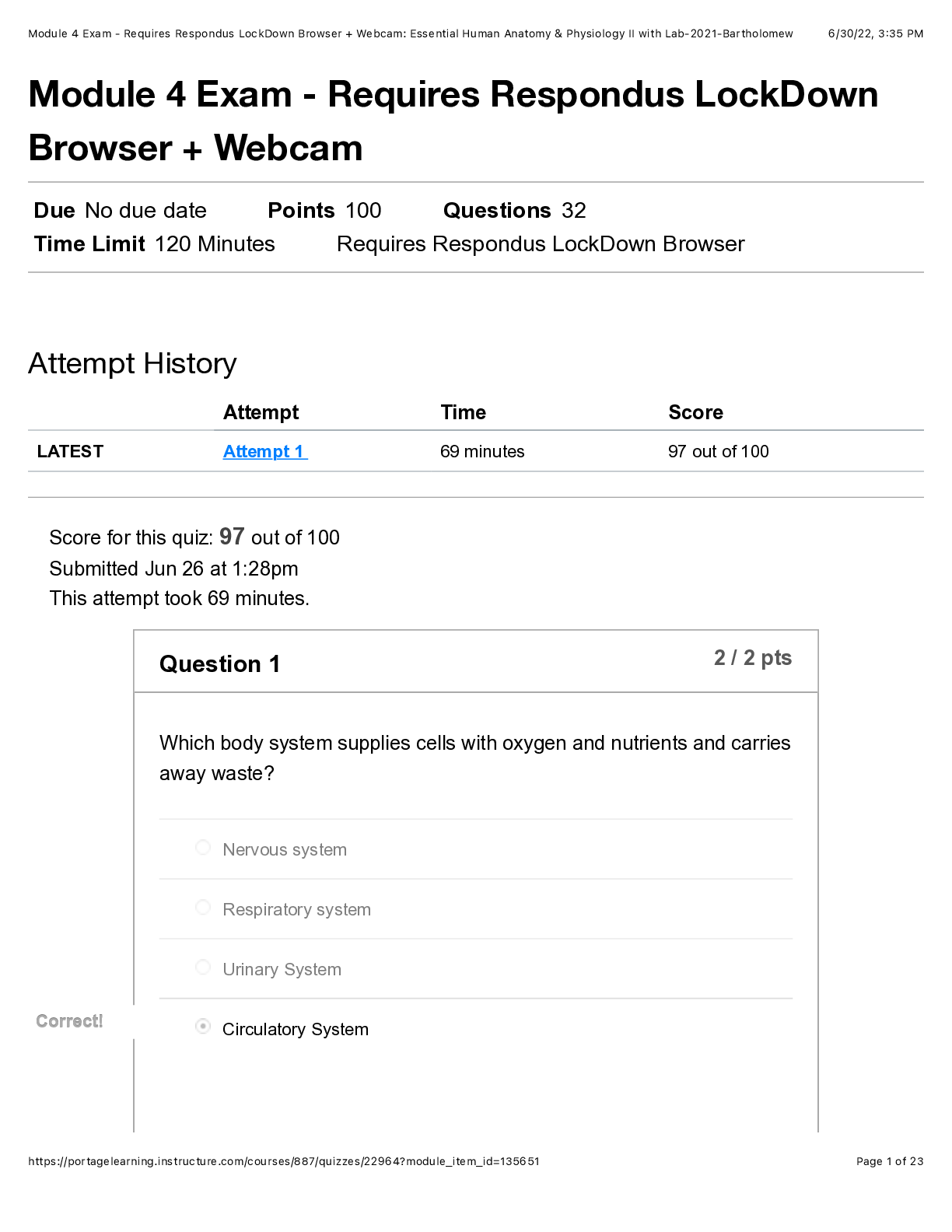
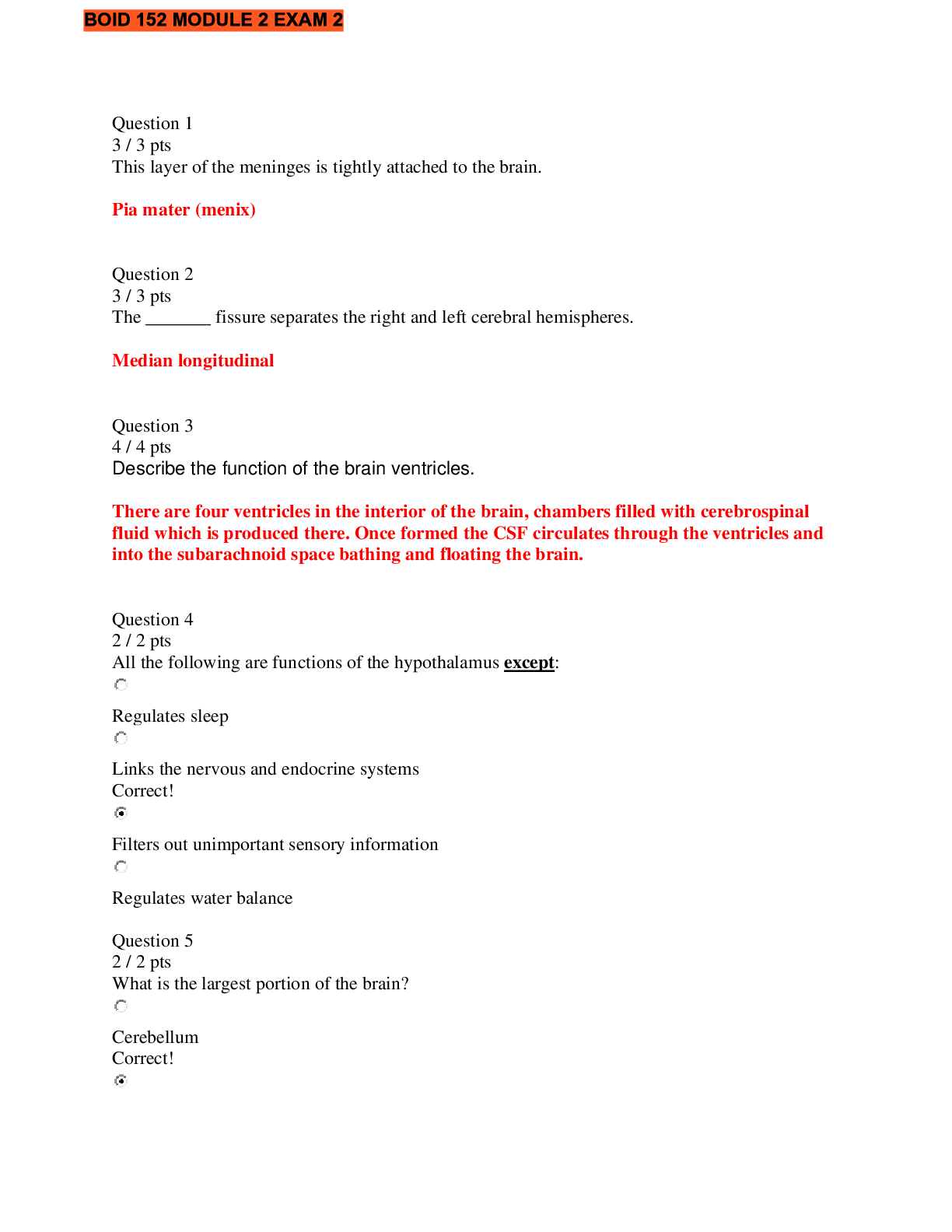
NURSING > QUESTIONS & ANSWERS > ATI Assessment of the Normal Newborn (All)
ATI Assessment of the Normal Newborn
Document Content and Description Below
Last updated: 3 years ago
Preview 1 out of 10 pages
Instant download

Buy this Document to get the Full Access Instantly
Provided by Students Who Aced it
We Verify Document Content to Gurantee Accuracy
Reviews( 0 )
Document information
Connected school, study & course
About the document
Uploaded On
Jun 12, 2021
Number of pages
10
Written in
All

Additional information
This document has been written for:
Uploaded
Jun 12, 2021
Downloads
0
Views
63
Topic Tags
Recommended For You
Get more on QUESTIONS & ANSWERS »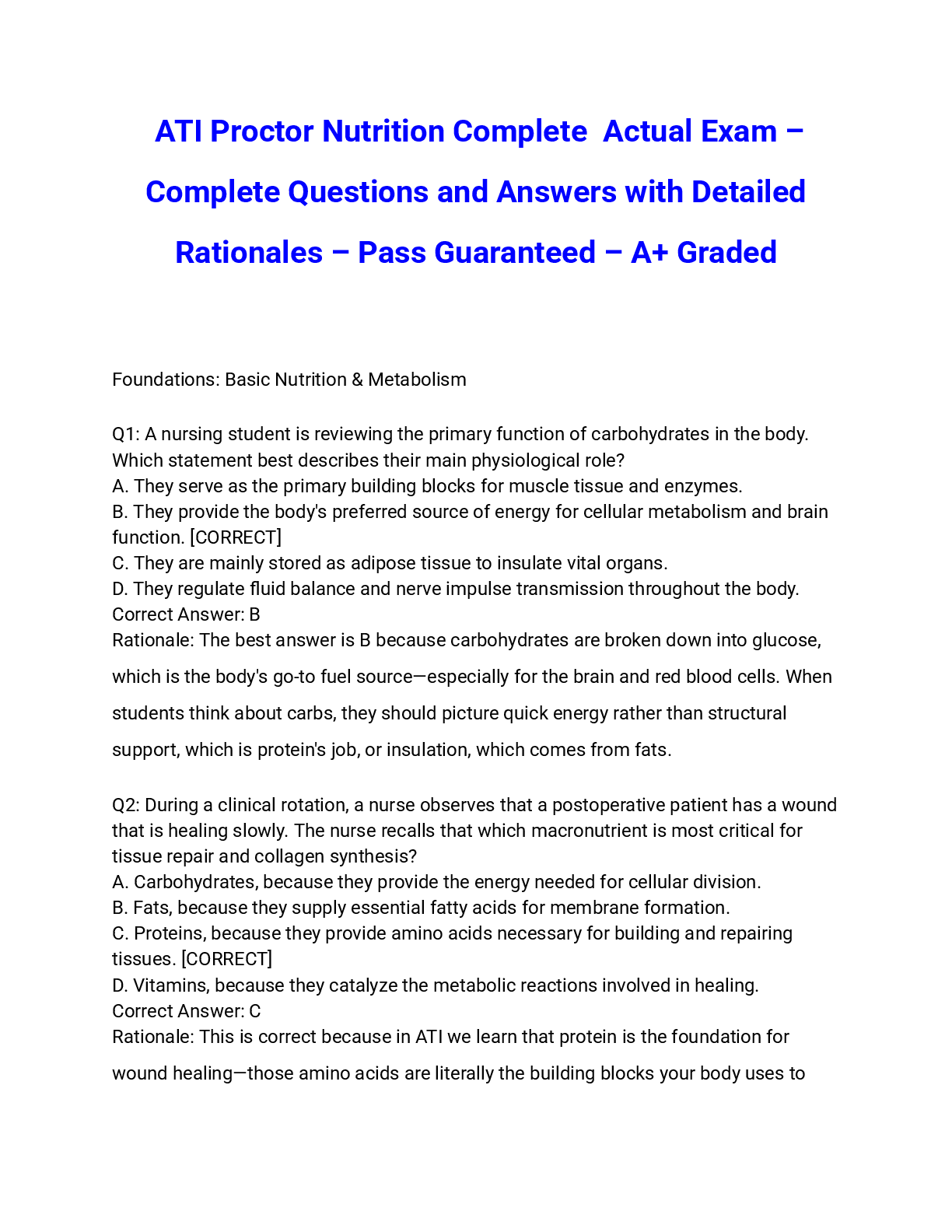
Ethical and legal issues in Canadian Nursing, 4t Edition by Ke...

Test Bank for Ross-Kerr and Wood's Canadian Nursing Issues & P...

Test Bank for Stanhope and Lancaster's Community Health Nursin...

Public Community Health and Nursing Practice Caring for Popul...
TEST BANK for Davis Advantage for Understanding Medical-Surgic...
Community Public Health Nursing 7th Edition By Mary Nies, Mela...
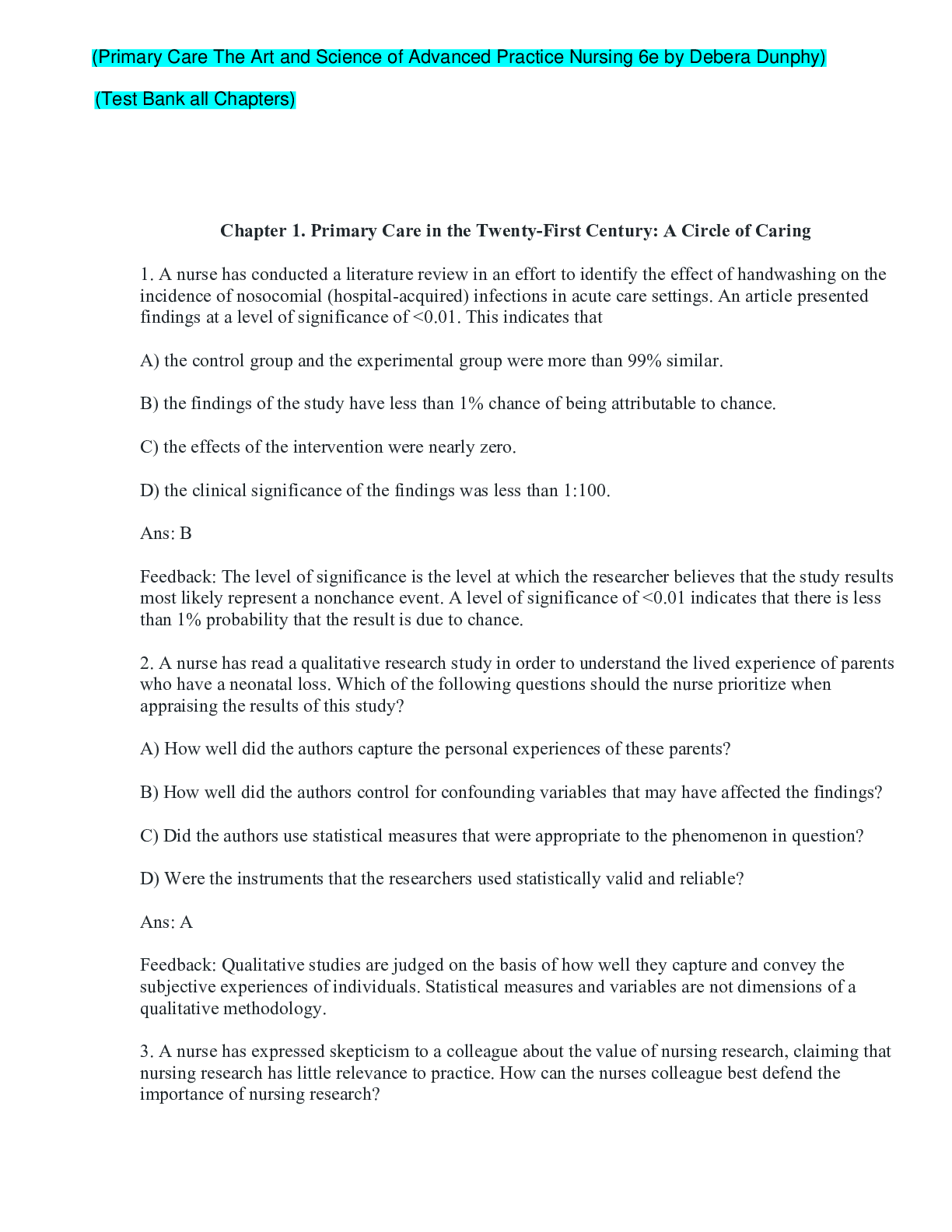
Primary Care The Art and Science of Advanced Practice Nursing...
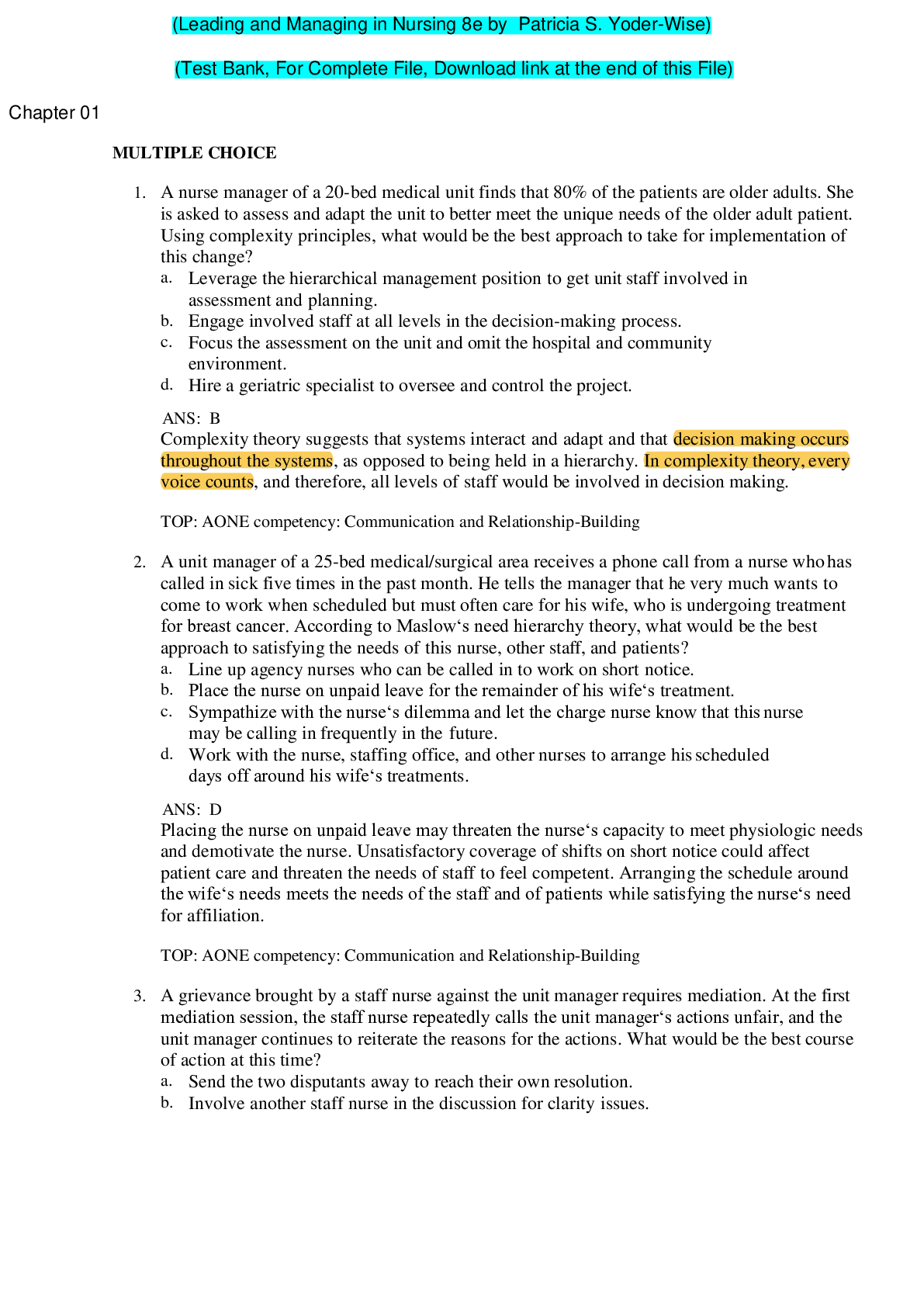
Leading and Managing in Nursing 8th Edition by Patricia S. Yo...

Leading and Managing in Nursing 7th Edition By Patricia S. Yod...
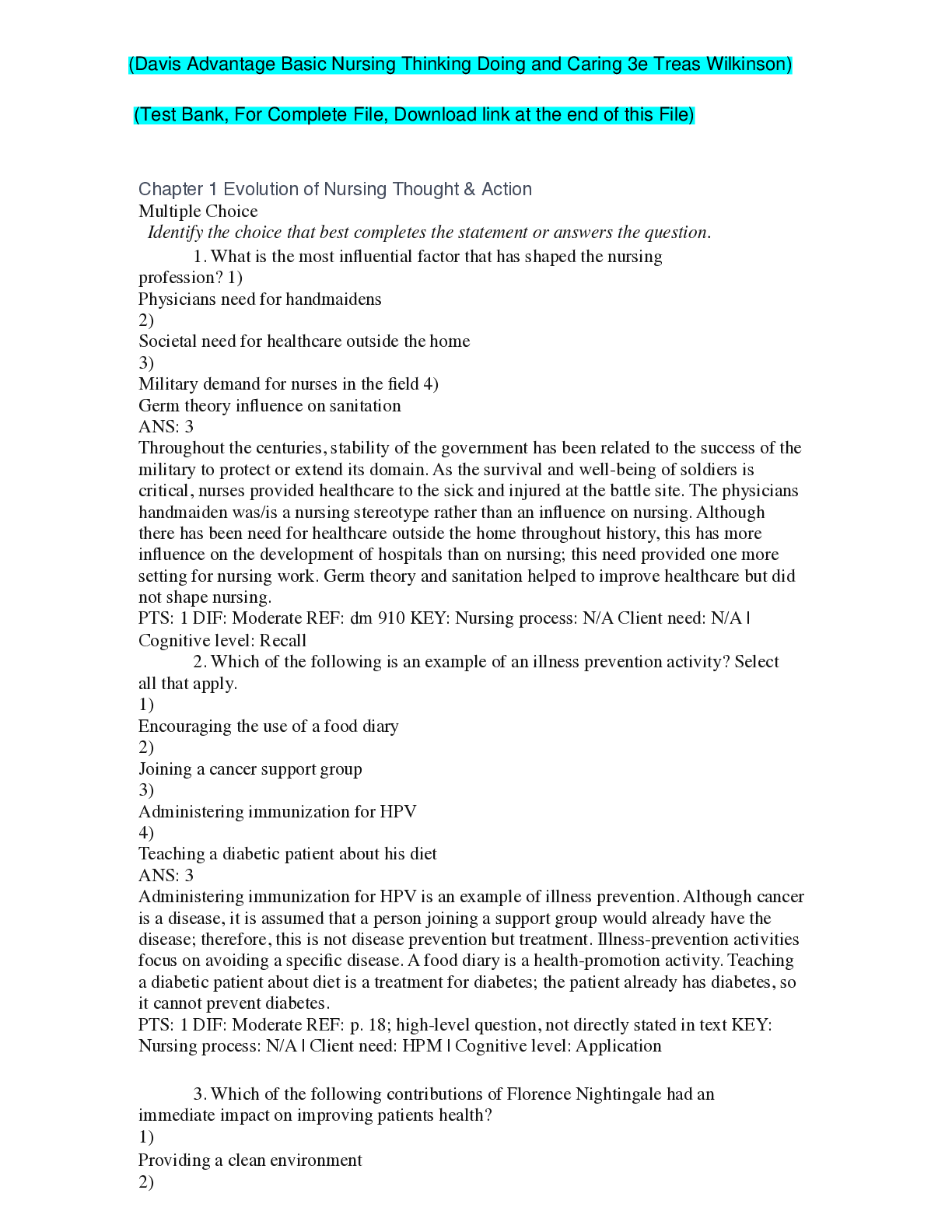
Davis Advantage Basic Nursing Thinking Doing and Caring 3rd Ed...
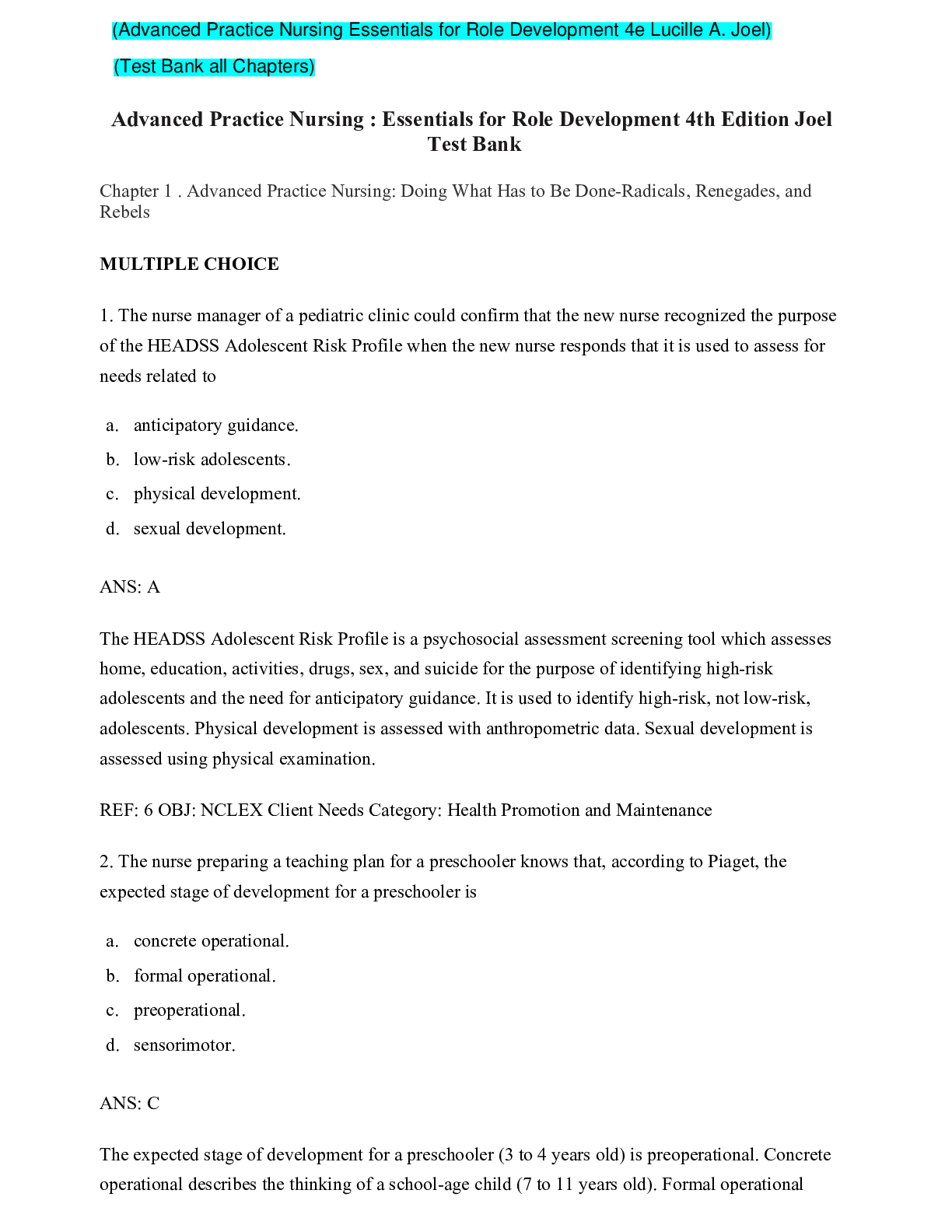
Advanced Practice Nursing Essentials for Role Development 4th...

Success in Practical Vocational Nursing, 9th Edition Patricia...

Public Health Nursing 9th Edition By Marcia Stanhope (Test Ban...

Priorities in Critical Care Nursing 8th Edition By Linda D. Ur...





 (1).png)