Psychopharmacology 6630 Midterm Exam[latest 2020/2021 version 100% verifird]
Document Content and Description Below
• Question 1
What is the strongest established risk factor for bipolar disorder? Family History
Response Feedback: “The strongest established risk factor for BPD is a family history of BPD.”
• Question 2
Which of the
...
[Show More]
Last updated: 4 years ago
Preview 1 out of 24 pages
Instant download

Buy this Document to get the Full Access Instantly
Provided by Students Who Aced it
We Verify Document Content to Gurantee Accuracy
Reviews( 0 )
Document information
Connected school, study & course
About the document
Uploaded On
Jun 15, 2021
Number of pages
24
Written in
All

Additional information
This document has been written for:
Uploaded
Jun 15, 2021
Downloads
0
Views
83
Topic Tags
Recommended For You
Get more on EXAM » (1).png)
$15.5
114 Pages
ATI MATERNAL NEWBORN Proctored Exam Latest 2020/2021. VERIFIED...

$17
50 Pages
NSG 6330 Final EXAM QUESTIONS AND ANSWERS , SOUTH UNIVERSITY ,...

$26.5
28 Pages
HESI PHARMACOLOGY EXAM LATEST 2020/2021 | COMPLETE AND VERIFIE...
$12.5
25 Pages
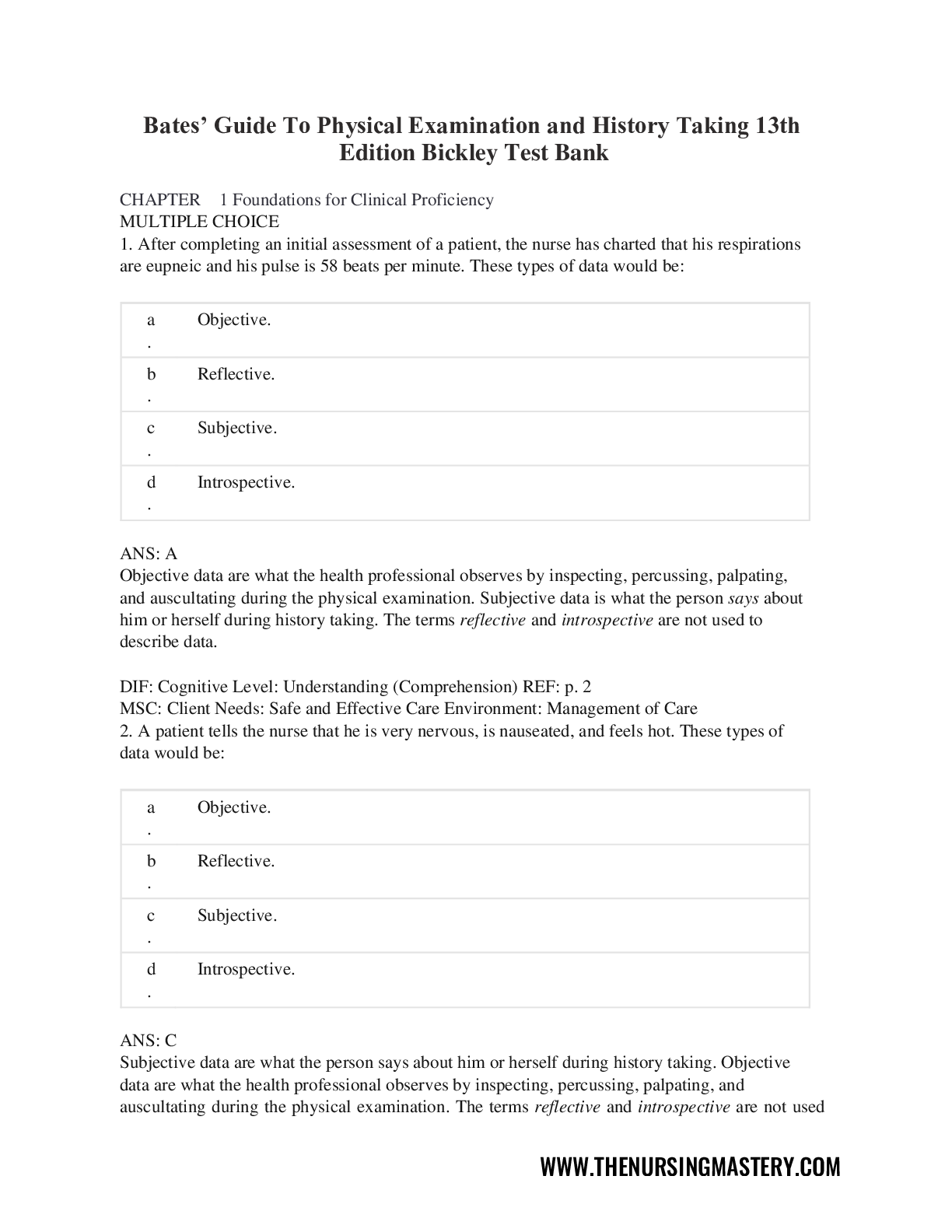
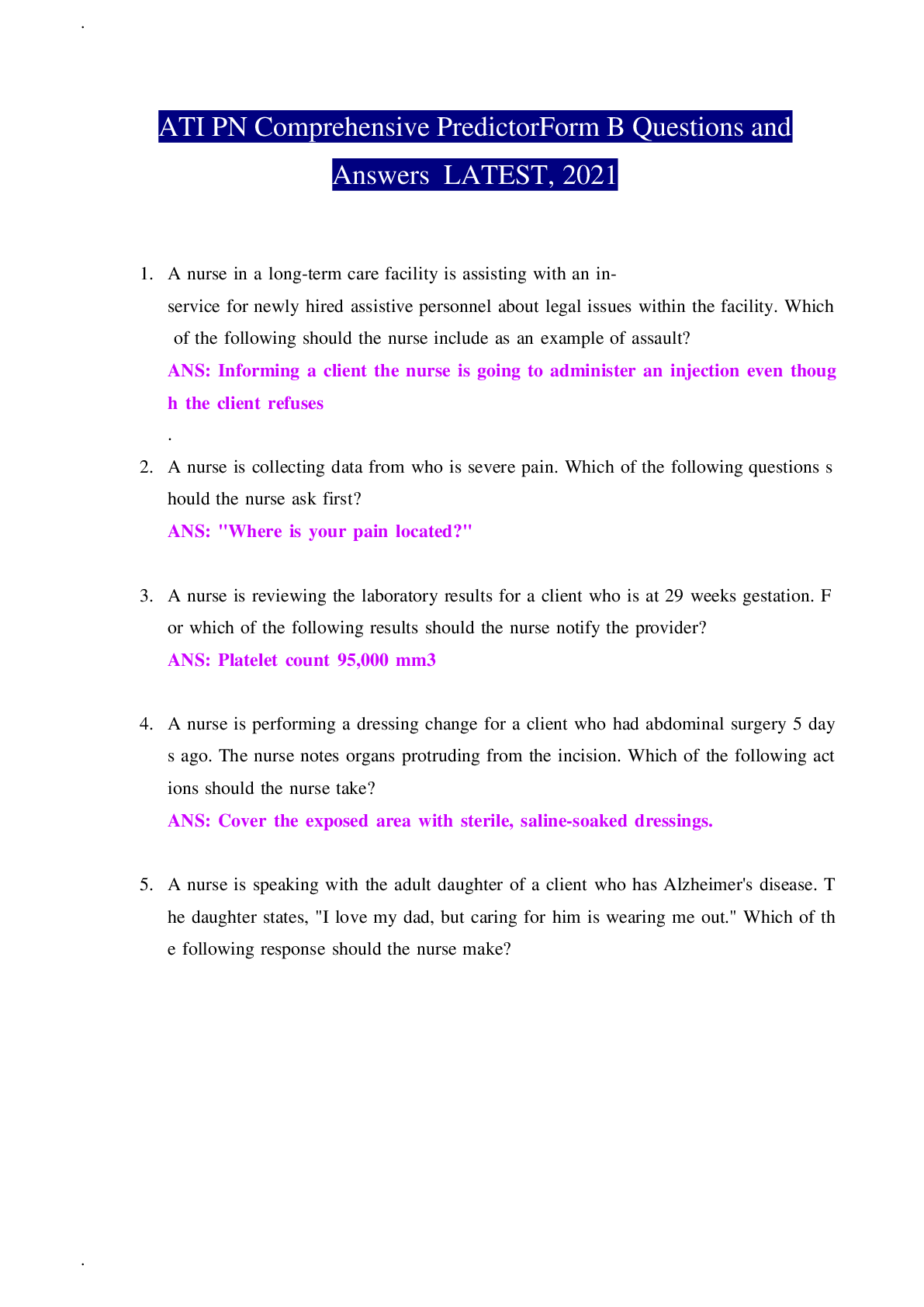
ATI PN Fundamentals Predictor Exam Form B | Questions and Answ...
$13
40 Pages
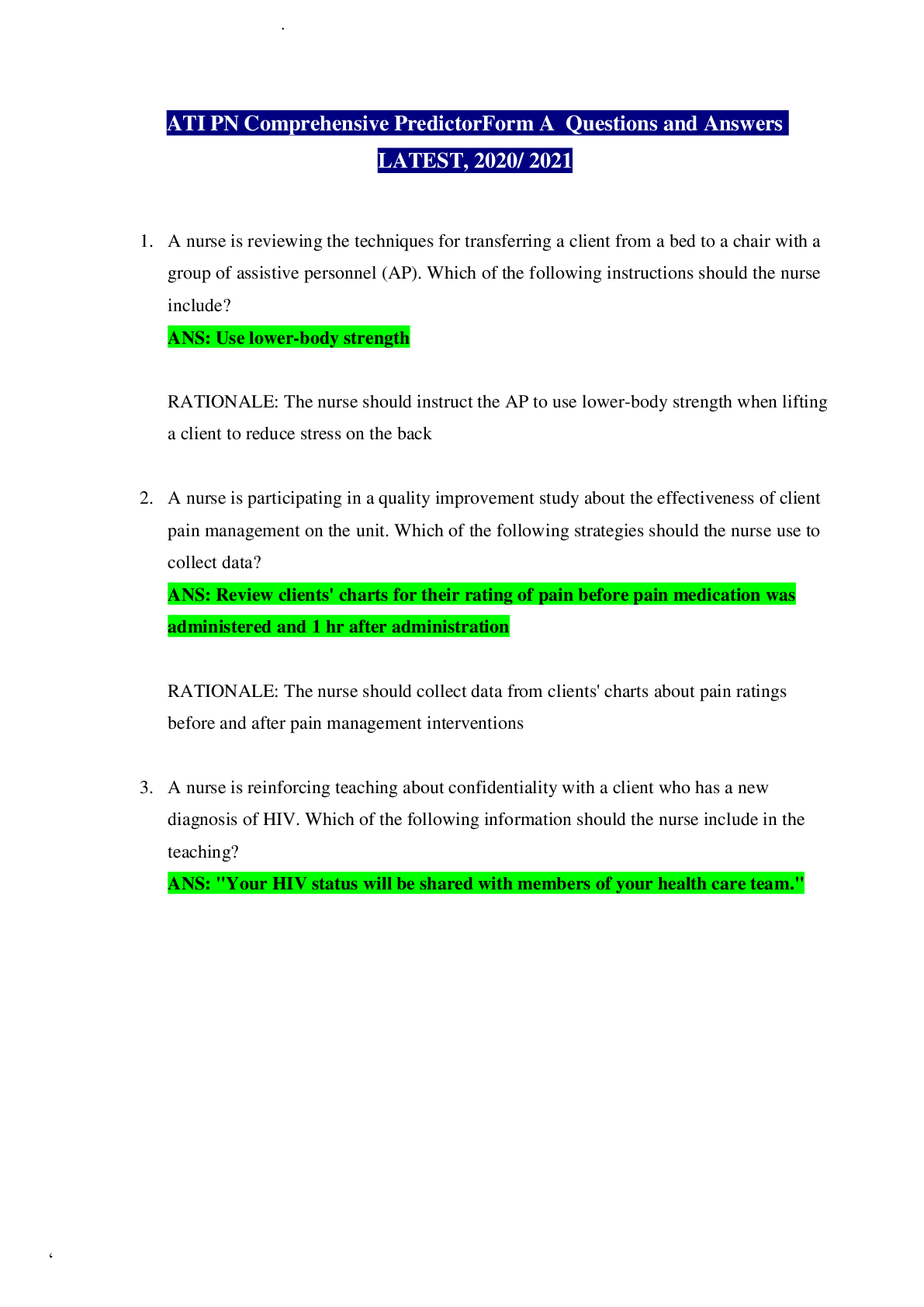
ATI PN Fundamentals Predictor Exam Form A | Questions and Answ...

$9
25 Pages
NURS 6501 / NURS6501 Final Exam Advanced Pathophysiology Lates...

$25
882 Pages
Lewis Medical Surgical Nursing 11th Edition Test Bank (LATEST...
$25
882 Pages
Lewis Medical Surgical Nursing 11th Edition Test Bank (LATEST...

$25
43 Pages
Leadership - Proctored (Complete) Questions With Answers (late...
$6.5
6 Pages
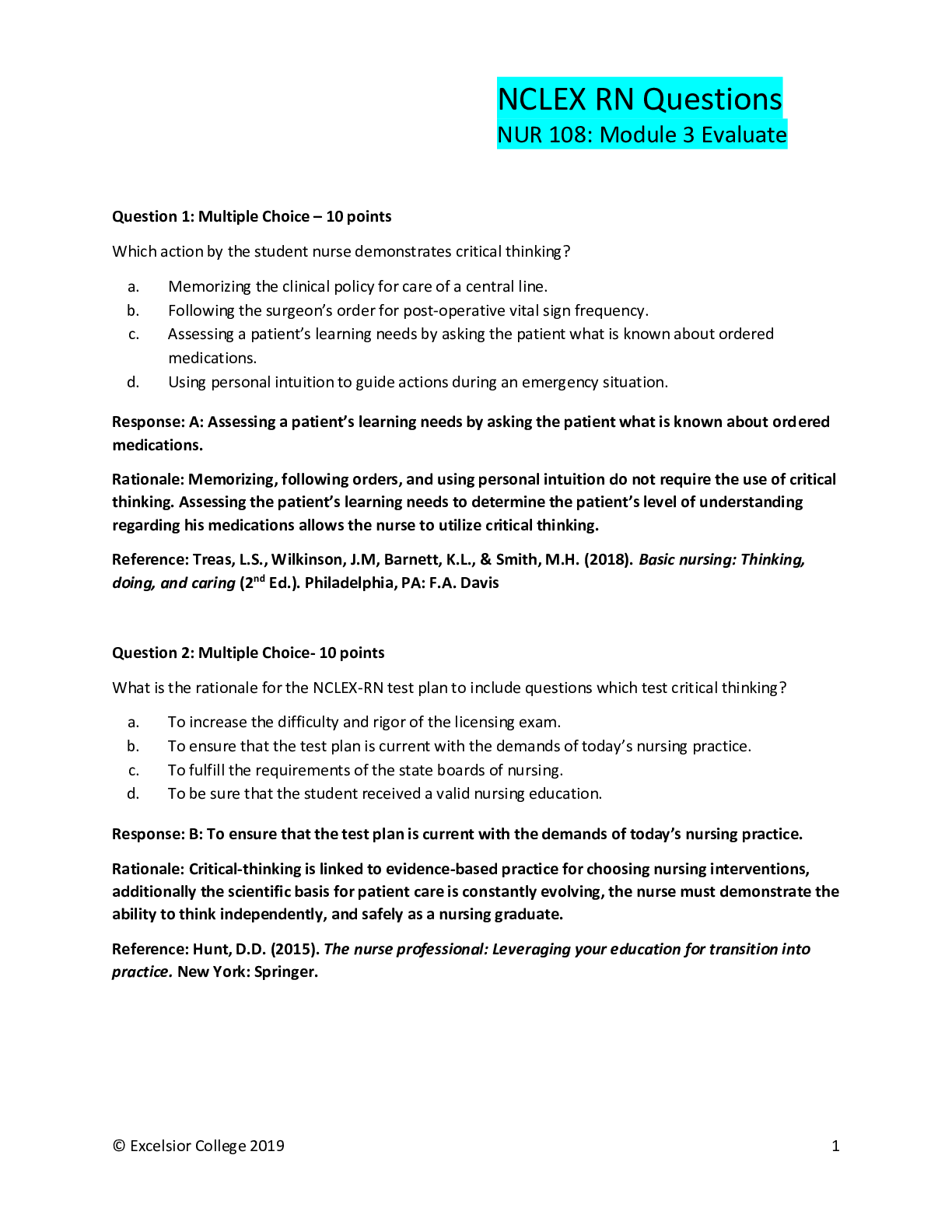
NCLEX-RN Questions Module 3 latest 2020/2021 with complete sol...


$13
33 Pages
NUR 634 Advanced Health Assessment and Diagnostic Reasoning Wi...
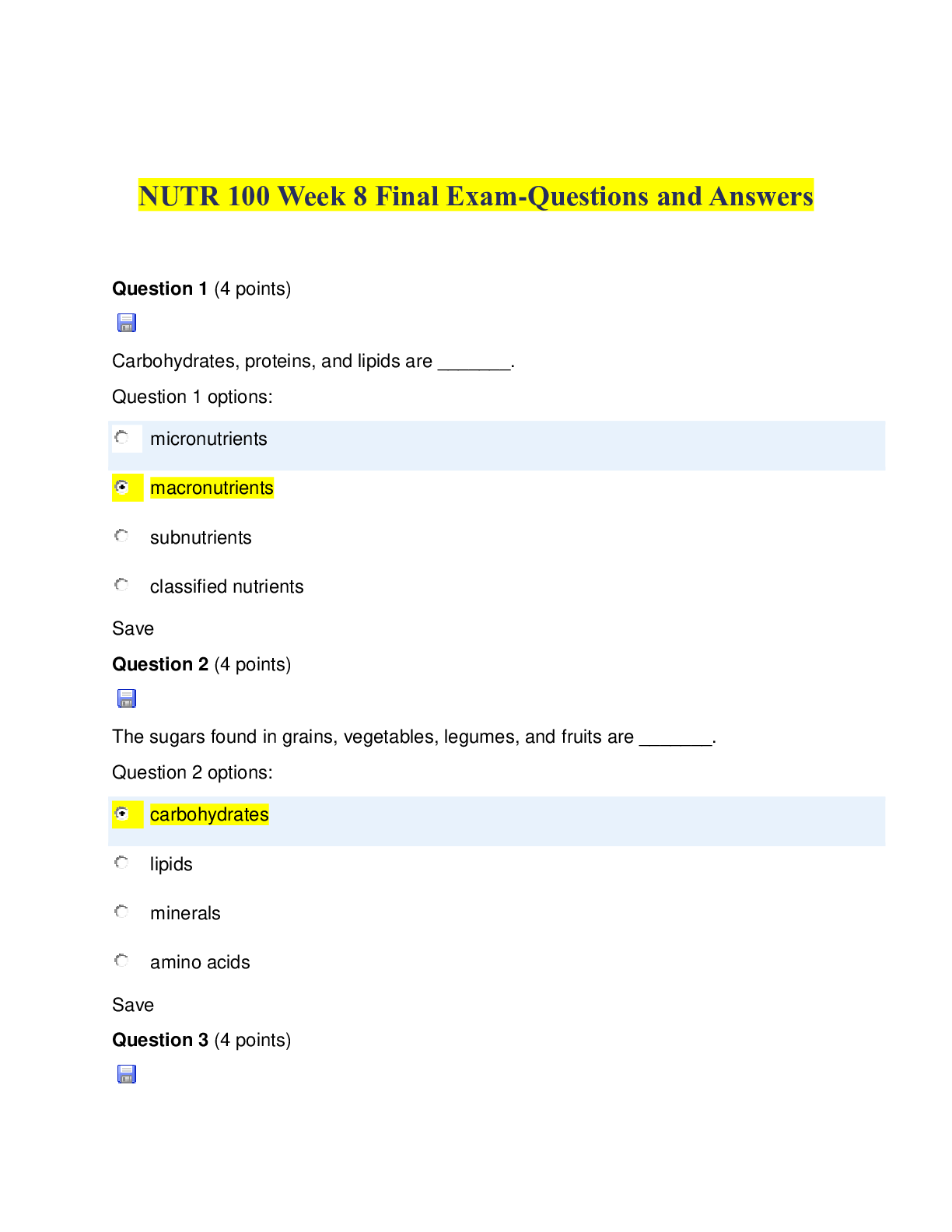
$15
19 Pages
NUTR 100 Week 8 Final Exam-Questions and Answers (Latest 2020)
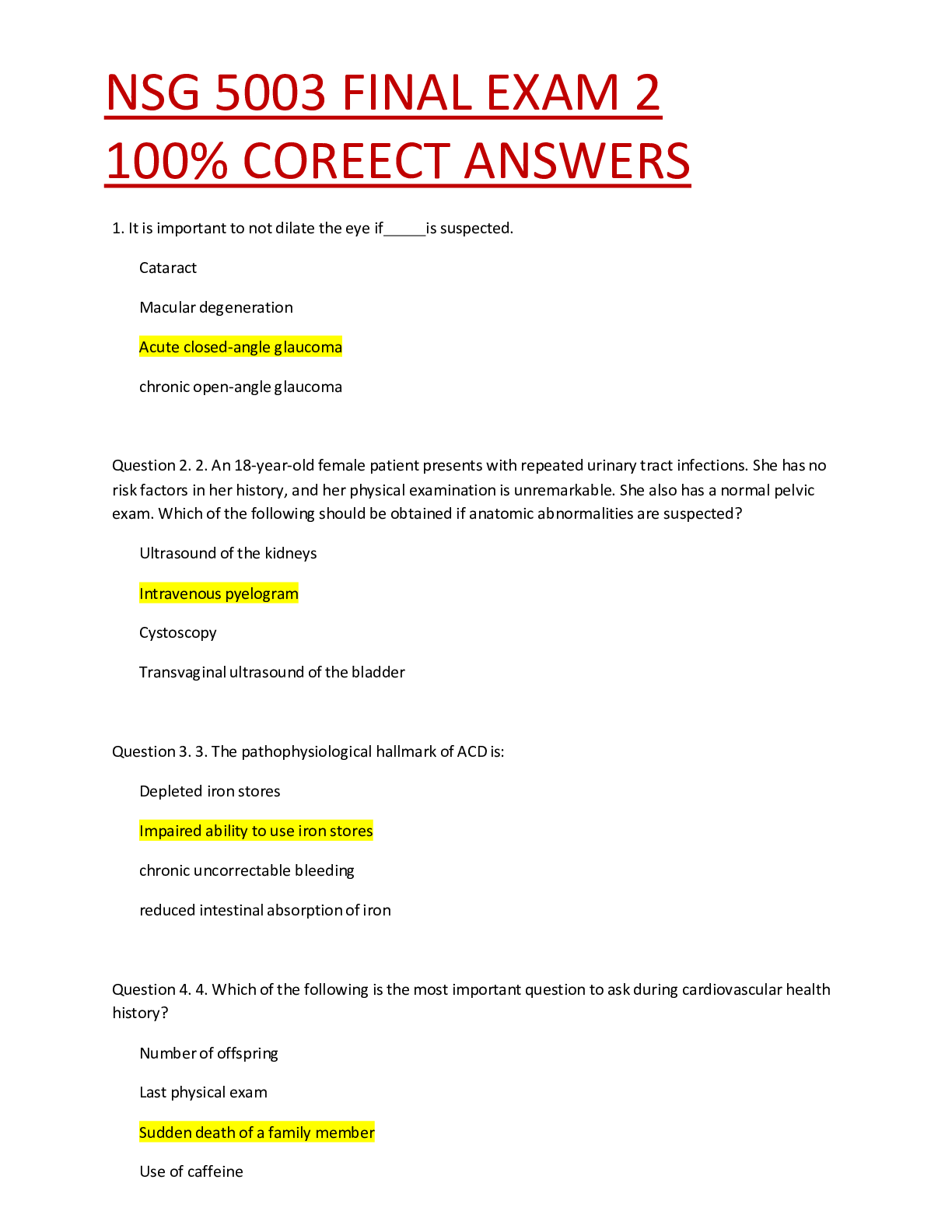
$15
54 Pages
NSG 5003 FINAL EXAM 2 - Questions and Answers (latest 2020)

$8
70 Pages
NSG 5003 Mid Term Exam 3 - Questions and Answers (Latest 2020)
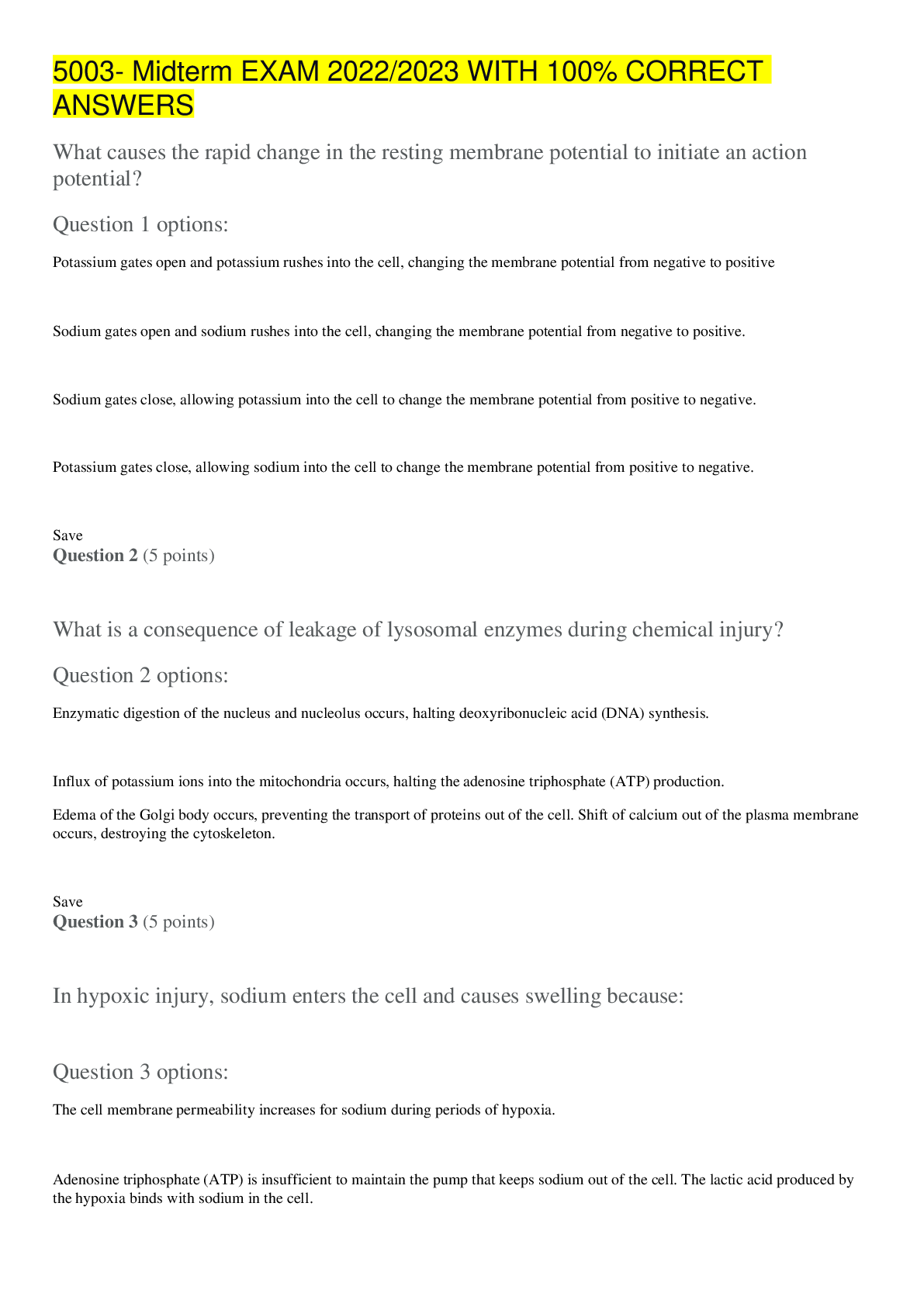
$15
19 Pages
NSG 5003 Advanced Pathophysiology Midterm Exam-Questions and A...

$17
53 Pages
HESI RN Fundamentals Exam,,Verified document to secure high sc...

$26.5
13 Pages
ATI Fundamentals Exam | 100 Questions and Answers | LATEST 202...
More related documents below


![Preview of NURS1150 PHARMACOLOGY EXAM 3[QUESTIONS AND ANSWERS ]LATEST 2020/2021]](https://scholarfriends.com/storage/docx (1) (2).png)

](https://scholarfriends.com/storage/EMT_Final (3).png)
![Preview of NURS 6501N Final Exam 1 (with Complete solution ]](https://scholarfriends.com/storage/NURS_6501N_Final_Exam_1__August_2020___100_out_of_100_.png)