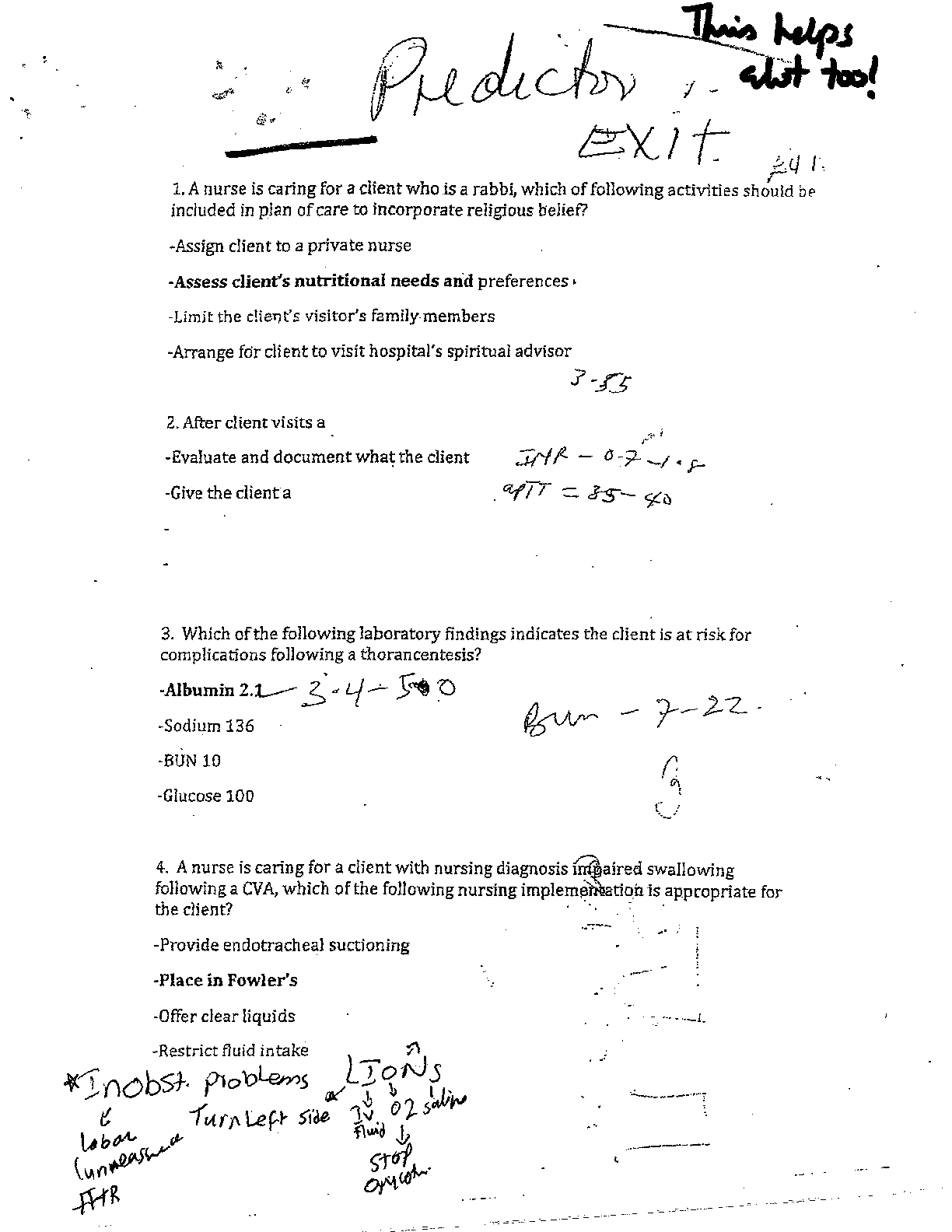
NURSING > QUESTIONS and ANSWERS > ATI-2021-Practice for Neuro-Shock & Burns latest (All)
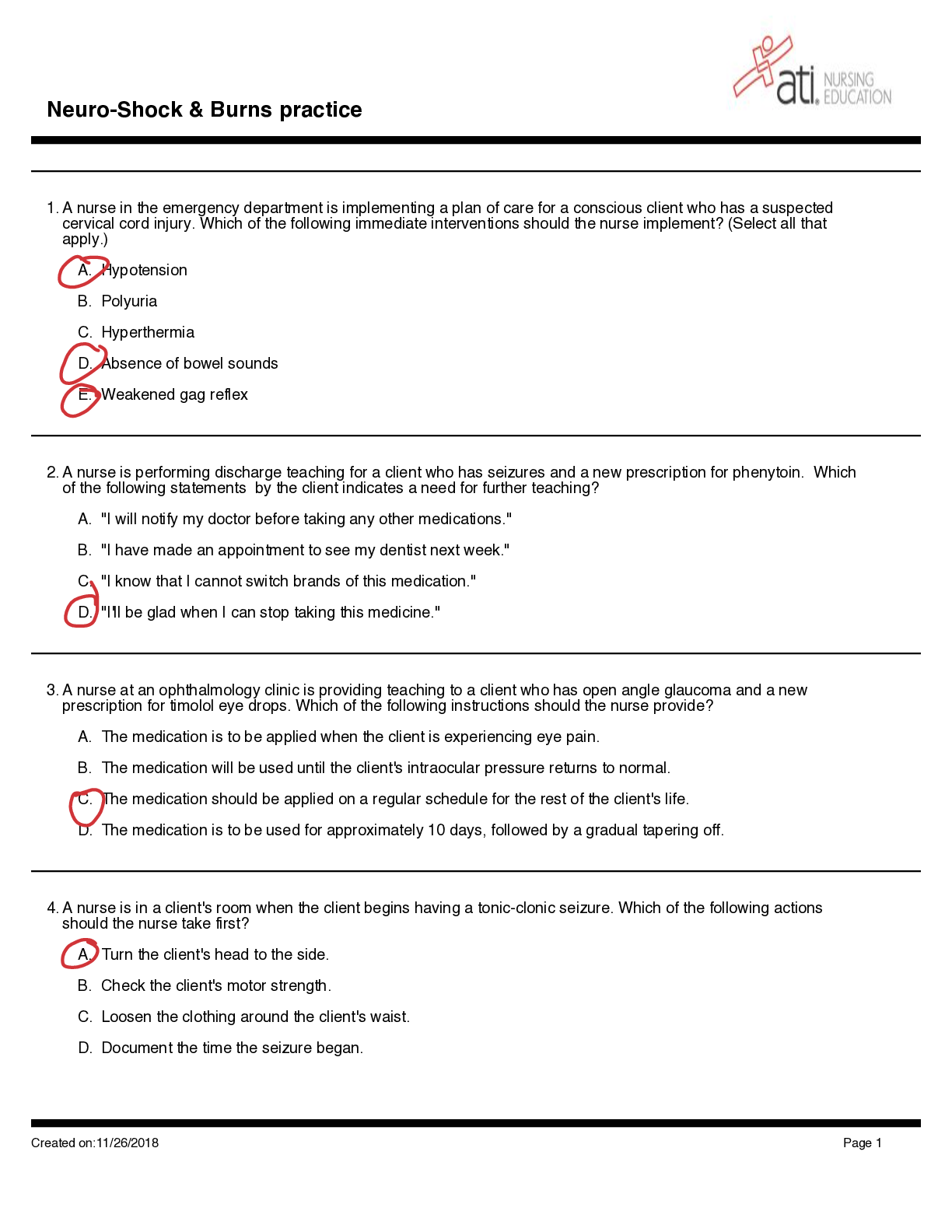
ATI-2021-Practice for Neuro-Shock & Burns latest
Document Content and Description Below
Last updated: 3 years ago
Preview 1 out of 26 pages
Instant download
Buy this Document to get the Full Access Instantly
Provided by Students Who Aced it
We Verify Document Content to Gurantee Accuracy
Reviews( 0 )
Document information
Connected school, study & course
About the document
Uploaded On
Jun 16, 2021
Number of pages
26
Written in
All

Additional information
This document has been written for:
Uploaded
Jun 16, 2021
Downloads
0
Views
82
Topic Tags
Related Subjects & Courses
Explore similar study resources and related concepts.
Recommended For You
Get more on QUESTIONS and ANSWERS »
GFACT CERTIFICATION EXAM 2025-2026 NEWEST,,,200 ACTUAL COMPELE...
ATLS 10th Edition Post Test Actual Questions with Verified Ans...
Test Bank for Medical Surgical Nursing Concepts and Practice 6...