AQA .A LEVEL ECONOMICS PAPER 1 Mark scheme
Document Content and Description Below
Level of response marking instructions
Level of response mark schemes are broken down into levels, each of which has a descriptor. The
descriptor for the level shows a description of the response at the middle of the l
...
[Show More]
Last updated: 3 years ago
Preview 1 out of 20 pages
Instant download

Buy this Document to get the Full Access Instantly
Provided by Students Who Aced it
We Verify Document Content to Gurantee Accuracy
Reviews( 0 )
Document information
Connected school, study & course
About the document
Uploaded On
Jun 18, 2021
Number of pages
20
Written in
All

Additional information
This document has been written for:
Uploaded
Jun 18, 2021
Downloads
0
Views
120
Topic Tags
Related Subjects & Courses
Explore similar study resources and related concepts.
Recommended For You
Get more on EXAM »
$8
29 Pages
2025 AQA A-LEVEL ECONOMICS Paper 2 National and International...

$8
29 Pages
2025 AQA A-LEVEL ECONOMICS Paper 1 Markets and Market Failure...
$8
55 Pages
2025 AQA A-LEVEL ECONOMICS Paper 3 Economic Principles and Is...

$10
8 Pages
AQA A-level ECONOMICS Paper 3 Economic principles and issues E...

.png)
$25
104 Pages
Microeconomics Theory and Applications, 13e Edgar Browning, Ma...
.png)
$25
1176 Pages
Microeconomics Theory and Applications, 13e Edgar Browning, Ma...
$25
28 Pages
Business Economics, 3e (Australian Edition) N. Gregory Mankiw,...

$15
3 Pages
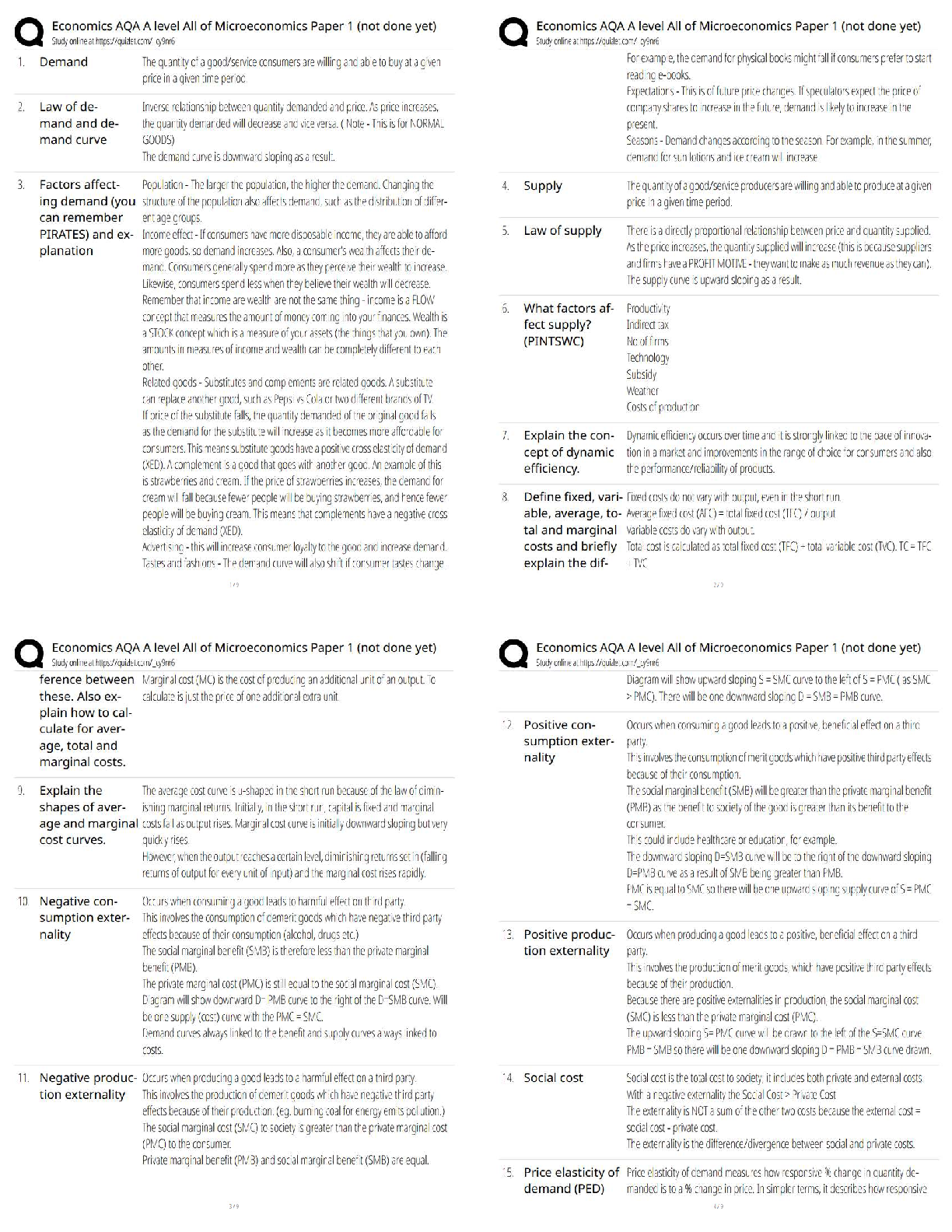
AQA A Level Economics Paper 1 Microeconomics (7135) 2025 Updat...


More related documents below


![Preview of NURS1150 PHARMACOLOGY EXAM 3[QUESTIONS AND ANSWERS ]LATEST 2020/2021]](https://scholarfriends.com/storage/docx (1) (2).png)
![Preview of FISDAP Medical Questions with Answers[2022 ]graded A+)](https://scholarfriends.com/storage/FISDAP_Medical_Questions_with_Answers.png)
](https://scholarfriends.com/storage/EMT_Final (3).png)
![Preview of NURS 6501N Final Exam 1 (with Complete solution ]](https://scholarfriends.com/storage/NURS_6501N_Final_Exam_1__August_2020___100_out_of_100_.png)