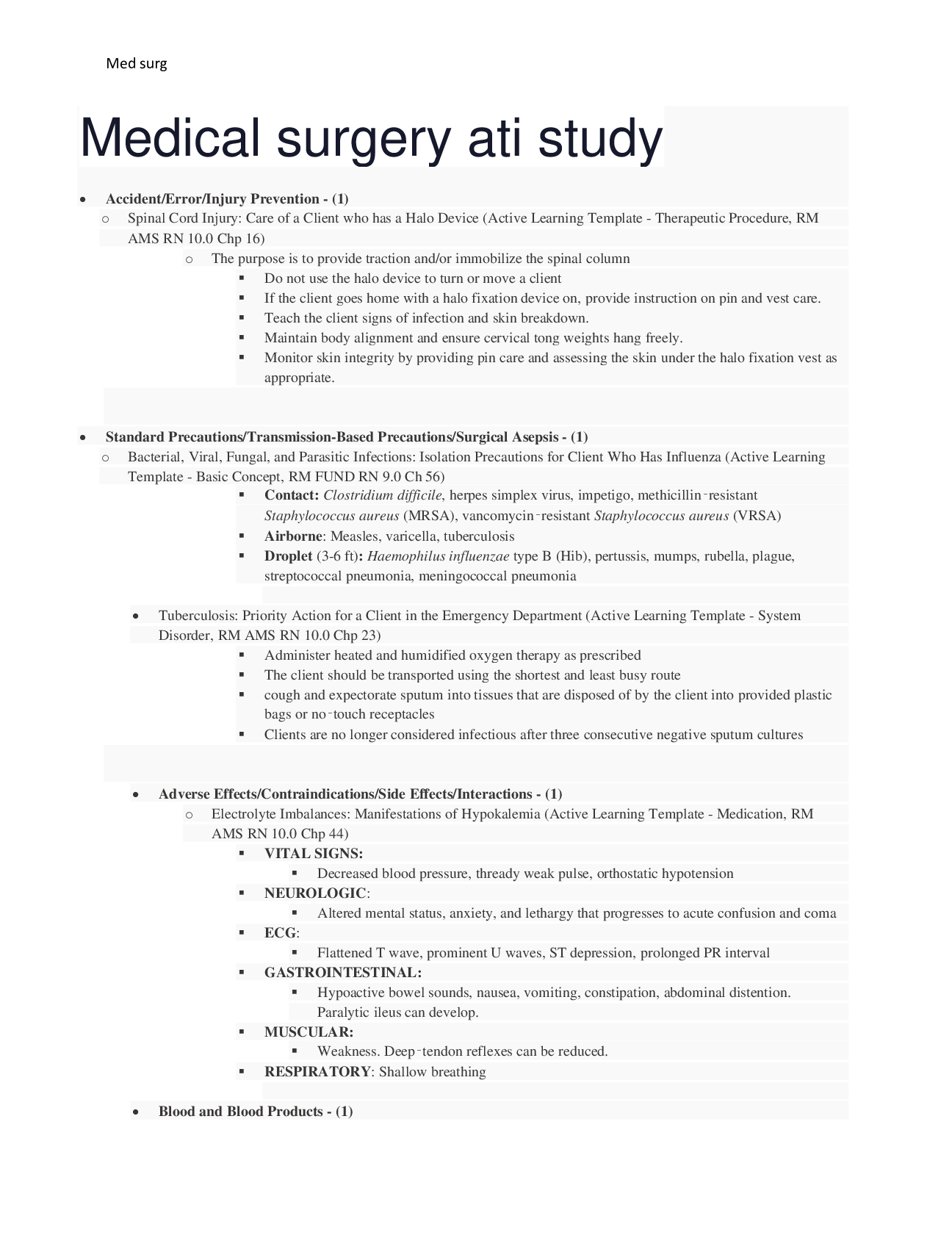
NURSING > MEDICAL STUDY RESOURCES > INTERMEDIATE MED SURG ATI-FOR 2021 LATEST ELABORATED AWNSERS (All)
INTERMEDIATE MED SURG ATI-FOR 2021 LATEST ELABORATED AWNSERS
Document Content and Description Below
Last updated: 3 years ago
Preview 1 out of 9 pages
Instant download

Buy this Document to get the Full Access Instantly
Provided by Students Who Aced it
We Verify Document Content to Gurantee Accuracy
Reviews( 0 )
Document information
Connected school, study & course
About the document
Uploaded On
Jun 18, 2021
Number of pages
9
Written in
All

Additional information
This document has been written for:
Uploaded
Jun 18, 2021
Downloads
0
Views
101
Topic Tags
Recommended For You
Get more on MEDICAL STUDY RESOURCES »
. Essentials of Psychiatric Mental Health Nursing: Concepts of...

HESI-Critical Care | HESI – 55 questions LATEST FOR 2021/2022
NRNP 6635 FINAL EXAM Exam Elaborations Questions with Answers...
NRNP 6635 FINAL EXAM Exam Elaborations Questions with Answers...
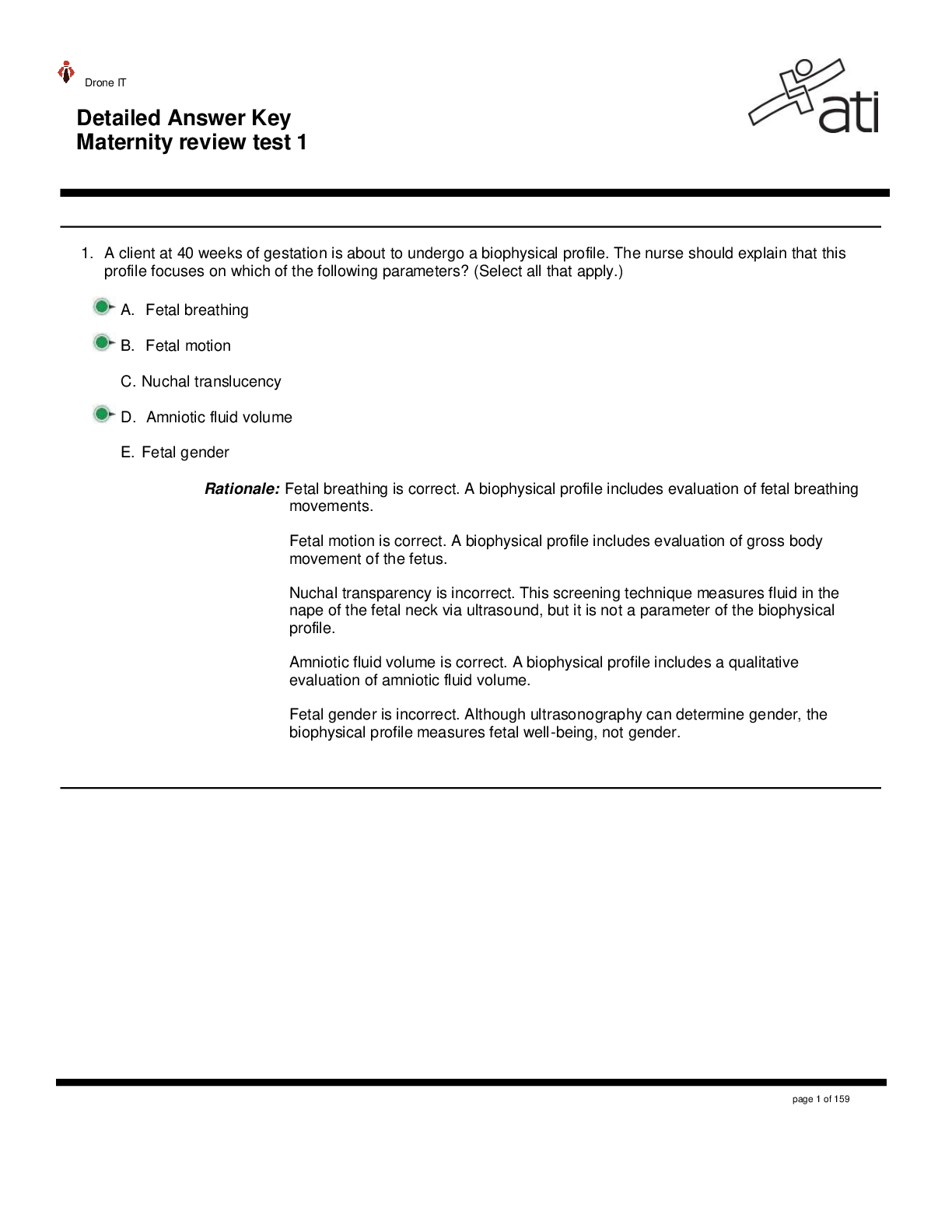
ATI Maternity - Detailed practice Answer Key Updated for 2021/...

kenneth bronson documentation/ Medical Case 1: Includes the F...
 (PDF) by Sheila L.png)
Psychiatric-Mental Health Nursing 8th Edition by Sheila L. Vi...

Maternity and Pediatric Nursing-Third Edition Latest for 2021/...

Database Systems: Design, Implementation, & Management Carlos...

Intermediate Financial Management Product Bundle by Eugene F....
The Future of Business by Christopher Hartt, Norm Althouse, La...

Pearson Edexcel Level 3 GCE Biology A (Salters Nuffield) Advan...

CBSE New Pattern Economics Class 12 for 2021-22 Exam (MCQs bas...
Hesi A2 All SUBJECTS FILES Study guide and Questions and Answe...
ATI Med-Surg Test Bank<NURSING LP N 100>134 Questions WITH ANS...
 Adult Medical Surgical.png)
(PN Medical-Surgical) Adult Medical Surgical Test Bank_ Answer...

ATI MED SURG PRACTICE B LATEST EXAM UPDATED FOR 2025-2026 ACT...

NURS 102 Med Surg I Math Practice. Complete solutions_Rational...






.png)