NURSING > TEST BANKS > Jarvis’s Physical Examination and Health Assessment 8th Edition. 2020 (All)
Jarvis’s Physical Examination and Health Assessment 8th Edition. 2020
Document Content and Description Below
Last updated: 4 years ago
Preview 1 out of 389 pages
Instant download

Buy this Document to get the Full Access Instantly
Provided by Students Who Aced it
We Verify Document Content to Gurantee Accuracy
Reviews( 0 )
Document information
Connected school, study & course
About the document
Uploaded On
Jun 18, 2021
Number of pages
389
Written in
All

Additional information
This document has been written for:
Uploaded
Jun 18, 2021
Downloads
0
Views
192
Topic Tags
Recommended For You
Get more on TEST BANKS »
TEST BANK QUESTIONS - Jarvis Physical Examination & Health Ass...
TEST BANK QUESTIONS - Jarvis Physical Examination & Health Ass...

Test Bank Jarvis Physical Examination Health Assessment 8e 202...
TestBank Jarvis Physical Examination Health Assessment 8e 2019
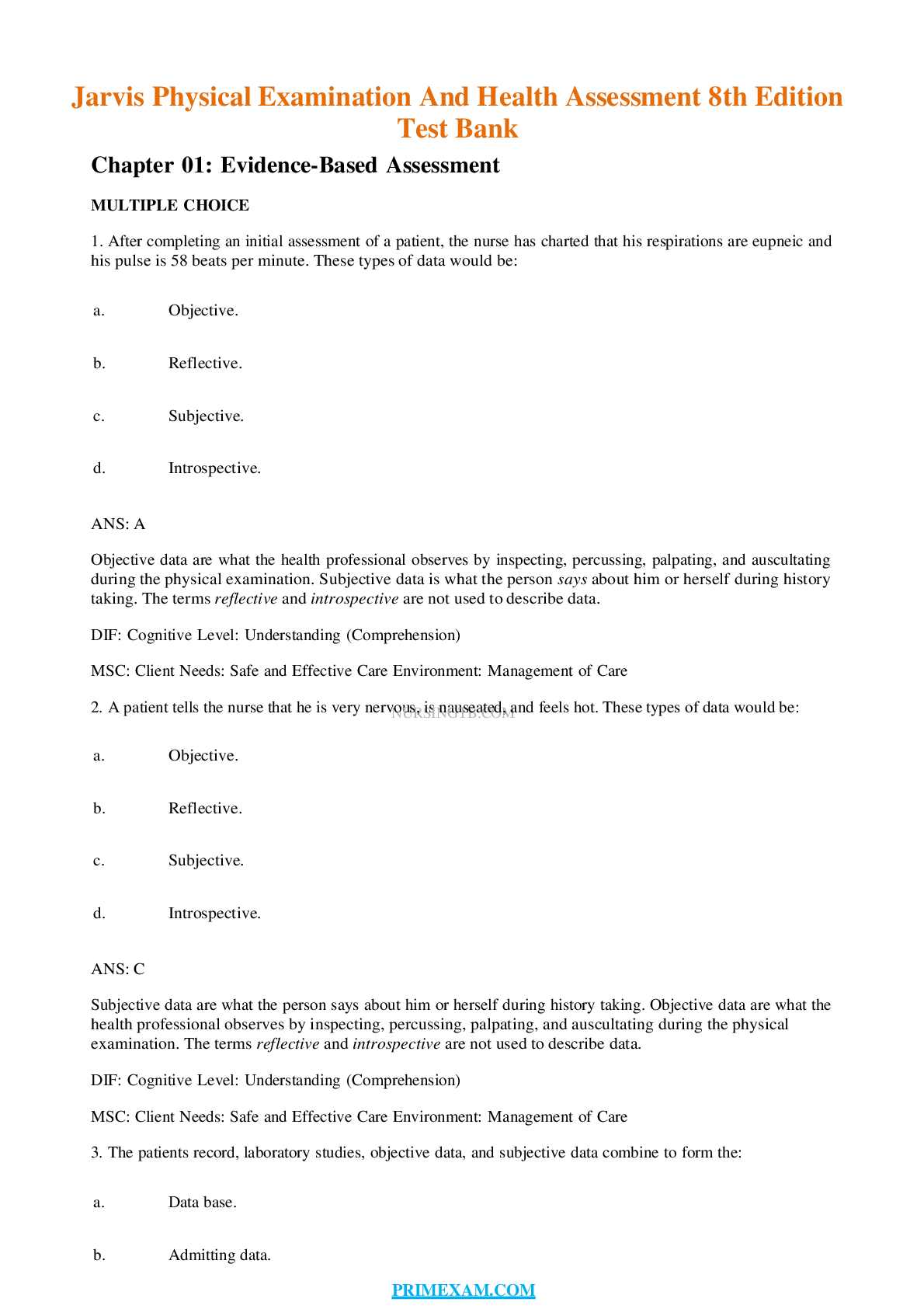
Test Bank for Jarvis Physical Examination And Health Assessmen...
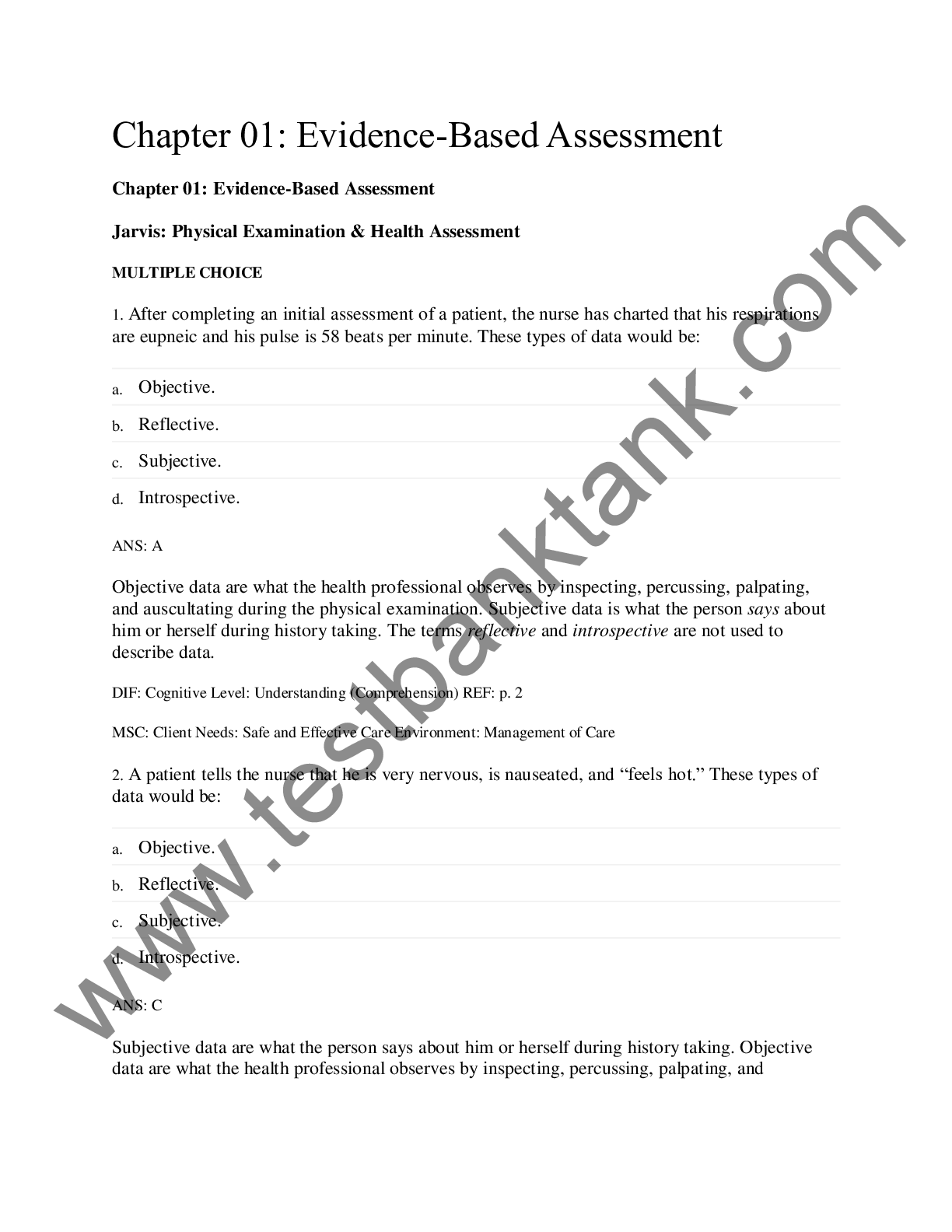
Jarvis physical examination and health assesment test bank 8th...

Chapter 3 The Interview Jarvis Physical Examination & Health A...

Chapter 9 General Survey, Measurement, Vital Signs Jarvis Phys...

Chapter 7 Domestic and Family Violence Assessments Jarvis Phys...

Chapter 01 Evidence-Based Assessment Jarvis Physical Examinati...

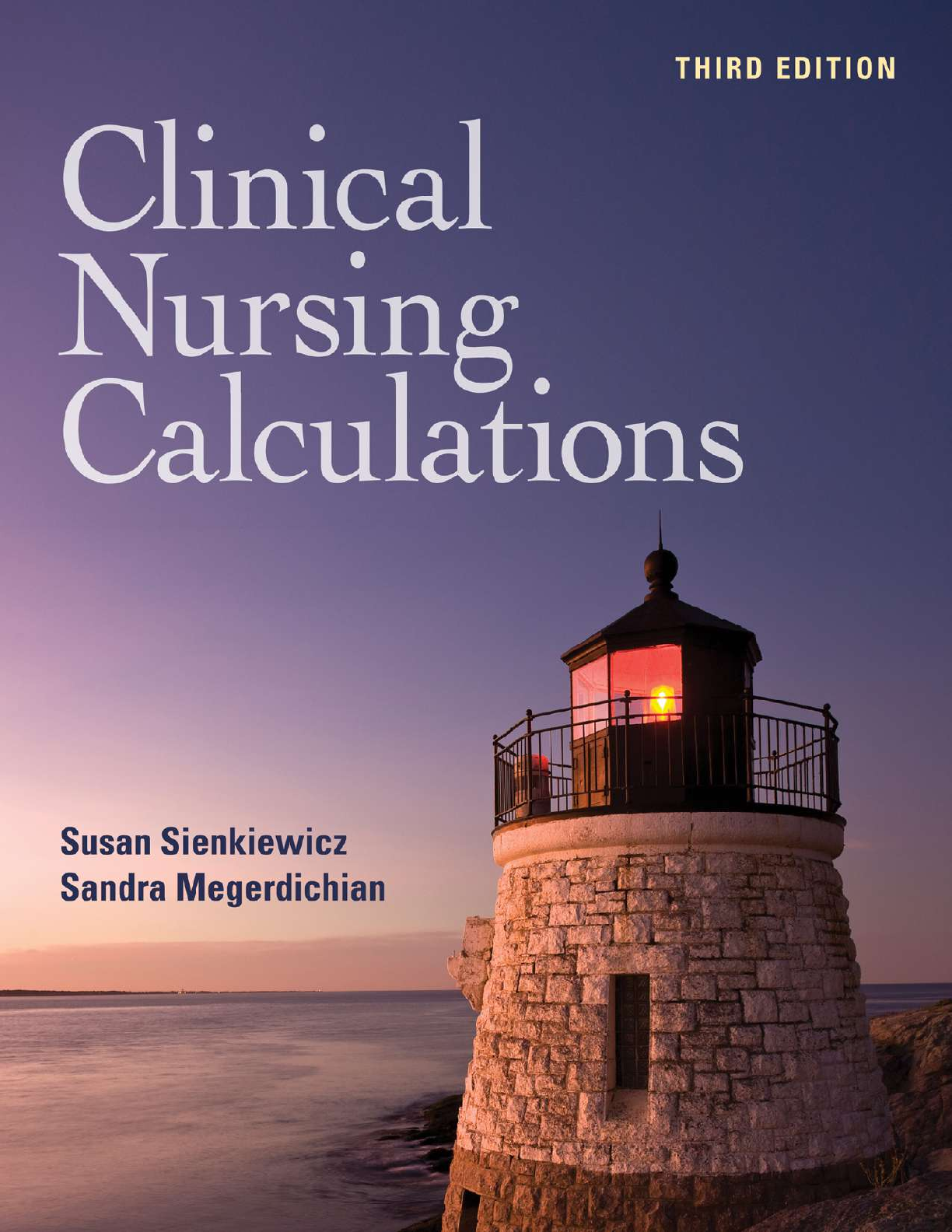
[eBook] [PDF] Clinical Nursing Calculations 3rd Edition By S...

NRNP 6635 FINAL EXAM QUESTIONS AND ANSWERS 2023! Rated A + Ans...
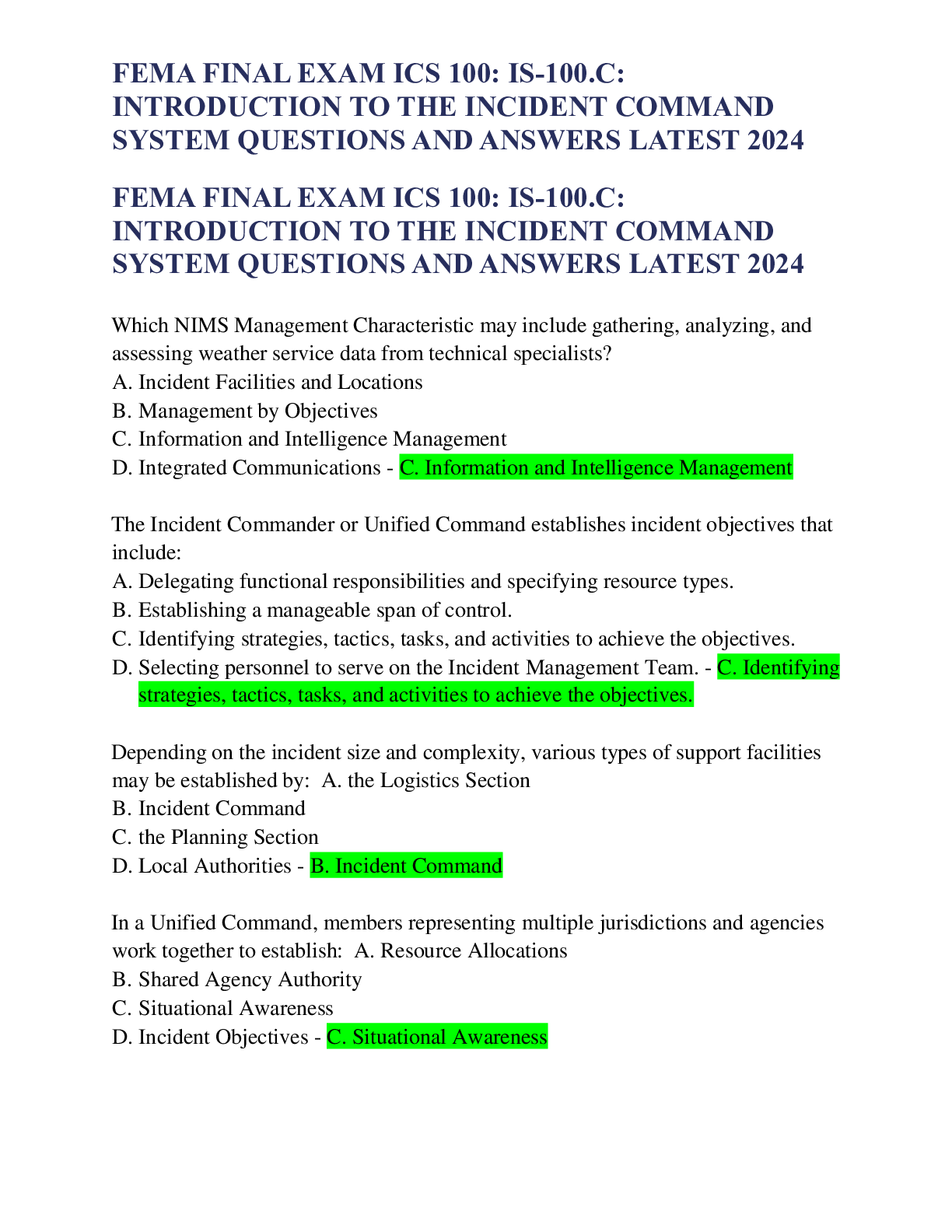
FEMA FINAL EXAM ICS 100: IS-100.C: INTRODUCTION TO THE INCIDEN...