NSG 6420 WEEK 8 2020 QUIZ VERIFIED ANSWERS
Document Content and Description Below
1. Which of the following best describes the pain associated with osteoarthritis?
2. Your 63-year-old Caucasian woman with polymyalgia rheumatica (PMR) will begin treatment with corticosteroids until the condition has r
...
[Show More]
Last updated: 3 years ago
Preview 1 out of 4 pages
Instant download

Buy this Document to get the Full Access Instantly
Provided by Students Who Aced it
We Verify Document Content to Gurantee Accuracy
Reviews( 0 )
Document information
Connected school, study & course
About the document
Uploaded On
Jun 22, 2021
Number of pages
4
Written in
All

Additional information
This document has been written for:
Uploaded
Jun 22, 2021
Downloads
0
Views
81
Topic Tags
Recommended For You
Get more on EXAM »
$10
19 Pages
NSG6420 / NSG 6420 Practicum I Family Health - Adult and Geron...
$10
12 Pages
NSG 6420 / NSG6420 Final Exam |Questions and Answers | LATEST
$17.5
10 Pages
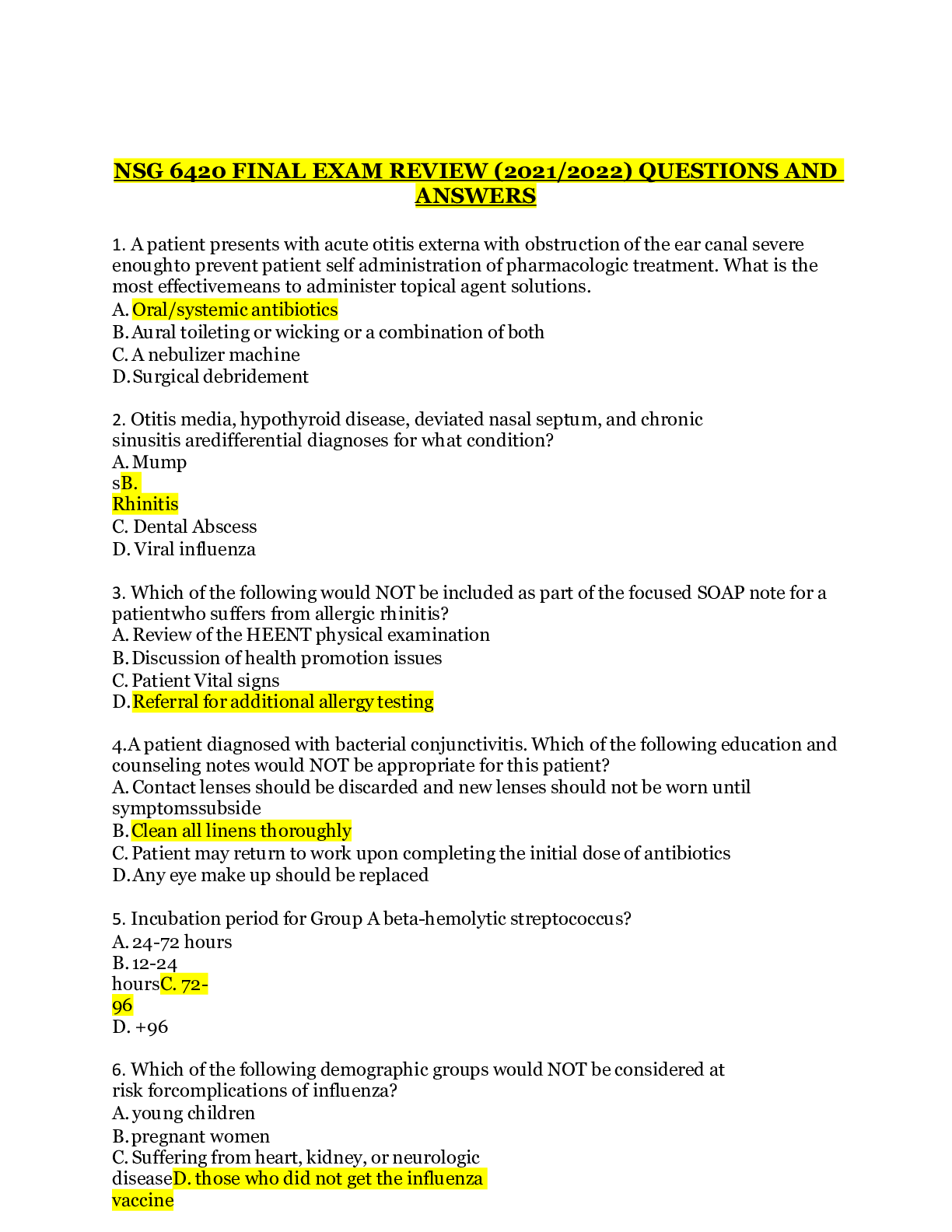
NSG 6420 FINAL EXAM REVIEW (2021) QUESTIONS AND ANSWERS

$10
19 Pages
NSG6420 / NSG 6420: Practicum I Family Health - Adult and Gero...
$10
44 Pages
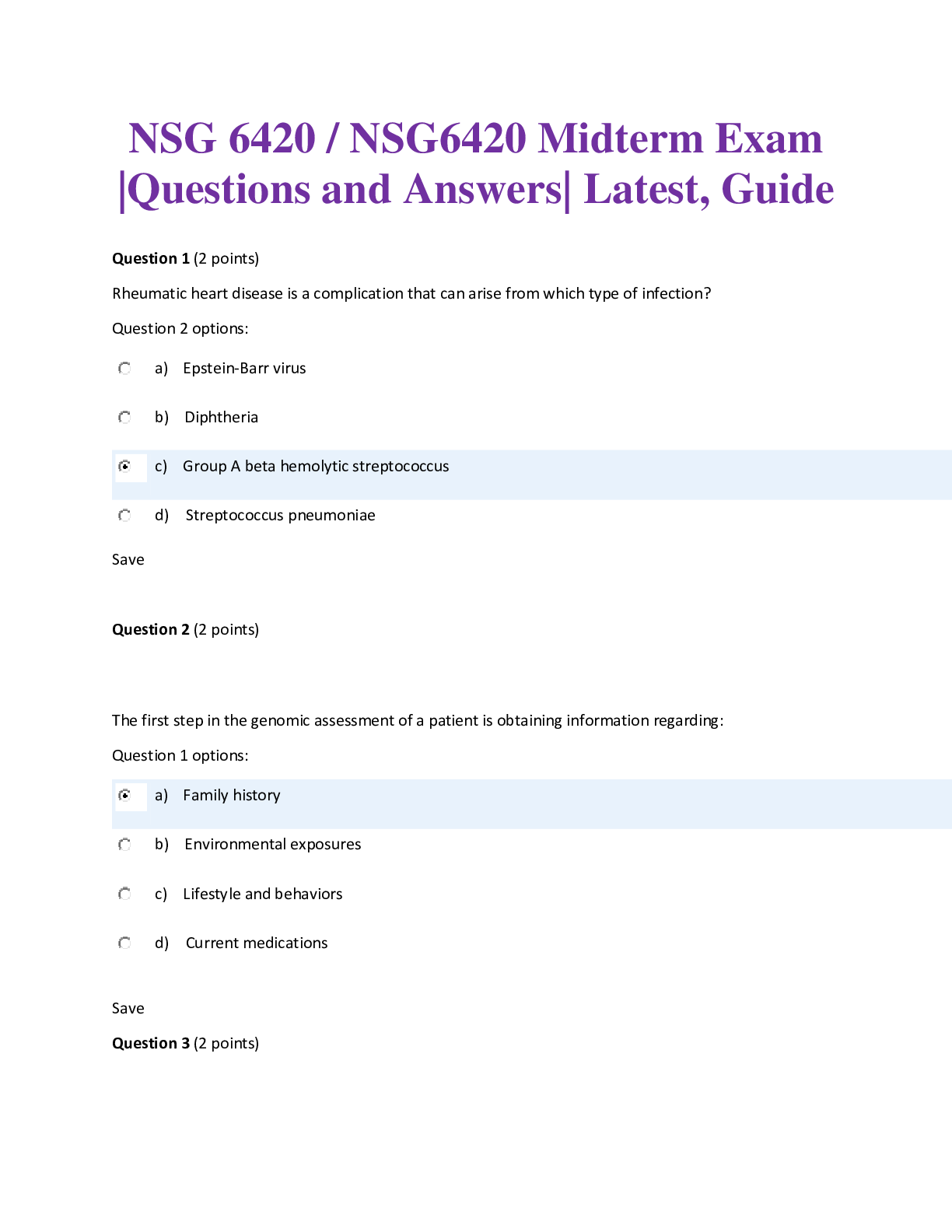
NSG 6420 / NSG6420 Midterm Exam |Questions and Answers| Latest...


$15
54 Pages
NSG 6420: FNP I Adult/Gero Final Review Study Guide,GRADED A


$10.5
7 Pages
SOAP NOTE week 5 Harvey.E | CC: swelling and pain to client ri...

$26
345 Pages
eBook [PDF] Barash, Cullen, and Stoelting's Clinical Anesthesi...

$29
551 Pages
eBook [PDF] Fundamentals of Nursing 3rd Edition By Joanne Toll...

$29
1067 Pages
eBook [PDF] Burns' Pediatric Primary Care 7th Edition BY Dawn...

$16
137 Pages
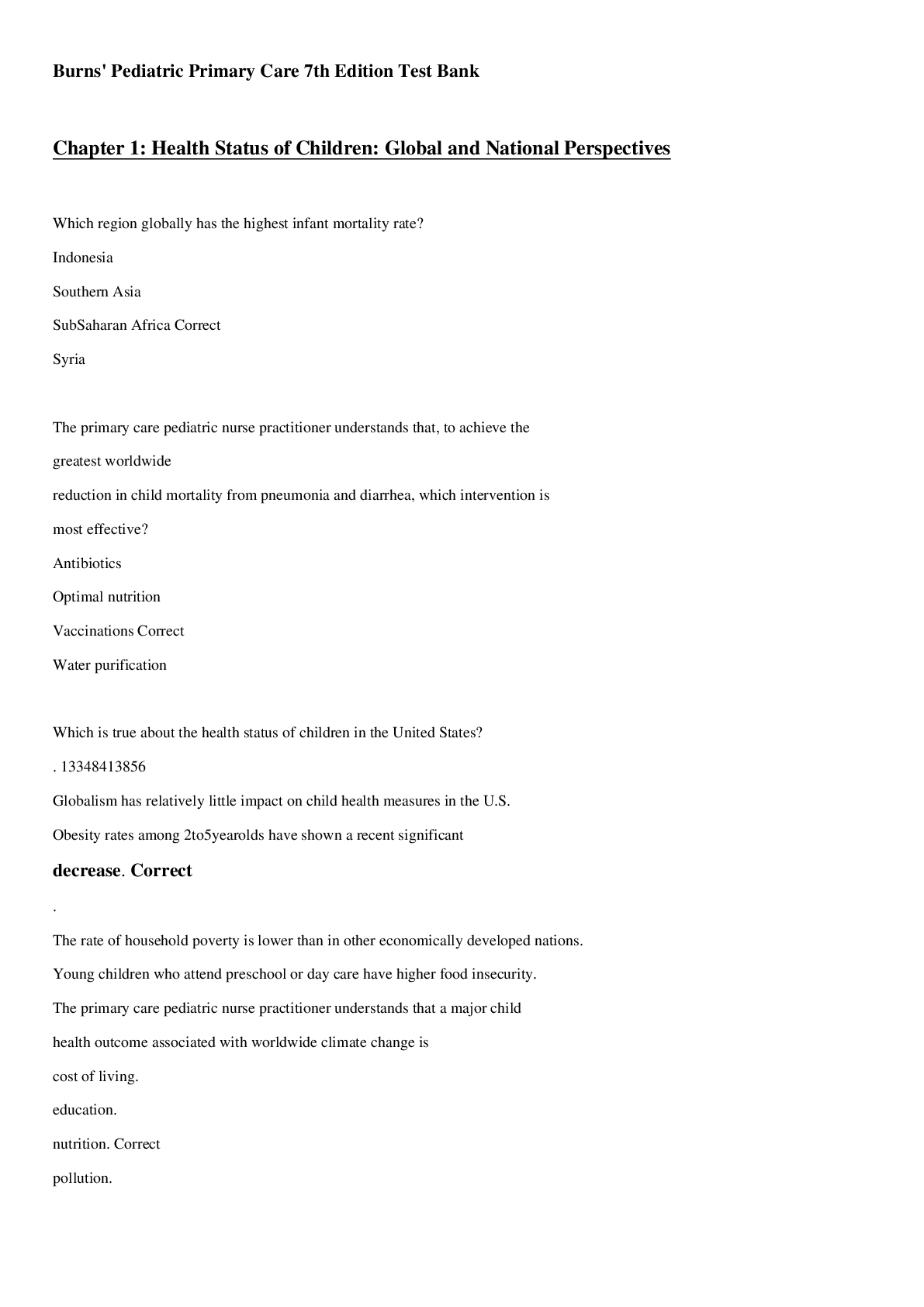
Test Bank for Burns' Pediatric Primary Care 7th Edition by Daw...
$15
135 Pages
Burns Pediatric Primary Care 7th Edition All Chapters Complete...
$26
209 Pages
Burns' Pediatric Primary Care, 7th Edition by Garzon, Barber S...
$15
835 Pages
Complete Test Bank Emergency Care 14th Edition Daniel Limmer Q...
$16
835 Pages
Test Bank Emergency Care 14th Edition Daniel Limmer Questions...
$25
591 Pages
AACN Essentials of Progressive Care Nursing 5th Edition By S...
More related documents below