HESI A2 Anatomy and Physiology
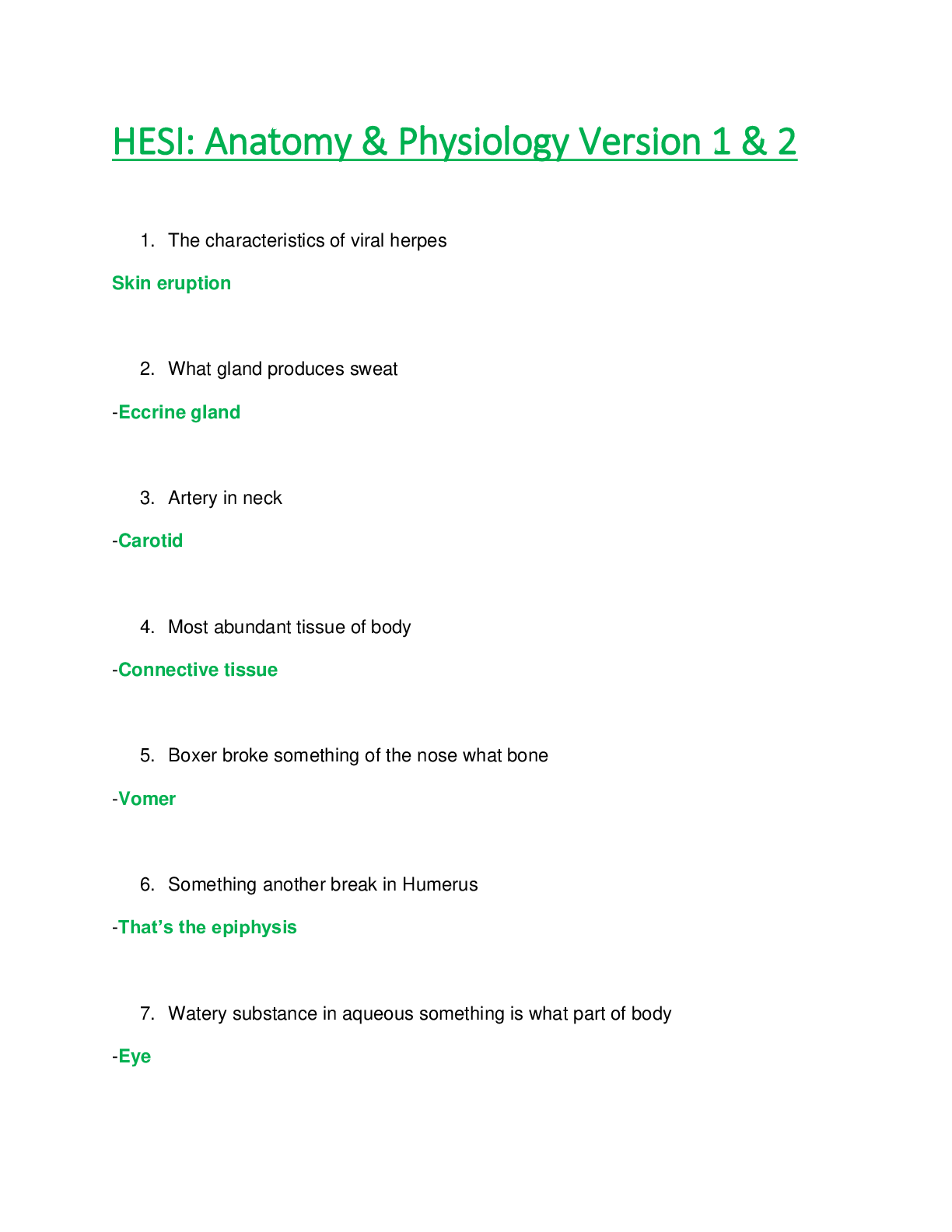
1. Anatomic position
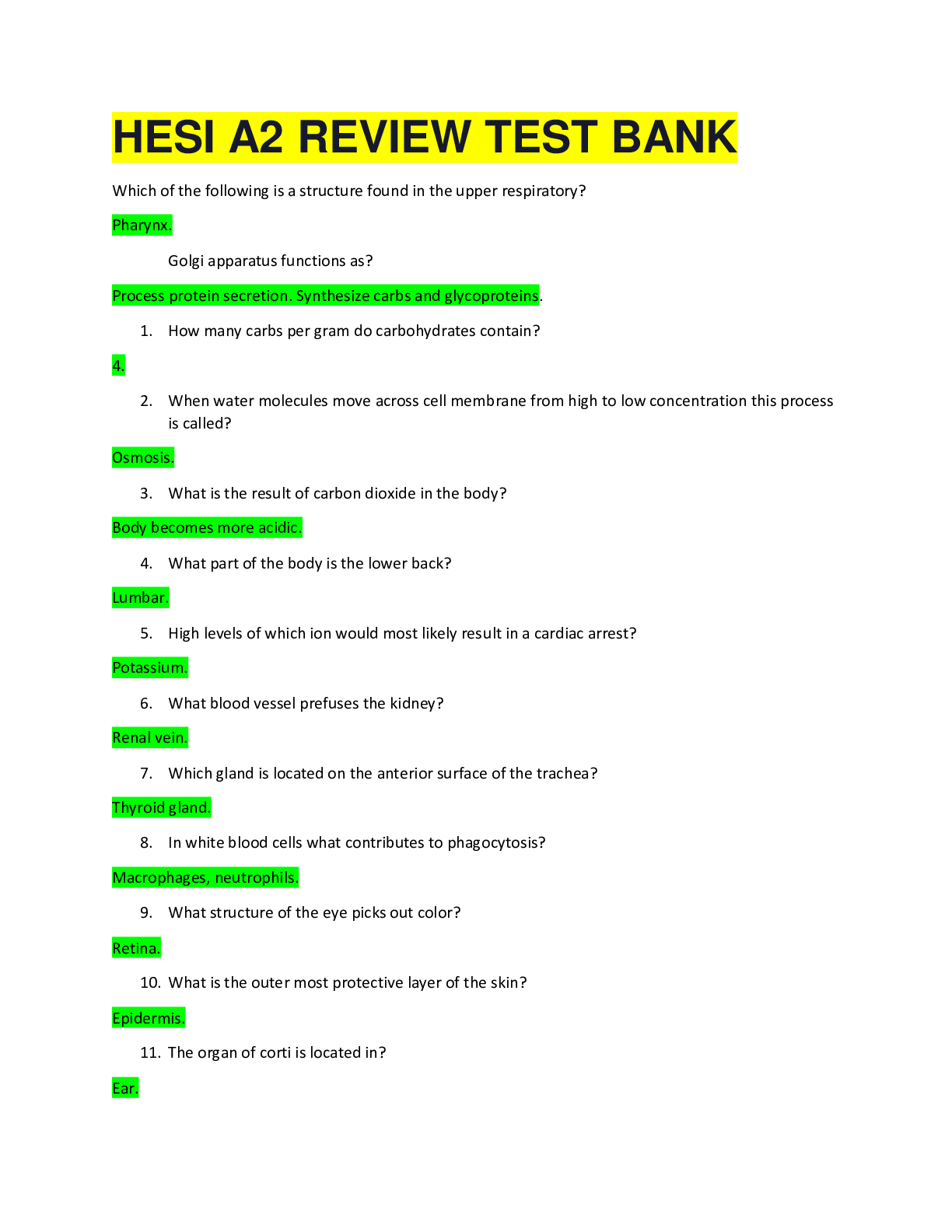
2. Which of the following is a structure found in the upper respiratory?
3. A person who has damage to their ulnar nerve will have decreases sensation in
4. Which
...
HESI A2 Anatomy and Physiology
1. Anatomic position
2. Which of the following is a structure found in the upper respiratory?
3. A person who has damage to their ulnar nerve will have decreases sensation in
4. Which bone dose not articulate with any other bone?
5. Which of the following statements best describe endocrine glands?
6. Diet is important because bone are storage places for
7. Which organ is part of both the male reproductive system and the urinary system?
8. Red blood cell production is known as which of the following?
A. Hematopoiesis B. Erythropoiesis
C. Phagocytosis
D. Thrombopoiesis
9. When an individual is under stress, hormones are released. Which of the following is not one of the locations in which hormones are released when under stress?
A. Parathyroid
B. Adrenal cortex
C. Posterior pituitary
D. Hypothalamus
10. The central nervous system is made up of all except which of the following?
A. Brain B. Heart
C. Retina
D. Spinal cord
11. The thyrotrophic-releasing growth hormone-releasing, and gonadotropin-releasing hormones are released by which of the following endocrine system glands?
A. Thymus
B. Pituitary gland
C. Pineal gland D. Hypothalamus
12. What is the most visible part of the ear? A. Pinna
B. Organ of Corti
C. Cochlea
D. Ear canal
13. Which of the following is an organ of the respiratory system?
A. Brain B. Larynx
C. Urethra
D. Pancreas
14. The motor cortex helps the brain by monitoring and controlling the body's movement. Where is the motor cortex located within the brain?
A. Top, middle portion of the parietal lobe.
B. Back of the head
C. Front portion of the parietal lobe.
D. Around the auditory cortex
15. The heart contains four chambers. Which of these four chambers is the largest and the strongest?
A. Left ventricle
B. Left atrium
C. Right ventricle
D. Right atrium
16. Which of the following organs is involved with the immune system?
A. Heart
B. Bronchi C. Appendix
D. Esophagus
17. Which of the following is not a principal organ of the nervous system?
A. Brian B. Thymus
C. Ganglia
D. Spinal cord
18. Where do the endocrine system and the nervous system meet?
A. At the pituitary gland and the pineal gland B. At the hypothalamus and pituitary gland
C. At the pineal gland
D. At the thyroid gland
19. The pancreas is an endocrine system gland mainly responsible for which of the following?
A. Proper bone development
B. Metabolism control
C. Maintaining healthy sugar levels
D. Distribution of stored fat.
20. The stomach lining membrane name?
21. skin aids in maintaining the calcium and phophate levels of the body by participating in the production of which of the following
22. all action of the nervous system depend on the transmission of nerve impulses over which of the following?
23. which hormone initiates the preparation of the endometrium of the uterus for pregnancy
24. which female reproductive organ's produce oocytes, estrogen and progesterone
25. the buttocks is on which surface the body
26. the esophagus is located at which body cavity
27. which is a hollow organ
28. which muscle is included in the quadriceps femoris group
29. what occur when the sympathetic nervous system is stimulated?
30. which hormone is produce by the posterior pituitary gland
31. which structure regulat the transport of substance in and out of a cell
32. a person who damages to their ulnar nerve will have decrease sesutior in which area
33. when assessing a female client who describes herself as a vegetarian in the nurse notes that she has an unusual skin color. The nurse should ask the client if she has eaten large amount of:
34. which structure produces B-lymphocytes
35. how many days is the avarage menstrul cycle
36. where in the human body are nutrients absorbed
37. The central nervous system is made up of all except which of the following?
38. The motor cortex helps the brain by monitoring and controlling the body's movement. Where is the motor cortex located within the brain?
39. The heart contains four chambers. Which of these four chambers is the largest and the strongest?
40. Which of the following is not a principal organ of the nervous system?
41. The pancreas is an endocrine system gland mainly responsible for which of the following?
42. Tough elastic tissues found in the joints that connect bones to bones are called:
43. What mineral is responsible for muscle contractions?
44. Where can the urinary bladder and internal reproductive organs be found?
45. Nerve tissue is composed of neurons and connective tissue cells that are referred to as which of the following?
46. Which tissue serves as the framework of the body by providing support and structure for the organs?
47. What are the glands of skin that produce a thin, watery secretion
48. You have been given a sample of tissue that has open spaces partially filled by an assemblage of needle like structures. What is this tissue?
49. Which mineral is responsible for regulating fluid in the body?
50. Motor or neurons transmit nerve impulses away from the CNS.
51. What are chemical messengers that control growth, differentiation, and the metabolism of specific target cells called?
52. Which blood vessel where exchanges take place between blood and the cells of the body?
53. The stomach muscle churns and mixes food, turning the mass into a soupy substance called what?
54. All the nutrients that enter the hepatic portal vein are routed where for decontamination?
55. In men, spermatozoa develop within the of each testis
56. During pregnancy, what organ produces the hormones that maintain the endometrium and prepare the breasts for milk production?
57. Gland whose secretion is oily- a mixture of oily substances and cell fragments
58. Sweat gland whose secretion is s primarily water and salts plus contains protein and fatty subsatances
59. Smooth muscle structure in the skin
60. What type of joint is the elbow
61. What type of joint is the hip and shoulder
62. what are the two most abundant minerals stored in bones extracellular matrix
63. The most abundant glial cells found in the CNS that anchor neurons to capillaries and
64. What does the adrenal medulla secrete?
65. Which skin cancer is the most dangerous? malignant
66. Which skin cancer is moderatly dangerous?
67. Which skin cancer is least dangerous?
68. What is the only artery in the body to carry oxygen-poor blood?
69. Chocolate cysts of the ovaries are attributed to .
70. tendons connect Where is interstitial fluid found in the body?
71. Which lobe of the brain is associated with judgement, planning, impulse control, and social behavior?
72. What does lipase do?
73. In what area of the body would you expect to find and especially thick stratum corneum?
74. What two things must be present for a muscle cell to contract?
75. the esophagus is located at which body cavity
a) ventral
b) abdominal c) thoracic
76. What is the response of CF cell in the collecting tubules in the nephrons when antiduretic hormone (ADH) is secreted?
77. what is the function of ADH hormone
78. which muscle is included in tue quadriceps femoris group
a) trapezius
b) vastuslateralis
c) gastrocnemious
d) rectus abdominus
79. the calcaneous is located in whih part of the body the leg
80. Where is the tympanic membrane located?
81. Fats are broken down in the small intestine using which enzyme(s)?
82. What is the only artery to carry oxygen-poor blood?
83. What do ligaments connect?
84. Is epithelial tissue vascular or avascular?
85. Which of the following describes the primary function of the respiratory system?
A) to take oxygen into the body while removing carbon dioxide
B) to transport nutrients to the cells and tissue of the body
C) to act as a barrier between the body's organs and outside influences
86. Which of the following is the first step of the scientific method?
A) construct a hypothesis
B) make observations
C) analyze data
D) form a question
87. The process of organisms with an advantageous trait surviving more often and producing more offspring than organisms without the advantageous trait describes which of the following basic mechanisms?
A) gene flow
B) genetic drift
C) mutation
D) natural selection
88. Which of the following is the group of basophils that produces follicle-stimulating hormone (FSH) and luteinizing hormone?
A) gonadotrophs
B) thyotroph
C) chromophil
D) pituicytes
89. Which of the following are considered the basic units of the female reproductive system, each containing a single immature egg cell that is released during ovulation?
A) oocytes
B) follicles
C) ovaries
D) fundus
[Show More]








.png)