NURSING > vSim For Nursing > VSIM George Palo Feedback Log (All)
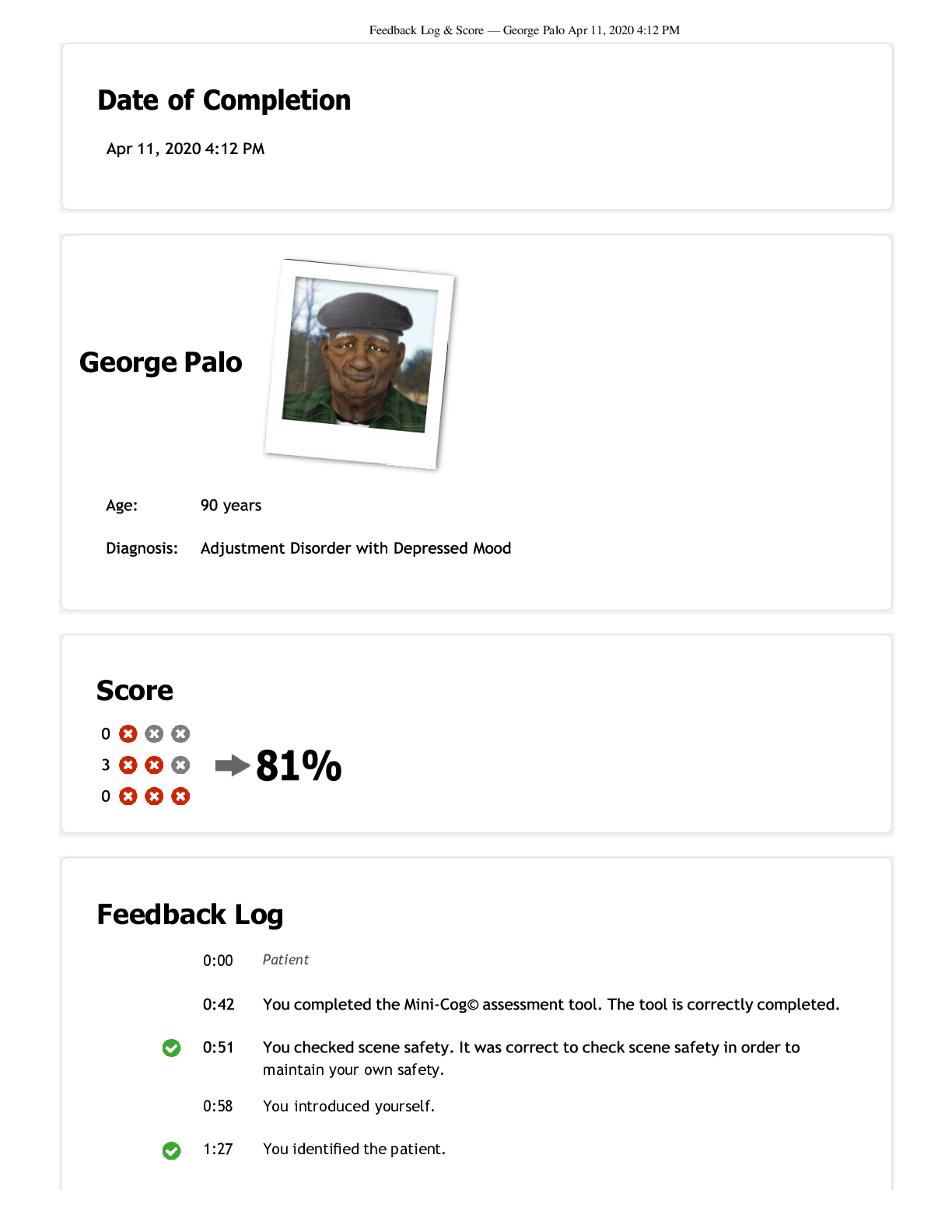
VSIM George Palo Feedback Log
Document Content and Description Below
Last updated: 3 years ago
Preview 1 out of 4 pages
Instant download
Buy this Document to get the Full Access Instantly
Provided by Students Who Aced it
We Verify Document Content to Gurantee Accuracy
Reviews( 0 )
Document information
Connected school, study & course
About the document
Uploaded On
Jun 23, 2021
Number of pages
4
Written in
All

Additional information
This document has been written for:
Uploaded
Jun 23, 2021
Downloads
0
Views
239
Topic Tags
Related Subjects & Courses
Explore similar study resources and related concepts.
Recommended For You
Get more on vSim For Nursing »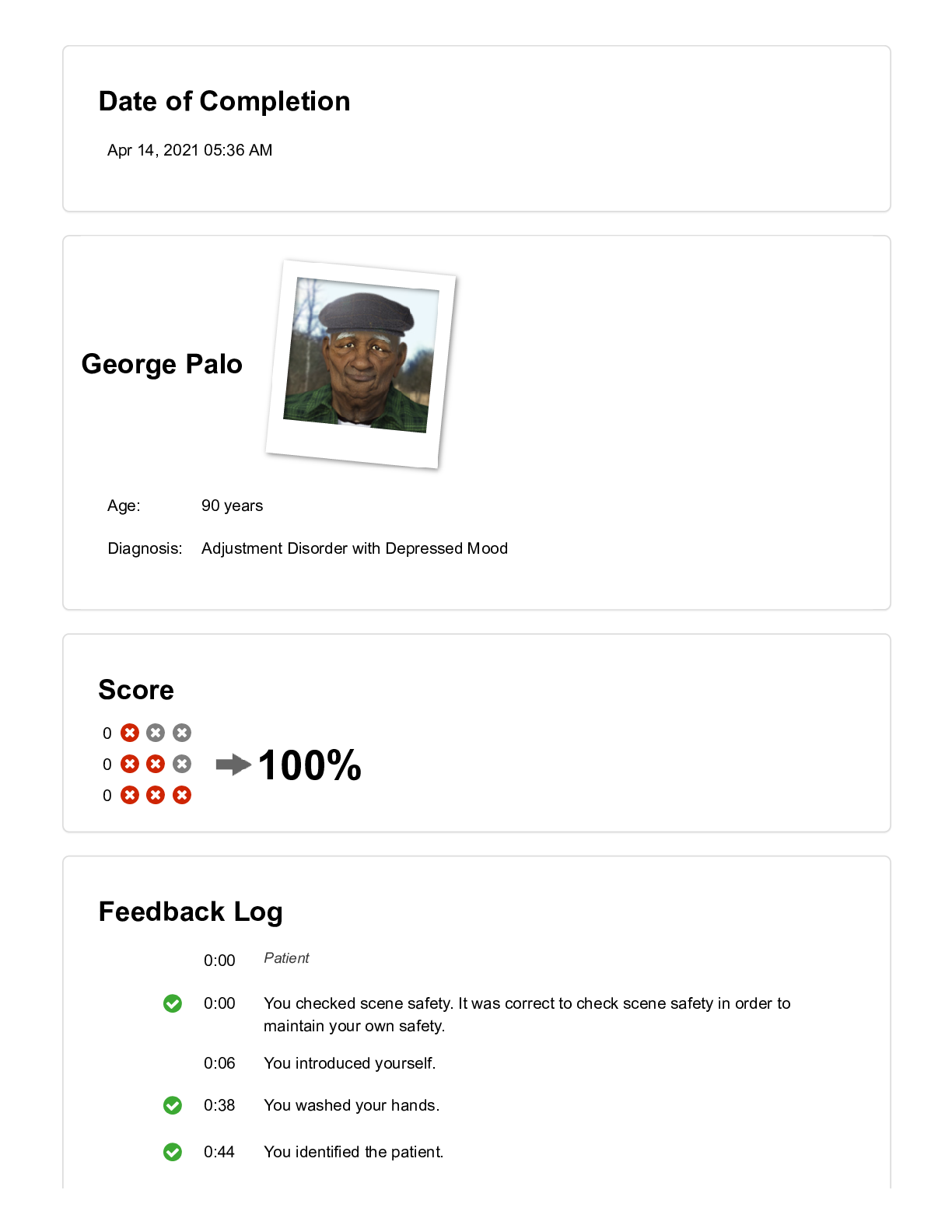
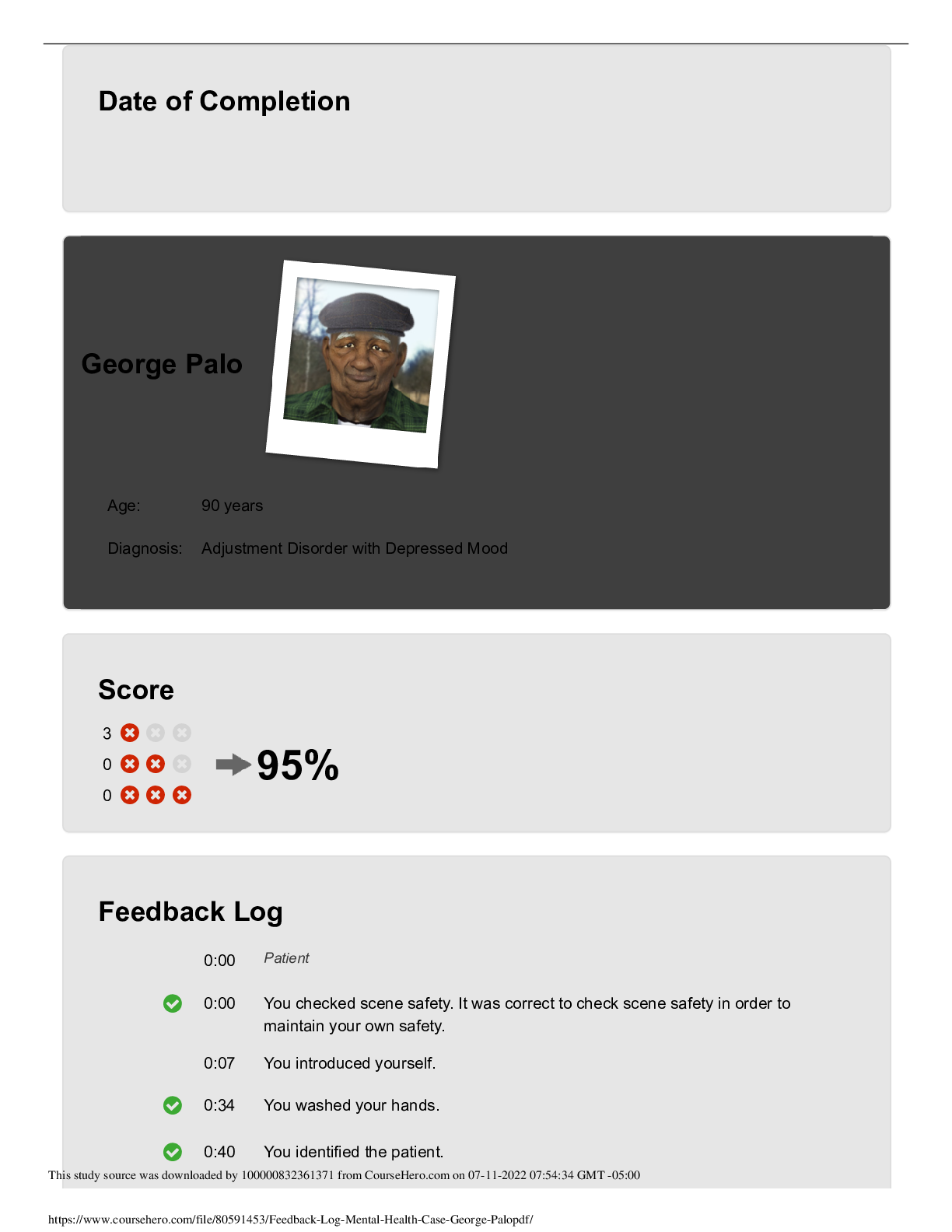
NURS 202 Mental Health VSIM George Palo Feedback Log Already R...
NURS 202 Mental Health VSIM George Palo Feedback Log Already R...
NURS 202 Mental Health VSIM George Palo Feedback Log Already R...

NURSING MISCVSIM George Palo Quiz. Questions and Answers. Incl...
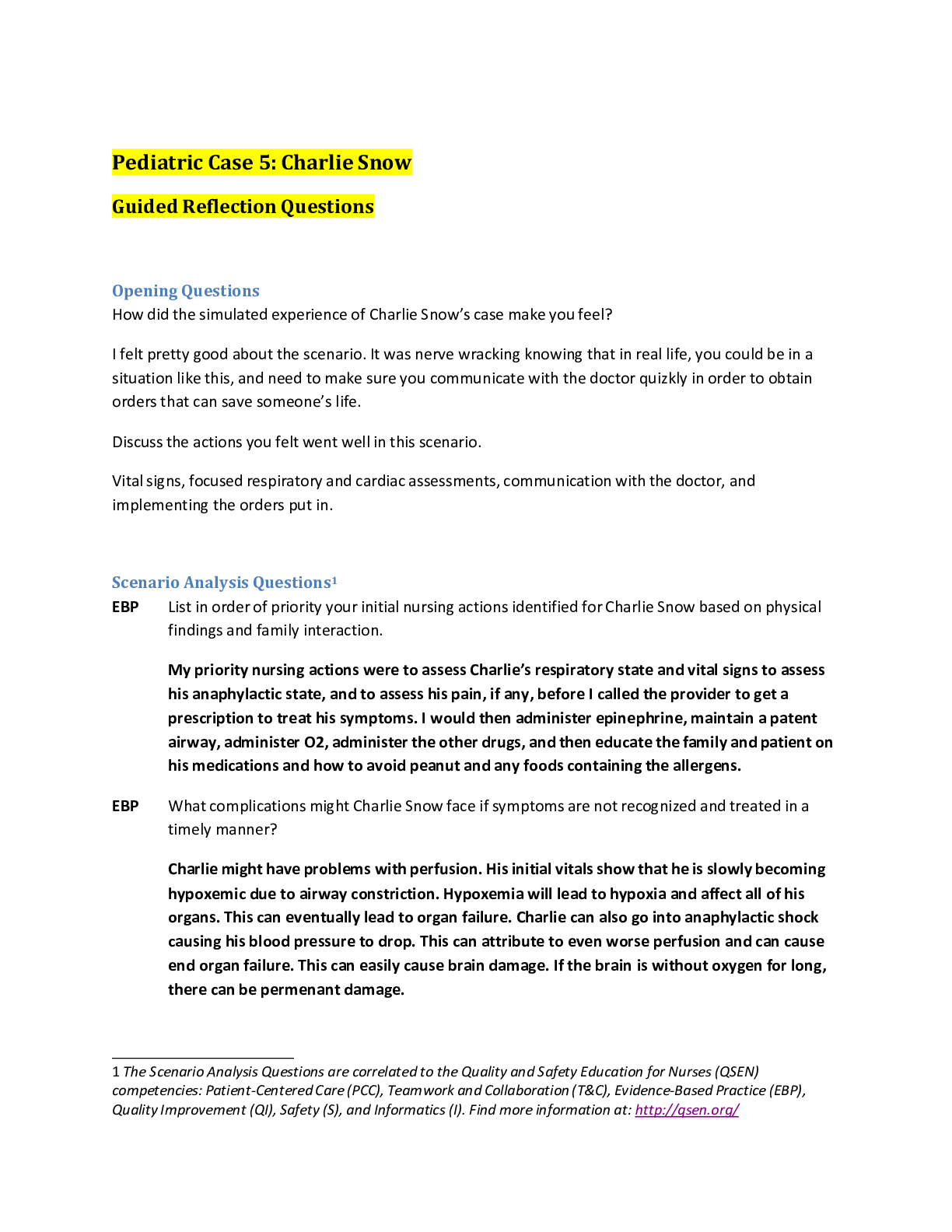
Pediatric Case 5: Charlie Snow Guided Reflection Questions and...

ATI TEAS 7 | 4 Versions for Reading, Math, Science, English, A...
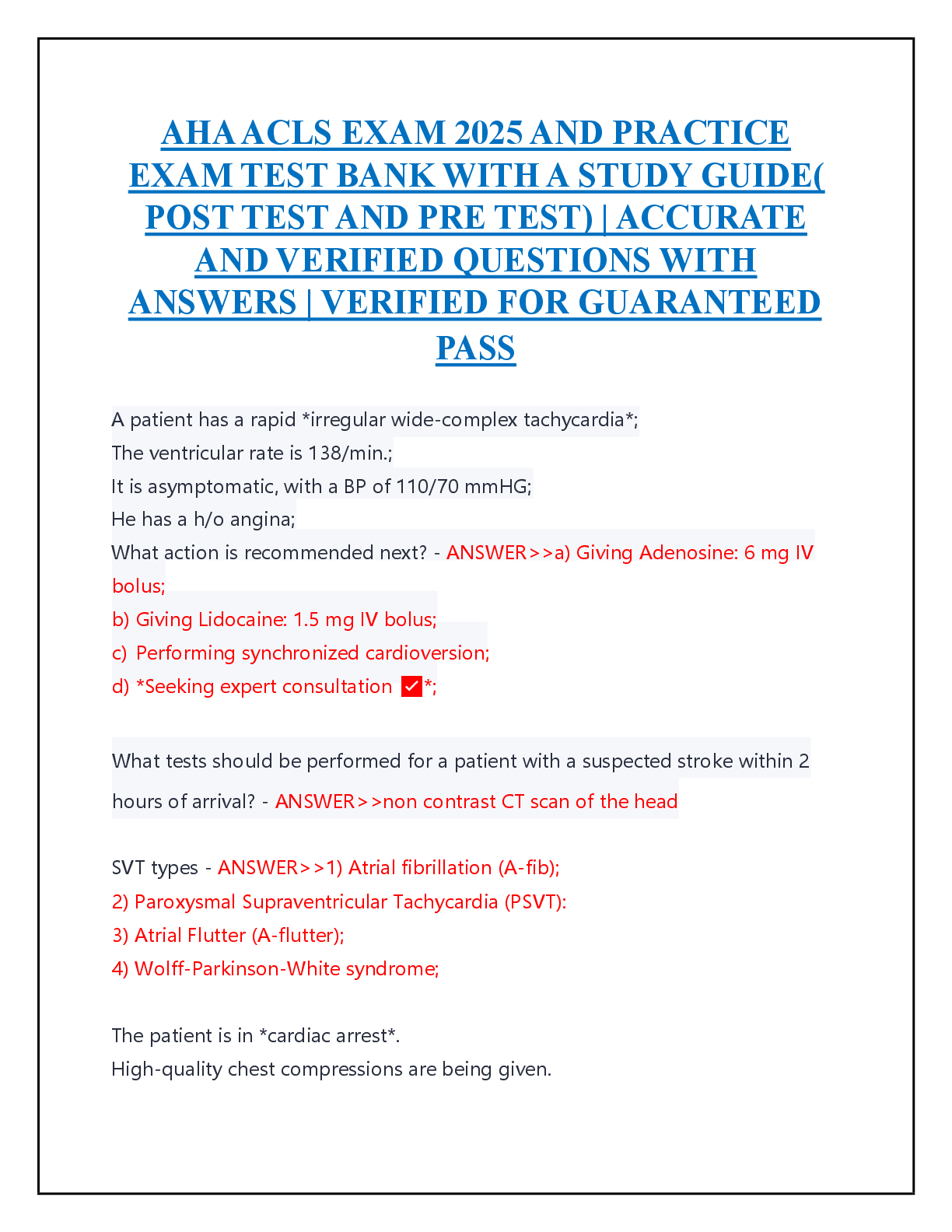
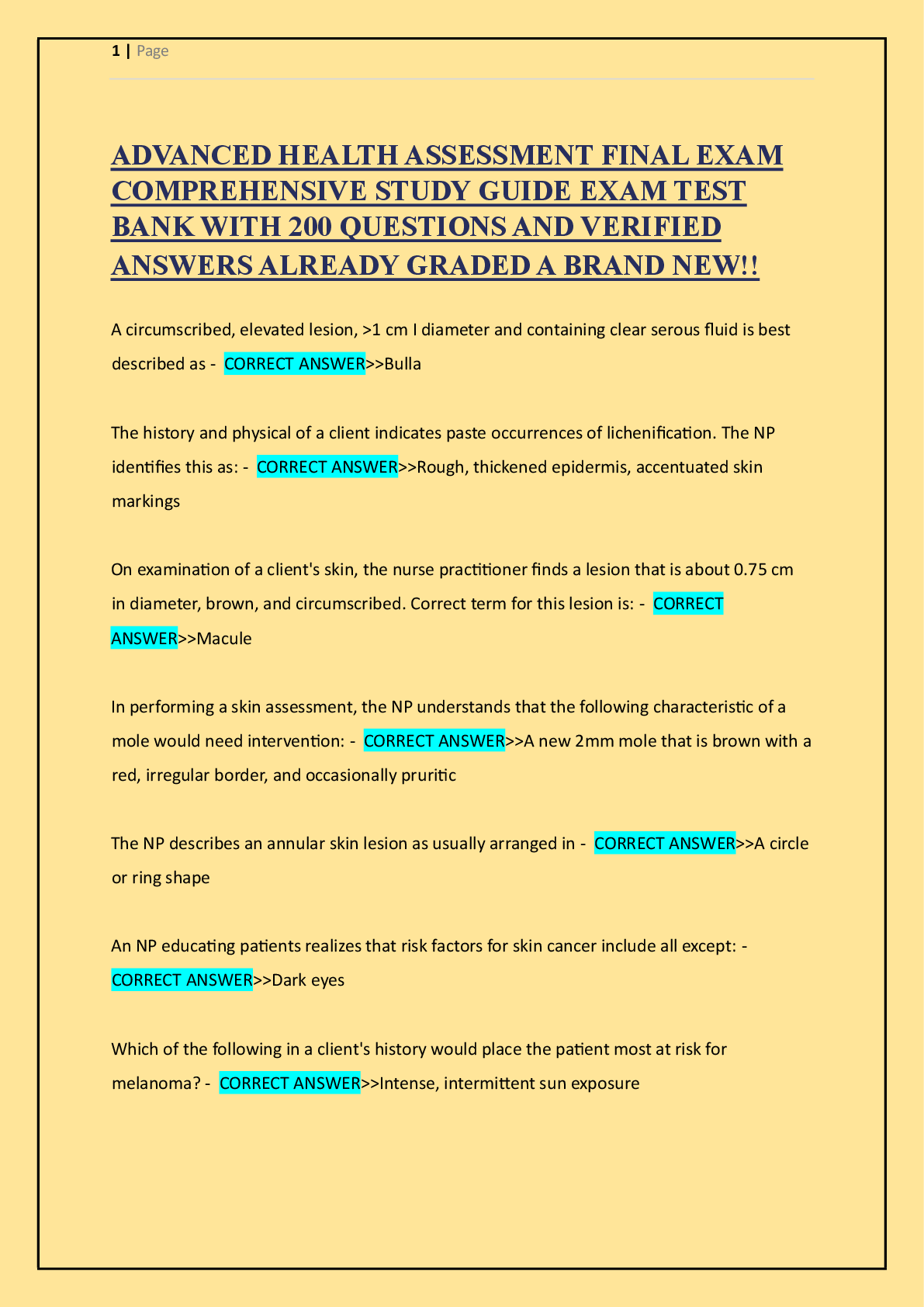

Jody Rush, 20 Y/O Female; SBAR,SOAP NOTE AND CAREPLAN (Answere...
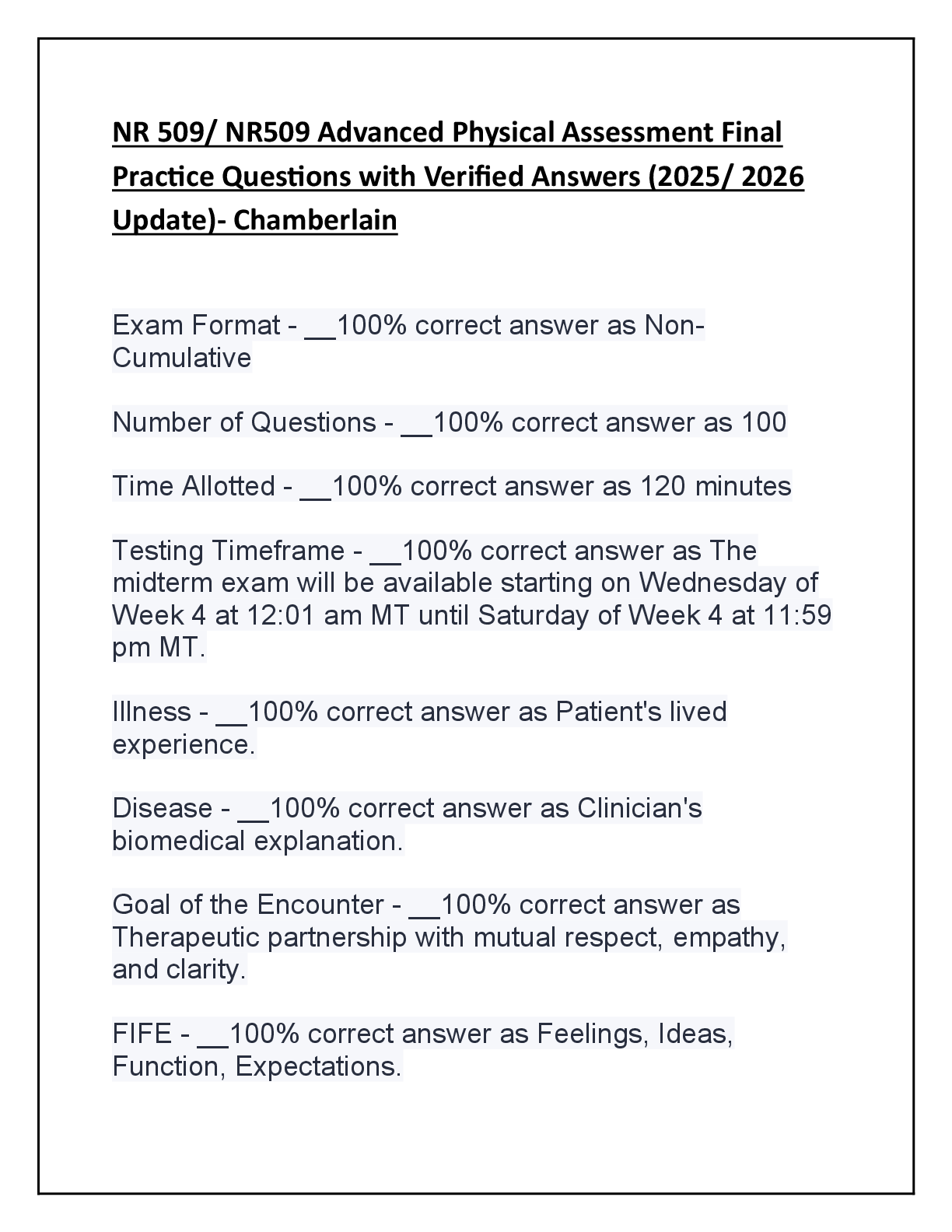
NR 509/ NR509 Advanced Physical Assessment Final Practice Que...
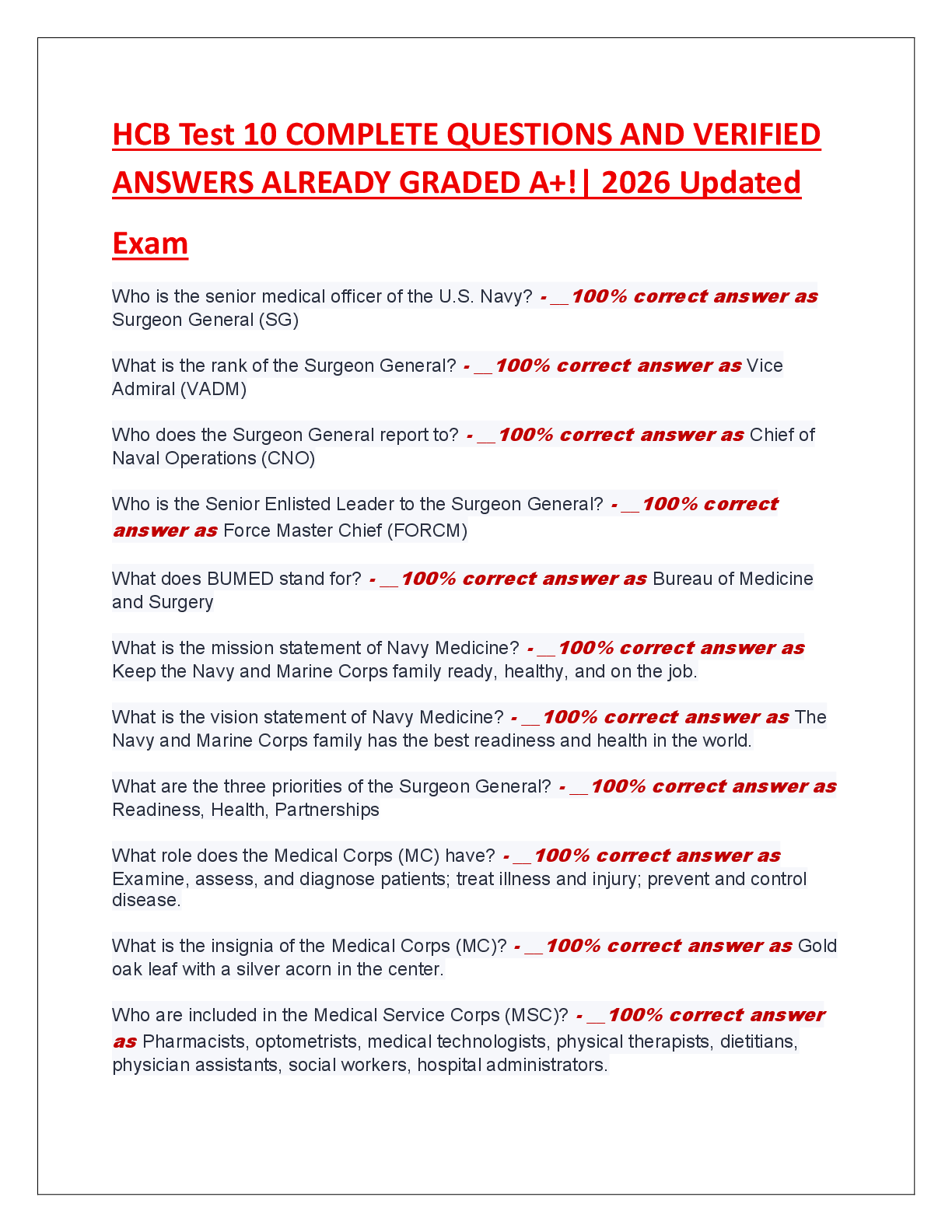
HCB Test 10 COMPLETE QUESTIONS AND VERIFIED ANSWERS ALREADY G...
NR511 Week 8 Final Exam ACTUAL 2025/2026 QUESTIONS AND 100% CO...