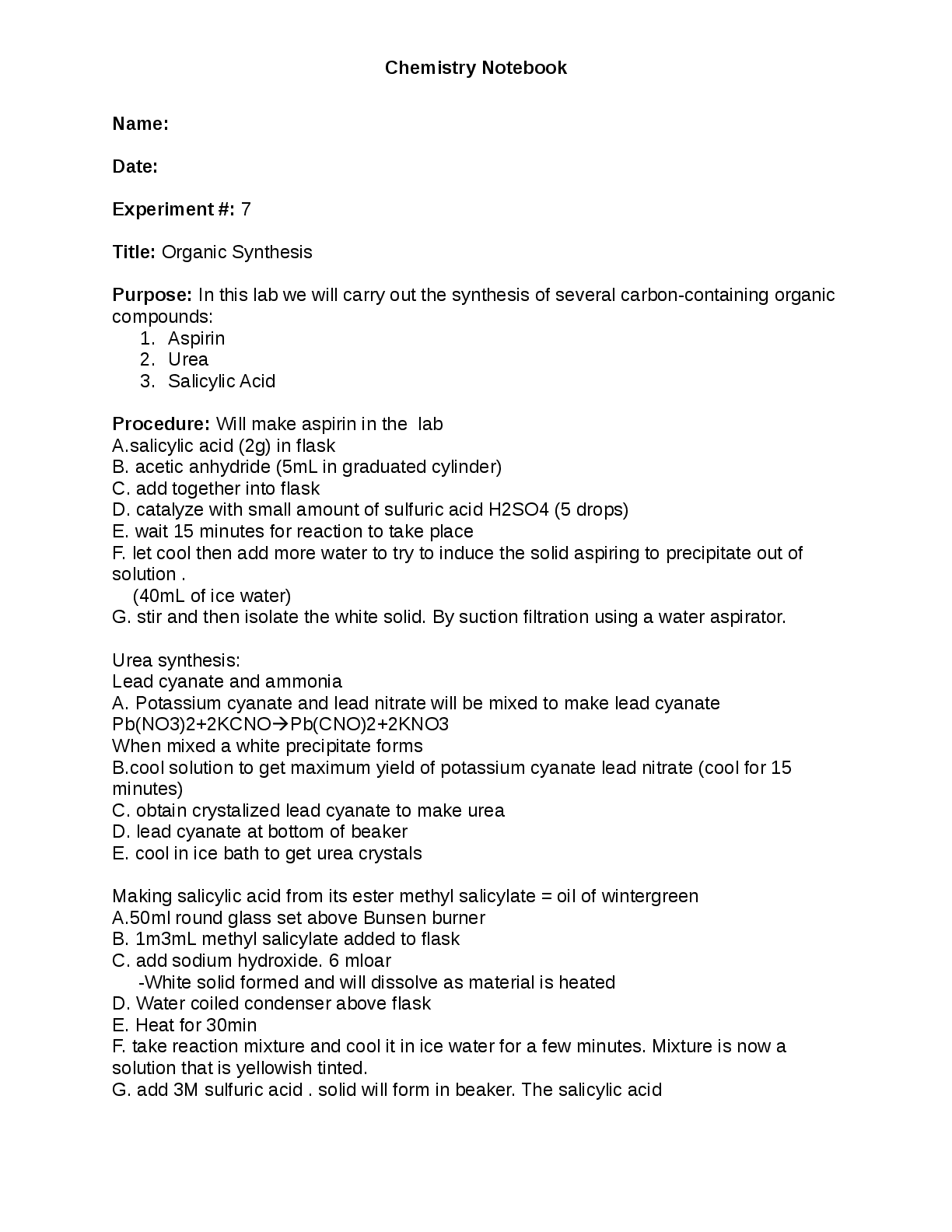
chem 120Midterm Study Guide
Document Content and Description Below
Science is an accumulation of knowledge about nature and our physical world and of
theories that we use to explain that knowledge.
The experimental roots of chemistry are in alchemy, a mixture of chemistry and
mag
...
[Show More]
Last updated: 3 years ago
Preview 1 out of 5 pages
Instant download

Buy this Document to get the Full Access Instantly
Provided by Students Who Aced it
We Verify Document Content to Gurantee Accuracy
Reviews( 0 )
Document information
Connected school, study & course
About the document
Uploaded On
Jun 24, 2021
Number of pages
5
Written in
All

Additional information
This document has been written for:
Uploaded
Jun 24, 2021
Downloads
0
Views
96
Topic Tags
Recommended For You
Get more on EXAM »
$25
550 Pages
Achieve for Interactive General Chemistry, 1e by Macmillan Lea...
$25
86 Pages
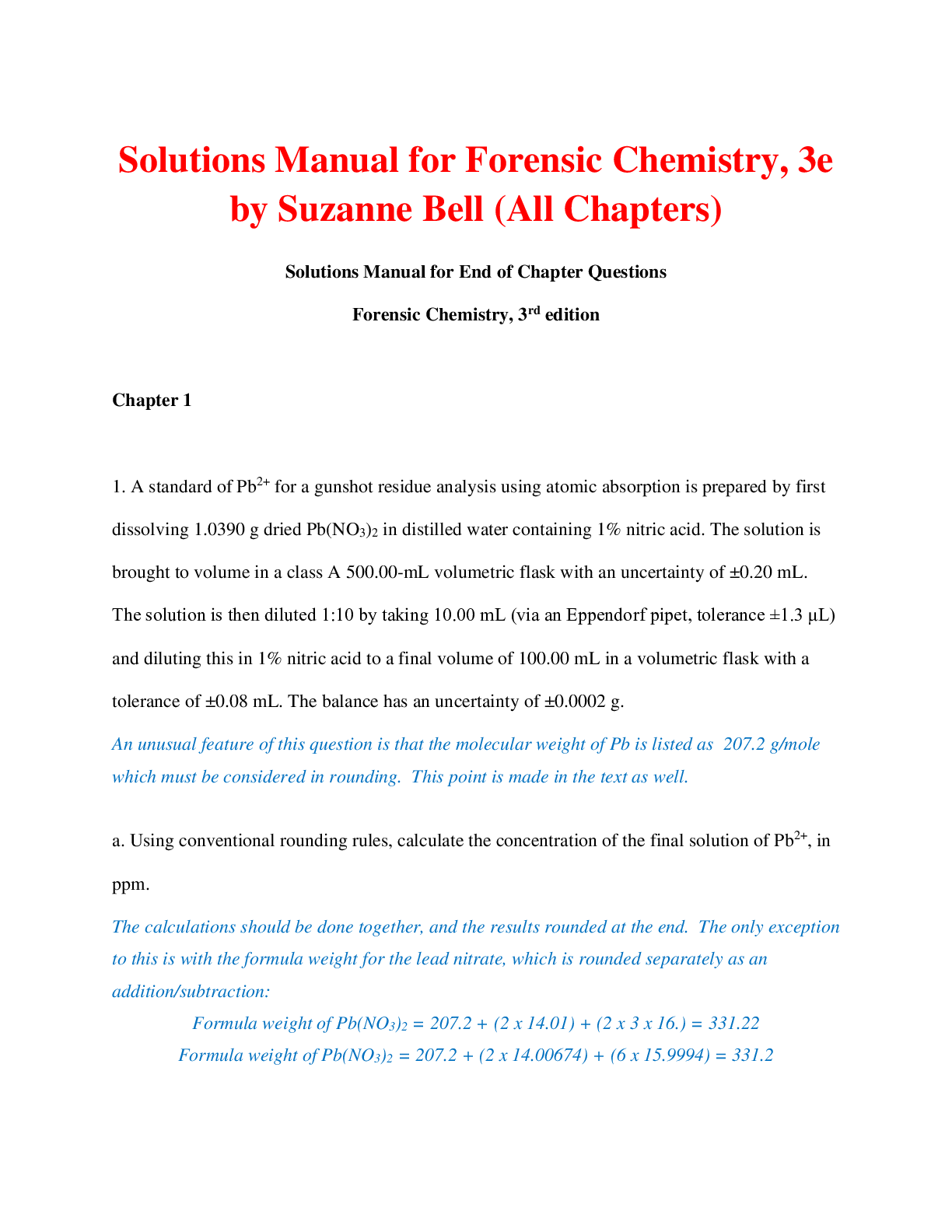
Forensic Chemistry 3rd Edition by Suzanne Bell | Solutions Man...

$18
973 Pages
Introduction to Chemistry 5th Edition By Richard Bauer, James...





More related documents below


