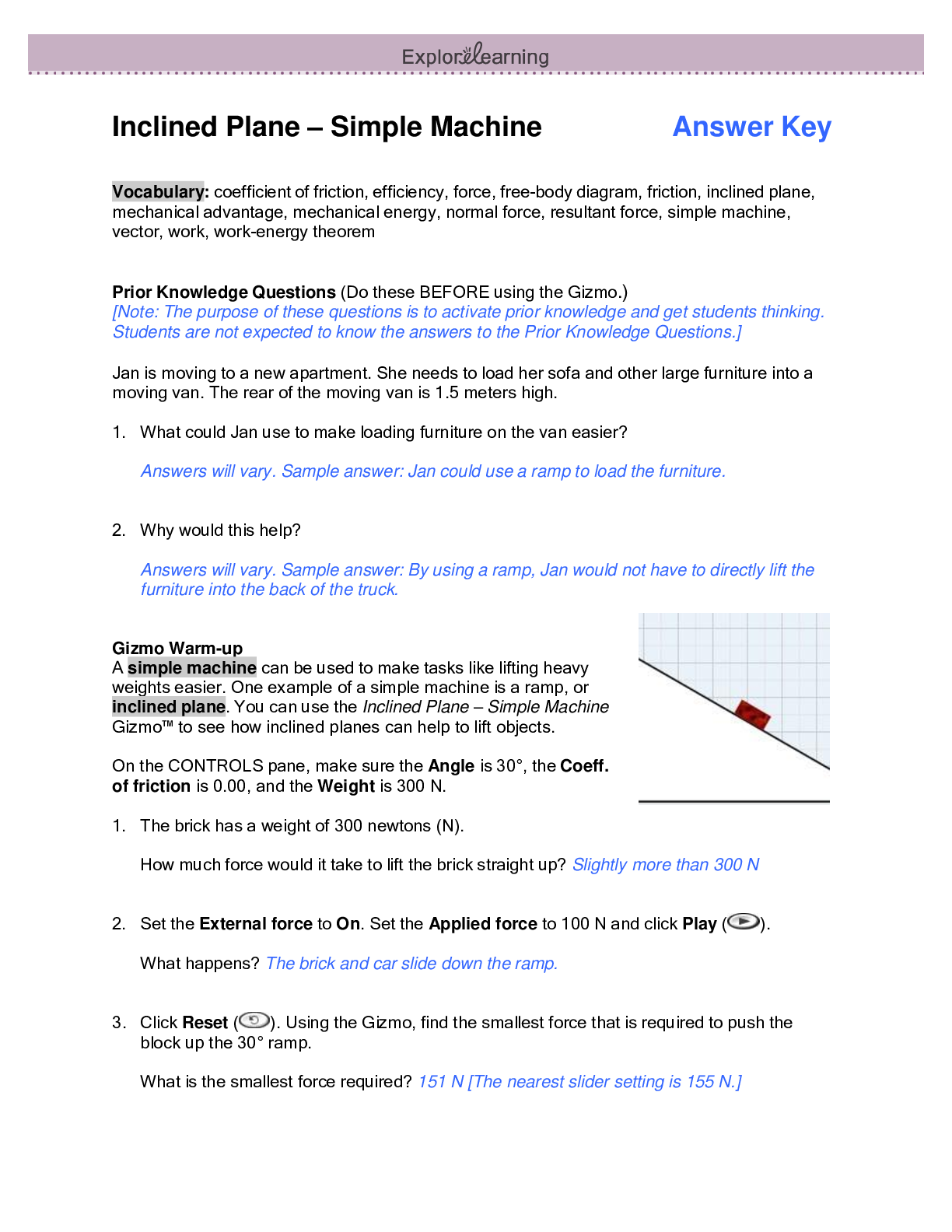
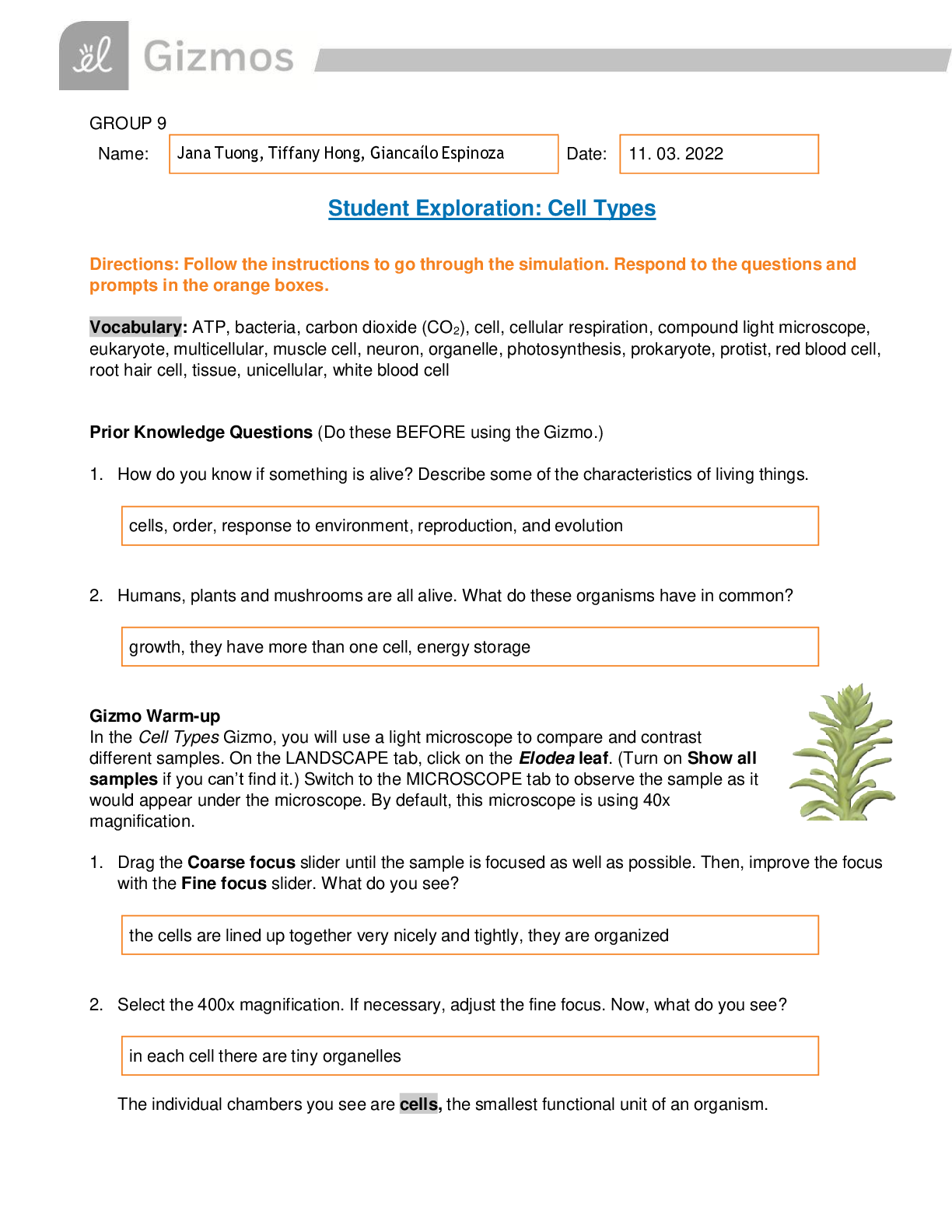
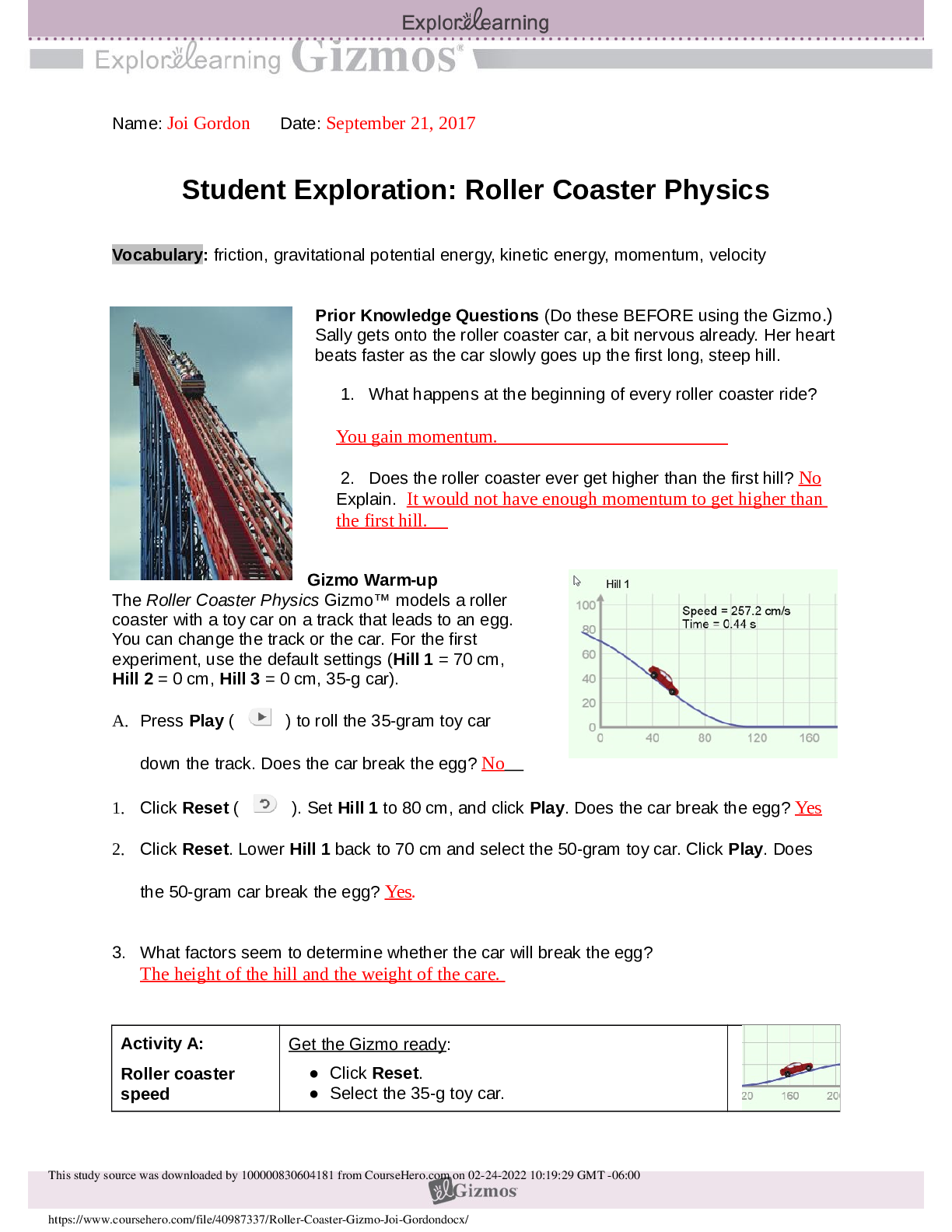
SCIENCE 101 > GIZMOS > GIZMO Isotopes Lab-ALL ANSWERS CORRECT-GRADED A+ (All)
GIZMO Isotopes Lab-ALL ANSWERS CORRECT-GRADED A+
Document Content and Description Below
Last updated: 3 years ago
Preview 1 out of 4 pages
Instant download

Buy this Document to get the Full Access Instantly
Provided by Students Who Aced it
We Verify Document Content to Gurantee Accuracy
Reviews( 0 )
Document information
Connected school, study & course
About the document
Uploaded On
Jun 25, 2021
Number of pages
4
Written in
All

Additional information
This document has been written for:
Uploaded
Jun 25, 2021
Downloads
0
Views
497
Topic Tags
Related Subjects & Courses
Explore similar study resources and related concepts.
Recommended For You
Get more on GIZMOS »
Illustrated Microsoft® Office 365® & Excel 2019 Comprehensive...
Test Bank for The Cell A Molecular Approach 8th Edition By Geo...

Test Bank for Neuroscience 6th Edition Dale Purves, George Aug...

eBook Nursing Informatics, A Health Informatics, Interprofessi...
Exploring Psychology, 12th Edition by David Myers, Nathan DeWa...

CompTIA Security+ Guide to Network Security Fundamentals, 7th...

Test Bank For Principles of Cognitive Neuroscience 2nd Edition...
eBook Brunner & Suddarth's Textbook of Medical-Surgical Nursin...
Clinical Psychology, A Scientific, Mulitcultural, and Life-Spa...

Theoretical Basis for Nursing 5th Edition By Melanie McEwen, E...

Psychiatric-Mental Health Nursing 8th Edition By Sheila L. Vid...
Test Bank FOR Psychiatric Mental Health Nursing 7th Edition By...
Test Bank FOR Pediatric Nursing: A Case-Based Approach 1st Edi...

Nursing Research Generating and Assessing Evidence for Nursing...
Maternity and Pediatric Nursing 3rd Edition By Susan Ricci, Th...

eBook The 5-Minute Clinical Consult 2021 29th Edition By Fran...

eBook Radiotherapy in Practice Imaging for Clinical Oncology 2...

eBook Quality and Safety Education for Nurses Core Competencie...