RN Capstone ATI Medical-Surgical.docx
Document Content and Description Below
A nurse is caring for a client following an infratentorial craniotomy. How should the nurse
position this client in the immediate post-operative period?
Keep client on either side for 24 to 48 hours to prevent pressu
...
[Show More]
Last updated: 3 years ago
Preview 1 out of 3 pages
Instant download

Buy this Document to get the Full Access Instantly
Provided by Students Who Aced it
We Verify Document Content to Gurantee Accuracy
Reviews( 0 )
Document information
Connected school, study & course
About the document
Uploaded On
Jun 25, 2021
Number of pages
3
Written in
All

Additional information
This document has been written for:
Uploaded
Jun 25, 2021
Downloads
0
Views
89
Document Keyword Tags
Recommended For You
Get more on EXAM »

$80
275 Pages
Just Released ATI RN Medical Surgical Nursing 2023 Proctored E...

$60.5
134 Pages
RN ATI MEDICAL SURGICAL EXAM PROCTORED WITH VERIFIED NGN QUEST...
$22
30 Pages
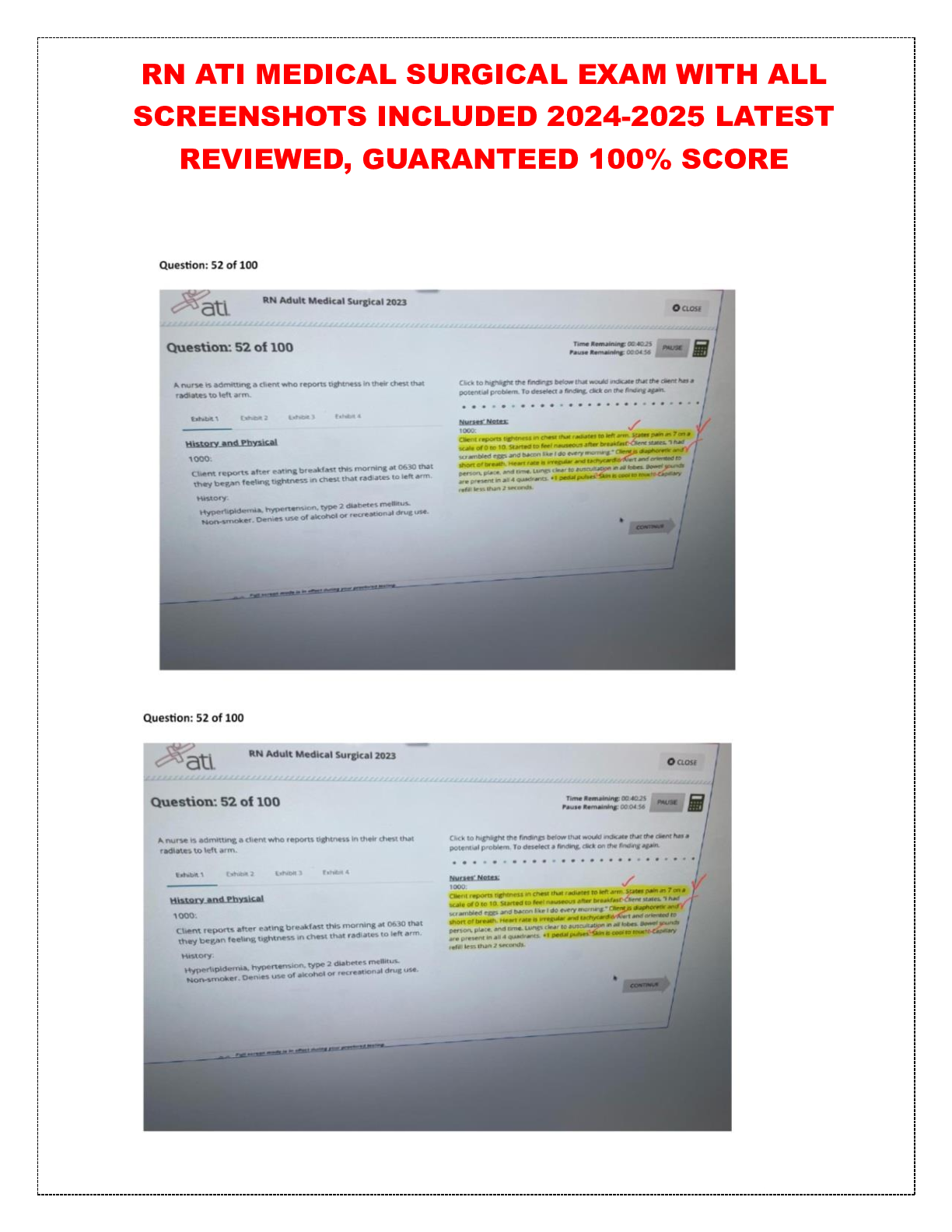
RN ATI Medical Surgical Exam with All Screenshots Included | 2...
.png)
$8.5
5 Pages
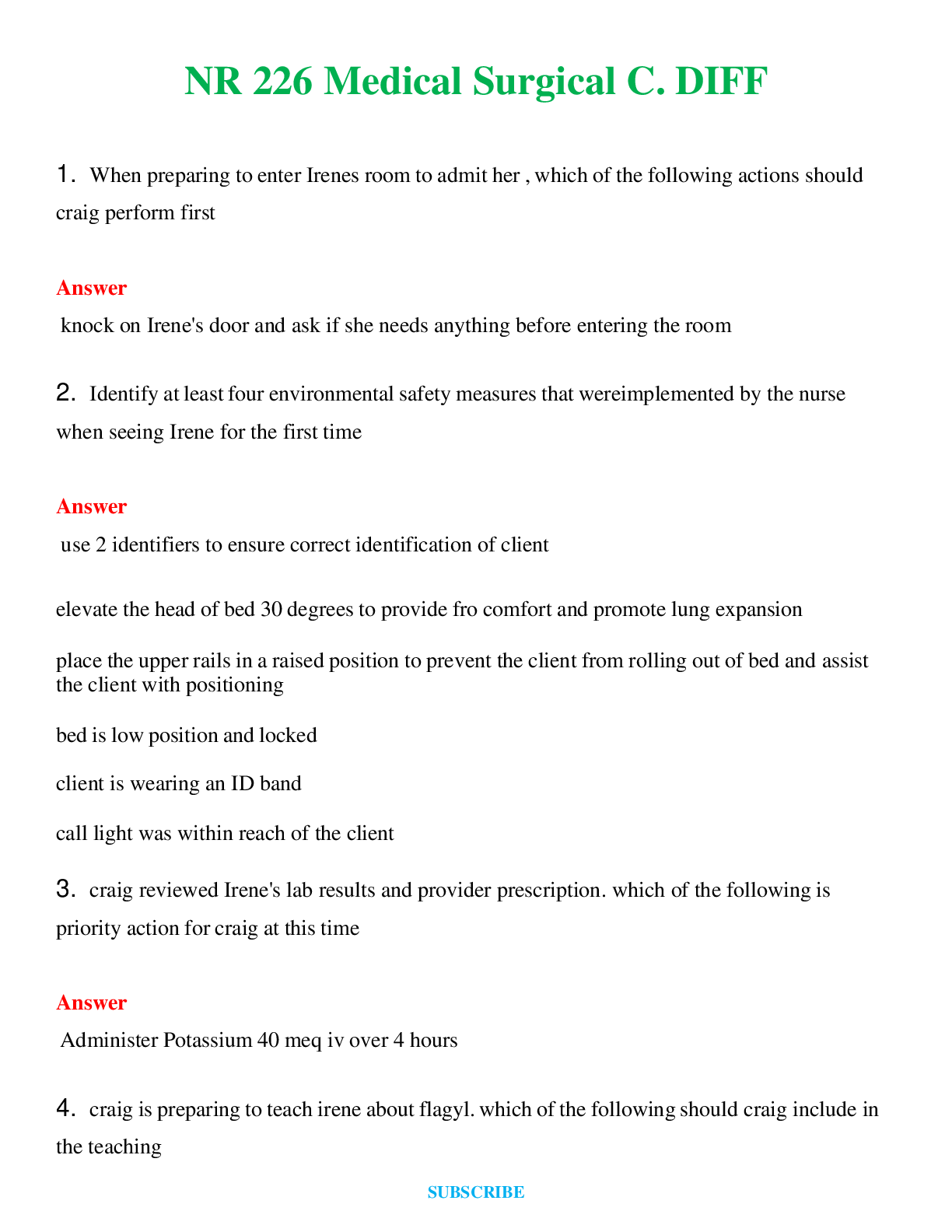
NR 226 Medical Surgical C. DIFF Questions and Answers (Verif...
$15.5
62 Pages
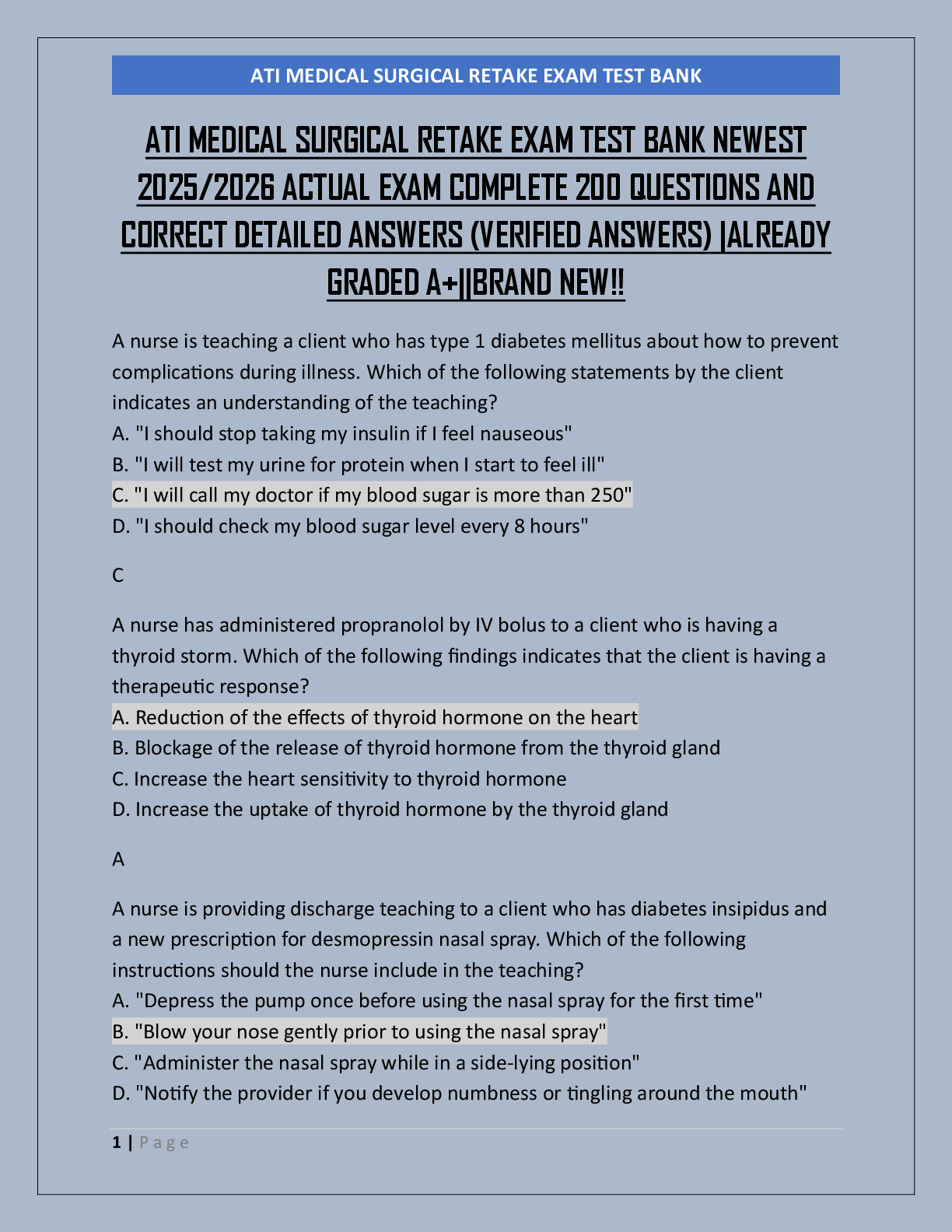
ATI MEDICAL SURGICAL RETAKE EXAM TEST BANK NEWEST 2025/2026 A...

$13.5
22 Pages
RN ATI Medical Surgical Test Bank_Medical Surgical 3 Combinati...
$18
22 Pages
RN ATI Medical Surgical Test Bank_Medical Surgical 3 Combinati...
$8.5
18 Pages
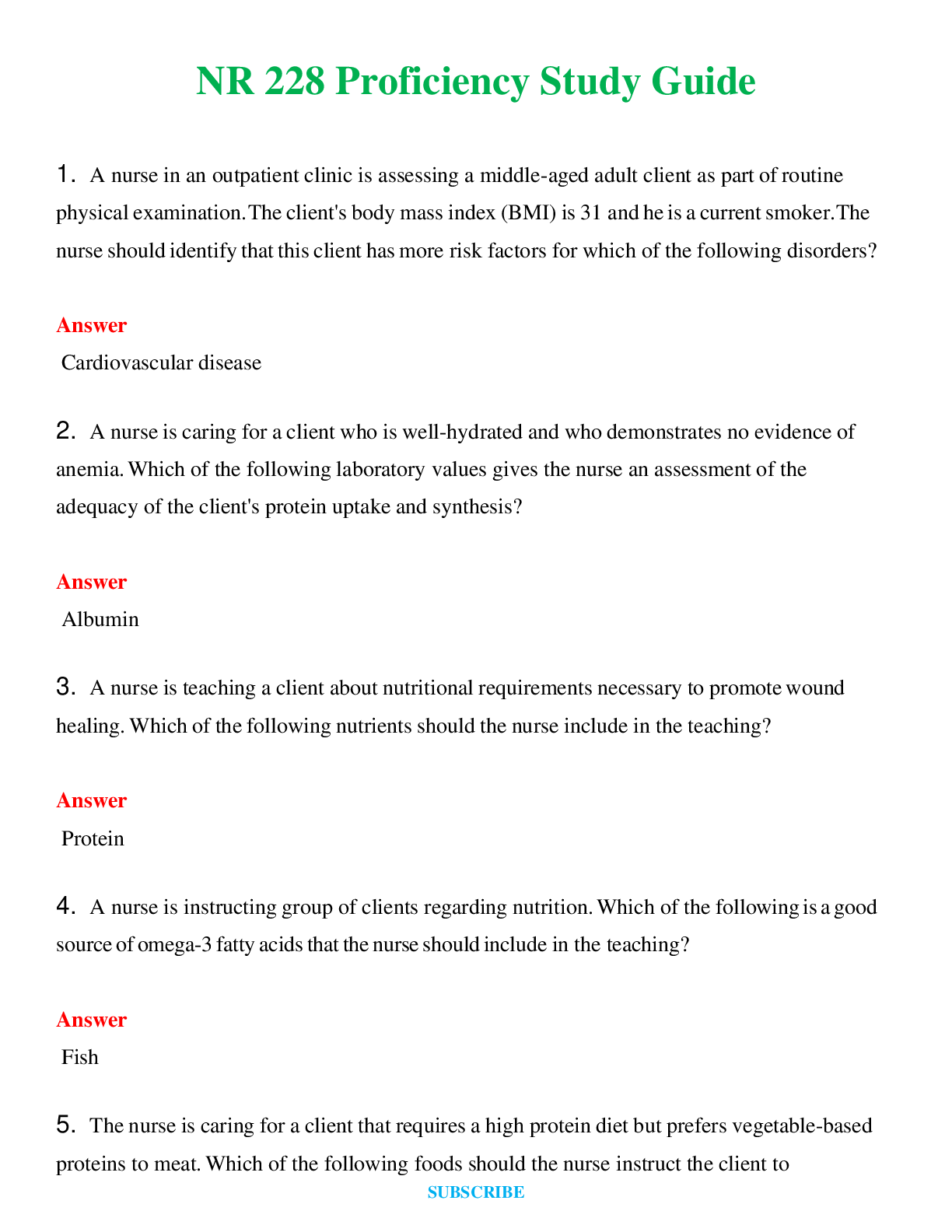
NR 228 Proficiency Study Guide Questions and Answers (Verifi...
.png)
$20
34 Pages
ATI MEDICAL SURGICAL STUDY GUIDE WITH IMPORTANTS TERMS TO REME...


$14
28 Pages
ATI MEDICAL SURGICAL MATERNAL AND NEW BORN TIPS RASMUSSEN CO...


$10
77 Pages
ATI MEDICAL SURGICAL PROCTORED EXAM 2019-STUDY GUIDE 504 CORRE...
More related documents below




.png)
.png)


