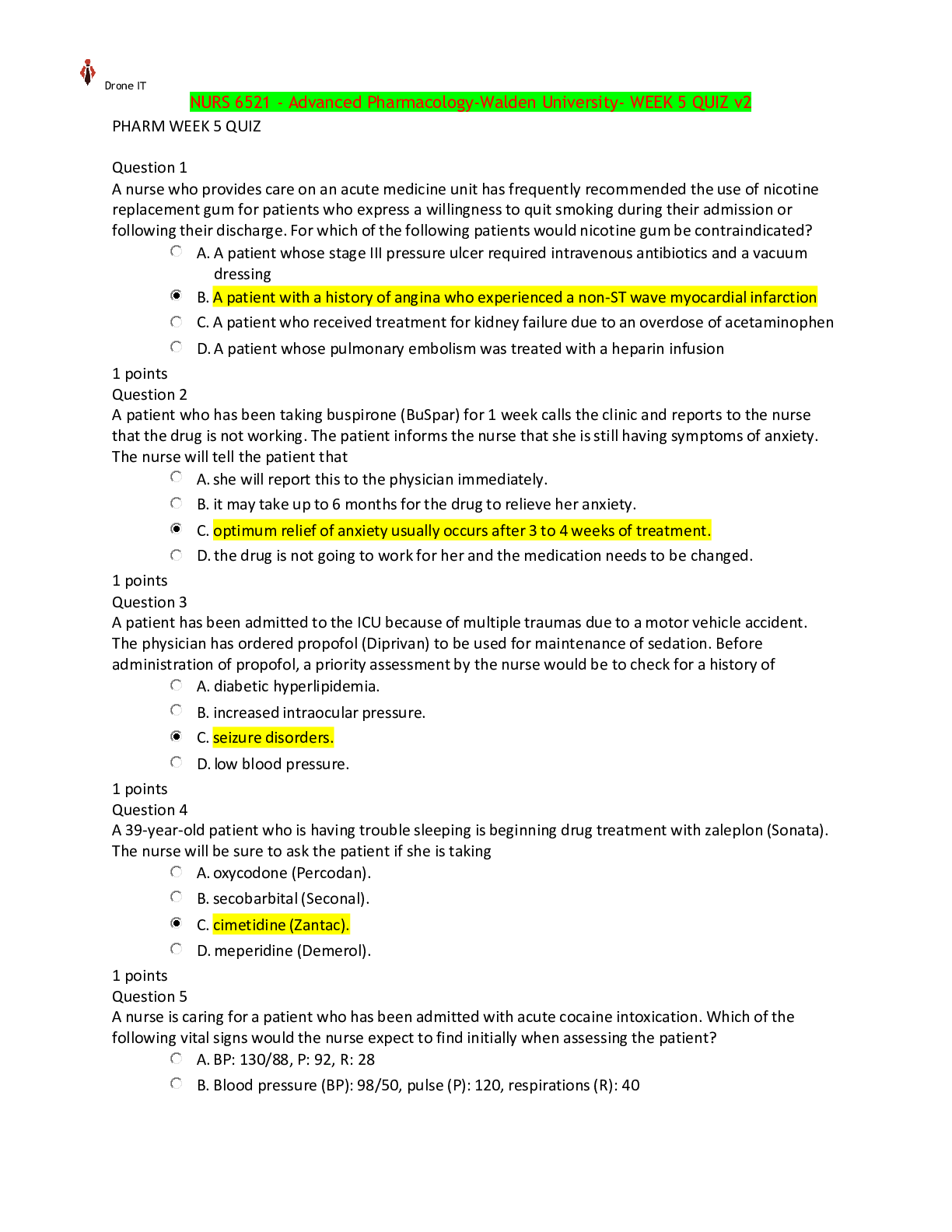
NR 509 Advanced Physical Assessment-Week 1-7 Quizes
Document Content and Description Below
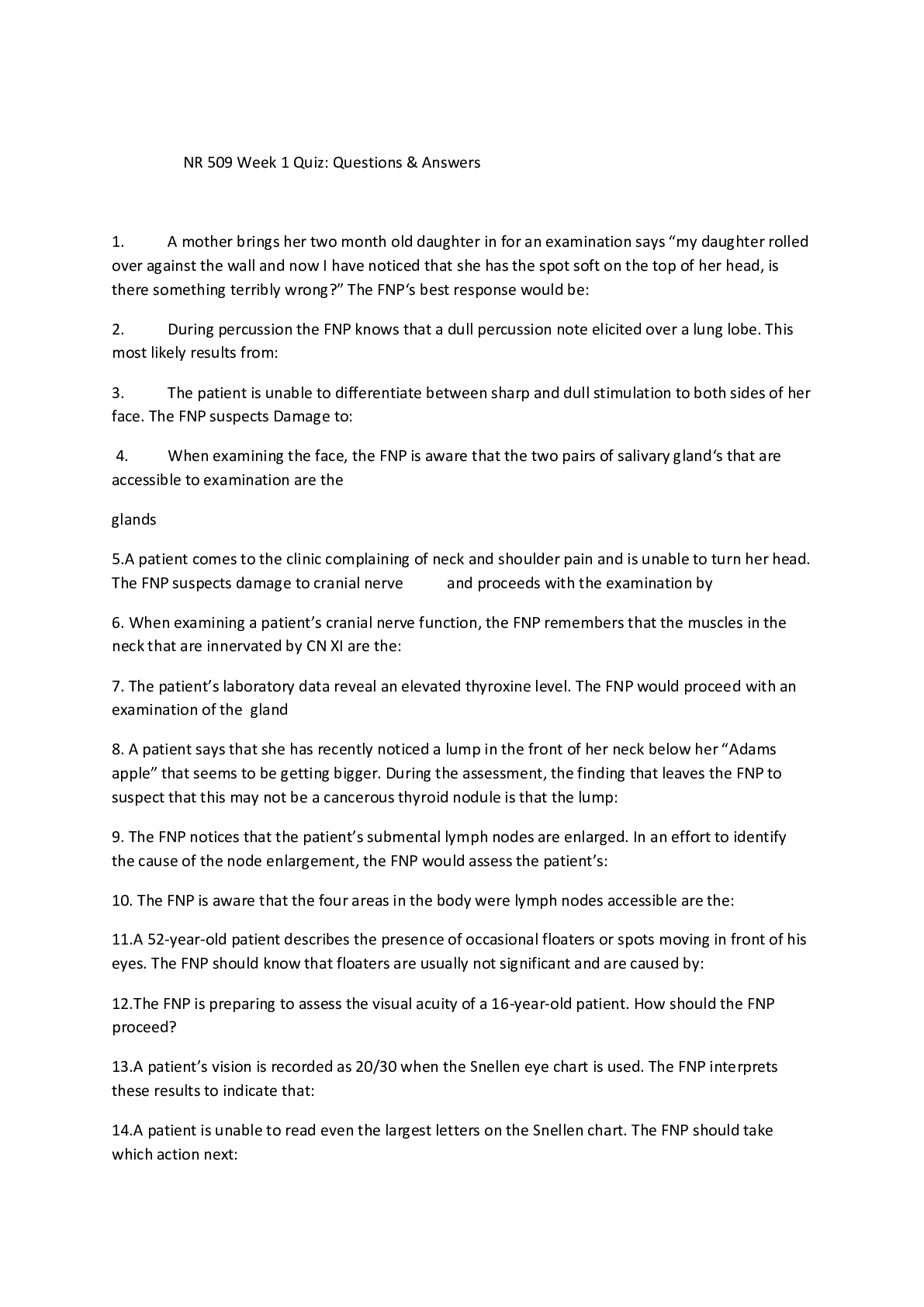
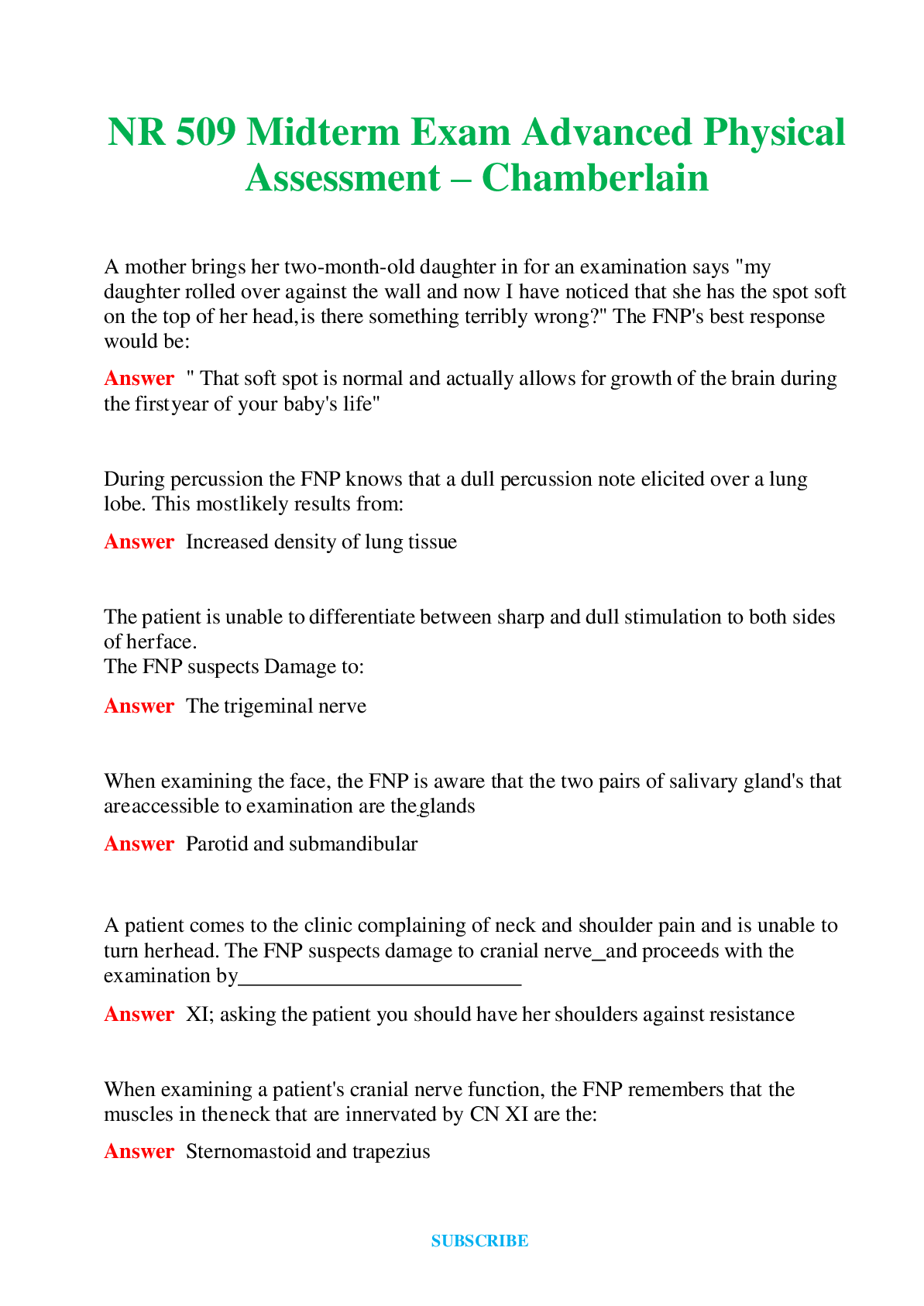
A mother brings her two month old daughter in for an examination says “my daughter rolled
over against the wall and now I have noticed that she has the spot soft on the top of her head, is
there something terribly wron
...
[Show More]
Last updated: 3 years ago
Preview 1 out of 19 pages
Instant download
Buy this Document to get the Full Access Instantly
Provided by Students Who Aced it
We Verify Document Content to Gurantee Accuracy
Reviews( 0 )
Document information
Connected school, study & course
About the document
Uploaded On
Jun 28, 2021
Number of pages
19
Written in
All

Additional information
This document has been written for:
Uploaded
Jun 28, 2021
Downloads
0
Views
68
Topic Tags
Recommended For You
Get more on EXAM »
$12.5
12 Pages
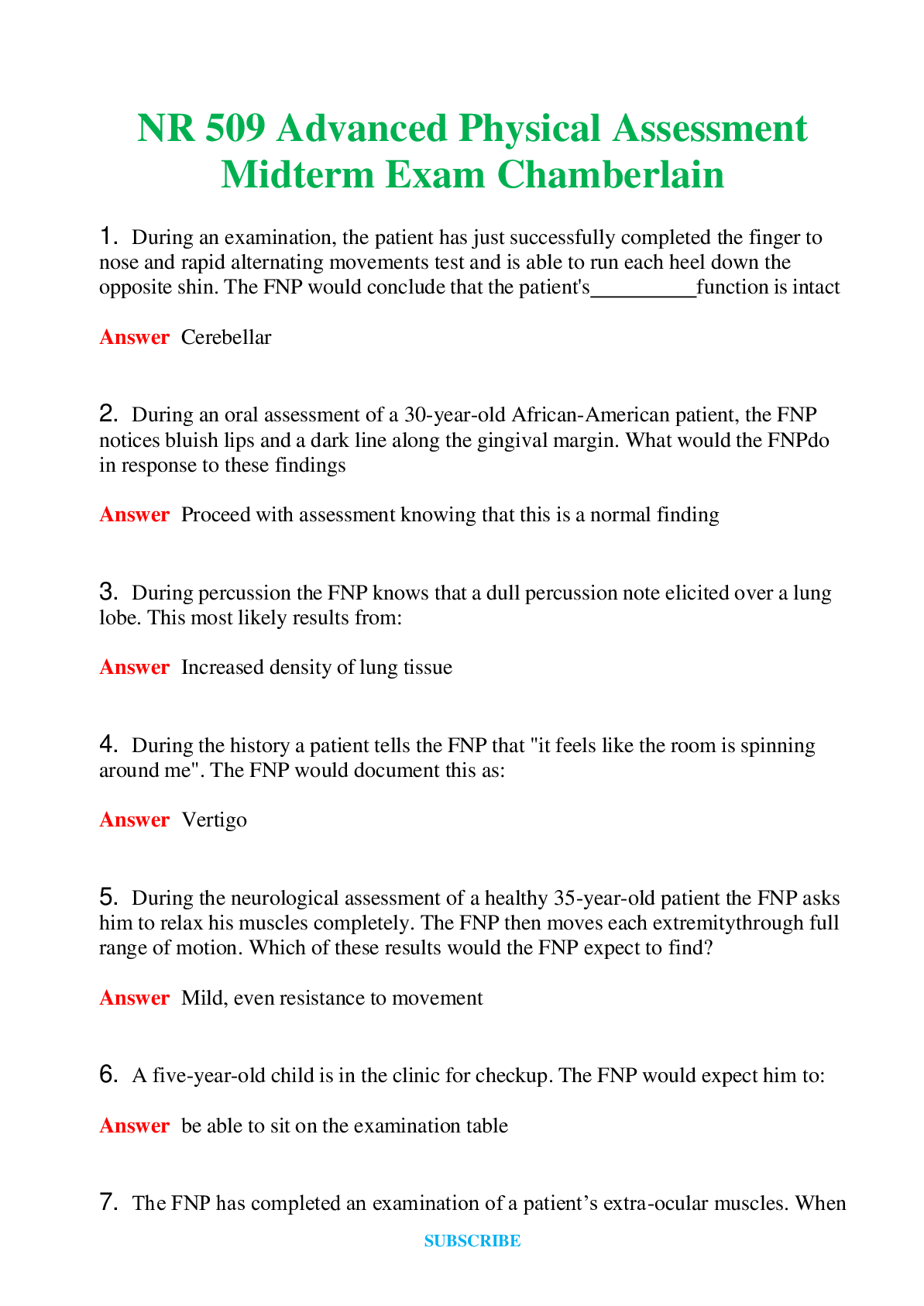
NR 509 Advanced Physical Assessment Midterm Exam Chamberlai...
$12.5
12 Pages
NR 509 Midterm Exam Advanced Physical Assessment - Chamberl...
$12.5
42 Pages
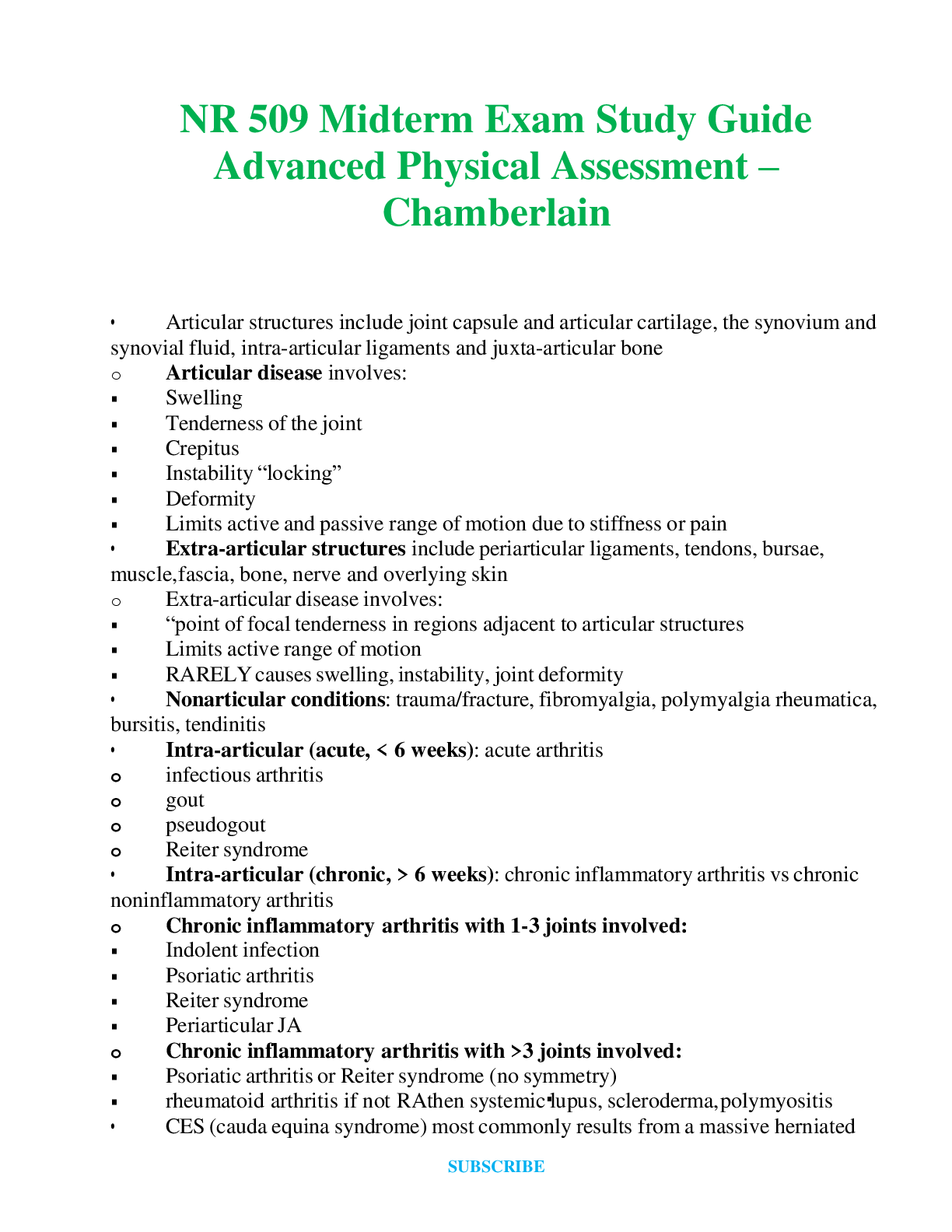
NR 509 Midterm Exam Study Guide Advanced Physical Assessmen...
$28
6 Pages
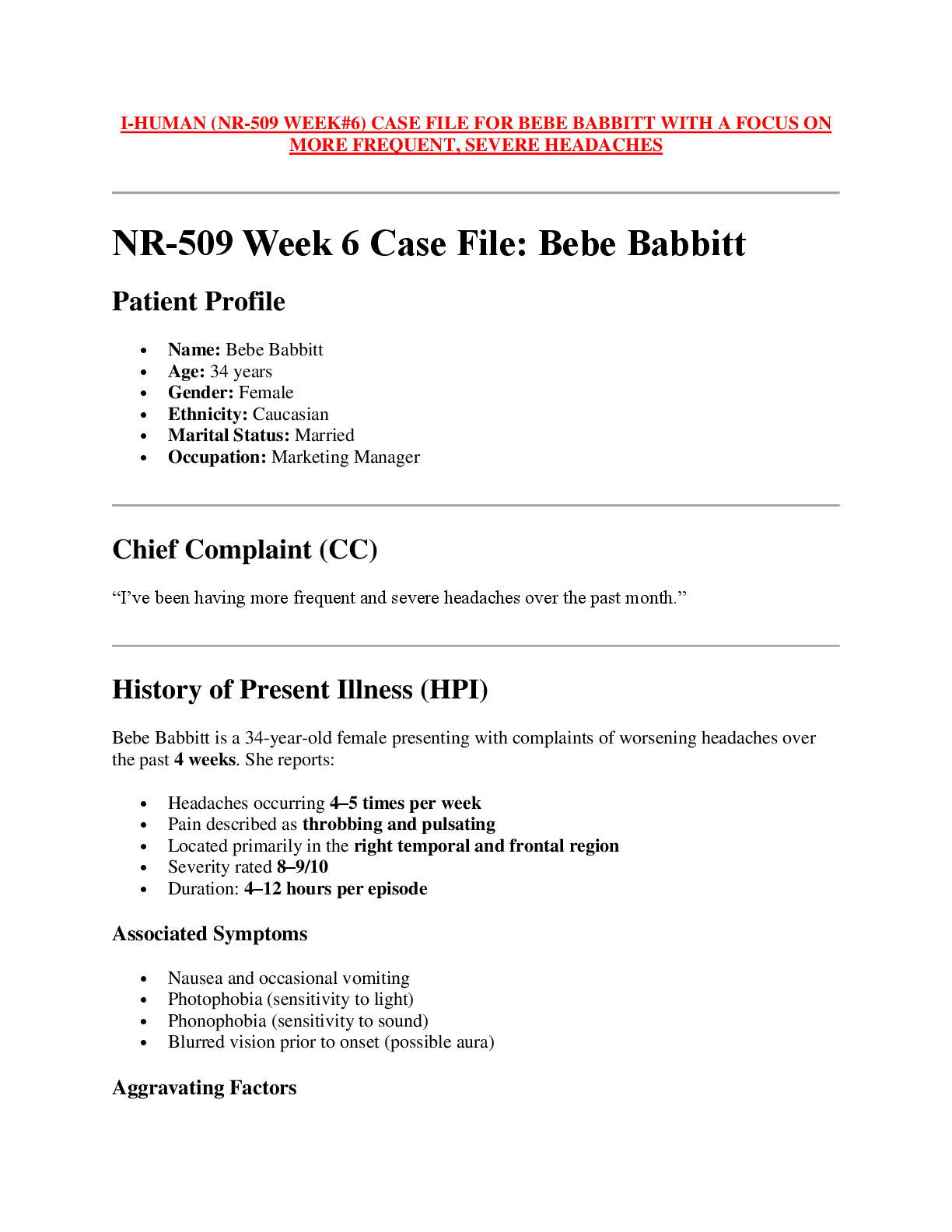
I-HUMAN (NR-509 WEEK#6) CASE FILE FOR BEBE BABBITT WITH A FOCU...
$17
333 Pages
Complete Test Bank For Lehnes Pharmacotherapeutics for Advance...
$24
993 Pages
Test Bank for Brunner & Suddarth's Textbook of Medical-Surgica...
More related documents below