Mathematics > Edexcel > Pearson Edexcel Level 3 GCE Mathematics Advanced Subsidiary Paper 22: Mechanics October 2020 8MA0/22 (All)
Pearson Edexcel Level 3 GCE Mathematics Advanced Subsidiary Paper 22: Mechanics October 2020 8MA0/22 QP and Mark Scheme
Document Content and Description Below
Last updated: 3 years ago
Preview 1 out of 8 pages
Instant download

Buy this Document to get the Full Access Instantly
Provided by Students Who Aced it
We Verify Document Content to Gurantee Accuracy
Reviews( 0 )
Document information
Connected school, study & course
About the document
Uploaded On
Jun 30, 2021
Number of pages
8
Written in
All

Additional information
This document has been written for:
Uploaded
Jun 30, 2021
Downloads
0
Views
675
Topic Tags
Recommended For You
Get more on Edexcel »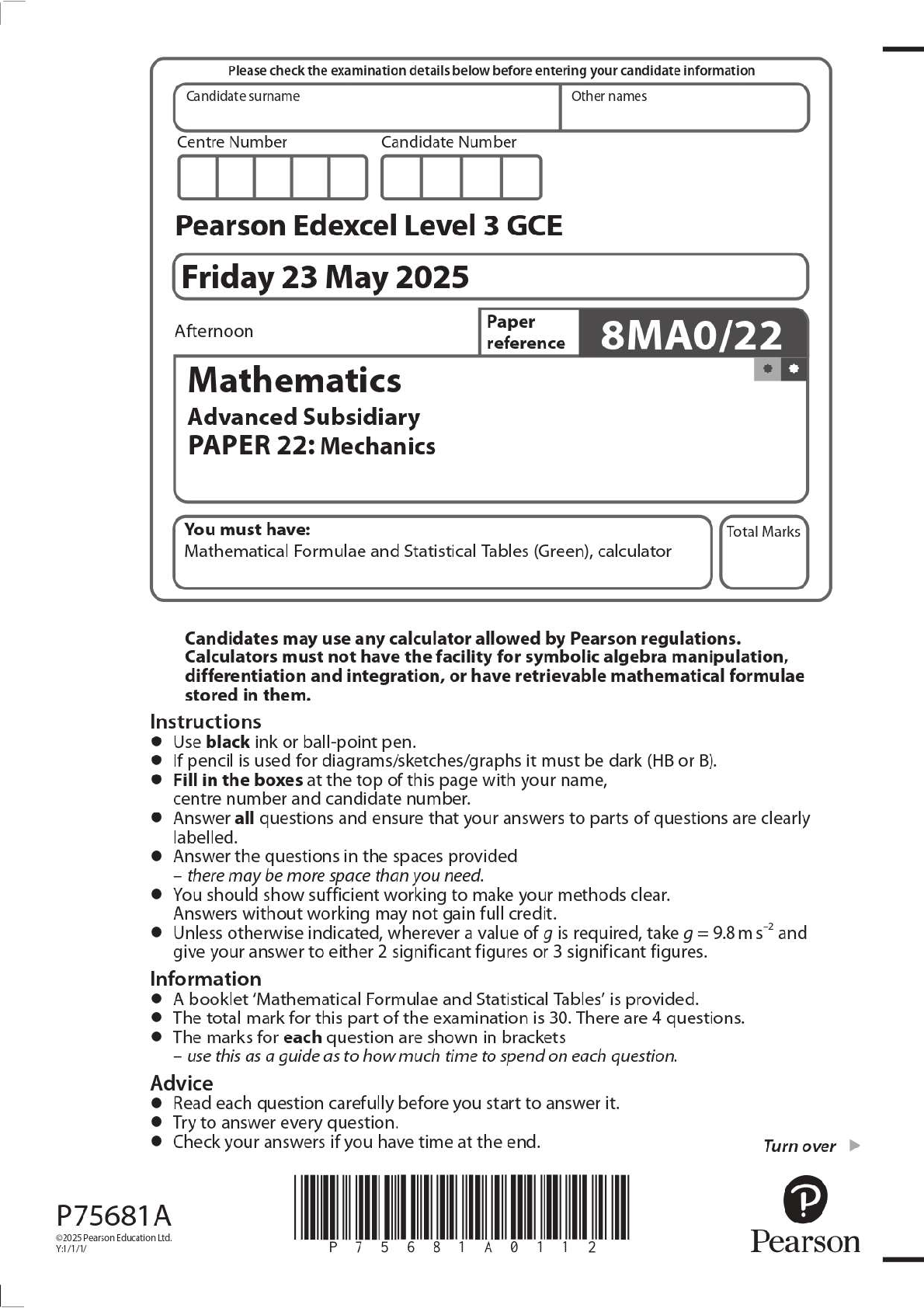
2025 Pearson Edexcel Level 3 GCE 8MA0/22 Mathematics Advanced...
.png)
Pearson Edexcel GCE Question Booklet + Mark Scheme (Results) N...

Edexcel AS Level In GCE mathematics (8MA0/22)Paper 22:mechanic...
Pearson Edexcel GCE Advanced Subsidiary Level Further Mathemat...

Latest Edexcel AS Level Mathematics May-June 2024 Question Pap...
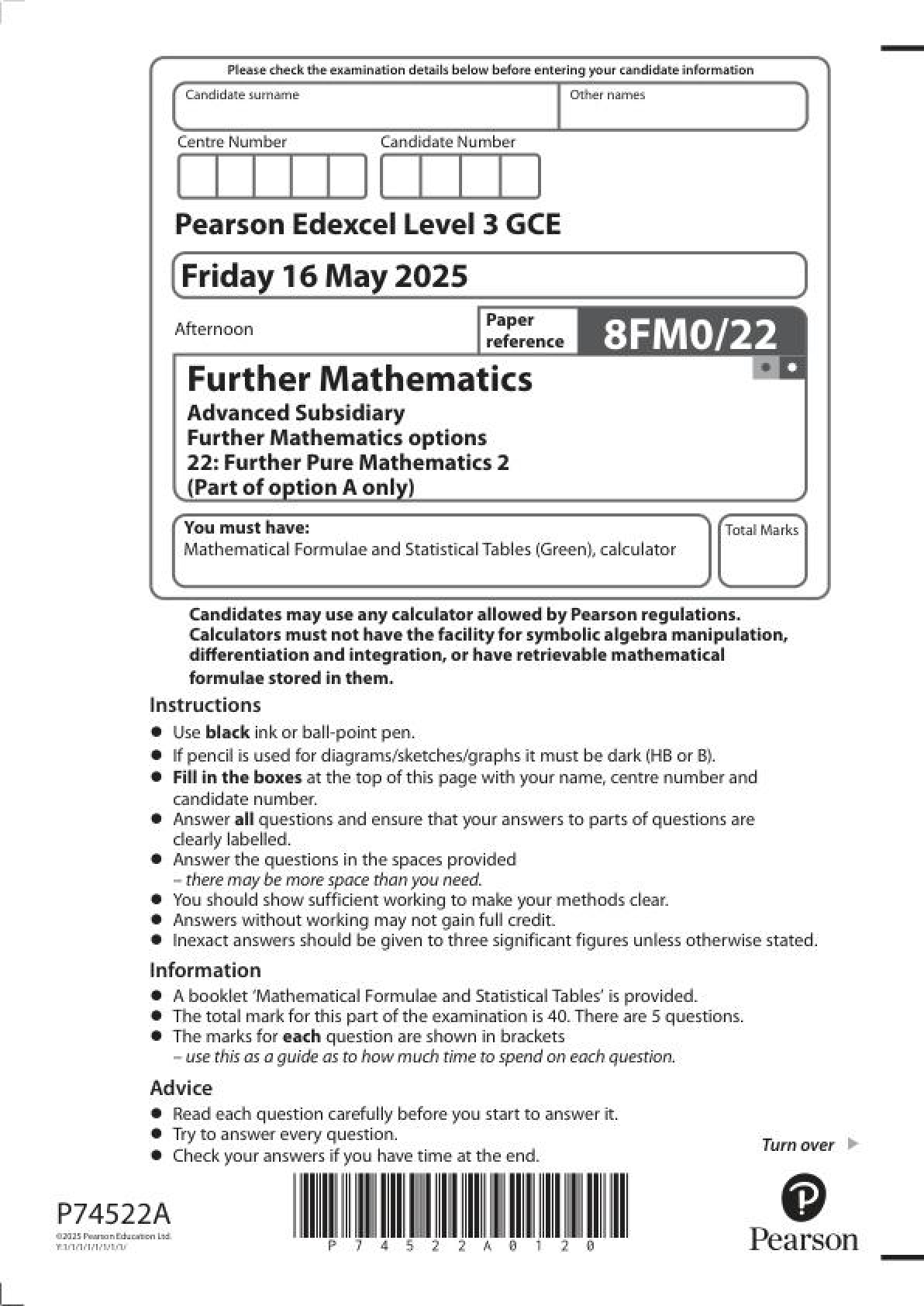
Pearson Edexcel GCE Advanced Subsidiary Level Further Mathemat...

Latest Edexcel AS Level Mathematics May-June 2024 Mark Scheme...

Mark Scheme October 2020 Pearson Edexcel GCE In Biology Spec A...


Pearson Edexcel GCE In AS (8BI0_02) Paper 2: Core Physiology a...

Pearson Edexcel GCE In Biology B (9BI0/01) Paper 1: Advanced B...

Pearson Edexcel Advanced Level In Biology A Salters Nuffield (...

Pearson Edexcel GCE In Biology B (9BI0/02) Paper 2: Advanced P...
Pearson Edexcel GCE In Biology B (9BI0/01) Paper 1: Advanced B...
Pearson Edexcel GCE In Biology B (9BI0/02) Paper 2: Advanced P...

Mark Scheme (Results) October 2020 Pearson Edexcel GCE In Biol...

Pearson Edexcel GCE In AS Biology (8BI0_01) Paper 1: Core Cell...

Pearson Edexcel GCE In Biology A Salters Nuffield (9BN0) Paper...

Pearson Edexcel GCE In Biology A Salters Nuffiled (9BN0) Paper...


.png)


 Paper 21 Statistics.png)

 (2).png)

