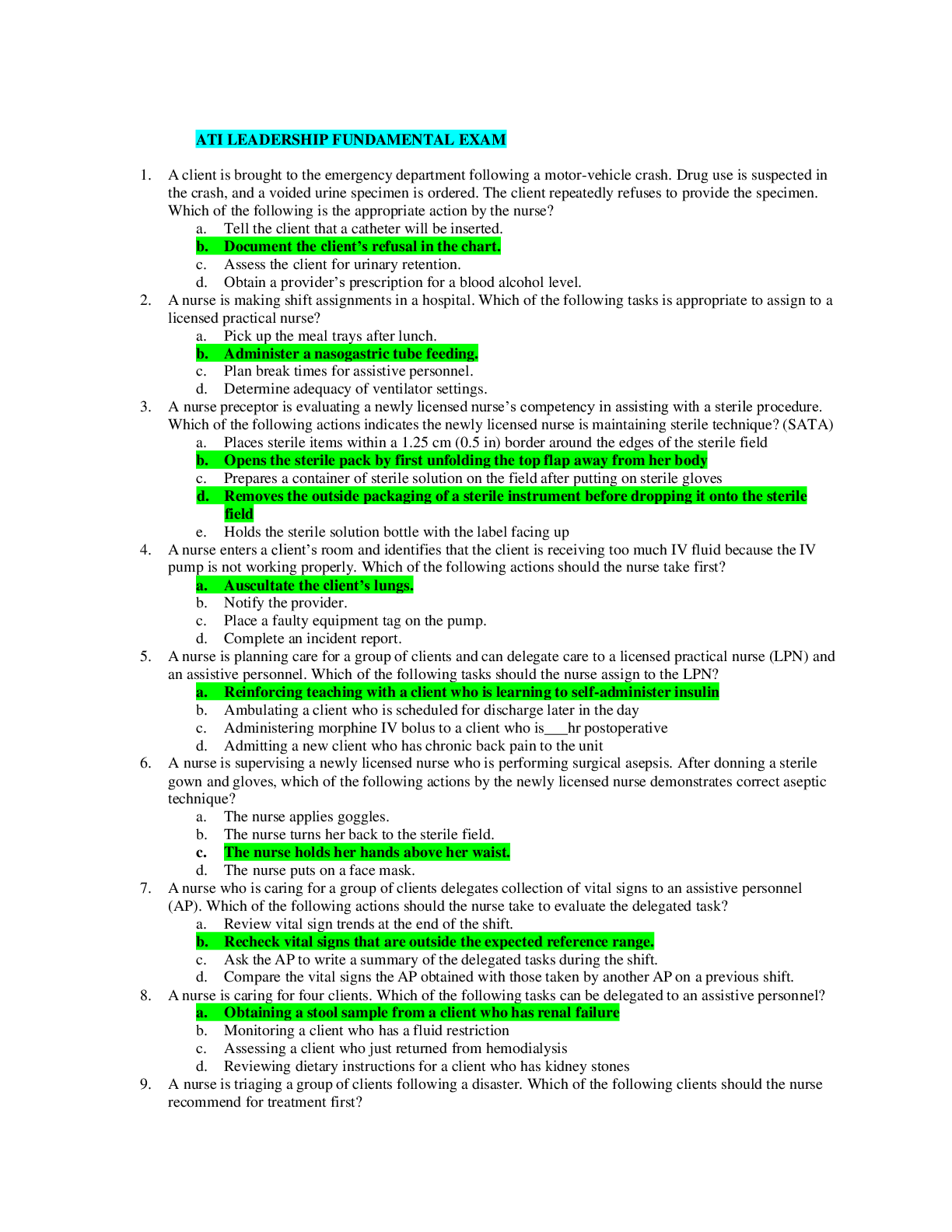
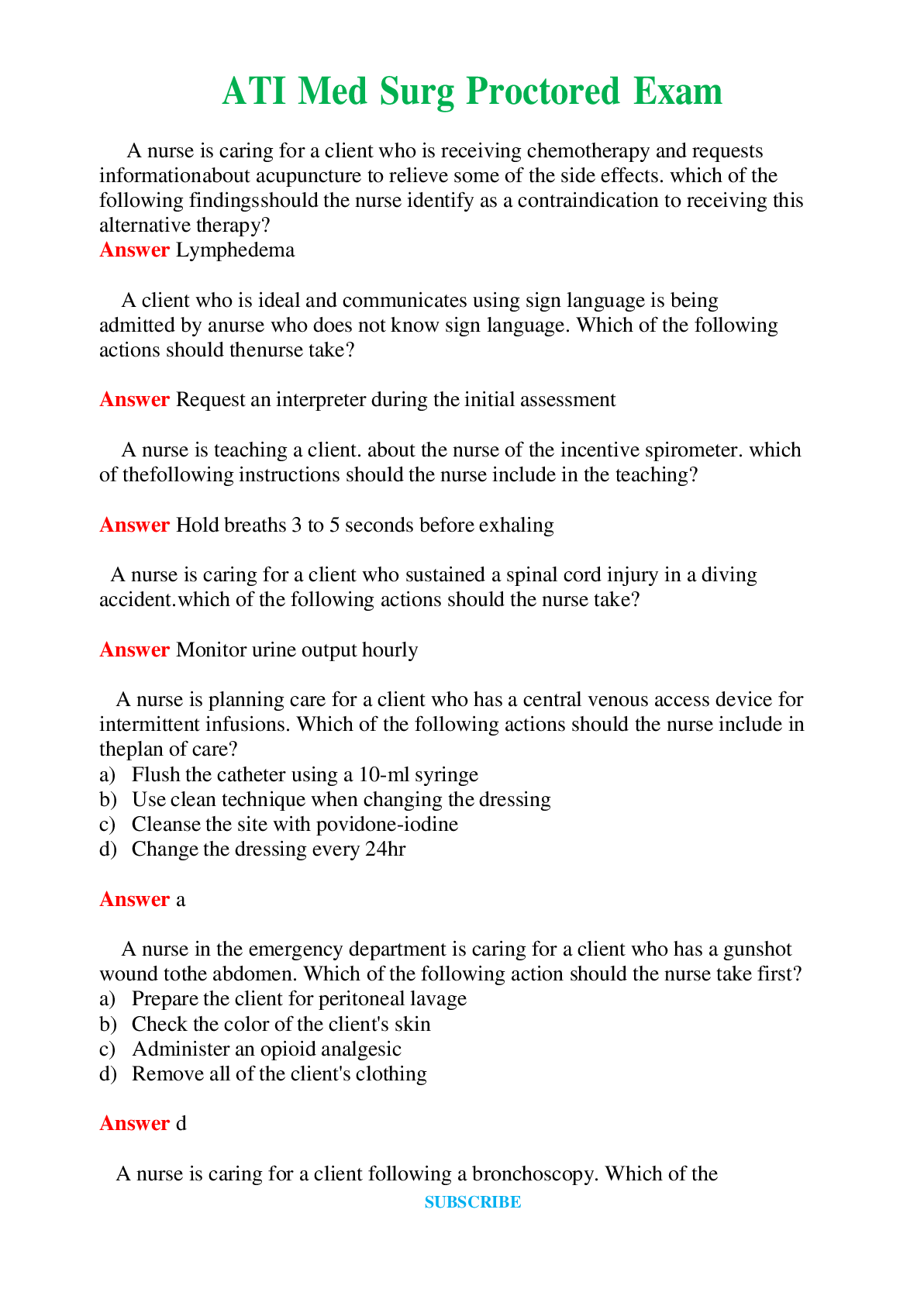
A nurse is reinforcing discharge teaching about wound care with a family member
of a client who is postoperative. Which of the following should the nurse include in
the teaching?
a) Administer an analgesic following w
...
A nurse is reinforcing discharge teaching about wound care with a family member
of a client who is postoperative. Which of the following should the nurse include in
the teaching?
a) Administer an analgesic following wound care.(The nurse should remind the
family member to administer an analgesic prior to wound care to prevent
discomfort.)
b) Irrigate the wound with povidone iodine.(The nurse should remind the family
member to irrigate the wound with 0.9% sodium chloride.)
c) Cleanse the wound with a cotton-tipped applicator.(The nurse should remind the
family member to avoid using a cotton-tipped applicator to cleanse the wound
because the fibers can become embedded in the wound, cause infection, and delay
wound healing.)
d) Report purulent drainage to the provider.(The nurse should remind the family
member to report signs of infection, including purulent drainage.)
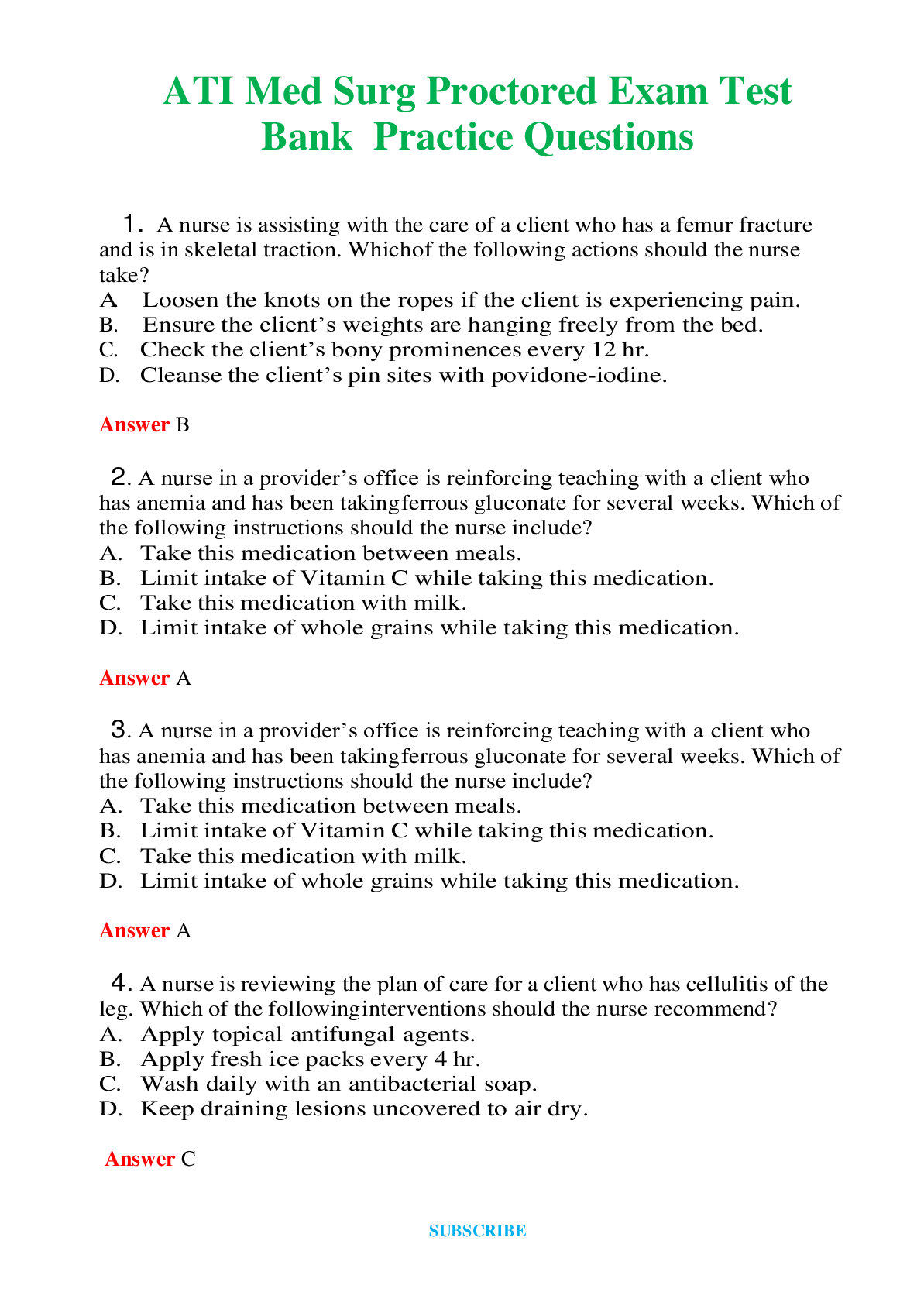
2. A nurse is caring for a client who has bacterial meningitis. Upon monitoring the
client, which of the following findings should the nurse expect?
a) Flaccid neck(The nurse should recognize that nuchal rigidity, rather than a flaccid
neck, is a manifestation of meningitis.)
b) Stooped posture with shuffling gait(The nurse should recognize that a stooped
posture with shuffling gait is a manifestation of Parkinson's disease, not a
manifestation of meningitis.)
c) Red macular rash(The nurse should expect to find a red macular rash, sometimes
called a petechial rash, which is a manifestation of meningococcal meningitis.)
d) Masklike facial expression(The nurse should recognize that a masklike expression
is a manifestation of Parkinson's disease, not a manifestation of meningitis.)
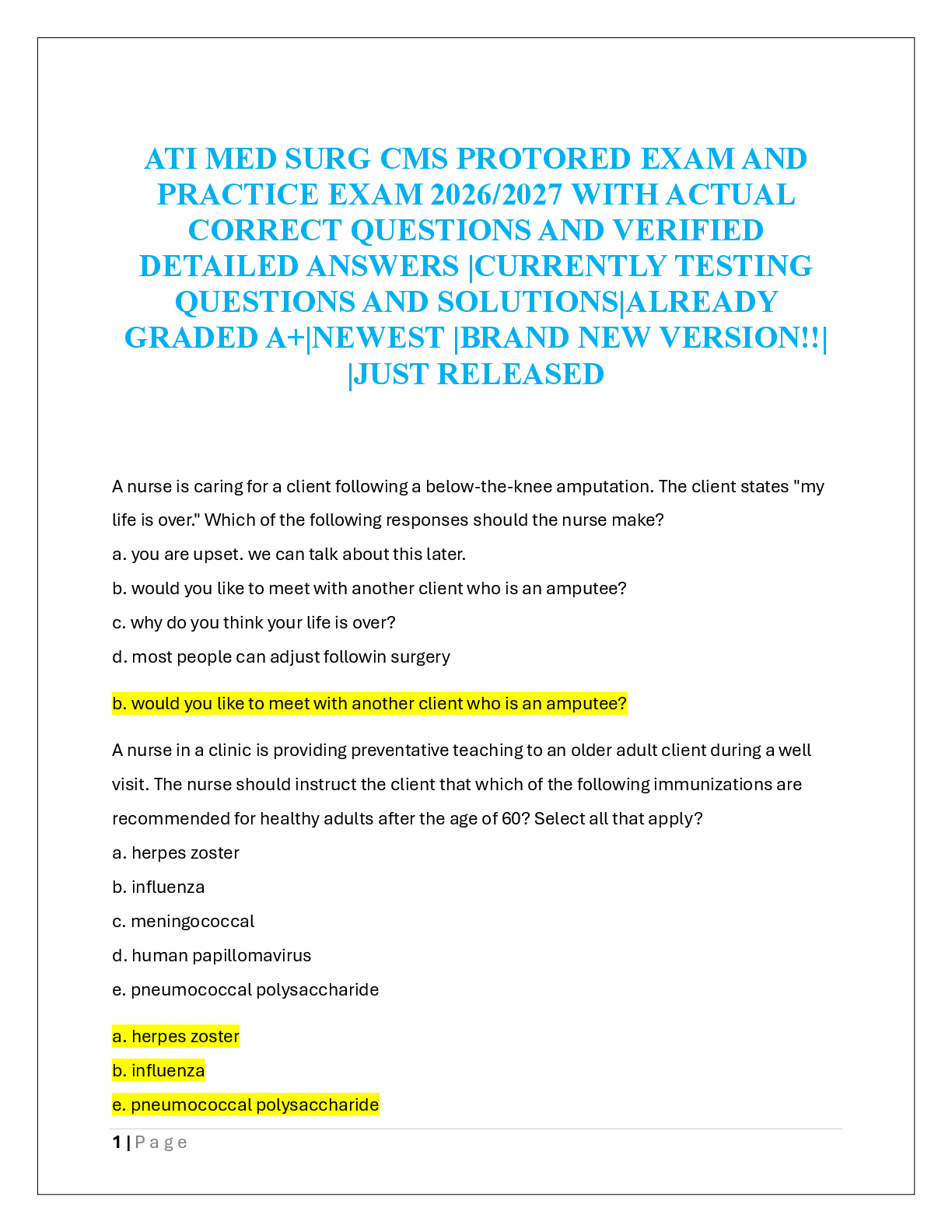
3. A nurse is contributing to the plan of care for an older adult client who is at risk for
osteoporosis. Which of the following interventions should the nurse include to
prevent bone loss?
a) Increase fluid intake.(Fluid intake is beneficial for general health and wellness, and it helps to treat some disorders. Caffeine and alcohol intake can increase the
client's risk of developing osteoporosis. However, fluid intake does not prevent
bone loss.)
b) Encourage range-of-motion exercises.(Range-of-motion exercises are beneficial
for general health and wellness, and they help to maintain flexibility and prevent
contractures. However, range-of-motion exercises do not prevent bone loss.)
c) Massage bony prominences.(Massaging bony prominences should be avoided
because it can traumatize deep tissues.)
d) Encourage weight-bearing exercises.(Weight-bearing exercises, such as walking, can maintain bone mass by reducing bone demineralization, thus helping to
prevent osteoporosis.)
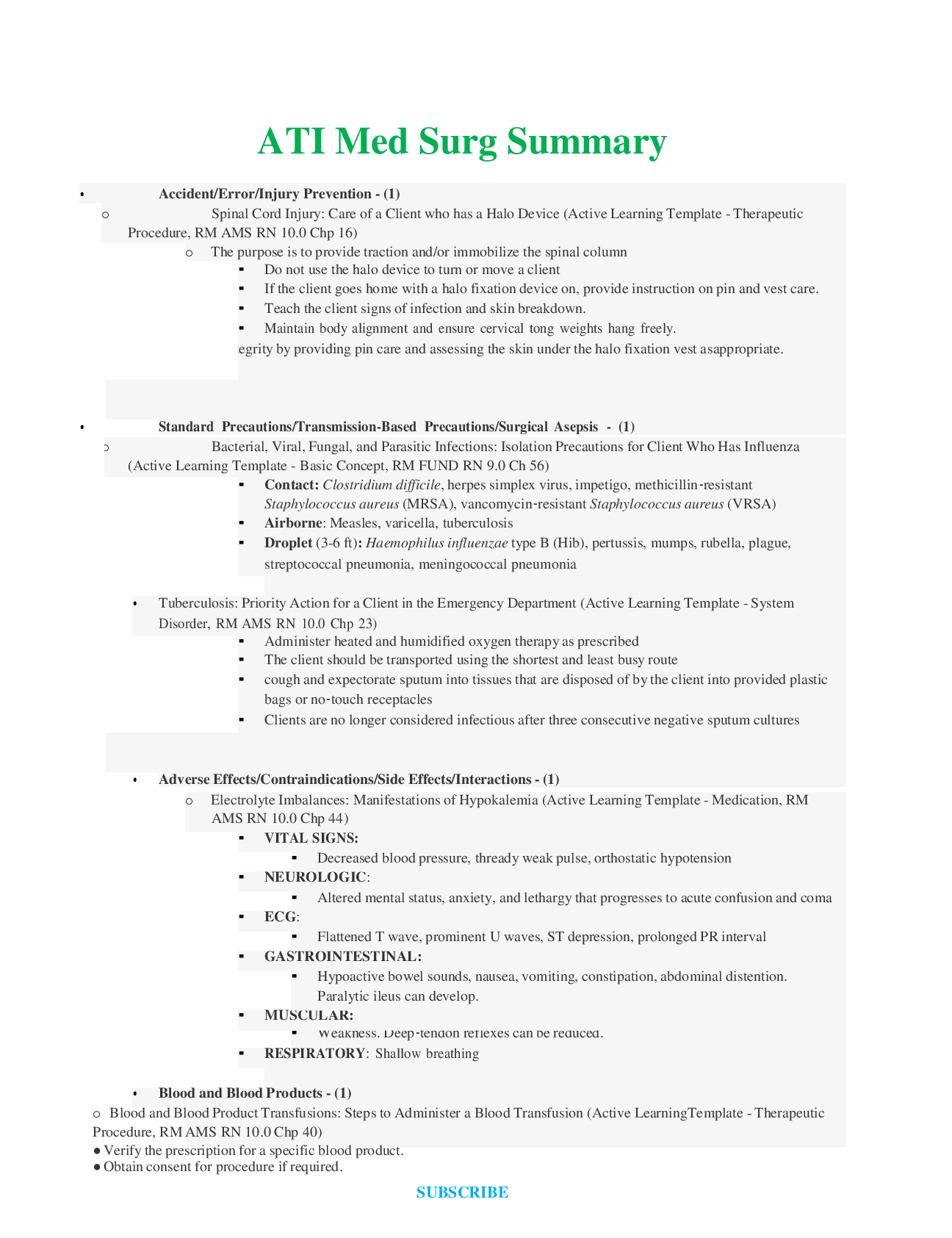
4. A nurse is collecting data from a client and notices several skin lesion. Which of the
following findings should the nurse report as possible melanoma?
a) Scaly patches(The nurse should report scaly patches as possible basal or
squamous cell carcinoma. b) Silvery white plaques(The nurse should report silvery white plaques as possible
psoriasis.)
c) Irregular borders(The nurse should report irregular borders of a skin lesion to the
provider because it can indicate malignant melanoma.)
d) Raised edges(The nurse should report raised edges of a skin lesion as possible
basal cell carcinoma.)
5. A nurse is reinforcing discharge teaching to prevent dumping syndrome for a client
following a partial gastrectomy for ulcers. Which of the following information
should the nurse include in the teaching?
a) Avoid liquids at mealtimes.(The nurse should remind the client to avoid drinking
liquids at mealtimes to prevent the food from emptying into the small bowel too
quickly.)
b) Exclude eating starchy vegetables.(The nurse should remind the client to include
starchy vegetables in the meal plan to slow gastric emptying.)
c) Avoid eating high-protein meals.(The nurse should remind the client to eat high- protein meals to help slow gastric emptying.)
d) Plan to increase intake of sweetened fruits.(The nurse should remind the client to
exclude sweetened fruits from the diet to help slow gastric emptying.)
6. A nurse is collecting data on a client who is scheduled for a cardiac catheterization. Which of the following laboratory levels should the nurse review prior to the
procedure?
a) Albumin(Albumin levels determine the amount of protein the liver produces in
the body and is an indication of hepatic function and nutritional status. However, it is not impacted by contrast media used for cardiac catheterization. Therefore, the nurse does not need to review this laboratory level prior to a cardiac
catheterization.)
b) Phosphorus(Phosphorus is an electrolyte that combines with calcium to maintain
bone health and is involved as an energy source in metabolism. However, it is not
impacted by contrast media used for cardiac catheterization. Therefore, the nurse
does not need to review this laboratory level prior to a cardiac catheterization.)
c) TSH(TSH levels determine thyroid function. However, it is not impacted by
contrast media used for cardiac catheterization. Therefore, the nurse does not need
to review this laboratory level prior to a cardiac catheterization.)
d) BUN(BUN levels indicate kidney function. Contrast media used during cardiac
catheterization can cause renal failure. The nurse should review this laboratory
level to determine if the client can tolerate the IV contrast dye during the
procedure.)
7. A nurse is reinforcing glycosylated hemoglobin (HbA1c) testing with a client who
has diabetes mellitus. Which of the following statements indicates that the client
understands the teaching?
a) "The HbA1c test should be performed 2 hr after I eat a meal that is high in
carbohydrates."(The nurse should remind the client that carbohydrate
consumption is not required for HbA1c testing.)
b) "The HbA1c test can help detect the presence of ketones in my body."(The nurse
should remind the client that urine testing can detect ketone bodies.)
c) "I will have my HbA1c checked twice per year."(An HbA1c test provides the
client's average glucose level for the preceding 3 months. The nurse should
instruct the client to have her HbA1c tested twice yearly to manage her glucose.)
d) "I will plan to fast before I have my HbA1c tested."(The nurse should remind the
client that fasting is not required for HbA1C testing.)
[Show More]
.png)



![Preview of [eBook] [PDF] Clinical Nursing Calculations 3rd Edition By Susan Sienkiewicz, Sandra Meg](https://browseimages.nyc3.digitaloceanspaces.com/paper-images/2025/Jul/04/4jF14r9I2025-07-04-05-586867ec3011731.png)