NURSING > QUESTION PAPER (QP) > NR 293 Chapter 26_ Coagulation Modifier Drug (All)
NR 293 Chapter 26_ Coagulation Modifier Drug
Document Content and Description Below
Last updated: 3 years ago
Preview 1 out of 6 pages
Instant download

Buy this Document to get the Full Access Instantly
Provided by Students Who Aced it
We Verify Document Content to Gurantee Accuracy
Also available in bundle (1)
Click Below to Access Bundle(s)

NR 293 Study guide,exam guide, case studies, questions & answers and Final exam
1. Study guide 2. Questions and Answers 3. Case studies 3. Exams guide 4. Discussions 5.Final exams
By Canzalo 5 years ago
$106.5
13
Reviews( 0 )
Document information
Connected school, study & course
About the document
Uploaded On
Jul 05, 2021
Number of pages
6
Written in
All

Additional information
This document has been written for:
Uploaded
Jul 05, 2021
Downloads
0
Views
206
Document Keyword Tags
Recommended For You
Get more on QUESTION PAPER (QP) »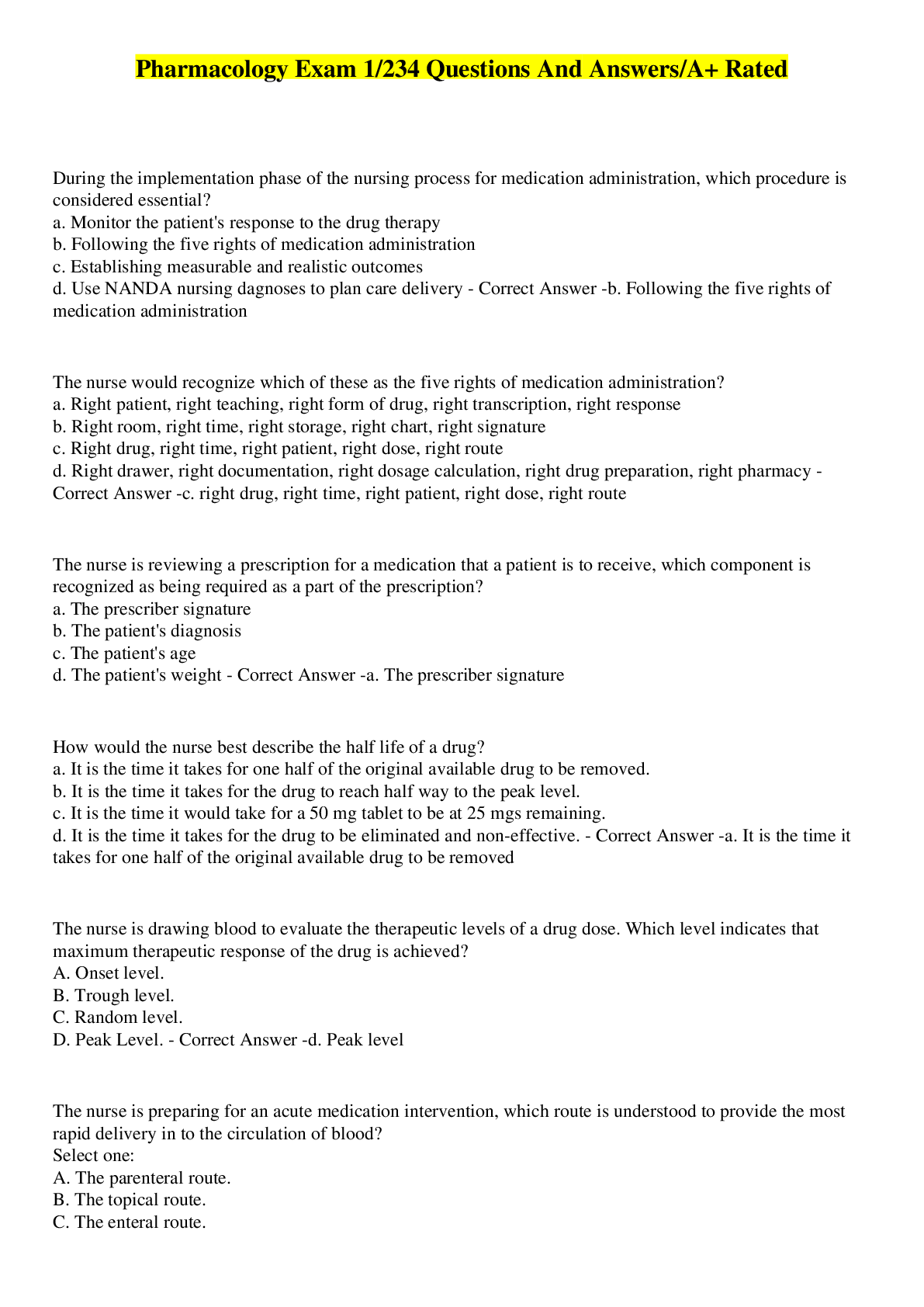
NR293 / NR 293 Pharmacology for Nursing Practice Exam 1. Chamb...

NR293 / NR 293 Pharmacology for Nursing Practice FINAL EXAM La...

NR293 / NR 293: Pharmacology for Nursing Practice Exam 1 (Fall...
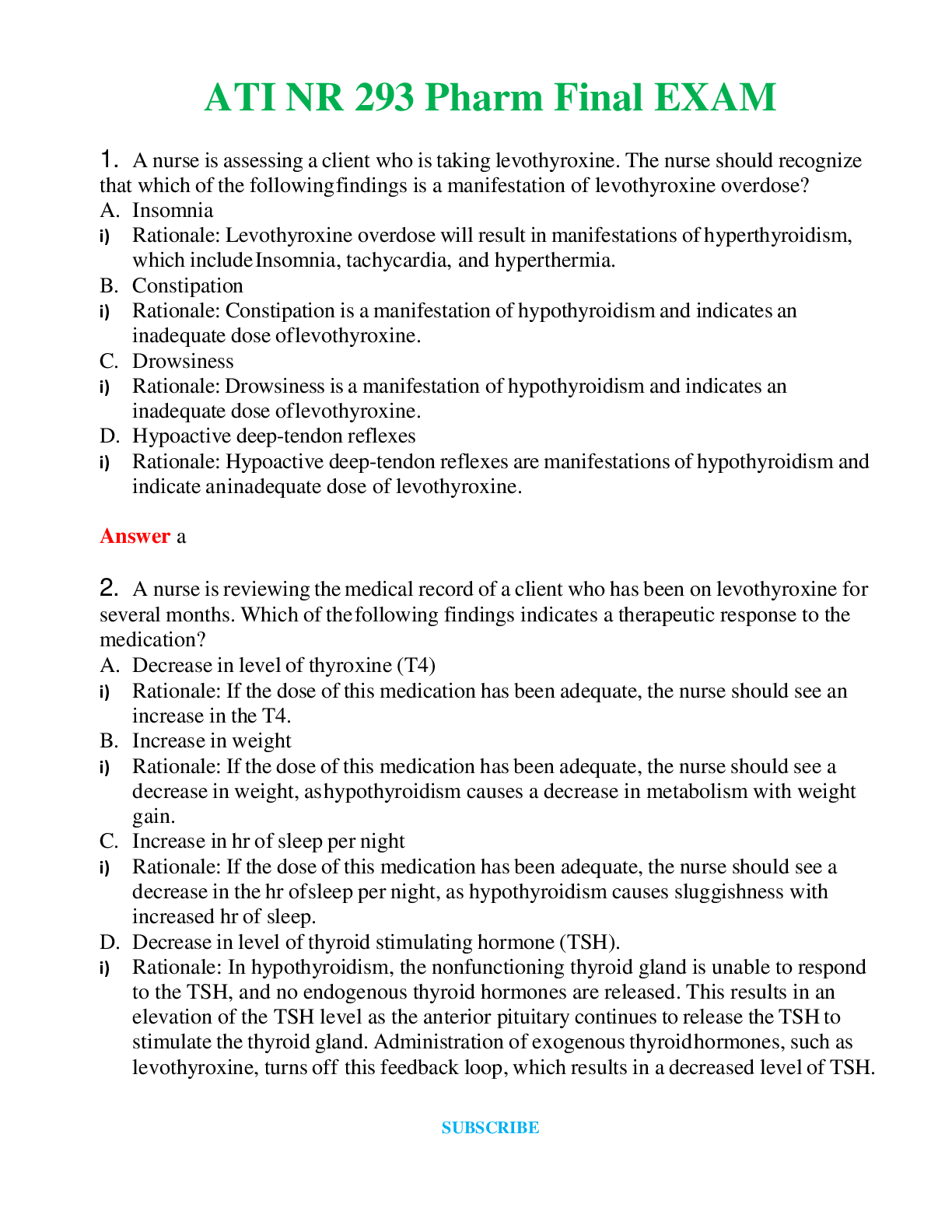
ATI NR 293 Pharm Final EXAM Questions and Answers (Verified A...
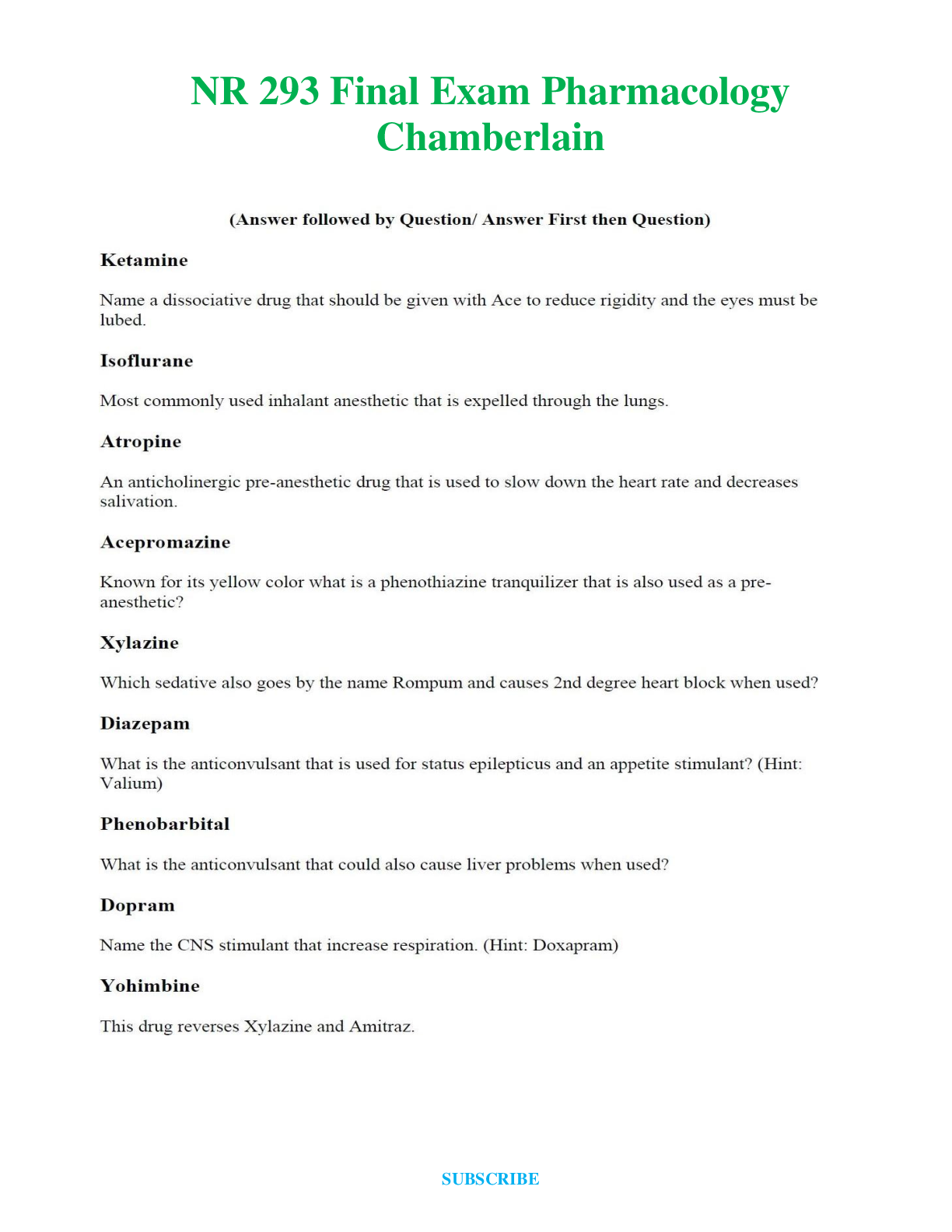
NR 293 Final Exam Pharmacology Chamberlain Questions and An...
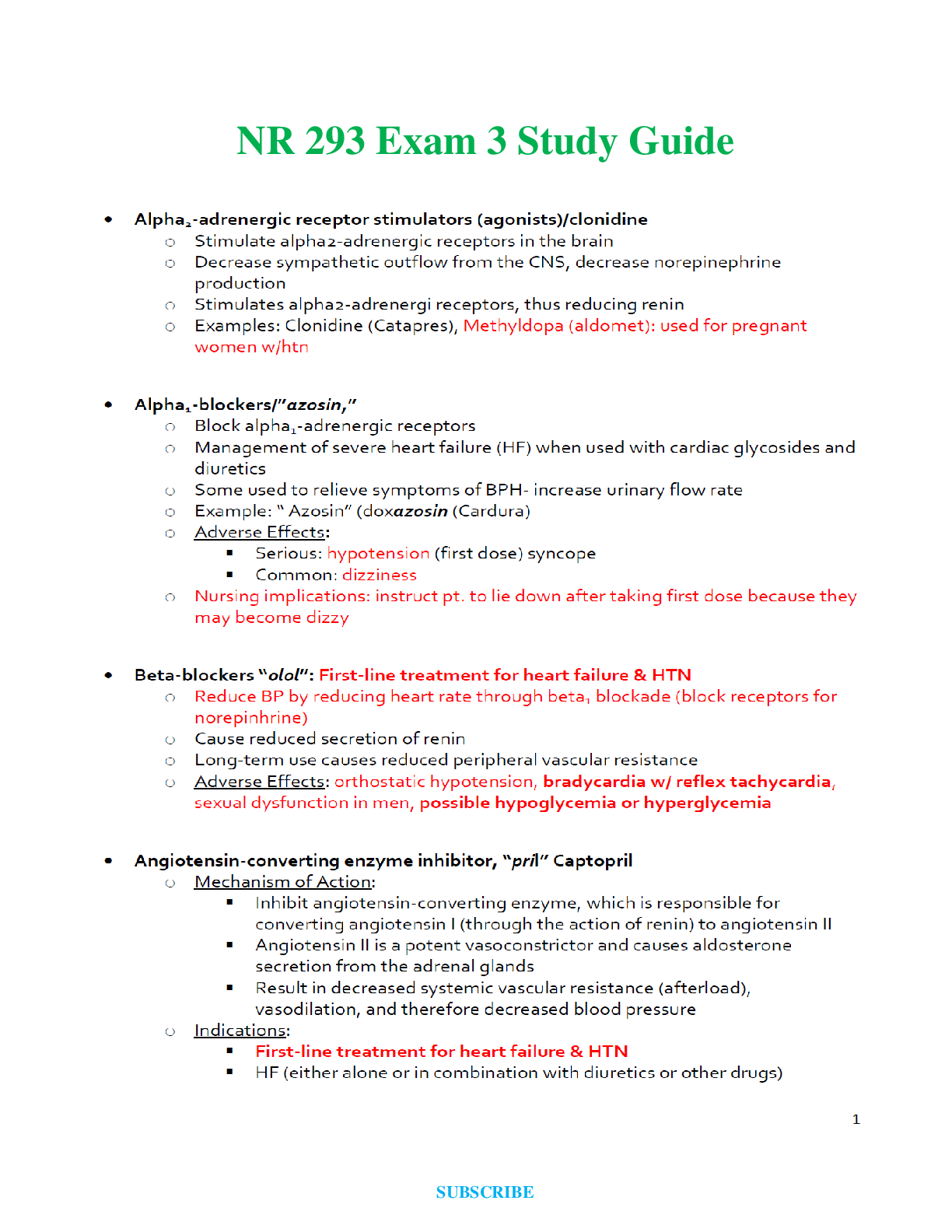
NR 293 Exam 3 Study GuideQuestions and Answers (Verified A...


NR 293 ATI Pharmacology Final Review_2020 - Chamberlain Colleg...

ATI NR 293 MED-SURG PART A, (Spring 2020) Complete Solution.
ATI NR293 Pharm Final Review, Latest 2020 complete A+ Solution...

NR 293 ATI Pharmacology Final Review_2020 – Chamberlain Colleg...

NR 293 ATI Pharmacology Final Review Chamberlain College of Nu...


