A nurse is caring for a client with
hyperparathyroidism and notes that
the client's serum calcium level is 13
mg/dL. Which medication should the
nurse prepare to administer as
prescribed to the client?
1. Calcium c
...
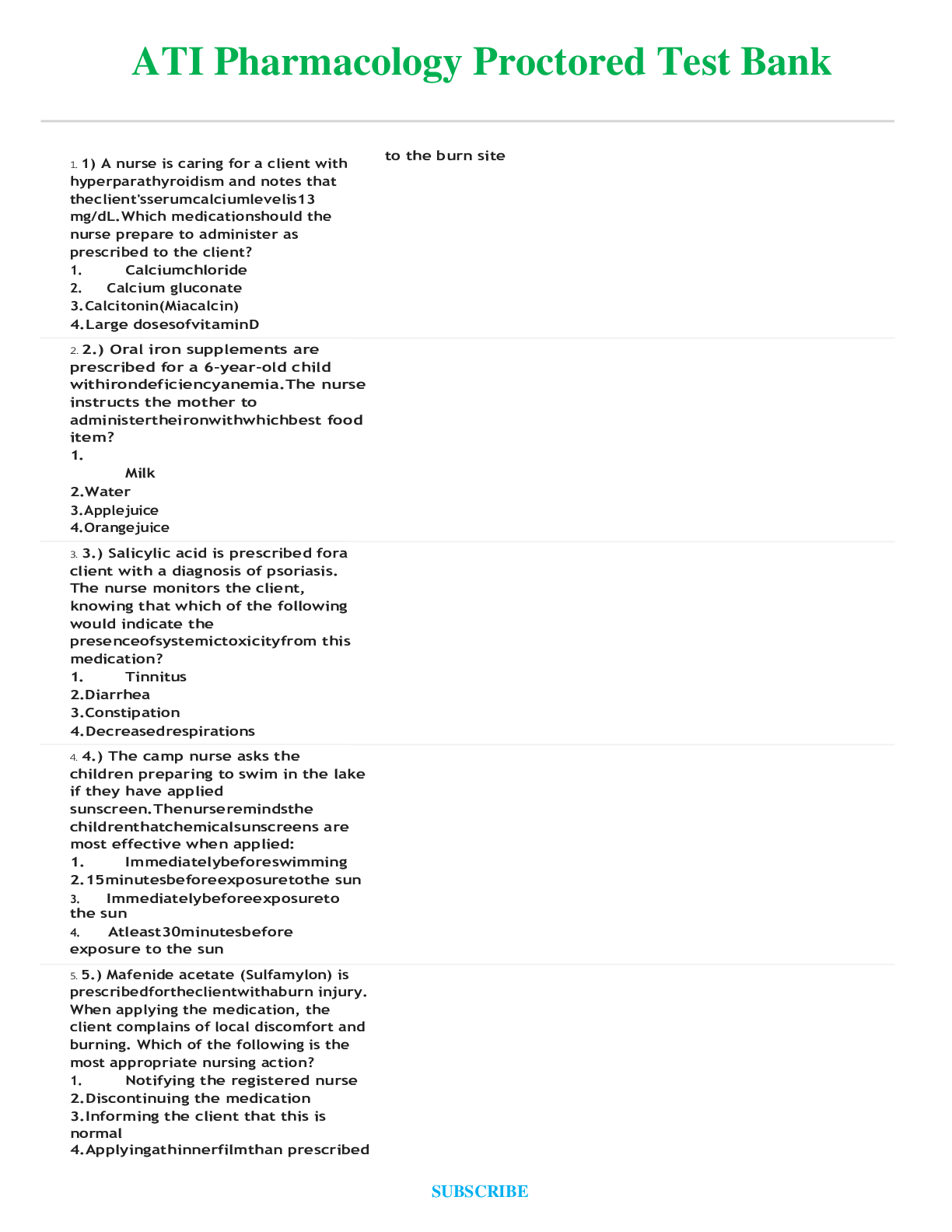
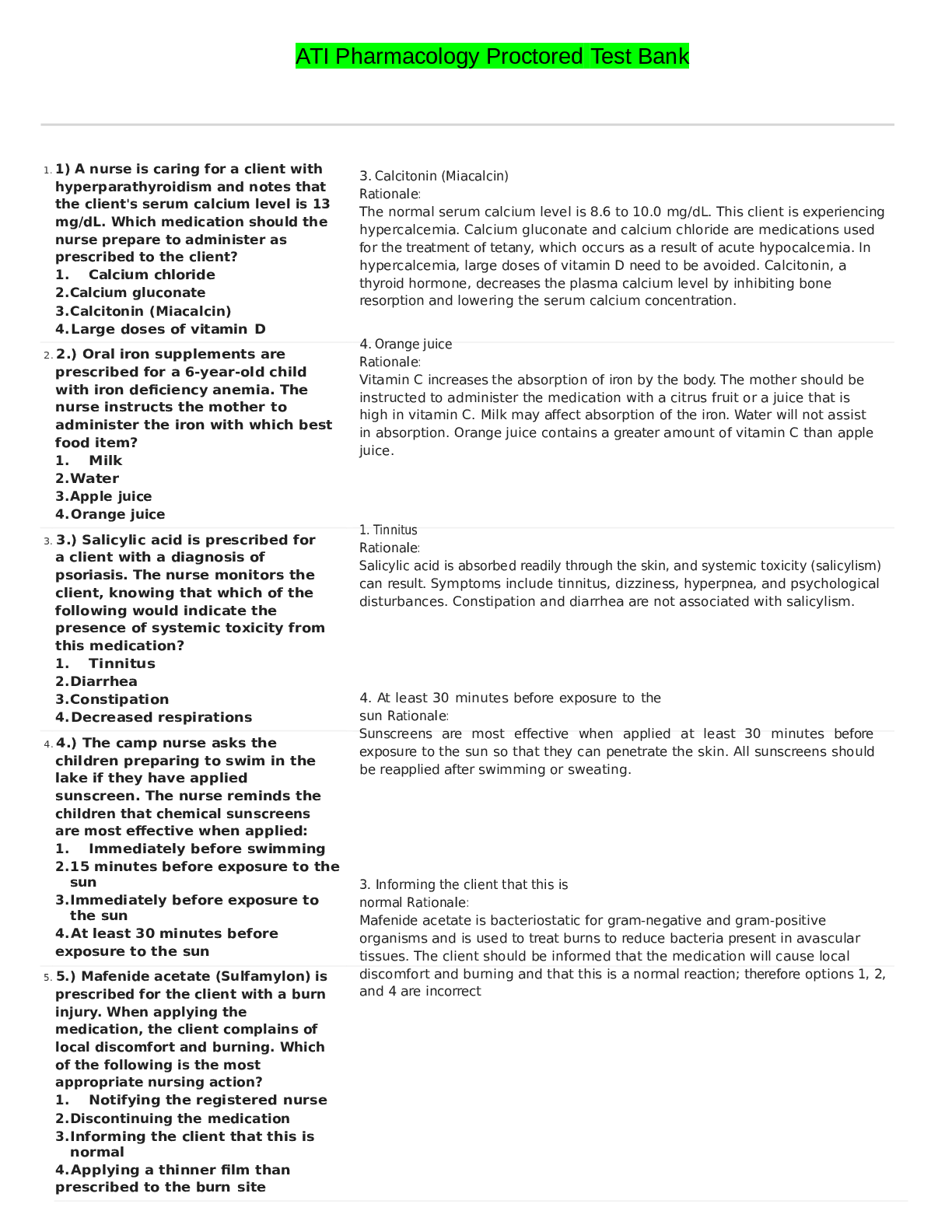
A nurse is caring for a client with
hyperparathyroidism and notes that
the client's serum calcium level is 13
mg/dL. Which medication should the
nurse prepare to administer as
prescribed to the client?
1. Calcium chloride
2.Calcium gluconate
3.Calcitonin (Miacalcin)
4.Large doses of vitamin D
2. 2.) Oral iron supplements are
prescribed for a 6-year-old child
with iron deficiency anemia. The
nurse instructs the mother to
administer the iron with which best
food item?
1. Milk
2.Water
3.Apple juice
4.Orange juice
3. 3.) Salicylic acid is prescribed for
a client with a diagnosis of
psoriasis. The nurse monitors the
client, knowing that which of the
following would indicate the
presence of systemic toxicity from
this medication?
1. Tinnitus
2.Diarrhea
3.Constipation
4.Decreased respirations
4. 4.) The camp nurse asks the
children preparing to swim in the
lake if they have applied
sunscreen. The nurse reminds the
children that chemical sunscreens
are most effective when applied:
1. Immediately before swimming
2.15 minutes before exposure to the
sun
3.Immediately before exposure to
the sun
4.At least 30 minutes before
exposure to the sun
5. 5.) Mafenide acetate (Sulfamylon) is
prescribed for the client with a burn
injury. When applying the
medication, the client complains of
local discomfort and burning. Which
of the following is the most
appropriate nursing action?
1. Notifying the registered nurse
2.Discontinuing the medication
3.Informing the client that this is
normal
4.Applying a thinner film than
prescribed to the burn site
The burn client is receiving
treatments of topical mafenide
acetate (Sulfamylon) to the site of
injury. The nurse monitors the client,
knowing that which of the following
indicates that a systemic effect has
occurred? 1.Hyperventilation
2.Elevated blood
pressure 3.Local pain
at the burn site 4.Local
rash at the burn site
7. 7.) Isotretinoin is prescribed for a
client with severe acne. Before the
administration of this medication, the
nurse anticipates that which
laboratory test will be prescribed?
1. Platelet count
2.Triglyceride level
3.Complete blood count
4.White blood cell count
8. 8.) A client with severe acne is seen in
the clinic and the health care provider
(HCP) prescribes isotretinoin. The
nurse reviews the client's medication
record and would contact the (HCP) if
the client is taking which medication?
1. Vitamin A
2.Digoxin (Lanoxin)
3.Furosemide (Lasix)
4.Phenytoin (Dilantin)
9. 9.) The nurse is applying a topical
corticosteroid to a client with
eczema. The nurse would monitor for
the potential for increased systemic
absorption of the medication if the
medication were being applied to
which of the following body areas?
1. Back
2.Axilla
3.Soles of the feet
4.Palms of the hands
10. 10.) The clinic nurse is performing an
admission assessment on a client. The
nurse notes that the client is taking
azelaic acid (Azelex). Because of the
medication prescription, the nurse
would suspect that the client is being
treated for:
1. Acne
2.Eczema
3.Hair loss
4.Herpes simplex
1. Hypervent
ilation Rationale:
Mafenide acetate is a carbonic anhydrase inhibitor and can suppress renal
excretion of acid, thereby causing acidosis. Clients receiving this treatment
should be monitored for signs of an acid-base imbalance (hyperventilation). If this
occurs, the medication should be discontinued for 1 to 2 days. Options 3 and 4
describe local rather than systemic effects. An elevated blood pressure may be
expected from the pain that occurs with a burn injury.
2. Triglyceride level
Rationale:
Isotretinoin can elevate triglyceride levels. Blood triglyceride levels should be
measured before treatment and periodically thereafter until the effect on the
triglycerides has been evaluated. Options 1, 3, and 4 do not need to be
monitored specifically during this treatment.
1. Vita
min A
Rationale:
Isotretinoin is a metabolite of vitamin A and can produce generalized
intensification of isotretinoin toxicity. Because of the potential for increased
toxicity, vitamin A supplements should be discontinued before isotretinoin
therapy. Options 2, 3, and 4 are not contraindicated with the use of isotretinoin.
2.Axilla
Rationale
:
Topical corticosteroids can be absorbed into the systemic circulation.
Absorption is higher from regions where the skin is especially permeable
(scalp, axilla, face, eyelids, neck, perineum, genitalia), and lower from regions in
which permeability is poor (back, palms, soles).
1. A
cne
Rationale
:
Azelaic acid is a topical medication used to treat mild to moderate acne. The
acid appears to work by suppressing the growth of Propionibacterium acnes
and decreasing the proliferation of keratinocytes. Options 2, 3, and 4 are
incorrect.
11. 11.) The health care provider has
prescribed silver sulfadiazine (Silvadene)
for the client with a partial- thickness burn,
which has cultured positive for gramnegative bacteria. The nurse is reinforcing
information to the client about the
medication. Which statement made by the
client indicates a lack of understanding
about the treatments?
1. "The medication is an antibacterial."
2."The medication will help heal the burn."
[Show More]