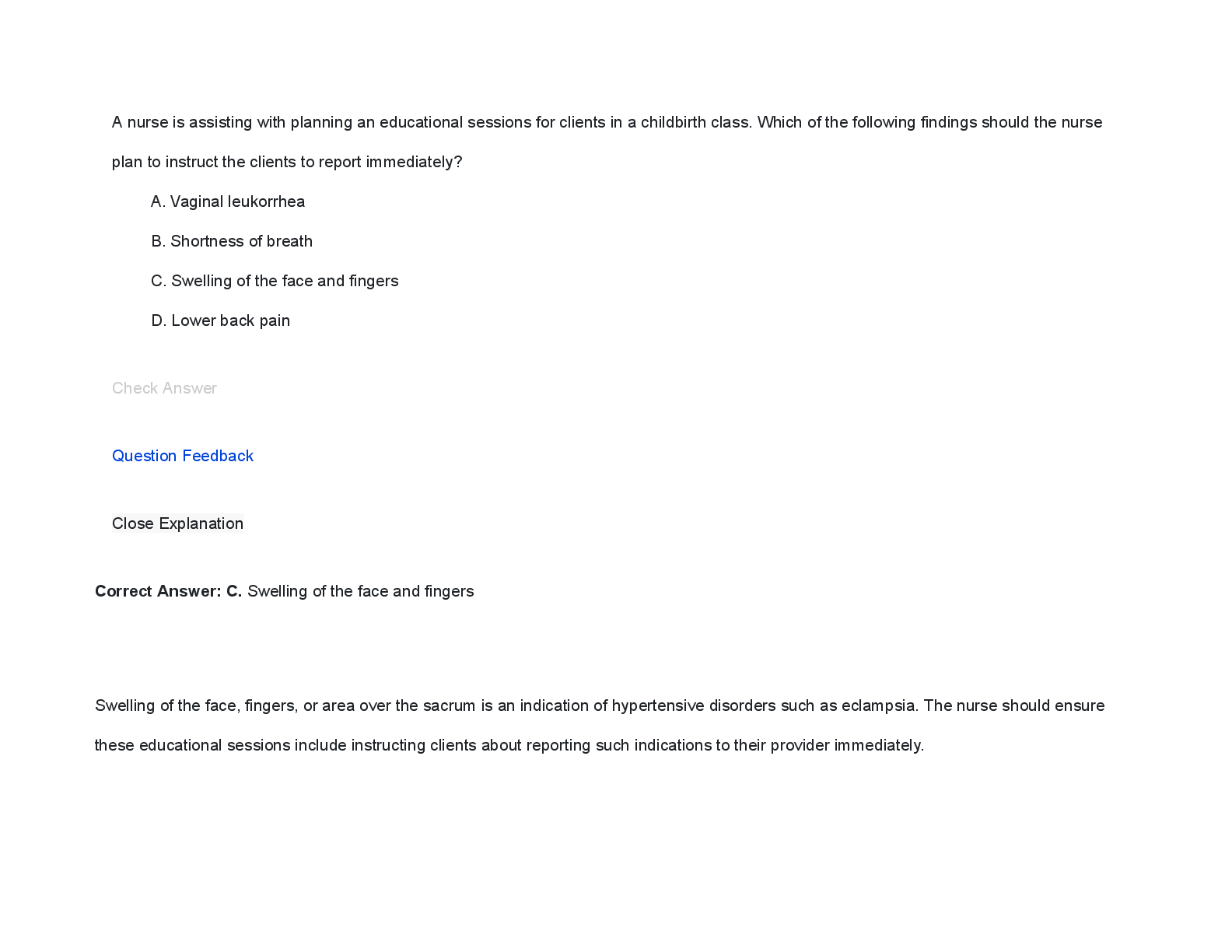
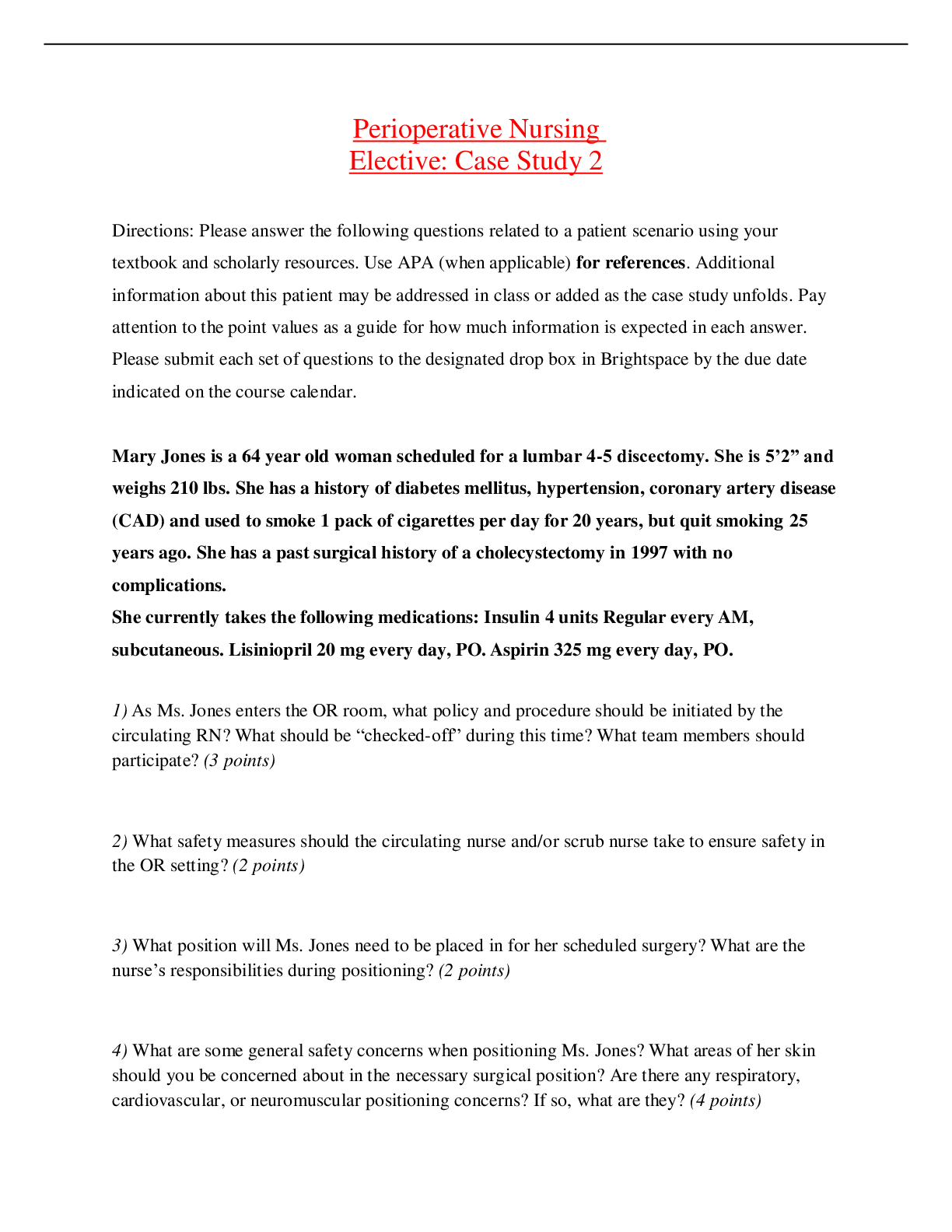
Perioperative Nursing Elective: Case Study 2/RATED A
Document Content and Description Below
1) As Ms. Jones enters the OR room, what policy and procedure should be initiated by the circulating RN? What should be “checked-off” during this time? What team members should participate? (3 points)
2) What safety
...
[Show More]
Last updated: 3 years ago
Preview 1 out of 2 pages
Instant download
Buy this Document to get the Full Access Instantly
Provided by Students Who Aced it
We Verify Document Content to Gurantee Accuracy
Reviews( 0 )
Document information
Connected school, study & course
About the document
Uploaded On
Jul 09, 2021
Number of pages
2
Written in
All

Additional information
This document has been written for:
Uploaded
Jul 09, 2021
Downloads
0
Views
112
Topic Tags
Recommended For You
Get more on EXAM »

$24
993 Pages
ATI-Comprehensive-Mental Health | IMPORTANT REVISION GUIDE BEF...

$72.5
194 Pages
KAPLAN MENTAL HEALTH AND MED SURG COMBINED VERSION A, B, C NEW...

$13
188 Pages
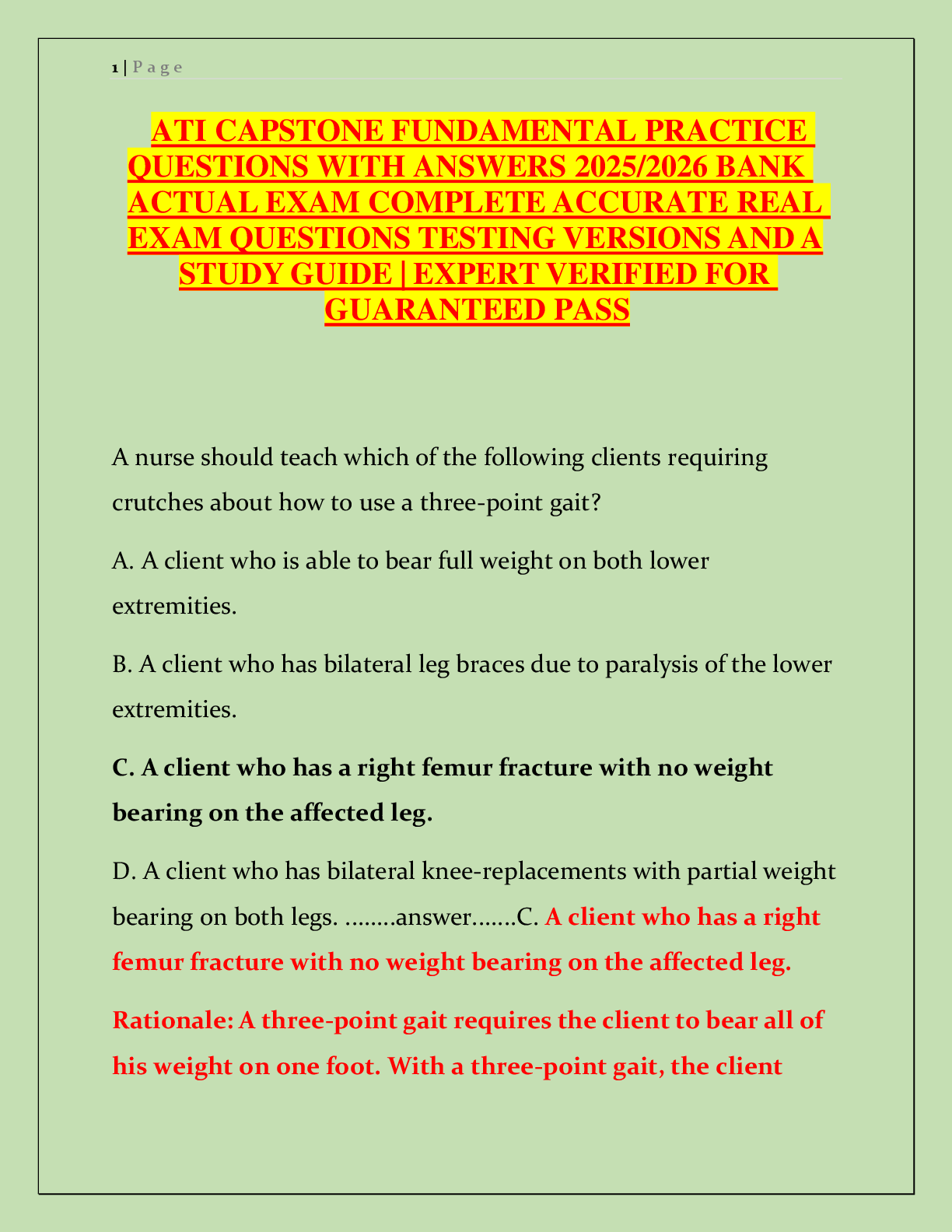
Complete Test Bank for Women’s Healthcare in Advanced Practice...


More related documents below