NUR 2790 Exam_Final_Content Guide( Complete Solution Rated A)
Document Content and Description Below
Final Exam Content Guide
1. Stroke – CVA – Brain attack disruption of cerebral blood flow secondary to ischemia, hemorrhage, brain attack, or embolism
1) Hemorrhagic – ruptured artery or aneurysm = ischemia and ↑ICP ca
...
[Show More]
Last updated: 3 years ago
Preview 1 out of 17 pages
Instant download
 (1).png)
Buy this Document to get the Full Access Instantly
Provided by Students Who Aced it
We Verify Document Content to Gurantee Accuracy
Reviews( 0 )
Document information
Connected school, study & course
About the document
Uploaded On
Jul 10, 2021
Number of pages
17
Written in
All

Additional information
This document has been written for:
Uploaded
Jul 10, 2021
Downloads
0
Views
94
Topic Tags
Recommended For You
Get more on EXAM »
$11
13 Pages
NUR 2790 / NUR2790 Professional Nursing III / PN3 Final Exam ....
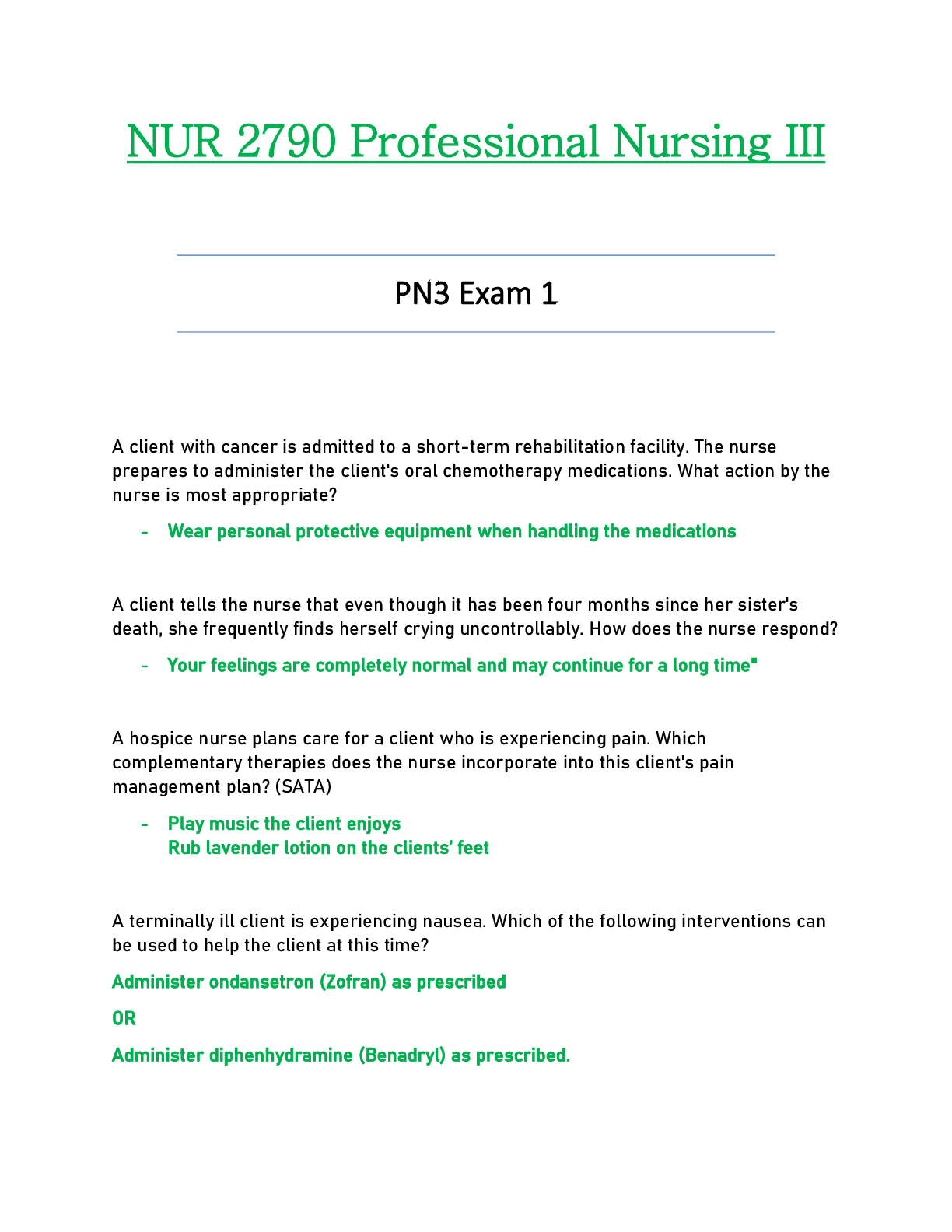
$10
11 Pages
NUR2790 / NUR 2790 Exam 1 Updated: Professional Nursing III /...
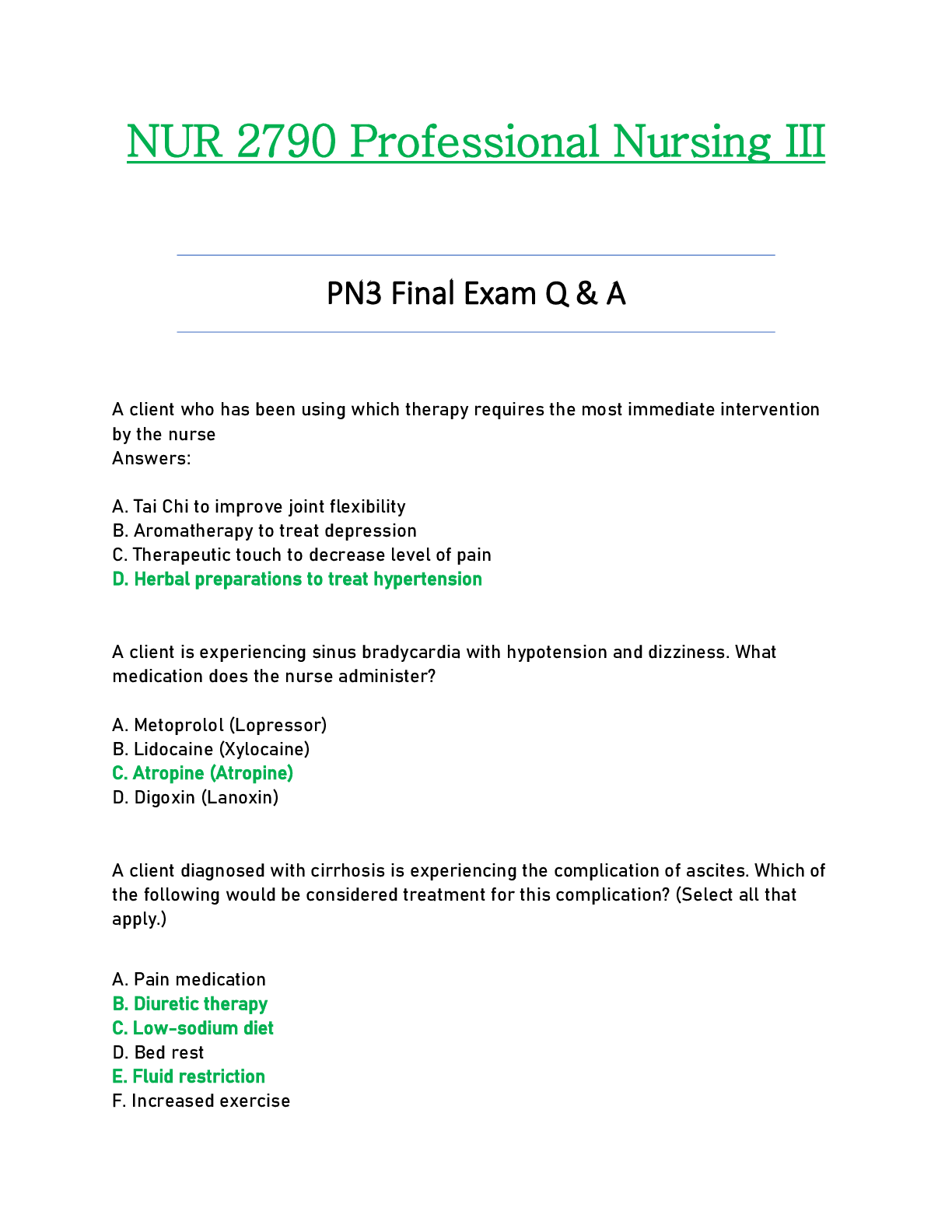
$10
23 Pages
NUR2790 - NUR 2790 Final Exam Professional Nursing III / PN3 -...

$10
4 Pages
NUR 2790 Exam2 PN 3 |NUR 2790 Exam2 PN3 |Questions and Answers...

$11
9 Pages
NUR 2790 Nursing III Exam 3 Questions & Answers Complete.

$12
76 Pages
NUR 2790 / NUR2790 Professional Nursing III / PN3 Final Exam S...
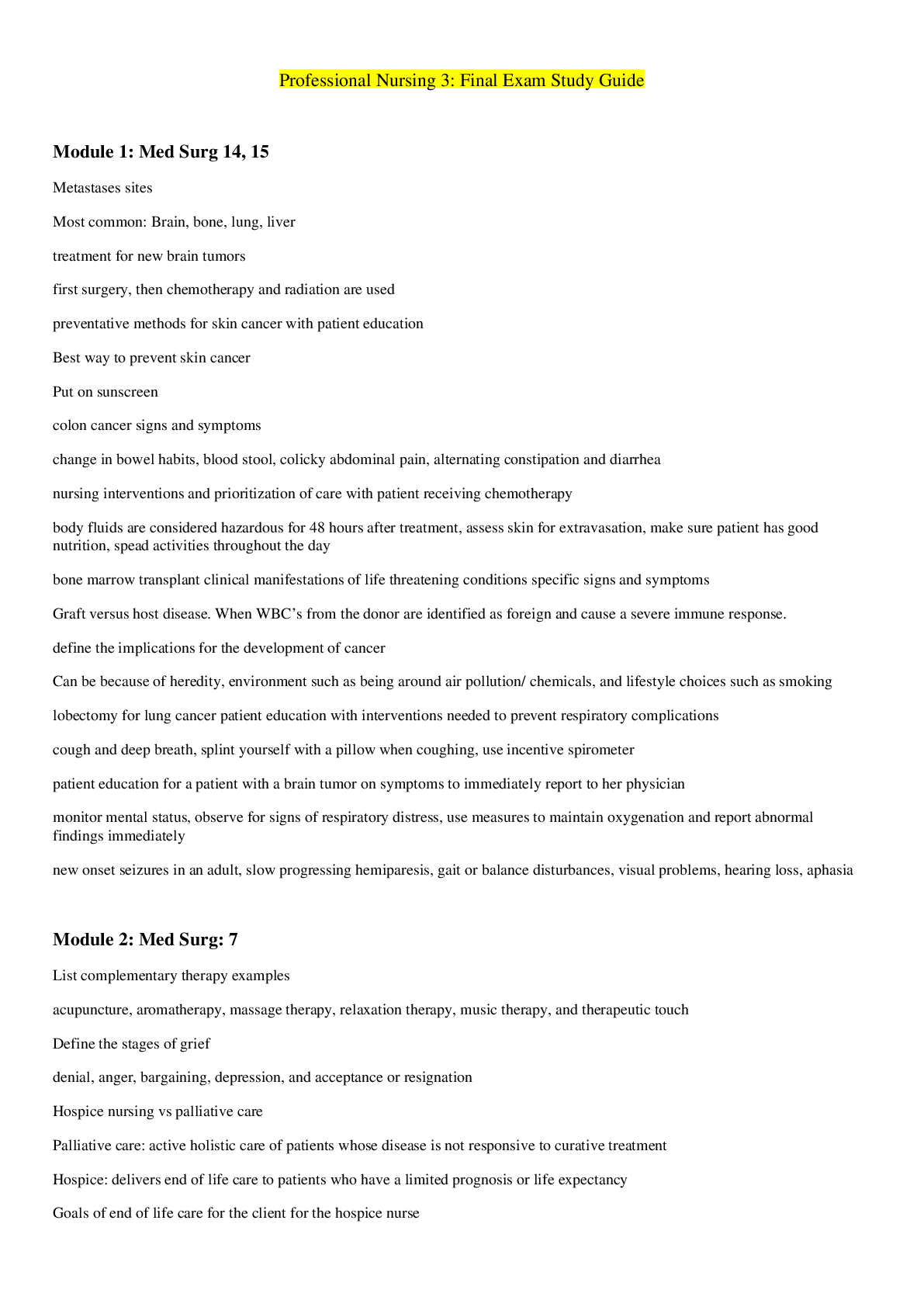
$18
8 Pages
NUR 2790 Final Exam Study Guide_Rasmussen College Professional...

$10.5
26 Pages
Final Exam Study Guide NUR 2790: Professional Nursing III( Com...
$11
26 Pages
Final Exam Study Guide NUR 2790: Professional Nursing III( Com...
$17
308 Pages
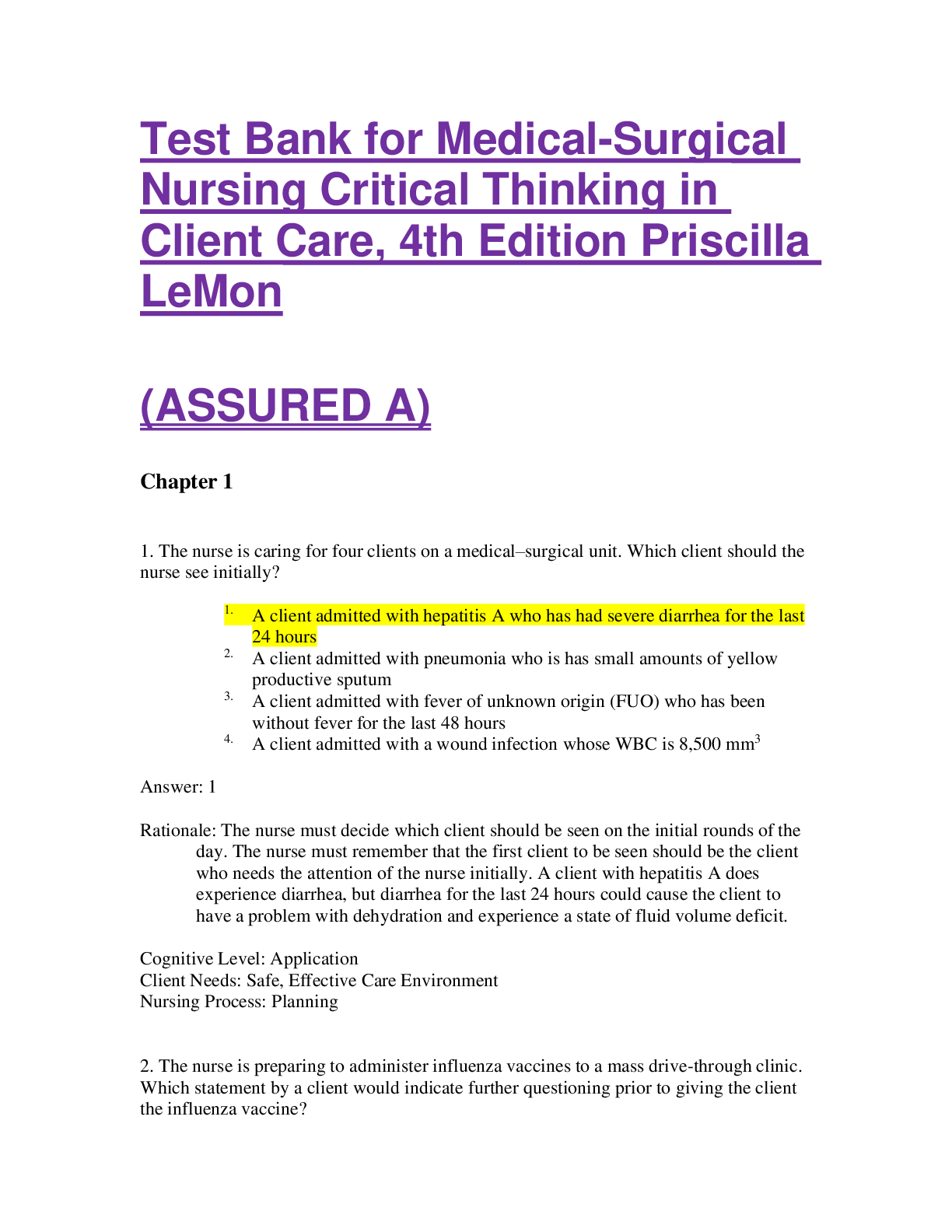
NUR 2790 TEST BANK for Medical-Surgical Nursing Critical Think...
$16
39 Pages
Rasmussen College: NUR2790 N3 E3 Guide 4 Latest updated 2021/2...


$19
7 Pages
NUR 2790 Exam III Nursing III Content Study Guide-Rasmussen Co...

$3.5
46 Pages
NUR 2790 Nursing 3 Final Lewis Chapter 59 Nursing Management C...
$16.5
39 Pages
Rasmussen College: NUR 2790 N3 E3 Guide 4 Latest updated 2021/...

More related documents below


.png)