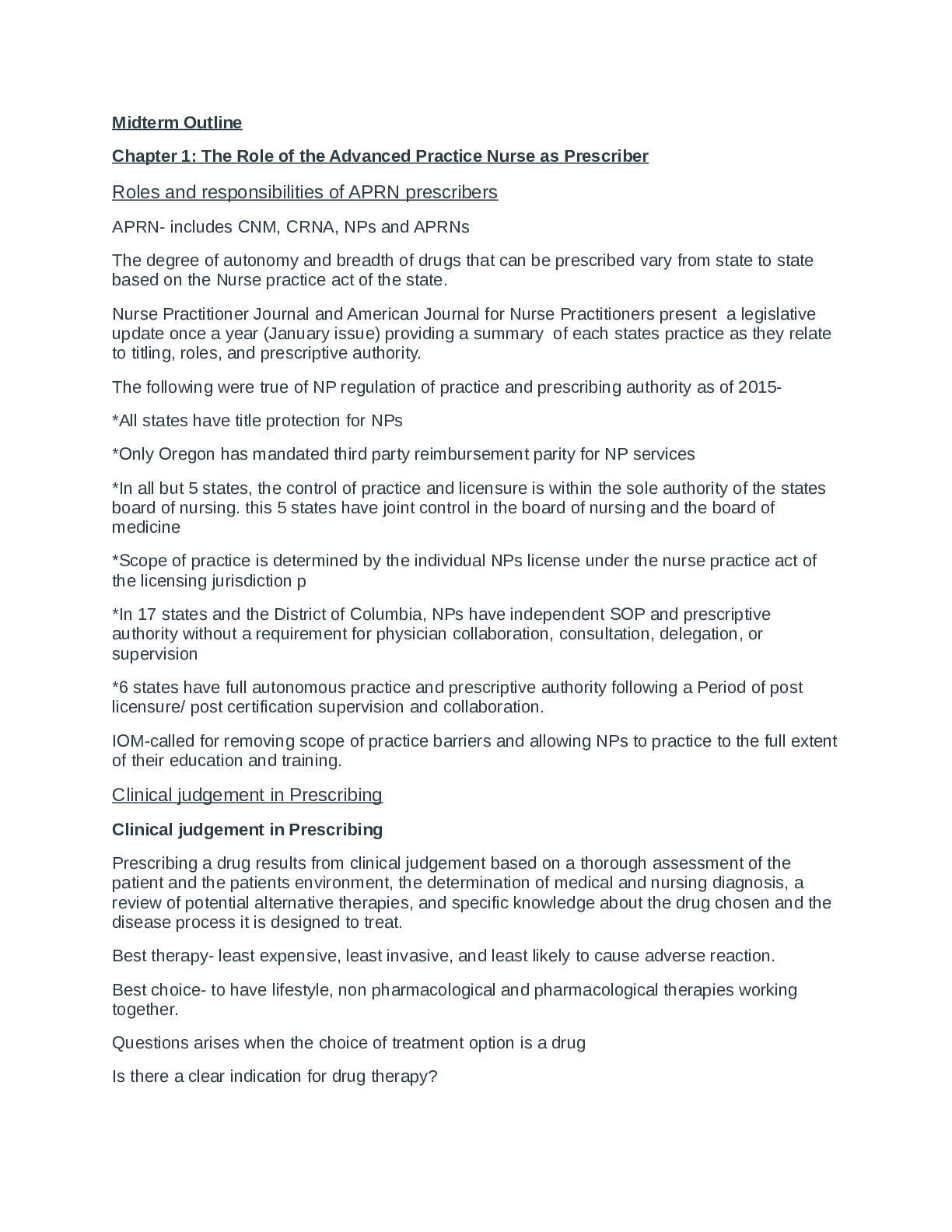
Midterm Outline
Chapter 1: The Role of the Advanced Practice Nurse as Prescriber
Roles and responsibilities of APRN prescribers
APRN- includes CNM, CRNA, NPs and APRNs
The degree of autonomy and breadth of drugs that
...
Midterm Outline
Chapter 1: The Role of the Advanced Practice Nurse as Prescriber
Roles and responsibilities of APRN prescribers
APRN- includes CNM, CRNA, NPs and APRNs
The degree of autonomy and breadth of drugs that can be prescribed vary from state to state
based on the Nurse practice act of the state.
Nurse Practitioner Journal and American Journal for Nurse Practitioners present a legislative
update once a year (January issue) providing a summary of each states practice as they relate
to titling, roles, and prescriptive authority.
The following were true of NP regulation of practice and prescribing authority as of 2015-
*All states have title protection for NPs
*Only Oregon has mandated third party reimbursement parity for NP services
*In all but 5 states, the control of practice and licensure is within the sole authority of the states
board of nursing. this 5 states have joint control in the board of nursing and the board of
medicine
*Scope of practice is determined by the individual NPs license under the nurse practice act of
the licensing jurisdiction p
*In 17 states and the District of Columbia, NPs have independent SOP and prescriptive
authority without a requirement for physician collaboration, consultation, delegation, or
supervision
*6 states have full autonomous practice and prescriptive authority following a Period of post
licensure/ post certification supervision and collaboration.
IOM-called for removing scope of practice barriers and allowing NPs to practice to the full extent
of their education and training.
Clinical judgement in Prescribing
Prescribing a drug results from clinical judgement based on a thorough assessment of the
patient and the patients environment, the determination of medical and nursing diagnosis, a
review of potential alternative therapies, and specific knowledge about the drug chosen and the
disease process it is designed to treat.
Best therapy- least expensive, least invasive, and least likely to cause adverse reaction.
Best choice- to have lifestyle, non pharmacological and pharmacological therapies working
together.
Questions arises when the choice of treatment option is a drug
Is there a clear indication for drug therapy?
Before drug therapy is chosen an indication and necessity of using a drug should be
carefully considered. Example: In treating Otitis media, guidelines regarding the use of
antibiotics have been evolving due to high percentage of OM infections resolves without
intervention. Of concern is
[Show More]