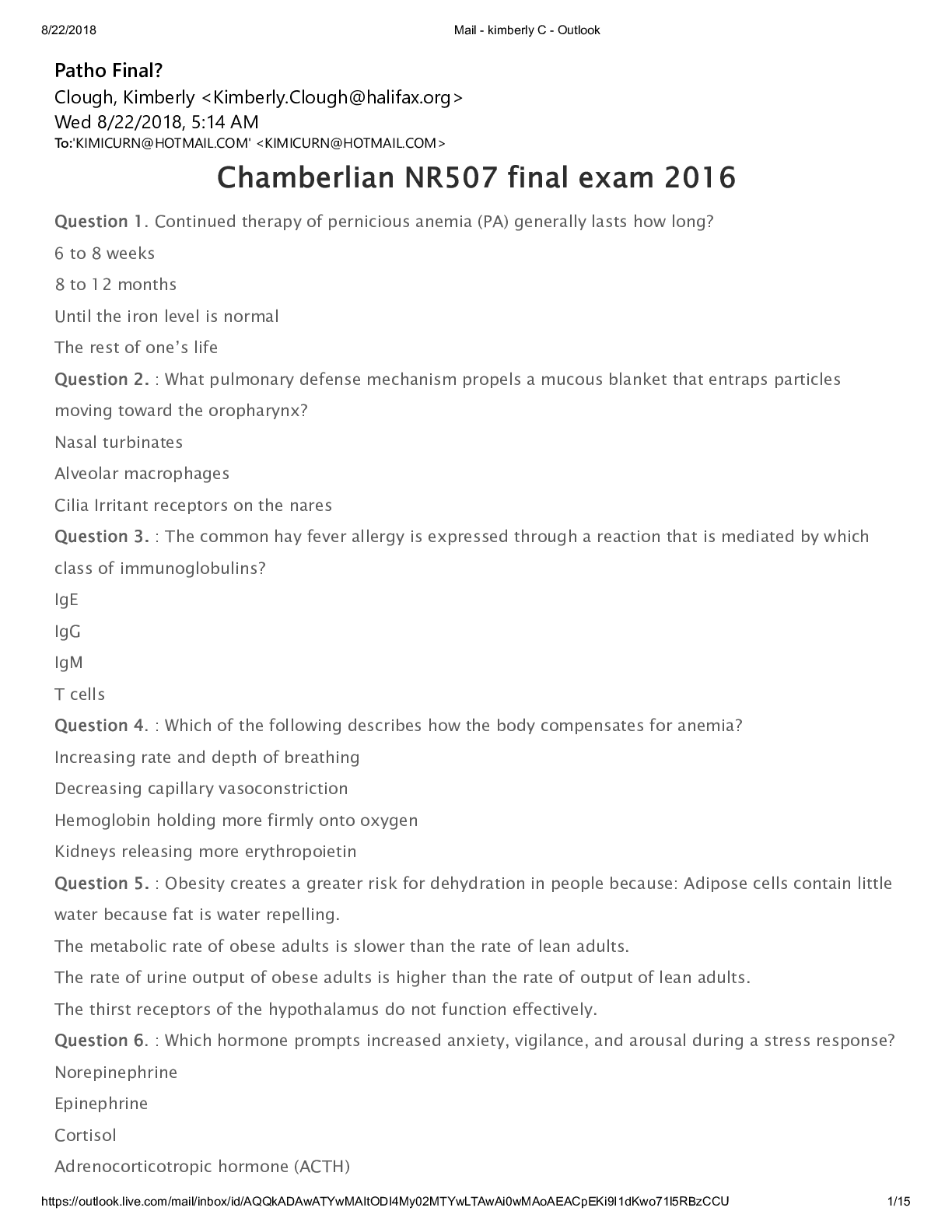
Question 1. Continued therapy of pernicious anemia (PA) generally lasts how long?
6 to 8 weeks
8 to 12 months
Until the iron level is normal
The rest of one’s life
Question 2. : What pulmonary defense mechanism prop
...
Question 1. Continued therapy of pernicious anemia (PA) generally lasts how long?
6 to 8 weeks
8 to 12 months
Until the iron level is normal
The rest of one’s life
Question 2. : What pulmonary defense mechanism propels a mucous blanket that entraps particles
moving toward the oropharynx?
Nasal turbinates
Alveolar macrophages
Cilia Irritant receptors on the nares
Question 3. : The common hay fever allergy is expressed through a reaction that is mediated by which
class of immunoglobulins?
IgE
IgG
IgM
T cells
Question 4. : Which of the following describes how the body compensates for anemia?
Increasing rate and depth of breathing
Decreasing capillary vasoconstriction
Hemoglobin holding more firmly onto oxygen
Kidneys releasing more erythropoietin
Question 5. : Obesity creates a greater risk for dehydration in people because: Adipose cells contain little
water because fat is water repelling.
The metabolic rate of obese adults is slower than the rate of lean adults.
The rate of urine output of obese adults is higher than the rate of output of lean adults.
The thirst receptors of the hypothalamus do not function effectively.
Question 6. : Which hormone prompts increased anxiety, vigilance, and arousal during a stress response?
Norepinephrine
Epinephrine
Cortisol
Adrenocorticotropic hormone (ACTH)8/22/2018 Mail - kimberly C - Outlook
Question 7. : What is the treatment of choice for pernicious anemia (PA)? Cyanocobalamin by oral intake
Vitamin B12 by injection
Ferrous fumarate by Z-track injection
Folate by oral intake
Question 8. : Which sexually transmitted infection frequently coexists with gonorrhea?
Syphilis
Herpes simplex virus
Chlamydia
Chancroid
Question 9. : During an infection, why do lymph nodes enlarge and become tender? B lymphocytes
proliferate.
The nodes are inflamed.
The nodes fill with purulent exudate.
The nodes are not properly functioning.
Question 10. : Chvostek and Trousseau signs indicate which electrolyte imbalance? Hypokalemia
Hyperkalemia
Hypocalcemia
Hypercalcemia
Question 11. : What is the suggested mean blood pressure for an 8- to 9-year-old child?
104/55 mm Hg
106/58 mm Hg
112/62 mm Hg
121/70 mm Hg
Question 12. : Stress-induced sympathetic stimulation of the adrenal medulla causes the secretion of:
Epinephrine and aldosterone
Norepinephrine and cortisol
Epinephrine and norepinephrine
Acetylcholine and cortisol
Question 13. : Bronchiolitis tends to occur during the first years of life and is most often caused by what
type of infection?
Respiratory syncytial virus (RSV)
Influenzavirus
Adenoviruses
Rhinovirus
[Show More]