Pharmacology exam 1 questions and Answers
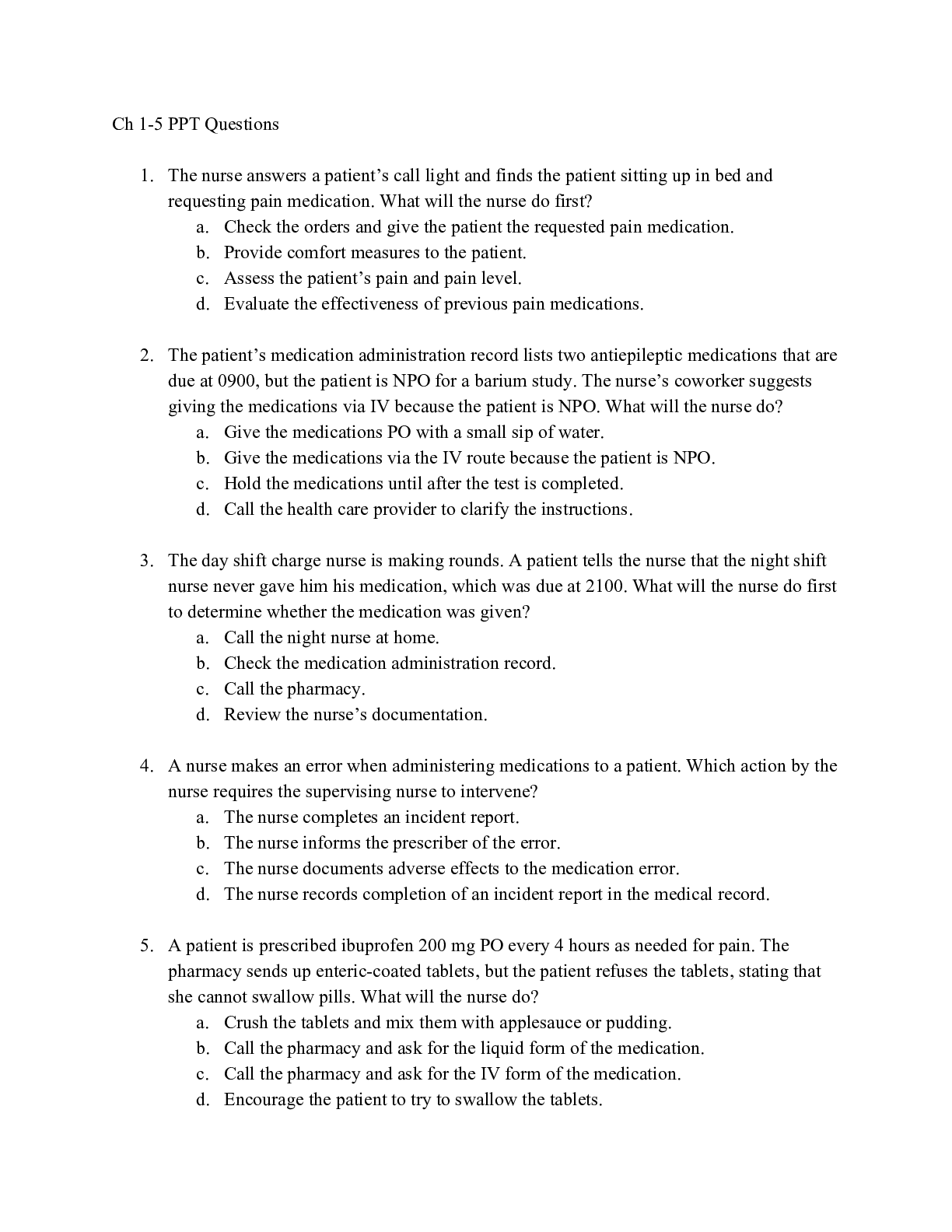
Ch 1-5 PPT Questions
1. The nurse answers a patient’s call light and finds the patient sitting up in bed and requesting pain medication. What will the nurse do first?
a. Che
...
Pharmacology exam 1 questions and Answers
Ch 1-5 PPT Questions
1. The nurse answers a patient’s call light and finds the patient sitting up in bed and requesting pain medication. What will the nurse do first?
a. Check the orders and give the patient the requested pain medication.
b. Provide comfort measures to the patient.
c. Assess the patient’s pain and pain level.
d. Evaluate the effectiveness of previous pain medications.
2. The patient’s medication administration record lists two antiepileptic medications that are due at 0900, but the patient is NPO for a barium study. The nurse’s coworker suggests giving the medications via IV because the patient is NPO. What will the nurse do?
a. Give the medications PO with a small sip of water.
b. Give the medications via the IV route because the patient is NPO.
c. Hold the medications until after the test is completed.
d. Call the health care provider to clarify the instructions.
3. The day shift charge nurse is making rounds. A patient tells the nurse that the night shift nurse never gave him his medication, which was due at 2100. What will the nurse do first to determine whether the medication was given?
a. Call the night nurse at home.
b. Check the medication administration record.
c. Call the pharmacy.
d. Review the nurse’s documentation.
4. A nurse makes an error when administering medications to a patient. Which action by the nurse requires the supervising nurse to intervene?
a. The nurse completes an incident report.
b. The nurse informs the prescriber of the error.
c. The nurse documents adverse effects to the medication error.
d. The nurse records completion of an incident report in the medical record.
5. A patient is prescribed ibuprofen 200 mg PO every 4 hours as needed for pain. The pharmacy sends up enteric-coated tablets, but the patient refuses the tablets, stating that she cannot swallow pills. What will the nurse do?
a. Crush the tablets and mix them with applesauce or pudding.
b. Call the pharmacy and ask for the liquid form of the medication.
c. Call the pharmacy and ask for the IV form of the medication.
d. Encourage the patient to try to swallow the tablets.
6. The nurse is preparing to administer a transdermal patch to a patient and finds that the patient already has a medication patch on his right upper chest. What will the nurse do?
a. Remove the old medication patch and notify the health care provider.
b. Apply the new patch without removing the old one.
c. Remove the old patch and apply the new patch in the same spot.
d. Remove the old patch and apply the new patch to a different, clean area.
7. The nurse is giving a medication that has a high first-pass effect. The health care provider has changed the route from PO to IV. What can the nurse expect with the IV dose?
a. The IV dose will be higher because of the first-pass effect.
b. The IV dose will be lower because of the first-pass effect.
c. The IV dose will be the same as the PO dose.
d. The rate of IV infusion must be faster due to first-pass effect.
8. A patient is complaining of severe pain and has orders for morphine sulfate. The nurse knows that the route that would give the slowest pain relief would be which route?
a. IV
b. IM
c. Subcutaneous
d. PO
9. When teaching a pregnant woman about the use of drugs during pregnancy, which statement will the nurse include?
a. Exposure of the fetus to drugs is most detrimental during the second trimester of pregnancy.
b. Pregnant women must never take drugs to control high blood pressure.
c. Drug transfer to a fetus is most likely to occur during the last trimester of pregnancy.
d. A fetus is at greatest risk for drug-induced developmental defects during the second trimester of pregnancy.
10. When administering medications to pediatric patients, the nurse understands that the dosage calculations for pediatric patients are different than for adults because pediatric patients
a. are more likely to develop edema.
b. have more stomach acid.
c. have skin that is less permeable.
d. have immature liver and kidney function, resulting in impaired drug metabolism and excretion.
11. Bruno is a 6-month-old male who is being admitted for the treatment of pneumonia. The unit where Bruno is admitted is a combined adult and pediatric medical unit. The nurse assigned has little pediatric experience and has sought the advice of the experienced charge nurse.
a. What age-related considerations should the nurse take into account when preparing medications for Bruno?
12. The nurse reviews the prescriber’s orders and notes the following: Administer acetaminophen 10 mg/kg/dose every 4 hours for fever greater than 102.6 temporal. The nurse needs to administer a dose.
a. What important data would the nurse need to verify?
13. The nurse verifies the child’s weight on admission: 18.5 pounds.
a. Using the prescribed dose: 10mg/kg/dose
b. Calculate the mg of medication Bruno will receive per dose.
14. The acetaminophen unit dose label reads: Acetaminophen 160 mg/5 ml.
a. How many ml will the nurse prepare for one dose of acetaminophen for Bruno?
15. The nurse caring for a pediatric patient calculates the safe range for the prescribed medication. Based on the nurses calculations, the dose ordered exceeds the high limit. What is the nurse’s next action?
a. Contact the prescriber immediately.
b. Administer only half the ordered dose.
c. Proceed with administration of the prescribed dose.
d. Contact pharmacy to substitute the prescribed medication with one that will calculate in the safe range.
16. What does the nurse identify as a pharmacokinetic change that occurs in older adults?
a. Gastric pH is more acidic.
b. Fat content is decreased because of increased lean body mass.
c. There is increased production of proteins by the liver.
d. The number of intact nephrons is decreased.
17. Which racial group is predicted to be nearly one in three U.S. residents in 2050?
a. African American
b. Asian
c. Hispanic
d. White
18. Which of the following statements regarding African Americans’ responses to antihypertensive medication therapy is true?
a. African Americans respond better to diuretics than to beta blockers.
b. African Americans do not respond to diltiazem.
c. Single-drug therapy is effective for African Americans.
d. Hypertension is uncommon in the African-American population.
19. A research group is conducting an investigational drug study on a promising new drug for osteoporosis. It has been difficult to find research participants who meet the criteria. Just before the conclusion of the study, four participants approach the researchers and express their desire to withdraw from the study. What is the researcher’s priority intervention?
a. Inform them that they waited too long to withdraw from the study.
b. Explore with them the reasons for withdrawing from the study.
c. Acknowledge that they can withdraw at any time from the study.
d. Request that they try to remain with the study until it is completed.
20. A nurse does not notice that a patient’s IV site is swollen, red, painful, and warm to touch nor that the IV has quit infusing properly. What ethical principle does this involve?
a. Breach of duty
b. Duty
c. Causation
d. Damage
21. A nurse has been asked to participate in an elective procedure that violates the nurse’s personal ethical principles. What is the nurse’s best action?
a. Refuse to participate.
b. Ask to switch assignments with another nurse.
c. Speak to the manager or supervisor.
d. Perform the procedure.
22. In a 2006 IOM study, it was estimated that some form of medication error resulted in harm to how many patients?
a. 400,000
b. 800,000
c. 1 million
d. 1.5 million
23. What is the most common point in the process at which medications errors occur?
a. Prescribing
b. Dispensing
c. Administering
d. Monitoring
24. The nurse is administering a drug that has been ordered as follows: “Give 10 mg on odd-numbered days and 5 mg on even-numbered days.” When the date changes from May 31 to June 1, what should the nurse do?
a. Give 10 mg because June 1 is an odd-numbered day.
b. Hold the dose until the next odd-numbered day.
c. Change the order to read: “Give 10 mg on even-numbered days and 5 mg on odd-numbered days.”
d. Consult the prescriber to verify that the dose should alternate each day, no matter whether the day is odd or even numbered
25. The nursing student realizes that she has given a patient a double dose of an antihypertensive medication. The tablet was supposed to be cut in half, but the student forgot and administered the entire tablet. The patient’s blood pressure just before the dose was 146/98 mm Hg. What should the student nurse do first?
a. Notify the patient’s physician.
b. Notify the clinical faculty.
c. Take the patient’s blood pressure.
d. Continue to monitor the patient.
Answers to Ch 1-5 PPT Questions:
1. ANS: C
a. The nurse should always assess a patient before any intervention. Although the nurse will check the orders and possibly give the medication (and possibly even perform the actions in responses B and D), the first priority is assessment.
2. ANS: D
a. The dosage for the IV route would not be the same as for the PO route. Holding the medications may cause drug levels to drop and result in seizure activity, and giving the medications PO without consent may alter the test results. The nurse must never assume the route of medication administration and should consult the physician for clarification of the orders.
3. ANS: B
a. The medication administration record is the legal documentation that the professional nurse uses to sign off medications that are given, so it should be checked first.
4. ANS: D
a. If there is a medication error, the nurse should complete an incident report with the entire event, surrounding circumstances, therapeutic response, adverse effects, and notification of the prescriber described in detail. However, the nurse should not record completion of an incident report in the medical record.
5. ANS: B
a. The liquid form is appropriate because it is also given via the oral route.
Enteric-coated tablets should not be crushed, and the patient should not be forced to take the tablets. This medication does not have an IV form, but even if it did, the routes cannot be changed without a health care provider’s order.
6. ANS: D
a. Transdermal drugs should be placed on alternating sites, on a clean and nonirritating area, and only after the previously applied patch has been removed.
7. ANS: B
a. The first-pass effect is the metabolism of a drug before it becomes systemically available, and it reduces the bioavailability of the drug. This primarily occurs
with oral medications. Therefore, IV doses need to be lower than PO doses because of the first-pass effect.
8. ANS: D
a. Parenteral routes result in the fastest absorption and therefore also the fastest effects.
9. ANS: C
a. Drug transfer to the fetus is most likely to occur during the last trimester of pregnancy. Exposure of a fetus to drugs is most detrimental during the first trimester of pregnancy, and fetuses are at greatest risk for drug-induced developmental defects during the first trimester of pregnancy. Pregnant women need to take medications to control situations such as high blood pressure.
10. ANS: D
a. In pediatric patients, body temperature is less well regulated, and dehydration occurs easily; pediatric patients lack stomach acid to kill bacteria and have skin that is thinner and more permeable. It is true that pediatric patients have immature liver and kidney function, resulting in impaired drug metabolism and excretion.
11. The nurse must consider the age and weight of the child for safe medication administration. A 6-month-old cannot swallow pills therefore, liquid preparation of medications must be available. High risk medications should be verified by a second RN. Pediatric medications have safe ranges and these should be calculated for all medications. If the drug dose raises concerns or varies from the safe range, contact the prescriber immediately. The nurse will have to consider how to safely administer the medication. Oral syringes are common methods to instill the medication in the mouth of the young child.
12. The nurse needs to verify an accurate weight. Children of this age should be weighed nude or with as little clothing as possible (diaper and t-shirt). The weight should be calculated in kilograms.
13. 18.5 pounds equals 8.4 kg. 10 mg x 8.4 kg = 84 mg.
14. 84 mg/160 mg x 5 ml = 2.6 ml.
15. ANS: A
a. The nurse should contact the prescriber immediately and before administering the medications. Giving only half the prescribed dose is making a prescribed order which is not within the scope of practice for the nurse. Pharmacy cannot make treatment changes without the direction of the prescriber.
16. ANS: D
a. In older adults, the gastric pH is less acidic because of a gradual reduction in the production of hydrochloric acid in the stomach, fat content is increased because of decreased lean body mass, and there is decreased production of proteins by the aging liver and reduced protein intake. It is correct that the number of intact nephrons decreases in older adults.
17. ANS: C
a. It is predicted that by 2050, nearly one third of the U.S. population will be Hispanic. The non-Hispanic, single-race white population is projected to be only slightly larger in 2050. The African-American population is projected to increase from 41 million (about 14%) to about 66 million (or 15%) by 2050. The Asian population is projected to increase from 15 million to about 40 million, rising from a current 5.1% to 9.2% of the total population.
18. ANS: A
a. African Americans respond less effectively to beta blockers. African Americans respond best to calcium channel blockers, especially diltiazem. African Americans respond less effectively to single-drug therapy.
19. ANS: C
a. The researcher may try to find the reasons for withdrawal and request that the participants try to remain with the study, but the individuals must know that their participation is truly voluntary and that they can quit the study at any time.
20. ANS: A
a. Refer to Teamwork and Collaboration: Legal and Ethical Principles: Elements of Liability for Nursing Malpractice box on page 58 in the textbook.
21. ANS: C
a. The nurse has a right to refuse to participate in any treatment or aspect of patient care that violates the nurse’s personal ethical principles. However, this should be done without deserting the patient. The matter should be discussed with the manager or supervisor so that a change in assignment can be approved.
22. ANS: D
a. In a 2006 IOM study, it was estimated that some form of medication error resulted in harm to 1.5 million patients per year, including 400,000 in hospitals and up to 800,000 in long-term care settings.
23. ANS: A
a. Nearly 50% of preventable errors occur at the point of prescribing. The next most common error point is administration of medications.
24. ANS: D
a. Although option C seems reasonable, the nurse does not have prescriptive authority to change the order. Therefore, the prescriber should be consulted to verify the order, which can be written in clearer terms. The other options would result in a change in the alternating dose schedule.
25. ANS: B
a. The patient’s blood pressure will need to be monitored, but it was just taken, and the medication dose will not have an immediate effect. The student should notify the clinical instructor immediately.
Ch 6-9 PPT Questions
1. The nurse is caring for an 85-year-old patient in the hospital and teaching him how to use an inhaler. His 84-year-old wife attends the teaching sessions, and their daughter comes in to visit in the evenings. The patient is having trouble remembering the steps. What is the nurse’s best approach?
a. Provide the package insert that comes with the medication for the patient to read.
b. Focus the teaching sessions on the patient’s wife.
c. Provide small amounts of information at a time, repeating information frequently.
d. Wait until the daughter comes in and teach the daughter instead.
2. A patient with newly diagnosed type 1 diabetes mellitus has completed a diabetes education program. One month later, the patient confesses at a follow-up appointment that he “just didn’t feel like” giving himself the insulin injections. Which nursing diagnosis will the nurse assign the patient?
a. Deficient knowledge
b. Noncompliance
c. Impaired memory
d. Sleep deprivation
3. A nurse is providing patient teaching for a community health center that serves a primarily Portuguese population. How would this nurse best serve this patient population?
a. By learning Portuguese
b. Always using interpreter services
c. Using the family member interpreter the patient provides
d. Finding a job in a different setting
4. After providing education regarding medications to a patient who has been newly diagnosed with type 2 diabetes mellitus, the nurse would use which part of the nursing process to determine whether the patient understands these new instructions?
a. Assessment
b. Diagnosis
c. Implementation
d. Evaluation
5. OTC medications now account for about what percent of all medications used in the United States?
a. 5%
b. 15%
c. 30%
d. 60%
6. A 56-year-old man is taking OTC antacids for relief of indigestion. He tells the nurse that he consumes at least one bottle a week and has done so for more than 1 month because “it works for me.” What is the nurse’s primary concern?
a. This self-treatment is expensive.
b. This self-treatment may be delaying treatment of a more serious problem.
c. This self-treatment may be the best treatment of his indigestion.
d. The long-term use of antacids may make the indigestion worse.
7. The nurse associates use of which OTC medication with the development of hepatotoxicity?
a. Acetylsalicylic acid (Aspirin)
b. Ibuprofen (Motrin)
c. Pseudoephedrine (Sudafed)
d. Acetaminophen (Tylenol)
8. A patient tells the nurse that he wants to stop taking his antilipemic drugs and start taking garlic to lower his cholesterol. What is the nurse’s best reply?
a. “That decision is up to you.”
b. “You have every right to switch to herbal remedies.”
c. “You should not go against what the doctor has prescribed for you.”
d. “Let’s explore the evidence that supports the use of garlic to lower your cholesterol.”
9. A nurse has been asked to provide teaching at a community health fair on the topic of use of herbs and dietary products.
a. A participant tells the nurse, “I have high blood pressure and hardening of my arteries. I go to the doctor and take prescription pills, but I have added herbs because they are natural and totally safe.”
b. The nurse understands use of herbal products in patients with cardiovascular disease has what significance?
10. A participant tells the nurse that she is seeing her family physician for treatment of depression and that she has been taking a serotonergic drug. The participant tells the nurse that she wants to start to take St. John’s wort because she has heard that this herb will help her depression get better faster.
a. The nurse bases his response based on the fact that use of St. John’s wort with serotonergic drugs has what effect?
11. A participant tells the nurse that she would like to start taking gingko.
a. Before starting this herb, it is most important for the nurse to ask the patient if she is taking which type of medication?
12. Which statement regarding gene therapy is accurate?
a. Gene therapy is commonly used for the treatment of disease.
b. During gene therapy, segments of RNA are injected into the patient’s body.
c. Bacteria are used for gene transfer.
d. The majority of the world’s insulin supply has been produced by recombinant gene technology.
13. A patient’s daughter asks the nurse, “What did the test results show? I know they were doing genetic testing on my mother.” How should the nurse respond?
a. Refer the daughter to the patient’s physician.
b. Review the patient’s medical record with the daughter.
c. Ask the patient about the test results when the daughter enters the room.
d. Remind the daughter that private information cannot be discussed without the patient’s permission.
14. The nurse’s instructions to a patient who is to take an orally disintegrating tablet would include what statement?
a. “Place the tablet on the tongue and let it dissolve there.”
b. “After it starts dissolving, chew the medication.”
c. “Place the tablet on your tongue and then take a sip of water.”
d. “This tablet will take several minutes to fully dissolve.”
15. A patient is ordered to receive two different types of insulin. How will the nurse prepare the insulin?
a. Draw each insulin into an insulin syringe and administer two injections.
b. Draw the cloudy insulin into the insulin syringe first and then the clear insulin into the same syringe.
c. Call the prescriber to question the order.
d. Draw the clear insulin into the insulin syringe and then the cloudy insulin into the same syringe.
16. A patient is to receive a 0.5-mL injection of iron dextran, which can be very irritating to the body’s tissues. What is the proper technique for administration of this drug?
a. IM injection using the Z-track technique
b. IM injection into the deltoid muscle
c. Subcutaneous injection into the abdomen
d. Intradermal injection into the forearm
17. Which is the safest site for administration of an intramuscular injection to an adult?
a. Deltoid
b. Dorsogluteal
c. Vastus lateralis
d. Ventrogluteal
18. When administering eyedrops, where will the nurse place the drop?
a. On the pupil
b. On the sclera
c. In the conjunctival sac
d. In the inner canthus
Answers to Ch 6-9 PPT Questions
1. ANS: C
a. Providing small amounts of information at a time and repeating information frequently are appropriate educational strategies for an older adult patient who may be having trouble with short-term memory. Written instructions should also be provided, but they should be in a format that the patient can easily read. The package insert may contain small lettering. Family members should be included if possible.
2. ANS: B
a. Deficient knowledge differs from noncompliance in that the latter occurs when the patient does not take the medication as prescribed or at all—in other words, the patient does not comply with or adhere to the instructions given about the medication. Noncompliance (also called nonadherence) is usually a patient’s choice.
3. ANS: A
a. The nurse should communicate with the patient in the patient’s native language if at all possible. If the nurse is not able to speak the patient’s native language, then a professional translator should be hired. It is best to avoid family members as translators, if possible, because of issues with bias, misinterpretation, and potential confidentiality issues.
4. ANS: D
a. The nurse would evaluate the effectiveness of the teaching session and look for areas where the patient needs reinforcement.
5. ANS: D
a. OTC medications now account for about 60% of all medications used in the United States.
6. ANS: B
a. Normally, over-the-counter medications should be used only for short-term treatment of common minor illnesses. Their use may postpone effective management of chronic disease states and may delay treatment.
7. ANS: D
a. Acetaminophen (Tylenol) is associated with the development of hepatotoxicity.
8. ANS: D
a. The nurse can provide patient education regarding potential risks and adverse drug reactions that are possible with herbal products.
9. A state-of-the-art paper published in the Journal of the American College of Cardiology in 2010 suggests that many herbal products are best avoided in patients with cardiovascular diseases (Tachjian et al., 2010). Herbal products can increase bleeding risk with warfarin, potentiate digoxin toxicity, increase the effects of antihypertensive agents, and cause heart block or dysrhythmias.
10. Use of St. John’s wort with serotonergic drugs may lead to serotonin syndrome. Patients should inform their health care providers of all OTC medications as well as herbal and dietary supplements they are taking.
11. Use of gingko may increase risk of bleeding in patients who are taking anticoagulants such as warfarin and heparin as well as antiplatelet drugs such as aspirin and clopidogrel.
12. ANS: D
a. The majority of the world’s medical insulin supply has been produced by this method for well over a decade. Gene therapy is not commonly used. During gene therapy, segments of DNA are injected into the patient’s body, and viruses are used for gene transfer.
13. ANS: D
a. Nurses must protect against improper disclosure of information to other family members, friends of the family, other health care providers, and insurance providers. Nurses share the responsibility with other health care providers to protect patients and their families against the misuse of the patients’ genetic information.
14. ANS: A
a. Orally disintegrating medications, either in tablet or medicated strip form, dissolve in the mouth without water in about a minute. These medications are placed on the tongue, not under the tongue, as in the sublingual route. The patient must be instructed to allow the medication to dissolve on the tongue and not to chew or swallow the medication.
15. ANS: D
a. When two different types of insulin are ordered for a patient, the same syringe is used. The clear insulin is drawn up into the syringe first followed by the cloudy insulin. There is no need to administer two separate injections.
16. ANS: A
a. The Z-track method is used for administration of irritating substances. This technique forms a “Z-track” in the tissue that prevents the irritating medication from leaking through the more sensitive subcutaneous tissue.
17. ANS: D
a. The ventrogluteal site is considered the safest of all sites because the muscle is deep and away from major blood vessels.
18. ANS: C
a. To avoid trauma to the eye and systemic absorption, the eyedrop should be placed in the conjunctival sac.
Ch 1 Questions
1. The nurse is writing a nursing diagnosis for a plan of care for a patient who has been newly diagnosed with type 2 diabetes. Which statement reflects the correct format for a nursing diagnosis?
a. Anxiety
b. Anxiety related to new drug therapy
c. Anxiety related to anxious feelings about new drug therapy, as evidenced by statements such as “I’m upset about having to test my blood sugars.”
d. Anxiety related to new drug therapy, as evidenced by statements such as “I’m upset about having to test my blood sugars.”
2. The patient is to receive oral guaifenesin (Mucinex) twice a day. Today, the nurse was busy and gave the medication 2 hours after the scheduled dose was due. What type of problem does this represent?
a. “Right time”
b. “Right dose”
c. “Right route”
d. “Right medication”
3. The nurse has been monitoring the patient’s progress on a new drug regimen since the first dose and documenting the patient’s therapeutic response to the medication. Which phase of the nursing process do these actions illustrate?
a. Nursing diagnosis
b. Planning
c. Implementation
d. Evaluation
4. The nurse is assigned to a patient who is newly diagnosed with type 1 diabetes mellitus. Which statement best illustrates an outcome criterion for this patient?
a. The patient will follow instructions
b. The patient will not experience complications
c. The patient will adhere to the new insulin treatment regimen
d. The patient will demonstrate correct blood glucose testing technique
5. Which activity best reflects the implementation phase of the nursing process for the patient who is newly diagnosed with hypertension?
a. Providing education on keeping a journal of blood pressure readings
b. Setting goals and outcome criteria with the patient’s input
c. Recording a drug history regarding OTC used at home
d. Formulating nursing diagnoses regarding deficient knowledge related to the new treatment regimen
6. The medication order reads, “Give ondansetron (Zofran) 4 mg, 30 minutes before beginning chemotherapy to prevent nausea.” The nurse notes that the route is missing from the order. What is the nurse’s best action?
a. Give the medication intravenously because the patient might vomit.
b. Give the medication orally because the tablets are available in 4-mg doses.
c. Contact the prescriber to clarify the route of the medication ordered.
d. Hold the medication until the prescriber returns to make rounds.
7. When the nurse considers the timing of a drug dose, which factor is appropriate to consider when deciding when to give a drug?
a. The patient’s ability to swallow
b. The patient’s height
c. The patient’s last meal
d. The patient’s allergy
8. The nurse is performing an assessment of a newly admitted patient. Which is an example of subjective data?
a. Blood pressure 158/96 mm Hg
b. Weight 255 pounds
c. The patient reports that he uses the herbal product ginkgo.
d. The patient’s laboratory work includes a complete blood count and urinalysis.
9. When giving medications, the nurse will follow the rights of medication administration. The rights include the right documentation, the right reason, the right response, and the patient’s right to refuse. Which of these are additional rights? (Select all that apply.)
a. Right drug
b. Right route
c. Right dose
d. Right diagnosis
e. Right time
f. Right patient
10. Place the phases of the nursing process in the correct order, with 1 as the first phase and 5 as the last phase. (Select all that apply.)
a. Planning
b. Evaluation
c. Assessment
d. Implementation
e. Nursing diagnosis
Ch 1 Answers
1. ANS: D
a. Formulation of nursing diagnosis is usually a three-step process. “Anxiety” is missing the “related to” and “as evidenced” portions of defining characteristics. “Anxiety related to new drug therapy” is missing the “as evidenced by” portion of defining characteristics. The statement beginning “Anxiety related to anxious feelings” is incorrect because the “related to” section is simply a restatement of the problem “anxiety,” not a separate factor related to the response.
2. ANS: A
a. “Right time” is correct because the medication was given more than 30 minutes after the scheduled dose was due. “Dose” is incorrect because the dose is not related to the time the medication administration is scheduled. “Route” is incorrect because the route is not affected. “Medication” is incorrect because the medication ordered will not change.
3. ANS: D
a. Monitoring the patient’s progress, including the patient’s response to the medication, is part of the evaluation phase. Planning, implementation, and nursing diagnosis are not illustrated by this example.
4. ANS: D
a. “Demonstrating correct blood glucose testing technique” is a specific and measurable outcome criterion. “Following instructions” and “not experiencing complications” are not specific criteria. “Adhering to new regimen” would be difficult to measure.
5. ANS: A
a. Education is an intervention that occurs during the implementation phase. Setting goals and outcomes reflects the planning phase. Recording a drug history reflects the assessment phase. Formulating nursing diagnoses reflects analysis of data as part of planning.
6. ANS: C
a. A complete medication order includes the route of administration. If a medication order does not include the route, the nurse must ask the prescriber to clarify it. The intravenous and oral routes are not interchangeable. Holding the medication
until the prescriber returns would mean that the patient would not receive a needed medication.
7. ANS: C
a. The nurse must consider specific pharmacokinetic/pharmacodynamic drug properties that may be affected by the timing of the last meal. The patient’s ability to swallow, height, and allergies are not factors to consider regarding the timing of the drug’s administration.
8. ANS: C
a. Subjective data include information shared through the spoken word by any reliable source, such as the patient. Objective data may be defined as any information gathered through the senses or that which is seen, heard, felt, or smelled. A patient’s blood pressure, weight, and laboratory tests are all examples of objective data.
9. ANS: A, B, C, E, F
a. Additional rights of medication administration must always include the right drug, right dose, right time, right route, and right patient. The right diagnosis is incorrect.
10. ANS: A, B, C, D, E
a. The nursing process is an ongoing process that begins with assessing and continues with diagnosing, planning, implementing, and evaluating.
Ch 2 Questions
1. The patient is receiving two different drugs. At current dosages and dosage forms, both drugs are absorbed into the circulation in identical amounts. Which term is used to identify this principle?
a. Bioequivalent
b. Synergistic
c. Prodrugs
d. Steady state
2. When given an intravenous medication, the patient says to the nurse, “I usually take pills. Why does this medication have to be given in the arm?” What is the nurse’s best answer?
a. “The medication will cause fewer adverse effects when given intravenously.”
b. “The intravenous medication will have delayed absorption into the body’s tissues.”
c. “The action of the medication will begin sooner when given intravenously.”
d. “There is a lower chance of allergic reactions when drugs are given intravenously.”
3. The nurse is administering parenteral drugs. Which statement is true regarding parenteral drugs?
a. Parenteral drugs bypass the first-pass effect.
b. Absorption of parenteral drugs is affected by reduced blood flow to the stomach.
c. Absorption of parenteral drugs is faster when the stomach is empty.
d. Parenteral drugs exert their effects while circulating in the bloodstream
4. When monitoring the patient receiving an intravenous infusion to reduce blood pressure, the nurse notes that the patient’s blood pressure is extremely low, and the patient is lethargic and difficult to awaken. This would be classified as which type of adverse drug reaction?
a. Adverse effect
b. Allergic reaction
c. Idiosyncratic reaction
d. Pharmacologic reaction
5. The nurse is reviewing pharmacology terms for a group of newly graduated nurses. Which sentence defines a drug’s half-life?
a. The time it takes for the drug to cause half of its therapeutic response
b. The time it takes for one half of the original amount of a drug to reach the target cells
c. The time it takes for one half of the original amount of a drug to be removed from the body
d. The time it takes for one half of the original amount of a drug to be absorbed into the circulation
6. When administering drugs, the nurse remembers that the duration of action of a drug is defined as which of these?
a. The time it takes for a drug to elicit a therapeutic response
b. The amount of time needed to remove a drug from circulation
c. The time it takes for a drug to achieve its maximum therapeutic response
d. The time period at which a drug’s concentration is sufficient to cause a therapeutic response
7. When reviewing the mechanism of action of a specific drug, the nurse reads that the drug works by selective enzyme interaction. Which of these processes describes selective enzyme interaction?
a. The drug alters cell membrane permeability.
b. The drug’s effectiveness within the cell walls of the target tissue is enhanced.
c. The drug is attracted to a receptor on the cell wall, preventing an enzyme from binding to that receptor.
d. The drug binds to an enzyme molecule and inhibits or enhances the enzyme’s action with the normal target cell.
8. When administering a new medication to a patient, the nurse reads that it is highly protein bound. Assuming that the patient’s albumin levels are normal, the nurse would expect which result, as compared to a medication that is not highly protein bound?
a. Renal excretion will be faster.
b. The drug will be metabolized quickly.
c. The duration of action of the medication will be shorter.
d. The duration of action of the medication will be longer.
9. The patient is experiencing chest pain and needs to take a sublingual form of nitroglycerin. Where does the nurse instruct the patient to place the tablet?
a. Under the tongue
b. On top of the tongue
c. At the back of the throat
d. In the space between the cheek and the gum
10. The nurse is administering medications to the patient who is in renal failure resulting from end-stage renal disease. The nurse is aware that patients with kidney failure would most likely have problems with which pharmacokinetic phase?
a. Absorption
b. Distribution
c. Metabolism
d. Excretion
11. A patient who has advanced cancer is receiving opioid medications around the clock to keep him comfortable as he nears the end of his life. Which term best describes this type of therapy?
a. Palliative therapy
b. Maintenance therapy
c. Empiric therapy
d. Supplemental therapy
12. The patient is complaining of a headache and asks the nurse which over-the-counter medication form would work the fastest to help reduce the pain. Which medication form will the nurse suggest?
a. A capsule
b. A tablet
c. An enteric-coated tablet
d. A powder
13. The nurse will be injecting a drug into the fatty tissue of the patient’s abdomen. Which route does this describe?
a. Intradermal
b. Subcutaneous
c. Intramuscular
d. Transdermal
14. Which drugs would be affected by the first-pass effect (Select all that apply)
a. Morphine given by IV push injection
b. Sublingual nitroglycerin tablets
c. Diphenhydramine (Benadryl) elixir
d. Levothyroxine (Synthroid) tablets
e. Transdermal nicotine patches
f. Esomeprazole (Nexium) capsules
g. Penicillin given by IV piggyback infusion
15. A drug dose that delivers 250 mg has a half life of 5 hours. Identify how much drug will remain in the body after one half life.
Ch 2 Answers
1. ANS: A
a. Two drugs absorbed into the circulation in the same amount (in specific dosage forms) have the same bioavailability; thus, they are bioequivalent. A drug’s steady state is the physiologic state in which the amount of drug removed via elimination is equal to the amount of drug absorbed from each dose. The term synergistic refers to two drugs, given together, with a resulting effect that is greater than the sum of the effects of each drug given alone. A prodrug is an inactive drug dosage form that is converted to an active metabolite by various biochemical reactions once it is inside the body.
2. ANS: C
a. An intravenous (IV) injection provides the fastest route of absorption. The IV route does not affect the number of adverse effects, nor does it cause delayed tissue absorption (it results in faster absorption). The IV route does not affect the number of allergic reactions.
3. ANS: A
a. Drugs given by the parenteral route bypass the first-pass effect. Reduced blood flow to the stomach and the presence of food in the stomach apply to enteral drugs (taken orally), not to parenteral drugs. Parenteral drugs must be absorbed into cells and tissues from the circulation before they can exert their effects; they do not exert their effects while circulating in the bloodstream.
4. ANS: D
a. A pharmacologic reaction is an extension of a drug’s normal effects in the body. In this case, the antihypertensive drug lowered the patient’s blood pressure levels too much. The other options do not describe a pharmacologic reaction. An adverse effect is a predictable, well-known adverse drug reaction that results in minor or no changes in patient management. An allergic reaction (also known as a hypersensitivity reaction) involves the patient’s immune system. An idiosyncratic reaction is unexpected and is defined as a genetically determined abnormal response to normal dosages of a drug.
5. ANS: C
a. A drug’s half-life is the time it takes for one half of the original amount of a drug to be removed from the body. It is a measure of the rate at which drugs are removed from the body. The other options are incorrect definitions of half-life.
6. ANS: D
a. Duration of action is the time during which drug concentration is sufficient to elicit a therapeutic response. The other options do not define duration of action. A drug’s onset of action is the time it takes for the drug to elicit a therapeutic response. A drug’s peak effect is the time it takes for the drug to reach its maximum therapeutic response. Elimination is the length of time it takes to remove a drug from circulation.
7. ANS: D
a. With selective enzyme interaction, the drug attracts the enzymes to bind with the drug instead of allowing the enzymes to bind with their normal target cells. As a result, the target cells are protected from the action of the enzymes. This results in a drug effect. The actions described in the other options do not occur with selective enzyme interactions.
8. ANS: D
a. Drugs that are bound to plasma proteins are characterized by longer duration of action. Protein binding does not make renal excretion faster, does not speed up drug metabolism, and does not cause the duration of action to be shorter.
9. ANS: A
a. Drugs administered via the sublingual route are placed under the tongue. Drugs administered via the buccal route are placed in the space between the cheek and the gum; oral drugs are swallowed. The other options are incorrect.
10. ANS: D
a. The kidneys are the organs that are most responsible for drug excretion. Renal function does not affect the absorption and distribution of a drug. Renal function may affect metabolism of drugs to a small extent.
11. ANS: A
a. The goal of palliative therapy is to make the patient as comfortable as possible. It is typically used in the end stages of illnesses when all attempts at curative therapy have failed. Maintenance therapy is used for the treatment of chronic illnesses such as hypertension. Empiric therapy is based on clinical probabilities and involves drug administration when a certain pathologic condition has an uncertain but high likelihood of occurrence based on the patient’s initial presenting symptoms. Supplemental (or replacement therapy) supplies the body with a substance needed to maintain normal function.
12. ANS: D
a. Of the types of oral medications listed, the powder form would be absorbed the fastest, thus having a faster onset. The tablet, the capsule, and, finally, the enteric-coated tablet would be absorbed next, in that order.
13. ANS: B
a. Injections into the fatty subcutaneous tissue under the dermal layer of skin are referred to as subcutaneous injections. Injections under the more superficial skin layers immediately underneath the epidermal layer of skin and into the dermal layer are known as intradermal injections. Injections into the muscle beneath the subcutaneous fatty tissue are referred to as intramuscular injections. Transdermal drugs are applied to the skin via an adhesive patch.
14. ANS: C, D, F
a. Orally administered drugs (elixirs, tablets, capsules) undergo the first-pass effect because they are metabolized in the liver after being absorbed into the portal circulation from the small intestine. IV medications (IV push and IV piggyback) enter the bloodstream directly and do not go directly to the liver. Sublingual tablets and transdermal patches also enter the bloodstream without going directly to the liver, thus avoiding the first-pass effect.
15. ANS: 125 mg
a. A drug’s half-life is the time required for one half of an administered dose of a drug to be eliminated by the body, or the time it takes for the blood level of a drug to be reduced by 50%. Therefore, one half of 250 mg equals 125 mg.
Ch 3 Questions
1. Drug transfer to the fetus is more likely during the last trimester of pregnancy for which reason?
a. Decreased fetal surface
b. Increased placental surface area
c. Enhanced blood flow to the fetus
d. Increased amount of protein-bound drug in maternal circulation
2. The nurse is monitoring a patient who is in the 26th week of pregnancy and has developed gestational diabetes and pneumonia. She is given medications that pose a possible fetal risk, but the potential benefits may warrant the use of the medications in her situation. The nurse recognizes that these medications are in which U.S. Food and Drug Administration pregnancy safety category?
a. Category X
b. Category B
c. Category C
d. Category D
3. When discussing dosage calculation for pediatric patients with a clinical pharmacist, the nurse notes that which type of dosage calculation is used most commonly in pediatric calculations?
a. West nomogram
b. Clark rule
c. Height-to-weight ratio
d. Milligram per kilogram of body weight formula
4. The nurse is assessing a newly admitted 83-year-old patient and determines that the patient is experiencing polypharmacy. Which statement most accurately illustrates polypharmacy?
a. The patient is experiencing multiple illnesses
b. The patient uses one medication for an illness several times per day
c. The patient uses OTC drugs for an illness
d. The patient uses multiple medications simultaneously
5. The nurse is aware that confusion, forgetfulness, and increased risk for falls are common responses in an elderly patient who is taking which type of drug?
a. Laxatives
b. Anticoagulants
c. Sedatives
d. Antidepressants
6. For accurate medication administration to pediatric patients, the nurse must take into account which criteria?
a. Organ maturity
b. Renal output
c. Body temperature
d. Height
7. The nurse recognizes that it is not uncommon for an elderly patient to experience a reduction in the stomach’s ability to produce hydrochloric acid. This change may result in which effect?
a. Delayed gastric emptying
b. Increased gastric acidity
c. Decreased intestinal absorption of medications
d. Altered absorption of weakly acidic drugs
8. The nurse is administering drugs to neonates and will consider which factor may contribute the most to drug toxicity?
a. The lungs are immature
b. The kidneys are small
c. The liver is not fully developed
d. Excretions of the drug occurs quickly
9. An 83-year-old woman has been given a thiazide diuretic to treat mild heart failure. She and her daughter should be told to watch for which problems?
a. Constipation and anorexia
b. Fatigue, leg cramps, and dehydration
c. Daytime sedation and lethargy
d. Edema, nausea, and blurred vision
10. An elderly patient with a new diagnosis of hypertension will be receiving a new prescription for an antihypertensive drug. The nurse expects which type of dosing to occur with this drug therapy?
a. Drug therapy will be based on the patient’s weight.
b. Drug therapy will be based on the patient’s age.
c. The patient will receive the maximum dose that is expected to reduce the blood pressure.
d. The patient will receive the lowest possible dose at first, and then the dose will be increased as needed.
11. The nurse is trying to give a liquid medication to a -year-old child and notes that the medication has a strong taste. Which technique is the best way for the nurse to give the medication to this child?
a. Give the medication with a spoonful of ice cream.
b. Add the medication to the child’s bottle.
c. Tell the child you have candy for him.
d. Add the medication to a cup of milk.
12. The nurse is preparing to give an injection to a 4-year-old child. Which intervention is age appropriate for this child?
a. Give the injection without any advanced preparation.
b. Give the injection, and then explain the reason for the procedure afterward.
c. Offer a brief, concrete explanation of the procedure at the patient’s level and with the parent or caregiver present.
d. Prepare the child in advance with details about the procedure without the parent or caregiver present.
13. Which statements are true regarding pediatric patients and pharmacokinetics? (Select all that apply.)
a. The levels of microsomal enzymes are decreased.
b. Perfusion to the kidneys may be decreased and may result in reduced renal function.
c. First-pass elimination is increased because of higher portal circulation.
d. First-pass elimination is reduced because of the immaturity of the liver.
e. Total body water content is much less than in adults.
f. Gastric emptying is slowed because of slow or irregular peristalsis.
g. Gastric emptying is more rapid because of increased peristaltic activity.
14. Which statements are true regarding the elderly and pharmacokinetics? (Select all that apply.)
a. The levels of microsomal enzymes are decreased.
b. Fat content is increased because of decreased lean body mass.
c. Fat content is decreased because of increased lean body mass.
d. The number of intact nephrons is increased.
e. The number of intact nephrons is decreased.
f. Gastric pH is less acidic.
g. Gastric pH is more acidic.
15. A 7-year-old child will be receiving amoxicillin (Amoxil) 80 mg/kg/day in two divided doses. The child weighs 55 pounds. The medication, once reconstituted, is available as an oral suspension of 50 mg/mL. Identify how many milliliters will the child receive per dose.
Ch 3 Answers
1. ANS: C
a. Drug transfer to the fetus is more likely during the last trimester as a result of enhanced blood flow to the fetus. The other options are incorrect. Increased fetal surface area, not decreased, is a factor that affects drug transfer to the fetus. The placenta’s surface area does not increase during this time. Drug transfer is increased because of an increased amount of free drug, not protein-bound drug, in the mother’s circulation.
2. ANS: D
a. Pregnancy category D fits the description given. Category B indicates no risk to animal fetus; information for humans is not available. Category C indicates adverse effects reported in animal fetus; information for humans is not available. Category X consists of drugs that should not be used in pregnant women because of reports of fetal abnormalities and positive evidence of fetal risk in humans.
3. ANS: D
a. The milligram per kilogram formula, based on body weight, is the most common method of calculating doses for pediatric patients. The other options are available methods but are not the most commonly used. Height-to-weight ratio is not used.
4. ANS: D
a. Polypharmacy usually occurs when a patient has several illnesses and takes medications for each of them, possibly prescribed by different specialists who may be unaware of other treatments the patient is undergoing. The other options are incorrect. Polypharmacy addresses the medications taken, not just the illnesses. Polypharmacy means the patient is taking several different medications, not just one, and can include prescription drugs, over-the-counter medications, and herbal products.
5. ANS: C
a. Sedatives and hypnotics often cause confusion, daytime sedation, ataxia, lethargy, forgetfulness, and increased risk for falls in the elderly. Laxatives, anticoagulants, and antidepressants may cause adverse effects in the elderly, but not the ones specified in the question.
6. ANS: A
a. To administer medications to pediatric patients accurately, one must take into account organ maturity, body surface area, age, and weight. The other options are incorrect; renal output and body temperature are not considerations, and height alone is not sufficient.
7. ANS: D
a. Reduction in the stomach’s ability to produce hydrochloric acid is an
aging-related change that results in a decrease in gastric acidity and may alter the absorption of weakly acidic drugs. The other options are not results of reduced hydrochloric acid production.
8. ANS: C
a. A neonate’s liver is not fully developed and cannot detoxify many drugs. The other options are incorrect. The lungs and kidneys do not play major roles in drug metabolism. Renal excretion is slow, not fast, because of organ immaturity, but this is not the factor that contributes the most to drug toxicity.
9. ANS: B
a. Electrolyte imbalance, leg cramps, fatigue, and dehydration are common complications when thiazide diuretics are given to elderly patients. The other options do not describe complications that occur when these drugs are given to the elderly.
10. ANS: D
a. As a general rule, dosing for elderly patients should follow the admonition, “Start low, and go slow,” which means to start with the lowest possible dose (often less than an average adult dose) and increase the dose slowly, if needed, based on patient response. The other responses are incorrect.
11. ANS: A
a. Ice cream or another nonessential food disguises the taste of the medication. The other options are incorrect. If the child does not drink the entire contents of the bottle, medication is wasted and the full dose is not administered. Using the word candy with drugs may lead to the child thinking that drugs are actually candy. If the medication is mixed with a cup of milk, the child may not drink the entire cup of milk, and the distasteful drug may cause the child to refuse milk in the future.
12. ANS: C
a. For a 4-year-old child, offering a brief, concrete explanation about a procedure just beforehand, with the parent or caregiver present, is appropriate. The other options are incorrect for any age group.
13. ANS: A, B, D, F
a. In children, first-pass elimination by the liver is reduced because of the immaturity of the liver, and microsomal enzymes are decreased. In addition, gastric emptying is reduced because of slow or irregular peristalsis. Perfusion to the kidneys may be decreased, resulting in reduced renal function. The other options are incorrect. In addition, remember that total body water content is greater in children than in adults.
14. ANS: A, B, E, F
a. In the elderly, levels of microsomal enzymes are decreased because the aging liver is less able to produce them; fat content is increased because of decreased lean body mass; the number of intact nephrons is decreased as the result of aging; and gastric pH is less acidic because of a gradual reduction of the production of hydrochloric acid. The other options are incorrect statements.
15. ANS: 20 mL
a. Convert pounds to kilograms: 55 pounds = 25 kg.
b. To get the amount per dose, divide 2000 by 2, which equals 1000 mg/dose.
Ch 4 Questions
1. During the development of a new drug, which would be included in the study by the researcher to prevent any bias or unrealistic expectations of the new drug’s usefulness?
a. A placebo
b. FDA approval
c. Informed consent
d. Safety information
2. A member of an investigational drug study team is working with healthy volunteers whose participation will help to determine the optimal dosage range and pharmacokinetics of the drug. The team member is participating in what type of study?
a. Phase I
b. Phase II
c. Phase III
d. Phase IV
3. During discharge patient teaching, the nurse reviews prescriptions with a patient. Which statement is correct about refills for an analgesic that is classified as Schedule C-III?
a. No prescriptions refill are permitted
b. Refills are allowed by only written prescriptions
c. The patient may have no more than five refills in a 6 month period
d. Written prescriptions expire in 12 months
4. A patient has been selected as a potential recipient of an experimental drug for heart failure. The nurse knows that when informed consent has been obtained, it indicates which of these?
a. The patient has been informed of the possible benefits of the new therapy.
b. The patient will be informed of the details of the study as the research continues.
c. The patient will receive the actual drug during the experiment.
d. The patient has had the study’s purpose, procedures, and the risks involved explained to him.
5. For which cultural group must the health care provider respect the value placed on preserving harmony with nature and the belief that disease is a result of ill spirits?
a. Hispanics
b. Asian Americans
c. Native Americans
d. African Americans
6. The nurse is assessing an elderly Hispanic woman who is being treated for hypertension. During the assessment, what is important for the nurse to remember about cultural aspects?
a. The patient should be discouraged from using folk remedies and rituals.
b. The nurse will expect the patient to value protective bracelets and “root workers” as healers.
c. The nurse will remember that the balance among body, mind, and environment is important for this patient’s health beliefs.
d. The nurse’s assessment needs to include gathering information regarding religious practices and beliefs regarding medication, treatment, and healing.
7. When reviewing the various schedules of controlled drugs, the nurse knows that which description correctly describes Schedule II drugs?
a. Drugs with high potential for abuse that have accepted medical use
b. Drugs with high potential for abuse that do not have accepted medical use
c. Medically accepted drugs that may cause moderate physical or psychological dependence
d. Medically accepted drugs with limited potential for causing physical or psychological dependence
8. The nurse is reviewing facts about pharmacology for a review course. The term legend drug refers to which item?
a. Over-the-counter drugs
b. Prescription drugs
c. Orphan drugs
d. Older drugs
9. Nurses have the ethical responsibility to tell the truth to their patients. What is this principle known as?
a. Justice
b. Veracity
c. Beneficence
d. Autonomy
10. A patient is undergoing major surgery and asks the nurse about a living will. He states, “I don’t want anybody else making decisions for me. And I don’t want to prolong my life.” The patient is demonstrating which ethical term?
a. Autonomy
b. Beneficence
c. Justice
d. Veracity
11. The nurse is reviewing a list of scheduled drugs and notes that Schedule C-I drugs are not on the list. Which is a characteristic of Schedule C-I drugs?
a. No refills are permitted.
b. They may be obtained over-the-counter with a signature.
c. They are available only by written prescription.
d. They are used only with approved protocols.
12. During a busy night shift, a new nurse administered an unfamiliar medication without checking it in a drug handbook. Later that day, the patient had a severe reaction because he has renal problems, which was a contraindication to that drug. The nurse may be liable for which of these?
a. Medical negligence
b. Nursing negligence
c. Nonmaleficence
d. Autonomy
13. The nurse is reviewing the concept of drug polymorphism. Which factors contribute to drug polymorphism? (Select all that apply.)
a. The number of drugs ordered by the physician
b. Inherited factors
c. The patient’s diet and nutritional status
d. Different dosage forms of the same drug
e. The patient’s health beliefs and practices
f. The patient’s drug history
g. The various available forms of a drug
14. The nurse is performing an admission assessment. Which findings reflect components of a cultural assessment? (Select all that apply.)
a. The patient uses aspirin as needed for pain.
b. The patient has a history of hypertension.
c. The patient uses herbal tea to relax in the evenings.
d. The patient does not speak English.
e. The patient is allergic to shellfish.
f. The patient does not eat pork products for religious reasons.
Ch 4 Answers
1. ANS: A
a. To prevent bias that may occur as a result of unrealistic expectations of an investigational new drug, a placebo is incorporated into the study. The other options are incorrect. FDA approval, if given, does not occur until after phase III. Informed consent is required in all drug studies. Safety information is not determined until the study is under way.
2. ANS: A
a. Phase I studies involve small numbers of healthy volunteers to determine optimal dosage range and the pharmacokinetics of the drug. The other phases progressively involve volunteers who have the disease or ailment that the drug is designed to diagnose or treat.
3. ANS: C
a. Schedule C-III medications may be refilled no more than five times in a 6-month period. The patient should be informed of this regulation. No prescription refills are permitted for Schedule C-II drugs. Requiring refills by written prescription only applies to Schedule C-II drugs. Schedule C-III prescriptions (written or oral) expire in 6 months.
4. ANS: D
a. Informed consent involves the careful explanation of the purpose of the study, the procedures to be used, and the risks involved. The other options do not describe informed consent.
5. ANS: C
a. Some Native Americans believe in preserving harmony with nature and that disease is a result of ill spirits. The groups listed in the other options do not typically reflect these practices.
6. ANS: D
a. All beliefs need to be considered clearly so as to prevent a conflict from arising between the goals of nursing and health care and the dictates of a patient’s cultural background. Assessing religious practices and beliefs is part of a thorough cultural assessment. The other options are incorrect. The nurse should not ignore a patient’s cultural practices. The concept of balance among body,
mind, and environment and the valuing of protective bracelets and root workers reflect beliefs or practices that usually do not apply to the Hispanic cultural group.
7. ANS: A
a. Schedule II drugs are those with high potential for abuse but that have accepted medical use. Drugs that have high potential for abuse but do not have accepted medical use are Schedule I drugs. Medically accepted drugs that may cause moderate physical or psychologic dependence are Schedule III drugs. Medically accepted drugs with limited potential for causing physical or psychologic dependence are Schedule IV and V drugs.
8. ANS: B
a. The term legend drug refers to prescription drugs, which were differentiated from over-the-counter drugs by the 1951 Durham-Humphrey Amendment. Orphan drugs are drugs that are developed for rare diseases. The other options are not examples of legend drugs.
9. ANS: B
a. Veracity is defined as the duty to tell the truth. Justice is the ethical principle of being fair or equal in one’s actions. Beneficence is the ethical principle of doing or actively promoting good. Autonomy is self-determination, or the ability to make one’s own decisions.
10. ANS: A
a. Autonomy includes self-determination, or the ability to act on one’s own, including making one’s own decisions about health care. Veracity is defined as the duty to tell the truth. Justice is the ethical principle of being fair or equal in one’s actions. Beneficence is the ethical principle of doing or actively promoting good.
11. ANS: D
a. Schedule C-I drugs are used only with approved protocols. Schedule C-II drugs are available only by written prescription, and refills are not permitted. Being available over-the-counter with a signature may be true of Schedule C-V drugs in certain states.
12. ANS: B
a. Negligence is the failure to act in a reasonable and prudent manner or failure of the nurse to give the care that a reasonably prudent (cautious) nurse would render
or use under similar circumstances. In this case, nursing negligence applies to nurses, not medical negligence. Nonmaleficence is defined as the duty to do no harm; autonomy is defined as the right to make one’s own decisions, or
self-determination.
13. ANS: B, C, E
a. Inherited factors, diet and nutritional status, and health beliefs and practices are some of the factors that contribute to drug polymorphism. The other options are not factors that contribute to drug polymorphism.
14. ANS: A, C, D, F
a. The past use of medicines, use of herbal treatments, languages spoken, and religious practices and beliefs are components of a cultural assessment. The other options reflect components of a general medication assessment or health history.
Ch 5 Questions
1. The nurse is reviewing medication errors. Which situation is an example of a medication error?
a. A patient refuses her morning medications.
b. A patient receives a double dose of a medication because the nurse did not cut the pill in half.
c. A patient develops hives after having started an IV antibiotic 24 hours earlier.
d. A patient complains of severe pain still present 60 minutes after a pain medication was given.
2. The nurse is reviewing a list of verbal medication orders. Which is the proper notation of the dose of the drug ordered?
a. Digoxin .125 mg
b. Digoxin .1250 mg
c. Digoxin 0.125 mg
d. Digoxin 0.1250 mg
3. When given a scheduled morning medication, the patient states, “I haven’t seen that pill before. Are you sure it’s correct?” The nurse checks the medication administration record and verifies that it is listed. Which is the nurse’s best response?
a. “It’s listed here on the medication sheet, so you should take it.”
b. “Go ahead and take it, and then I’ll check with your doctor about it.”
c. “It wouldn’t be listed here if it were not ordered for you!”
d. “Let me check on the order first before you take it.”
4. During a period of time when the computerized medication order system was down, the prescriber wrote admission orders, and the nurse is transcribing them. The nurse is having difficulty transcribing one order because of the prescriber’s handwriting. Which is the best action for the nurse to take at this time?
a. Ask a colleague what the order says.
b. Contact the prescriber to clarify the order.
c. Wait until the prescriber makes rounds again to clarify the order.
d. Ask the patient what medications he takes at home.
5. When taking a telephone order for a medication, which action by the nurse is most appropriate?
a. Verify the order with the charge nurse.
b. Call back the prescriber to review the order.
c. Repeat the order to the prescriber before hanging up the telephone.
d. Ask the pharmacist to double-check the order.
6. The nurse can prevent medication errors by following which principles? (Select all that apply.)
a. Assess for allergies after giving medications.
b. Use two patient identifiers before giving medications.
c. Do not give a medication that another nurse has drawn up in a syringe.
d. Minimize the use of verbal and telephone orders.
e. Use trade names instead of generic names to avoid confusion.
7. Levothyroxine is available in 88-mcg tablet form. Convert this dose to milligram strength. (do not round)
8. Digoxin is available in 0.125-mg tablet form. Convert this dose to microgram strength. (do not round)
Ch 5 Answers
1. ANS: B
a. A medication error is defined as a preventable adverse drug event that involves inappropriate medication use by a patient or health care provider. The other options are not preventable. The patient’s refusing to take medications and complaining of pain after a medication is given are patient behaviors, and the development of hives is a possible allergic reaction.
2. ANS: C
a. Digoxin 0.125 mg illustrates the correct notation with a leading zero before the decimal point. Omitting the leading zero may cause the order to be misread, resulting in a large drug overdose. Digoxin .125 mg and digoxin .1250 mg do not have the leading zero before the decimal point. Digoxin 0.1250 mg has a trailing zero, which also is incorrect.
3. ANS: D
a. When giving medications, the nurse should always listen to and honor any concerns or doubts expressed by the patient. If the patient doubts an order, the nurse should check the written order and/or check with the prescriber. The other options illustrate that the nurse is not listening to the patient’s concerns.
4. ANS: B
a. If a prescriber writes an order that is illegible, the nurse should contact the prescriber for clarification. Asking a colleague is not useful because the colleague did not write the order. Waiting for the prescriber to return is incorrect because it would delay implementation of the order. Asking the patient about medications is incorrect because this question will not clarify the current order written by the prescriber.
5. ANS: C
a. For telephone or verbal orders, repeat the order back to the prescriber before hanging up the telephone. The other options are incorrect.
6. ANS: B, C, D
a. Measures that prevent medication errors include using two patient identifiers, giving only medications that you have drawn up or prepared, and minimizing the use of verbal and telephone orders. Assessment for allergies should be done
before medications are given. Generic names should be used to avoid the many sound-alike trade names of medications.
7. ANS: 0.088 mg
a. One mg equals 1000 mcg. To convert 88 mcg to mg, divide 88 by 1000 to equal
0.088 mg, or move the decimal point to the left three spaces. Do not forget to include the leading zero.
8. ANS: 125 mcg
a. One mg equals 1000 mcg. To convert 0.125 mg to mcg, multiply by 1000 to equal 125 mcg, or move the decimal point to the right three spaces.
Ch 6 Questions
1. Which nursing diagnosis is appropriate for the patient who has just received a prescription for a new medication?
a. Noncompliance related to new drug therapy
b. Impaired memory related to new drug therapy
c. Lack of knowledge regarding newly prescribed drug therapy
d. Deficient knowledge related to newly prescribed drug therapy
2. The nurse is developing a care plan for a patient who will be self-administering insulin injections. Which statement reflects a measurable outcome?
a. The patient will know about self-administration of insulin injections.
b. The patient will understand the principles of self-administration of insulin injections.
c. The patient will demonstrate the proper technique of self-administering insulin injections.
d. The patient will comprehend the proper technique of self-administering insulin injections.
3. During a nursing assessment, which question by the nurse allows for greater clarification and additional discussion with the patient?
a. “Are you allergic to penicillin?”
b. “What medications do you take?”
c. “Have you had a reaction to this drug?”
d. “Are you taking this medication with meals?”
4. The nurse is setting up a teaching session with an 85-year-old patient who will be going home on anticoagulant therapy. Which educational strategy would reflect consideration of the age-related changes that may exist with this patient?
a. Show a video about anticoagulation therapy.
b. Present all the information in one session just before discharge.
c. Give the patient pamphlets about the medications to read at home.
d. Develop large-print handouts that reflect the verbal information presented.
5. When the nurse teaches a skill such as self-injection of insulin to the patient, what is the best way to set up the teaching/learning session?
a. Provide written pamphlets for instruction.
b. Show a video, and allow the patient to practice as needed on his own.
c. Verbally explain the procedure, and provide written handouts for reinforcement.
d. After demonstrating the procedure, allow the patient to do several return demonstrations.
6. A patient with a new prescription for a diuretic has just reviewed with the nurse how to include more potassium in her diet. This reflects learning in which domain?
a. Cognitive
b. Affective
c. Physical
d. Psychomotor
7. During an admission assessment, the nurse discovers that the patient does not speak English. Which is considered the ideal resource for translation?
a. A family member of the patient
b. A close family friend of the patient
c. A translator who does not know the patient
d. Prewritten note cards with both English and the patient’s language
8. The nurse is teaching a 16-year-old patient who has a new diagnosis of type 1 diabetes about blood glucose monitoring and the importance of regulating glucose intake. When developing a teaching plan for this teenager, which of Erikson’s stages of development should the nurse consider?
a. Trust versus mistrust
b. Intimacy versus isolation
c. Industry versus inferiority
d. Identity versus role confusion
9. A 60-year-old patient is on several new medications and expresses worry that she will forget to take her pills. Which action by the nurse would be most helpful in this situation?
a. Teaching effective coping strategies
b. Asking the patient’s prescriber to reduce the number of drugs prescribed
c. Assuring the patient that she will not forget once she is accustomed to the routine
d. Assisting the patient with obtaining and learning to use a calendar or pill container
10. Which are appropriate considerations when the nurse is assessing the learning needs of a patient? (Select all that apply.)
a. Cultural background
b. Family history
c. Level of education
d. Readiness to learn
e. Health beliefs
11. A patient is to receive prednisone 7.5 mg PO daily. The tablets are available in a 2.5- mg strength. Identify how many tablets will the patient receive.
Ch 6 Answers
1. ANS: D
a. A patient who has a limited understanding of newly prescribed drug therapy may have the nursing diagnosis of deficient knowledge. Noncompliance is incorrect because that term implies that the patient does not follow a recommended regimen, which is not the case with a newly prescribed drug. Impaired memory is not appropriate in this situation. “Lack of knowledge” is not a nursing diagnosis.
2. ANS: C
a. The word demonstrate is a measurable verb, and measurable terms should be used when developing goals and outcome criteria statements. The other options are incorrect because the terms know, understand, and comprehend are not measurable terms.
3. ANS: B
a. Asking “What medications do you take?” is an open-ended question that will encourage greater clarification and additional discussion with the patient. The other options are examples of closed-ended questions, which prompt only a “yes” or “no” answer and provide limited information.
4. ANS: D
a. Developing large-print handouts addresses altered perception in two ways. First, by using visual aids to reinforce verbal instructions, one addresses the possibility of decreased ability to hear high-frequency sounds. By developing the handouts in large print, one addresses the possibility of decreased visual acuity. Showing a video does not allow discussion of the information; furthermore, the text and print may be small and difficult to read and understand. Presenting all the information in one session before discharge also does not allow for discussion, and the patient may not be able to hear or see the information sufficiently. Because of the possibility of decreased short-term memory and slowed cognitive function, giving pamphlets to read may not be appropriate.
5. ANS: D
a. Return demonstration allows the nurse to evaluate the patient’s newly learned skills. The techniques in the other options are incorrect because those suggestions do not allow for evaluation of the patient’s technique.
6. ANS: A
a. The cognitive domain refers to problem-solving abilities and may involve recall and knowledge of facts. The affective domain refers to values and beliefs. The term physical does not refer to one of the learning domains. The psychomotor domain involves behaviors such as learning how to perform a procedure.
7. ANS: C
a. The nurse should communicate with the patient in the patient’s native language if at all possible. If the nurse is not able to speak the patient’s native language, a translator should be made available so as to prevent communication problems, minimize errors, and help boost the patient’s level of trust and understanding of the nurse. In practice, this translator may be another nurse or health care professional, a nonprofessional member of the health care team, or a layperson, family member, adult friend, or religious leader or associate. However, it is best to avoid family members as translators, if possible, because of issues with bias, misinterpretation, and potential confidentiality issues.
8. ANS: D
a. According to Erikson, the adolescent (12 to 18 years of age) is in the identity versus role confusion stage of development. Trust versus mistrust reflects the infancy stage; intimacy versus isolation reflects the young adulthood stage; and industry versus inferiority reflects the school-age stage of development.
9. ANS: D
a. Calendars, pill containers, or diaries may be helpful to patients who may forget to take prescribed drugs as scheduled. The nurse must ensure that the patient knows how to use these reminder tools. Teaching coping strategies is a helpful suggestion but will not help with remembering to take medications. Asking the prescriber to reduce the number of drugs that are prescribed is not an appropriate action by the nurse. Assuring the patient that she will not forget is false reassurance by the nurse and inappropriate when education is needed.
10. ANS: A, C, D, E
a. Family history is not a part of what the nurse considers when assessing learning needs. The other options are appropriate to consider when the nurse is assessing learning needs.
11. 3 tablets
Ch 7 Questions
1. A 25-year-old woman is visiting the prenatal clinic and shares with the nurse her desire to go “natural” with her pregnancy. She shows the nurse a list of herbal remedies that she wants to buy so that she can “avoid taking any drugs.” Which statement by the nurse is correct?
a. “Most herbal remedies are not harmful and are safe for use during pregnancy.”
b. “Please read each label carefully before use to check for cautionary warnings.”
c. “Keep in mind that products from different manufacturers are required to contain consistent amounts of the herbal products.”
d. “It’s important to remember that herbal remedies do not have proven safety ratings for pregnant women.”
2. The patient is asking the nurse about current U.S. laws and regulations of herbal products. According to the Dietary Supplement and Health Education Act of 1994, which statement is true?
a. Medicinal herbs are viewed as dietary supplements.
b. Herbal remedies are held to the same standards as drugs.
c. Producers of herbal products must prove therapeutic efficacy.
d. Herbal remedies are protected by patent laws.
3. The patient wants to take the herb valerian to help him rest at night. The nurse would be concerned about potential interactions if he is taking a medication from which class of drugs?
a. Digitalis
b. Anticoagulants
c. Sedatives
d. Immunosuppressants
4. The patient has been taking an over-the-counter (OTC) acid-reducing drug because he has had “stomach problems” for several months. He tells the nurse that the medicine helps as long as he takes it, but once he stops it, the symptoms return. Which statement by the nurse is the best advice for this patient?
a. “The over-the-counter drug has helped you, so you should continue to take it.”
b. “The over-the-counter dosage may not be strong enough. You should be taking prescription-strength for best effects.”
c. “For best results, you need to watch what you eat in addition to taking this drug.”
d. “Using this drug may relieve your symptoms, but it does not address the cause. You should be seen by your health care provider.”
5. During an assessment, the patient tells the nurse that he eats large amounts of garlic for its cardiovascular benefits. Which drug or drug class, if taken, would have a potential interaction with the garlic?
a. Acetaminophen (Tylenol)
b. Insulin
c. Antilipemic drugs
d. Sedatives
6. A patient calls the clinic to ask about taking cranberry dietary supplement capsules because a friend recommended them. The nurse will discuss which possible concern when a patient is taking cranberry supplements?
a. It may increase the risk for bleeding if the patient is taking anticoagulants.
b. It may increase the risk of toxicity of some psychotherapeutic drugs.
c. It may reduce elimination of drugs that are excreted by the kidneys.
d. Cranberry may increase the intensity and duration of effects of caffeine.
7. A patient wants to take the herb gingko to help his memory. The nurse reviews his current medication list and would be concerned about potential interactions if he is taking a medication from which class of drugs?
a. Digitalis
b. Anticoagulants
c. Sedatives
d. Immunosuppressants
8. The nurse is conducting a class for senior citizens about the use of over-the-counter (OTC) drugs. Which statements are true regarding the use of OTC drugs? (Select all that apply.)
a. Use of OTC drugs may delay treatment of serious ailments.
b. Drug interactions with OTC medications are rare.
c. OTC drugs may relieve symptoms without addressing the cause of the problem.
d. OTC drugs are indicated for long-term treatment of conditions.
e. Patients may misunderstand product labels and use the drugs improperly.
9. The nurse is reviewing the criteria for over-the-counter drugs. Which criteria for over-the-counter status in the United States are accurate? (Select all that apply.)
a. The drug must be easy to use.
b. The drug must have a low therapeutic index.
c. The consumer must be able to monitor the drug’s effectiveness.
d. The drug must have a low potential for abuse.
e. The drug must not have any interactions with other drugs.
Ch 7 Answers
1. ANS: D
a. The fact that a drug is an herbal or a dietary supplement does not mean that it can be safely administered to children, infants, or pregnant or lactating women. Many herbal products have not been tested for safety during pregnancy. Simply reading the labels may not provide enough information for use during pregnancy. Last, manufacturers of herbal products are not required to guarantee the reliability of the contents.
2. ANS: A
a. Current U.S. laws view herbal products as dietary supplements and do not hold them to the same efficacy standards as drugs. The other options do not correctly reflect current U.S. laws regarding herbal supplements.
3. ANS: C
a. Valerian may cause increased central nervous system depression if used with sedatives. Digitalis, anticoagulants, and immunosuppressants do not have interactions with valerian.
4. ANS: D
a. The use of OTC drugs may postpone effective management of chronic disease states and may delay treatment of serious or life-threatening disorders because these drugs may relieve symptoms without necessarily addressing the cause of the disorder. The other options do not address the need to investigate the cause of the symptoms and are incorrect.
5. ANS: B
a. The use of garlic may interfere with hypoglycemic drugs. The other options are incorrect because acetaminophen, antilipemic drugs, and sedatives do not have interactions with garlic.
6. ANS: C
a. The use of cranberry decreases the elimination of many drugs that are renally excreted. The other concerns do not occur with cranberry supplements.
7. ANS: B
a. The use of gingko increases the risk of bleeding with anticoagulants (warfarin, heparin) and antiplatelets (aspirin, clopidogrel). The other concerns do not occur with gingko supplements.
8. ANS: A, C, E
a. It is true that use of OTC drugs may delay treatment of serious ailments; OTC drugs may relieve symptoms without addressing the cause of the problem, and patients may misunderstand product labels and use the drugs improperly. These statements should be included when teaching patients about their use. In contrast, drug interactions with OTC medications are not rare and may indeed occur with prescription medications and other OTC drugs. Normally, OTC drugs are intended for short-term treatment of minor ailments.
9. ANS: A, C, D
a. In the United States, criteria for over-the-counter status include the drug being easy to use, the drug having a low potential for abuse, and the consumer must be able to monitor the drug’s effectiveness for the condition. The drug must have a high therapeutic index (not a low one), and the drug must have limited interactions with other drugs.
Ch 8 Questions
1. The nurse is reviewing the applications of gene therapy. Which drug is manufactured as a result of indirect gene therapy?
a. Vitamin K
b. Warfarin
c. Human insulin
d. Heparin
2. The nurse is discussing gene therapy in a continuing education class. Which is the best definition of eugenics?
a. The use of gene therapy to prevent disease
b. The development of new drugs based on gene therapy
c. Intentional selection, before birth, of genotypes that are considered more desirable than others
d. The determination of genetic factors that influence a person’s response to medications
3. The nurse is explaining the Human Genome Project to colleagues. Which of these is the main purpose of the Human Genome Project?
a. The study of genetic diseases.
b. The study of genetic traits in humans.
c. The discovery new genetic diseases.
d. To describe the entire genome of a human being.
4. A patient has just been told that she has the genetic markers for a severe type of breast cancer. After the patient meets with the physician, the patient’s daughter asks the nurse, “What did the doctor tell my mother? She seems upset.” What is the nurse’s best response?
a. “I’m sorry, but I’m not allowed to discuss that.”
b. “The physician will discuss this with you.”
c. “It seems that your mother has the genetic markers for a type of breast cancer.”
d. “This is information that your mother will need to discuss with you.”
5. The nurse is asking a patient about his family history as part of an assessment. Which component is included in an effective family history?
a. Asking the patient about the current and past health status of the patient’s children
b. Covering at least three generations of family history
c. Obtaining a family history of the patient’s spouse
d. Asking about the family history for the patient’s siblings and parents only
6. The nurse is performing an assessment of a patient. Which assessment findings may indicate a higher risk for genetic disorders? (Select all that apply.)
a. The patient’s father was diagnosed with heart disease at 60 years of age.
b. The patient’s mother was diagnosed with breast cancer at 33 years of age.
c. The patient’s grandfather died of a cerebral vascular accident at 78 years of age.
d. The patient’s sister has a history of both renal and lung cancer.
e. The patient has two uncles and a grandparent who have been diagnosed with Alzheimer’s disease.
Ch 8 Answers
1. ANS: C
a. A recombinant form of human insulin is one of the most widespread uses of indirect gene therapy. Other examples include hormones, vaccines, antitoxins, and monoclonal antibodies. The other options listed are not examples of drugs manufactured by indirect gene therapy.
2. ANS: C
a. Eugenics is the intentional selection of genotypes, before birth, that are considered more desirable than others, and it is a major ethical issue concerning gene therapy. The other options do not describe eugenics.
3. ANS: D
a. The Human Genome Project was undertaken to describe in detail the entire genome of a human being. The other options do not describe the Human Genome Project.
4. ANS: D
a. Maintaining privacy and confidentiality is of utmost importance during genetic testing and counseling. The patient (not the nurse or the physician) is the one who decides whether to include or exclude any family members from the discussion and from knowledge of the results of genetic testing. Telling the patient’s daughter that you are “not allowed” to discuss the matter would cause more anxiety. Telling the daughter about the genetic markers would be a violation of the patient’s privacy.
5. ANS: B
a. The family history is most effective if it covers at least three generations and includes the current and past health status of each family member. The other options are incorrect.
6. ANS: B, D, E
a. The nurse should assess for factors that may indicate a risk for genetic disorders. A few examples of factors that may indicate a risk for genetic disorders are a higher incidence of a particular disease or disorder in the patient’s family than in the general population; diagnosis of a disease in family members at an unusually young age; or diagnosis of a family member with an unusual form of cancer or with more than one type of cancer. The options regarding heart disease at 60 years
of age and cerebral vascular accident at 78 years of age are not factors that indicate a higher risk for genetic disorders.
Ch 9 Questions
1. Before administering any medication, what is the nurse’s priority action regarding patient safety?
a. Verifying orders with another nurse
b. Documenting the medications given
c. Counting medications in the medication cart drawers
d. Checking the patient’s identification using two identifiers
2. The nurse is giving an intradermal (ID) injection and will choose which syringe for this injection?
a. 3 mL
b. 1 mL
c. 100 units
d. 5 mL
3. A patient is to receive a penicillin intramuscular (IM) injection in the ventrogluteal site. The nurse will use which angle for the needle insertion?
a. 15 degrees
b. 45 degrees
c. 60 degrees
d. 90 degrees
4. When administering medication by IV bolus (push), the nurse will occlude the IV line by which method?
a. Not pinching the IV tubing at all
b. Pinching the tubing just above the injection port
c. Pinching the tubing just below the injection port
d. Pinching the tubing just above the drip chamber of the infusion set
5. The nurse has an order to administer an intramuscular (IM) immunization to a 2-month-old child. Which site is considered the best choice for this injection?
a. Deltoid
b. Dorsogluteal
c. Ventrogluteal
d. Vastus lateralis
6. The nurse needs to administer insulin subcutaneously to an obese patient. Which is the proper technique for this injection?
a. Using the Z-track method
b. Inserting the needle at a 5- to 15-degree angle until resistance is felt
c. Pinching the skin at the injection site, and then inserting the needle to below the tissue fold at a 90-degree angle
d. Spreading the skin tightly over the injection site, inserting the needle, and then releasing the skin
7. The nurse will plan to use the Z-track method of intramuscular (IM) injections for which situation?
a. The medication is known to be irritating to tissues.
b. The patient is emaciated and has very little muscle mass.
c. The medication must be absorbed quickly into the tissues.
d. The patient is obese and has a deep fat layer below the muscle mass.
8. After administering an intradermal (ID) injection for a skin test, the nurse notices a small bleb at the injection site. The best action for the nurse to take at this time is to:
a. apply heat.
b. massage the area.
c. do nothing.
d. report the bleb to the physician.
9. The nurse is administering an IV push medication through an IV lock. After injecting the medication, which action will be taken next?
a. Flushing the lock
b. Regulating the IV flow
c. Clamping the tubing for 10 minutes
d. Holding the patient’s arm up to improve blood flow
10. When adding medications to a bag of intravenous (IV) fluid, the nurse will use which method to mix the solution?
a. Shaking the bag or bottle vigorously
b. Turning the bag or bottle gently from side to side
c. Inverting the bag or bottle one time after injecting the medication
d. Allowing the IV solution to stand for 10 minutes to enhance even distribution of medication
11. The nurse is measuring 4 mL of a liquid cough elixir for a child. Which method is most appropriate?
a. Using a teaspoon to measure and administer
b. Holding the medication cup at eye level and filling it to the desired level
c. Withdrawing the elixir from the container using a syringe without a needle attached
d. Withdrawing the elixir from the container using a calibrated oral syringe
12. While the nurse is assisting a patient in taking his medications, the medication cup falls to the floor, spilling the tablets. What is the nurse’s best action at this time?
a. Discarding the medications and repeating preparation
b. Asking the patient if he will take the medications
c. Waiting until the next dose time, and then giving the medications
d. Retrieving the medications and administering them to avoid waste
13. When giving a buccal medication to a patient, which action by the nurse is appropriate?
a. Encouraging the patient to swallow, if necessary
b. Administering water after the medication has been given
c. Placing the medication between the upper or lower molar teeth and the cheek
d. Placing the tablet under the patient’s tongue and allowing it to dissolve completely
14. The nurse is giving medications through a percutaneous endoscopic gastrostomy (PEG) tube. Which technique is correct?
a. Administering the medications using a 3-mL medication syringe
b. Applying firm pressure on the syringe’s piston to infuse the medication
c. Flushing the tubing with 30 mL of saline after the medication has been given
d. Using the barrel of the syringe, allowing the medication to flow via gravity into the tube
15. The nurse is about to give a rectal suppository to a patient. Which technique would facilitate the administration and absorption of the rectal suppository?
a. Having the patient lie on his or her right side, unless contraindicated
b. Having the patient hold his or her breath during insertion of the medication
c. Lubricating the suppository with a small amount of petroleum-based lubricant before insertion
d. Encouraging the patient to lie on his or her left side for 15 to 20 minutes after insertion
16. A patient is receiving eyedrops that contain a beta-blocker medication. The nurse will use what method to reduce systemic effects after administering the eyedrops?
a. Wiping off excess liquid immediately after instilling the drops
b. Having the patient close the eye tightly after the drops are instilled
c. Having the patient try to keep the eye open for 30 seconds after the drops are instilled
d. Applying gentle pressure to the patient’s nasolacrimal duct for 30 to 60 seconds after instilling the drops
17. A 2-year-old child is to receive eardrops. The nurse is teaching the parent about giving the eardrops. Which statement reflects the proper technique for administering eardrops to this child?
a. Administer the drops without pulling on the ear lobe.
b. Straighten the ear canal by pulling the lobe upward and back.
c. Straighten the ear canal by pulling the pinna down and back.
d. Straighten the ear canal by pulling the pinna upward and outward.
18. A patient with asthma is to begin medication therapy using a metered-dose inhaler. What is an important reminder to include during teaching sessions with the patient?
a. Repeat subsequent puffs, if ordered, after 5 minutes.
b. Inhale slowly while pressing down to release the medication.
c. Inhale quickly while pressing down to release the medication.
d. Administer the inhaler while holding it 3 to 4 inches away from the mouth.
19. When giving medications, the nurse will use Standard Precautions, which include what action?
a. Bending the needle to prevent reuse
b. Recapping needles to prevent needle sticks
c. Discarding all syringes and needles in the trash can
d. Discarding all syringes and needles in a puncture-resistant container
20. A patient says he prefers to chew rather than swallow his pills. One of the pills has the abbreviation SR behind the name of the medication. The nurse needs to remember which correct instruction regarding how to give this medication?
a. Break the tablet into halves or quarters.
b. Dissolve the tablet in a small amount of water before giving it.
c. Do not crush or break the tablet before administration.
d. Crush the tablet as needed to ease administration.
21. When administering nasal spray, which instruction by the nurse is appropriate?
a. “You will need to blow your nose before I give this medication.”
b. “You will need to blow your nose after I give this medication.”
c. “When I give this medication, you will need to hold your breath.”
d. “You need to sit up for 5 minutes after you receive the nasal spray.”
22. The nurse is preparing to give an aqueous intramuscular (IM) injection to an average-sized adult. Which actions are appropriate? (Select all that apply.)
a. Choose a 26- or 27-gauge, – to -inch needle.
b. Choose a 22- to 27-gauge, 1- to -inch needle.
c. Choose the dorsogluteal site, the preferred site for IM injections for adults.
d. Insert the needle at a 45-degree angle.
e. Insert the needle at a 90-degree angle.
f. Before injecting the medication, withdraw the plunger to check for blood return.
23. A patient is to receive hydromorphone (Dilaudid) 1.5 mg IV push now. The medication comes in a prefilled syringe, 2 mg/mL. Identify how many milliliters will the nurse administer for this dose.
Ch 9 Answers
1. ANS: D
a. Verifying the patient’s identity, using two identifiers, before administering any medication is essential for the patient’s safety and reflects checking one of the “Nine Rights” of medication administration. Documentation is done after the medications are given.
2. ANS: B
a. The proper size syringe for ID injection is 1-mL tuberculin. The other syringes pictured are incorrect. Insulin syringes (marked in units) are not used for intradermal injections.
3. ANS: D
a. The proper angle for IM injections is 90 degrees. The other angles are incorrect.
4. ANS: B
a. Before a medication is injected by IV push, the IV line is occluded by pinching the tubing just above the injection port. The other locations are incorrect.
5. ANS: D
a. The vastus lateralis is the preferred site of injection of drugs such as immunizations for infants. The other sites are not appropriate for infants. The ventrogluteal site is the preferred site for adults and children. The deltoid site is used only for the administration of immunizations to toddlers, older children, and adults (not infants) and only for small volumes of medication. The dorsogluteal site is no longer recommended because of the possibility of nerve injury.
6. ANS: C
a. The proper technique for a subcutaneous injection for an obese patient is to pinch the skin at the site and inject the needle to below the skin fold at a 90-degree angle.
7. ANS: A
a. The Z-track method is used for medications known to irritate tissues or for medications that are painful or cause stains to the tissues. It also prevents the deposit of medication into more sensitive subcutaneous tissues. The other options are not appropriate situations for the Z-track method.
8. ANS: C
a. The formation of a small bleb is expected after an ID injection for skin testing. The other actions are not appropriate.
9. ANS: A
a. IV locks are to be flushed before and after each use; either heparin or saline flush is used, depending on the individual institution’s policy. The other actions are not appropriate.
10. ANS: B
a. When medications are added to IV fluid containers, the medication and the IV solution are mixed by holding the bag or bottle and turning it end-to-end, mixing it gently. Shaking vigorously is not appropriate; inverting the bag just once or simply allowing the bag to stand for 10 minutes may not be sufficient to mix the medication into the fluid.
11. NS: D
a. Small doses of liquid medications must be withdrawn using a calibrated oral syringe. A hypodermic syringe or a syringe with a needle or syringe cap must not be used. If hypodermic syringes are used, the drug may be inadvertently given parenterally, or the syringe cap or needle, if not removed from the syringe, may become dislodged and accidentally aspirated by the patient when the syringe plunger is pressed. The other methods are not accurate for small volumes.
12. ANS: A
a. Medications that fall to the floor must be discarded, and the procedure must be repeated with new medications. The other actions are not appropriate.
13. ANS: C
a. Buccal medications are properly administered between the upper or lower molar teeth and the cheek. Caution the patient against swallowing, and do not administer with water. Medications given under the tongue are sublingually administered.
14. ANS: D
a. For PEG tubes (and nasogastric tubes), medications are poured into the barrel of the syringe with the piston removed, and the medication is allowed to flow via gravity into the tube. Fluid must never be forced into the tube. The tubing is to be flushed with 30 mL of tap water (not saline) to ensure that the medication is
cleared from the tube after the medication has been given. A 3-mL syringe is too small for this procedure.
15. ANS: D
a. Position the patient on his or her left side for rectal suppository insertion. The suppository is then lubricated with a small amount of water-soluble lubricant, not petroleum-based substances. The patient is told to take a deep breath and exhale through the mouth during insertion. Then the patient needs to remain lying on the left side for 15 to 20 minutes to allow absorption of the drug.
16. ANS: D
a. When administering ophthalmic drugs that may cause systemic effects, one’s finger should be protected by a clean tissue or glove and gentle pressure applied to the patient’s nasolacrimal duct for 30 to 60 seconds. The other actions are not appropriate.
17. ANS: C
a. In an infant or a child younger than 3 years of age, the ear canal is straightened by pulling the pinna down and back. In adults, the pinna is pulled up and outward. Pulling the lobe and administering eardrops without pulling on the ear lobe are not appropriate actions.
18. ANS: B
a. Position the inhaler to an open mouth, with the inhaler 1 to 2 inches away from the mouth, or attach a spacer to the mouthpiece of the inhaler, or place the mouthpiece in the mouth. To administer, press down on the inhaler to release the medication while inhaling slowly. Wait 1 to 2 minutes between puffs if a second puff of the same medication has been ordered.
19. ANS: D
a. Standard Precautions include wearing clean gloves when there is potential exposure to a patient’s blood or other body fluids; never recapping needles; never bending needles or syringes; and discarding all disposable syringes and needles in the appropriate puncture-resistant container.
20. ANS: C
a. Sustained-release (SR) and enteric-coated tablets or capsules are forms of medications that must not be crushed before administration so as to protect the
gastrointestinal lining or the medication itself. Do not break, dissolve, or crush these tablets before administering.
21. ANS: A
a. Clear the nasal passages before receiving nasal spray. Blowing one’s nose after receiving the medication will remove the medication from the nasal passages. The patient will receive the spray while inhaling through the open nostril and needs to remain in a supine position for 5 minutes afterward.
22. ANS: B, E, F
a. In general, aqueous medications can be given with a 22- to 27-gauge needle, and average needle lengths for adults range from 1 to inches. Insert the needle at a 90-degree angle. Checking for blood return is also part of the technique for IM injections to prevent inadvertent administration into the bloodstream. The
ventrogluteal site is the preferred site for IM injections in adults. The dorsogluteal site is to be avoided because of proximity to nerves and blood vessels.
23. ANS: 0.75 mL
[Show More]